TYLER ROBINSON TO FACE TRIAL IN JUNE 2028 OVER CHARLIE KIRK KILLING AS DEATH PENALTY CASE MOVES FORWARD
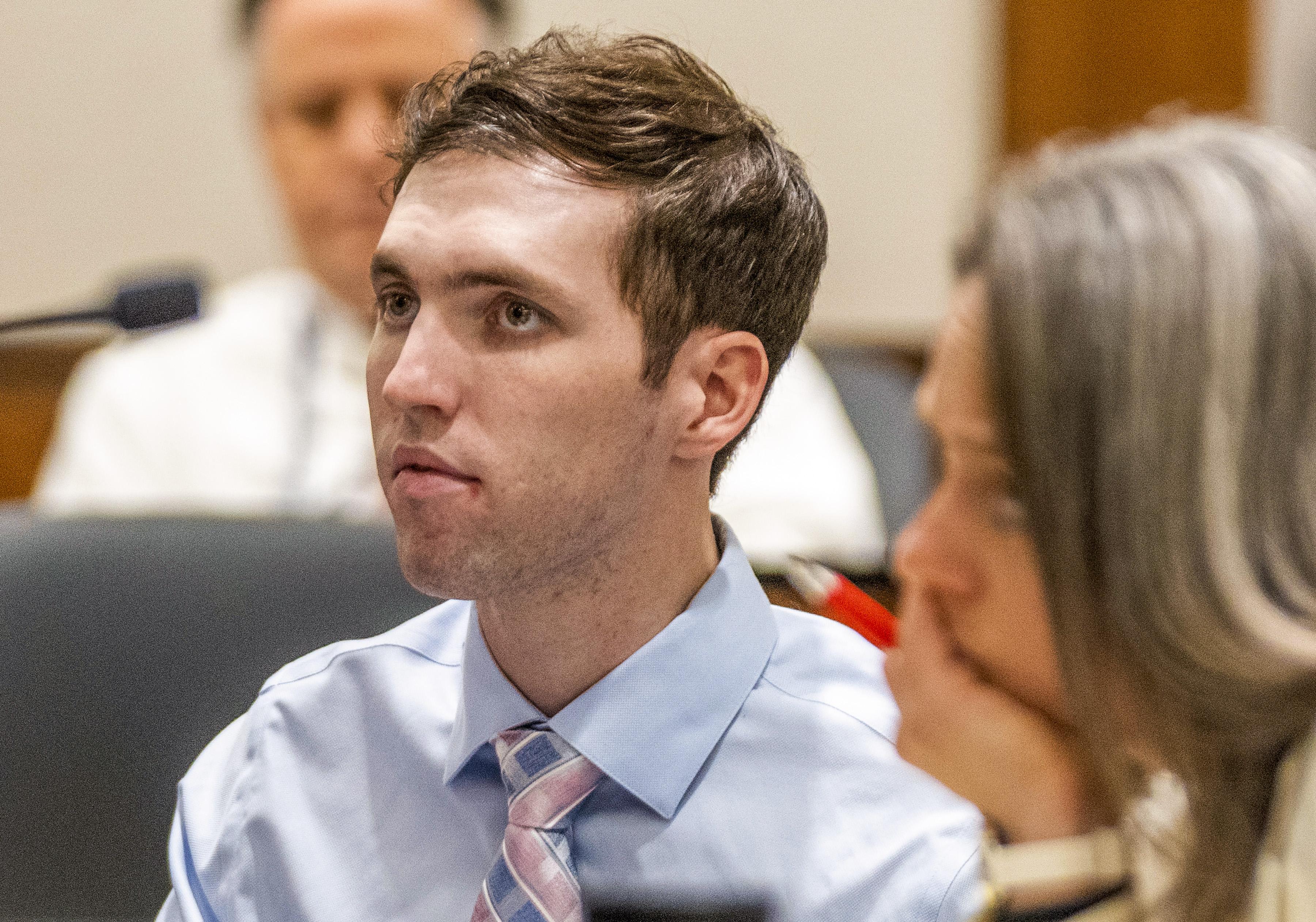
A Utah judge has scheduled Tyler Robinson’s trial over the killing of conservative activist Charlie Kirk to begin with jury selection on June 21, 2028. Robinson, 23, has pleaded not guilty to seven charges including aggravated murder and could face the death penalty if convicted. Judge Tony Graf reserved 105 court days for the proceedings after balancing a defense request for a 2029 trial against prosecutors’ push for January 2028 and the Kirk family’s request for a 2027 start.
Tyler Robinson, the 23 year old man accused of killing conservative activist Charlie Kirk during a public event at Utah Valley University, is scheduled to stand trial beginning in June 2028 after a Utah judge set a timetable for what is expected to be one of the most closely watched criminal cases in the United States. Judge Tony Graf announced that jury selection will begin on June 21, 2028, after considering competing requests from prosecutors, defense lawyers and Kirk’s family over how quickly the case should move toward trial. Robinson has pleaded not guilty to seven charges, including aggravated murder, and prosecutors have said they will seek the death penalty if he is convicted.
The trial date places the start of proceedings nearly three years after Kirk was shot on September 10, 2025, while speaking before a large crowd at Utah Valley University in Orem. Prosecutors allege that Robinson deliberately targeted Kirk because of his political views and fired the fatal shot from a rooftop position overlooking the event. Robinson’s defense team disputes key parts of the prosecution’s theory and has indicated that it plans to challenge evidence, the alleged motive and the state’s attempt to seek capital punishment. The defense has also raised the possibility of asking for the trial to be moved out of Utah County if it believes an impartial jury cannot be selected there.
Graf’s decision came after months of argument over how much preparation time both sides would need. Robinson’s lawyers had asked for a trial beginning in the latter part of 2029, saying the case involves an enormous volume of evidence, complex forensic questions, death penalty litigation and extensive investigation into Robinson’s background. Prosecutors had proposed a much earlier date in January 2028 and argued that they could be ready even sooner, while Kirk’s widow, Erika Kirk, had urged the court to begin the trial in 2027 because of the emotional burden continued delays were placing on the family. The judge ultimately selected a date between those competing positions and said the schedule was intended to balance the defendant’s right to prepare a full defense with the family’s interest in a timely resolution.
The court has reserved 105 days for the proceedings, although the actual trial could last somewhat less depending on jury selection, legal arguments and the amount of evidence presented. The schedule allows roughly five months for the case and reflects the complexity normally associated with capital murder trials. Jury selection alone could take several weeks because prospective jurors will be questioned about their knowledge of the case, their views on the death penalty and whether they can remain impartial despite the enormous publicity surrounding Kirk’s killing. More than 3,000 potential jurors are expected to receive questionnaires ahead of the trial, underscoring the difficulty of assembling a panel in a case that has received national political attention.
Robinson is accused of shooting Kirk as the conservative activist held one of his trademark public debates before thousands of people at Utah Valley University. The attack shocked American political circles and immediately triggered a nationwide manhunt, intense media coverage and renewed debate over political violence in the United States. Kirk, who was 31, had become one of the most prominent conservative organizers of his generation through Turning Point USA and was a close ally of President Donald Trump. His appearances on university campuses frequently drew both enthusiastic supporters and outspoken critics, and prosecutors allege that Robinson targeted him because of positions he had taken on issues including gay marriage and transgender rights.
The prosecution’s motive theory remains disputed. Prosecutors have said evidence collected during the investigation suggests Robinson was angry over Kirk’s political positions and deliberately chose the Utah Valley University event as the location for the attack. Defense lawyers have pushed back on that account and have argued that there is not enough evidence to establish that Robinson opposed Kirk’s views in the way prosecutors claim. The question of motive will likely become one of the central issues at trial because it could influence how jurors understand Robinson’s alleged actions and how prosecutors present the aggravated nature of the killing.
Robinson faces seven criminal counts in total. In addition to aggravated murder, prosecutors have filed charges including obstruction and witness related offenses arising from his alleged conduct after the shooting. Authorities have accused him of attempting to influence another person to withhold cooperation and delete communications, claims that could become important because prosecutors may use them to argue that Robinson understood the seriousness of what had happened and took steps to interfere with the investigation. He has pleaded not guilty to all charges and remains legally presumed innocent unless prosecutors prove their case beyond a reasonable doubt.
The death penalty has added another layer of complexity to the proceedings. Judge Graf previously ruled that prosecutors had presented enough evidence for the aggravated murder charge to move forward and that the circumstances alleged by the state were sufficient at this stage to keep capital punishment available as a possible sentence. Under Utah law, a conviction for aggravated murder can carry several possible penalties, including death, life imprisonment without parole or a lengthy prison term with the possibility of parole depending on the circumstances and the eventual findings of the court and jury.
A death penalty case generally requires far more preparation than an ordinary murder trial because the defense must prepare not only for the question of guilt but also for a separate sentencing phase if the defendant is convicted. Lawyers may investigate the defendant’s childhood, family history, education, mental health history and other personal circumstances that could be presented as mitigating evidence. Prosecutors, meanwhile, may present aggravating evidence intended to support the argument that the crime was serious enough to justify the harshest punishment available under state law. That process helps explain why Robinson’s attorneys sought a 2029 trial date and argued that rushing the case could compromise their ability to provide an adequate defense.
The court has also set regular pretrial status conferences leading up to the trial. Those hearings will allow Judge Graf to monitor the progress of evidence review, expert reports, legal motions and any disputes between the prosecution and defense. In April 2028, the judge is expected to assess whether both sides are on track to begin jury selection in June and to make final decisions about where the trial will be held. That timetable gives the defense additional time to pursue a possible change of venue if surveys or other evidence suggest that publicity has made it difficult to find impartial jurors in Utah County.
The venue question could become especially important because Kirk’s death generated extraordinary political and media attention. His killing was widely discussed by elected officials, commentators and activists across the country, and President Trump has repeatedly spoken publicly about the case. Trump has criticized the pace of the proceedings and called for the trial to begin much sooner, comments that have added to the pressure surrounding the judge’s scheduling decisions. The court will ultimately have to determine whether public statements by political figures and the extensive coverage of the case have affected the ability to seat a neutral jury.
Kirk’s family has also been outspoken about the delay. Erika Kirk asked the court to begin the trial by October 2027 and argued that extending the case into 2028 would prolong the family’s grief. After Graf announced the June 2028 date, the family described the decision as deeply disappointing and said that every additional day without a resolution added to the pain created by Kirk’s death. The judge acknowledged those concerns but said he did not believe a 2027 trial was realistic given the amount of evidence and the obligations facing both legal teams.
The defense has emphasized a different concern, arguing that a capital case of this scale cannot responsibly be prepared on a compressed schedule. Robinson’s lawyers say they must review tens of thousands of pages of material, examine forensic evidence, retain experts and investigate every aspect of the prosecution’s case. They are also expected to challenge aspects of Utah’s death penalty process and may raise constitutional arguments that could require extensive hearings before jurors ever hear opening statements. The judge’s decision to begin in 2028 reflects an attempt to accommodate those demands without granting the much longer delay requested by the defense.
For prosecutors, the case will likely depend on a combination of eyewitness accounts, forensic evidence, digital records and alleged statements connected to Robinson after the shooting. Authorities have previously presented evidence linking him to the investigation and have argued that the totality of the material shows he was responsible for the killing. Defense attorneys are expected to scrutinize the collection and testing of physical evidence and challenge any evidence they believe is unreliable, improperly obtained or taken out of context.
The prosecution may also rely on communications that investigators say shed light on Robinson’s state of mind before and after the attack. Reports from earlier court proceedings indicate that prosecutors believe some of those messages support their claim that the shooting was politically motivated. The defense has disputed the strength of that interpretation and has indicated that prosecutors are drawing conclusions that the evidence does not necessarily support. Those competing accounts will likely become central once the case reaches a jury.
The trial will take place against a broader national debate over political violence. Kirk’s killing became one of the most prominent examples of violence directed at a political figure in recent American history and intensified concern about the increasingly hostile tone surrounding political events, public figures and ideological disputes. Supporters of Kirk described the attack as an assault on political expression, while others emphasized the need to avoid using the killing to inflame partisan divisions before the facts were fully established in court.
That broader political environment presents another challenge for Judge Graf. The courtroom must separate the criminal allegations against Robinson from the wider national arguments surrounding Kirk’s career and political influence. Jurors will be asked to decide whether prosecutors have proved the charges based on evidence presented in court, not based on their personal views of Kirk, Robinson or the political movements associated with either side of the public debate.
Kirk was a highly influential and often polarizing conservative figure. He built Turning Point USA into a major organization focused on mobilizing young conservatives and became a regular presence at Republican events, college campuses and political gatherings. Supporters viewed him as an effective advocate for conservative causes and a powerful organizer of young voters, while critics strongly challenged many of his statements on race, immigration, gender and sexuality. Those political arguments are part of the public context surrounding the case but will not themselves determine Robinson’s guilt or innocence.
Robinson’s trial is expected to draw intense national and international media attention when jury selection begins. Court officials will have to manage security, press access and the risk that extensive reporting could influence jurors. Judge Graf has already imposed rules governing cameras and photography inside the courtroom during earlier hearings, including restrictions intended to prevent disruptive or overly intrusive coverage.
The death penalty question could also extend the proceedings beyond the initial trial. If Robinson is convicted of aggravated murder, a separate penalty phase would be required before any death sentence could be imposed. During that stage, prosecutors and defense attorneys would present competing evidence about whether execution is appropriate, and jurors would be required to consider aggravating and mitigating circumstances before reaching a decision.
If he is acquitted of aggravated murder or convicted of a lesser offense, the sentencing process would be different. The exact outcome will depend entirely on the evidence presented and the jury’s findings, and there is still a lengthy pretrial process before the case reaches that point.
Between now and June 2028, the court is expected to handle numerous motions dealing with evidence, expert testimony, jury selection, venue and the death penalty itself. Both sides may also challenge previous rulings or seek additional hearings as new evidence emerges. Capital cases frequently generate complex legal disputes before the trial begins, and some of those rulings could later become issues in appeals depending on the outcome.
The timetable announced by Graf therefore gives the case a clearer path forward without resolving the major disputes that remain. Prosecutors believe they can prove that Robinson deliberately killed Kirk and should face the possibility of the death penalty. Robinson’s defense maintains his not guilty plea and is preparing to challenge the state’s evidence, motive theory and capital punishment request.
The trial date also means Kirk’s family and supporters will have to wait more than another year and a half before a jury begins hearing the case. For Robinson, the same period will be used to prepare a defense against charges that could result in the most severe punishment available under Utah law.
When jury selection finally begins on June 21, 2028, the case will move from years of investigation and preliminary litigation into the stage where prosecutors must prove their allegations beyond a reasonable doubt before a jury. Until then, Robinson remains accused rather than convicted, while both sides prepare for a lengthy capital trial that will examine not only who killed Charlie Kirk but also the evidence prosecutors say explains why the shooting occurred.