
UK flight chaos continues after air traffic control failure disrupts more than 1,000 flights
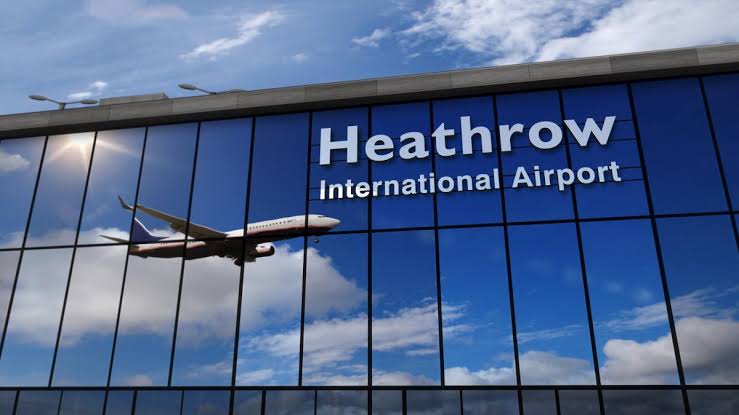
More than 1,000 flights were cancelled after a technical failure in Britain's air traffic control system caused widespread disruption across at least 15 airports. Heathrow temporarily suspended arrivals, while British Airways cancelled or diverted more than 100 flights and Ryanair said more than 65,000 of its passengers were affected. Although NATS has fixed the technical problem, cancellations and delays have continued into a second day.
LONDON — Air passengers across Britain are facing a second day of disruption after a major failure in the UK's air traffic control system forced the cancellation of more than 1,000 flights, temporarily halted arrivals at Heathrow and left thousands of travellers stranded at airports and aboard aircraft.
The disruption began on Tuesday after Britain's National Air Traffic Services reported a technical problem with its flight processing system.
The failure affected operations at at least 15 airports, including Heathrow, Gatwick, Manchester, Birmingham, Stansted and London City, with disruption spreading beyond Britain as airlines struggled to operate flights through UK airspace.
NATS said engineers identified the problem and implemented a fix later on Tuesday, but the restoration of the system did not immediately return the aviation network to normal.
Airlines were left with aircraft and crews in the wrong locations, creating a backlog that continued into Wednesday.
More than 1,000 flights to and from the UK were cancelled on Tuesday, while hundreds of additional services faced delays.
Heathrow, Britain's busiest airport, resumed departures after the technical problem was resolved but suspended arrivals for the remainder of Tuesday night as the airport attempted to manage the disruption safely.
Passengers were warned that cancellations and delays could continue as airlines worked to restore their schedules.
By Wednesday, the effects of the failure were still being felt across the country's aviation network, with further cancellations expected at Heathrow and other airports.
Passengers stranded for hours
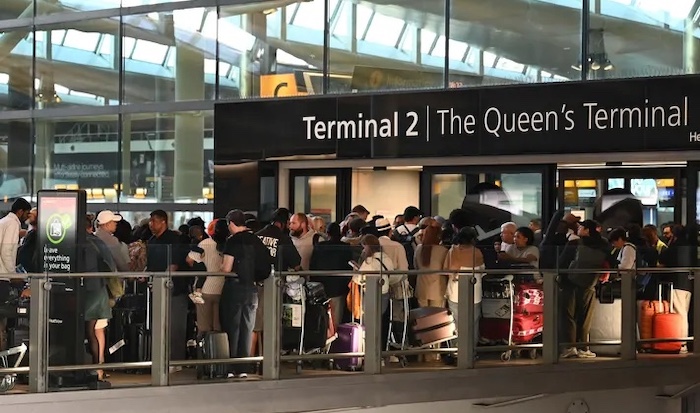
The system failure left thousands of passengers waiting inside terminals and aboard aircraft.
At Gatwick Airport, passenger Josie Donoghue spent approximately three hours aboard a Ryanair flight to Ireland before the service was eventually cancelled.
She described the situation at the airport as an “absolute nightmare”.
“Getting through that airport was like trying to get out of Alcatraz,” Donoghue said.
Other passengers reported similar experiences, including long waits on aircraft that were unable to depart and difficulty retrieving luggage after flights were cancelled.
At Heathrow, passengers aboard a British Airways flight scheduled to travel to Baltimore reportedly spent about four hours on the ground before being allowed to leave the aircraft.
The disruption continued inside terminals as large numbers of passengers attempted to rebook flights, retrieve baggage and arrange alternative transportation.
British Airways cancels and diverts more than 100 flights
British Airways was among the airlines hardest hit by the failure.
The carrier said it was forced to cancel or divert more than 100 flights on Tuesday, affecting tens of thousands of customers.
British Airways warned that the consequences would continue after the technical problem itself had been fixed because aircraft and crews had been displaced across its network.
The airline described the incident as outside its control and said it was working to restore operations.
Ryanair said more than 65,000 of its passengers were affected and more than 50 scheduled flights were cancelled during the initial disruption.
The airline strongly criticised NATS over the failure.
EasyJet also reported that some flights were unable to operate because of the air traffic control problem, while other European airlines experienced delays and cancellations connected to UK airspace.
The scale of the disruption demonstrates how quickly a relatively short interruption to air traffic control can spread across the aviation network.
Airlines operate tightly coordinated schedules in which aircraft and crews may complete several flights in a single day.
When one part of that system is interrupted for several hours, aircraft can end up hundreds or thousands of kilometres from where they are required for later services.
That creates additional cancellations even after the original technical problem has been resolved.
NATS chief summoned over failure
The disruption has increased scrutiny of Britain's air traffic control infrastructure.
UK Transport Secretary Heidi Alexander is expected to meet NATS chief executive Martin Rolfe as the government seeks an explanation for the failure and assurances over the resilience of the system.
NATS has apologised to passengers and airlines.
The organisation said recovery had been complex and warned that it would take time for the entire aviation network to return to normal.
Rolfe has said the technical failure was not the result of a cyberattack.
Britain's Civil Aviation Authority is also expected to receive a full report from NATS on the incident and assess whether further measures are required to improve the reliability of the country's air traffic control infrastructure.
The latest disruption has renewed criticism from airlines because it follows previous major failures involving NATS systems.
A serious air traffic control failure in August 2023 caused widespread cancellations and delays, affecting hundreds of thousands of passengers.
Another technical problem disrupted UK flights in July 2025.
The latest incident therefore represents the third significant disruption involving the country's air traffic control system in approximately three years.
Ryanair and Wizz Air have publicly criticised NATS following Tuesday's failure, with Ryanair calling for Rolfe to resign.
Disruption continues into Wednesday
Although the technical problem has been resolved, airlines and airports continue to deal with its consequences.
Flights that failed to leave Britain on Tuesday night were unavailable to operate scheduled return journeys on Wednesday morning, creating another wave of cancellations.
Airports including Heathrow have warned passengers to expect continued disruption while schedules are restored.
Passengers due to travel have been advised to check directly with their airlines before leaving for the airport.
The recovery could take additional time because airlines must reposition aircraft, reorganise crews and accommodate passengers whose original flights were cancelled.
For travellers caught in the disruption, the resolution of the computer failure therefore does not necessarily mean an immediate end to the delays.
As Britain's aviation network works through the backlog, attention is also turning to why another major air traffic control failure occurred and whether changes will be required to prevent a similar disruption in the future.