UK THREATENS TOTAL VISA BAN ON ERITREANS AS DEPORTATION STANDOFF DEEPENS
The United Kingdom has threatened a complete visa ban on Eritrean nationals unless Asmara resumes cooperation in accepting the return of its citizens who have no legal right to remain in Britain, including rejected asylum seekers and foreign national offenders. The Home Office says Eritrea withdrew returns cooperation earlier in 2026. Eritrean diplomats must now seek permission to travel more than 60 kilometers outside London, while fast-track visa privileges for senior officials have been withdrawn. Eritrea has rejected forced repatriations and accused Britain of politicizing the dispute.
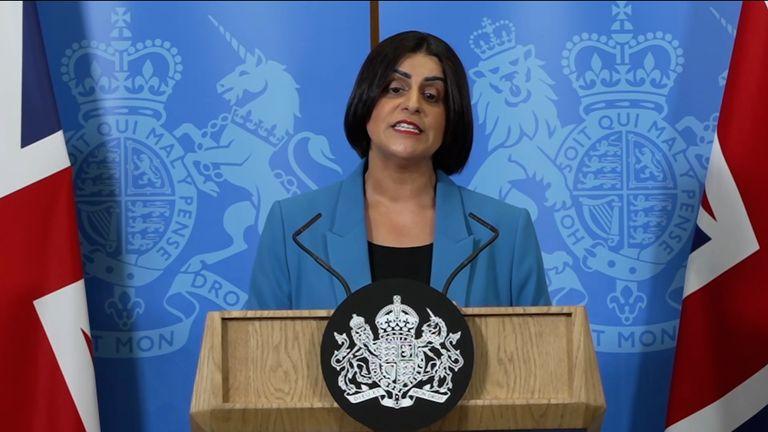
The United Kingdom has threatened to impose a complete visa ban on Eritrean nationals unless the government in Asmara resumes cooperation over the return of people Britain says have no legal right to remain in the country, escalating a migration dispute that has already led London to impose restrictions on Eritrean diplomats and senior officials. Home Secretary Shabana Mahmood issued the ultimatum after accusing Eritrea of refusing to accept the return of convicted foreign offenders, rejected asylum seekers and other nationals facing removal from Britain, warning that the government is prepared to block Eritrean citizens from obtaining UK visas if cooperation does not improve rapidly.
The confrontation intensified on Thursday, October 15, when the Home Office announced immediate measures against Eritrean officials. Preferential and fast-track visa processing for Eritrean VIPs and government representatives has been withdrawn, while Eritrean diplomats based in Britain must now obtain permission from the Foreign Office before traveling more than 60 kilometers, approximately 37 miles, outside London. British officials said the movement restrictions mirror limitations already imposed on UK diplomats working in the Eritrean capital, Asmara, making the measures part of a wider deterioration in relations between the two governments.
Mahmood said the government had attempted for months to resolve the dispute privately before moving to public pressure. According to the Home Office, Eritrea had previously cooperated with Britain on the return of some nationals but abruptly withdrew that cooperation earlier this year, making it more difficult for UK authorities to deport people who have exhausted their legal avenues to remain. The government says reliable returns arrangements are essential because deportation cannot usually be completed unless the receiving state verifies nationality, supplies travel documentation where necessary and permits the individual to enter.
The Home Secretary said Eritrea had been given repeated opportunities to resolve the issue and warned that Britain was prepared to escalate from targeted restrictions on officials to a complete visa shutdown affecting ordinary Eritrean nationals. Her message was that governments should not expect their citizens to continue enjoying access to the United Kingdom while refusing to receive nationals whom British authorities have lawfully ordered to leave. The policy represents a significant use of immigration controls as diplomatic leverage, with legal migration being restricted in an attempt to secure cooperation on deportations.
The Eritrean government has strongly rejected Britain’s characterization of the dispute. Asmara maintains that it does not accept the forced return of Eritrean citizens and argues that repatriations should be voluntary, safe and dignified rather than imposed through deportation. Eritrean officials have accused the British government of politicizing migration policy and have disputed suggestions that they are simply refusing reasonable diplomatic cooperation.
The disagreement is complicated by Eritrea’s human rights record and the unusually high proportion of Eritrean asylum claims that are accepted in Britain. UK data show that approximately 84 percent of Eritrean asylum applications receiving an initial decision have been granted protection, one of the highest approval rates among major nationalities seeking asylum in the country. That means most Eritreans whose cases reach an initial decision are recognized by British authorities themselves as having a legitimate need for protection, while the deportation dispute concerns a smaller group whose claims have failed, who have no other lawful basis to remain, or who have been convicted of criminal offenses.
Home Office figures show that 6,952 Eritrean nationals sought asylum in Britain in the year ending June 2026. Of those, 5,875 had arrived by small boat across the English Channel, making Eritreans the most common nationality among small-boat arrivals during that period. Those numbers have increased the political importance of securing a functioning returns agreement because the government argues that an immigration system cannot maintain credibility if people whose claims are ultimately rejected cannot actually be removed.
The government is understood to be seeking the deportation of approximately 230 Eritrean foreign national offenders in addition to other Eritreans who have exhausted their immigration and asylum claims. Ministry of Justice figures separately showed that 160 Eritrean nationals were among the prison population in England and Wales at the end of June, although being imprisoned and being immediately eligible for deportation are not necessarily the same thing because each case is subject to legal and immigration processes.
Despite the increasingly forceful language from London, the practical impact of some of the initial visa restrictions may be relatively limited. Eritrea’s embassy in London has said the UK has not issued a visa to an Eritrean government official since 2023, raising questions about how much immediate leverage can be generated by withdrawing preferential treatment for senior officials. A total visa ban covering ordinary Eritrean nationals would be far broader and could affect students, workers, relatives and other people seeking to travel legally to Britain.
Home Office figures illustrate that legal migration from Eritrea is comparatively small when measured against the broader UK immigration system. Only 77 work visas were granted to Eritrean nationals in the year ending June 2026, accounting for roughly 0.03 percent of the approximately 234,841 work visas issued during the period. The threatened full ban would therefore be politically significant and personally consequential to affected Eritreans, but it would not represent a major change to overall UK legal migration numbers.
Britain’s strategy toward Eritrea follows an approach it has already used against other African governments. The Home Office previously threatened visa penalties against Angola, Namibia and the Democratic Republic of Congo after accusing those countries of failing to cooperate sufficiently with migrant returns. Angola and Namibia subsequently agreed to enhanced arrangements, while the DRC initially faced actual restrictions before cooperation improved.
The British government says the DRC experience demonstrates that visa sanctions can produce results. Restrictions targeting Congolese officials and visa services were eventually removed after what the Home Office described as six months of sustained cooperation and the resumption of returns flights. Officials say more than 3,000 nationals of Angola, Namibia and the DRC could now potentially be removed from Britain because of agreements secured after the earlier pressure campaign.
Mahmood has presented that experience as evidence that countries must face consequences when they obstruct deportation processes. She has repeatedly signaled that Eritrea may not be the final country targeted and that the government is prepared to use visa access more aggressively as part of its wider effort to increase removals of foreign offenders and people without permission to stay.
The tougher policy comes as immigration remains one of the most politically sensitive issues in Britain. The government is under pressure to reduce irregular Channel crossings, shorten asylum processing times and increase the number of people removed after their claims fail, while also facing criticism from refugee organizations and human rights advocates who argue that stricter policies can expose vulnerable migrants to serious danger.
Eritrea presents an especially difficult case because of longstanding international concerns about conditions inside the country. Human rights organizations and United Nations experts have repeatedly raised allegations of arbitrary detention, severe restrictions on political and religious freedoms, torture and an indefinite system of national service that has contributed to large numbers of Eritreans leaving the country. Eritrea rejects many international criticisms of its political system and accuses foreign governments and organizations of misrepresenting conditions.
Those concerns help explain why such a high proportion of Eritrean asylum claims in Britain are accepted. The existence of a high grant rate does not prevent Britain from deporting people whose individual claims fail or foreign offenders who have exhausted their legal appeals, but it means the government must carefully distinguish between Eritreans recognized as refugees and those legally eligible for removal.
That distinction is important because the Home Office’s threat is directed at Eritrea’s cooperation with returns rather than at the validity of Eritrean asylum claims generally. A person who has been granted refugee status in Britain would not suddenly become removable because of the diplomatic dispute. The conflict concerns individuals whom British authorities have determined can legally be removed after completing the relevant immigration, asylum and criminal justice procedures.
There are also practical reasons that deportations require cooperation from the country of origin. Individuals scheduled for removal may not possess a valid passport, and immigration authorities can require emergency travel documents or confirmation of nationality before airlines or destination governments will accept them. If the government of the receiving country refuses to provide documentation or denies entry, Britain can face significant obstacles even when a deportation order has already been issued.
Reports indicate that this documentation issue became central to the Eritrean dispute earlier this year. Asmara reportedly stopped issuing the emergency documents Britain needed to carry out some returns, effectively preventing removals from proceeding. Britain views that position as deliberate non-cooperation, while Eritrea maintains that it has legitimate objections to forced repatriation.
Asmara has also challenged aspects of Britain’s asylum and migration system, arguing that European policies have encouraged Eritreans to make dangerous journeys and created incentives for people to claim Eritrean nationality. Eritrean authorities have complained that some individuals described by foreign governments as Eritrean may not actually be citizens of the country, adding another layer of disagreement over identity verification and responsibility for returnees.
Britain, however, argues that a state has an obligation to accept its own citizens once their nationality has been properly established. The government’s position is that diplomatic disagreements cannot be allowed to create a situation in which foreign national offenders or failed asylum seekers become effectively undeportable because their home government refuses to cooperate.
The dispute has now extended beyond immigration administration into conventional diplomatic retaliation. The decision to restrict Eritrean diplomats’ travel outside London reflects the principle of reciprocity frequently used in international relations, with Britain saying its diplomats face comparable restrictions in Eritrea. Such measures are designed both to express dissatisfaction and to increase pressure without immediately taking the more drastic step of reducing diplomatic representation or severing relations.
The visa threat also creates a wider ethical debate because the people who would be affected by a total ban are not necessarily connected to their government’s decisions. Eritrean students, family members, workers and other legitimate travelers could lose access to Britain because of a dispute between London and Asmara over deportation cooperation. Critics of visa diplomacy argue that such measures can punish ordinary citizens for actions over which they have little influence.
Supporters of the government’s approach respond that targeted diplomatic pressure has limited effect when officials rarely travel to Britain and that governments may have little incentive to cooperate unless consequences extend to wider visa access. The previous agreements with Angola, Namibia and the DRC have strengthened the Home Office’s argument that migration-related visa sanctions can influence state behavior.
The dispute also comes as Britain expands its overall deportation infrastructure. The Home Office announced earlier this year that detention capacity would be increased significantly as part of plans it says could enable the removal of tens of thousands more foreign offenders and failed asylum seekers over the coming decade. The government says removals and deportations have already reached their highest level in nearly a decade and argues that further improvements depend partly on countries of origin accepting their nationals.
At the same time, ministers have introduced legislation intended to make it harder for foreign offenders to prevent deportation using family-life arguments under Article 8 of the European Convention on Human Rights. The government says courts should place greater weight on public safety and the public interest when deciding whether convicted foreign nationals should remain in Britain, while rights groups have warned that individual circumstances and family relationships must still receive meaningful consideration.
The pressure on Eritrea therefore forms part of a much broader strategy rather than an isolated diplomatic disagreement. Mahmood has sought to increase removals through detention expansion, changes to immigration law, faster bilateral return agreements and the threat of penalties against governments that refuse to accept deportees.
The Home Office has also recently reached an agreement with Egypt intended to reduce the time required to return Egyptian nationals without permission to remain in Britain from approximately 30 weeks to about three weeks. Officials are presenting such agreements as examples of the type of cooperation they want from countries whose citizens are subject to removal orders.
Eritrea’s response suggests that reaching a similar agreement with Asmara may be substantially harder. The Eritrean government’s objection is not simply about administrative delays but appears to involve a more fundamental policy against forced returns. If neither side modifies its position, the dispute could move quickly from restrictions targeting government officials to a blanket visa ban.
Such a ban would represent one of the strongest immigration-related measures Britain has imposed on an African country in the current campaign. The government has not announced a precise deadline by which Eritrea must comply before the threatened shutdown takes effect, saying instead that cooperation must improve rapidly. That gives London flexibility to negotiate while retaining the threat of escalation.
The absence of a publicly fixed deadline also means Eritrean travelers are not currently subject to the complete visa ban being discussed. The measures already in force concern diplomatic travel restrictions and the removal of preferential visa processing for VIPs and government officials. Describing the total ban as already implemented would therefore be inaccurate.
Negotiations may continue behind the scenes even as both governments exchange public criticism. Diplomatic disputes over returns often involve complex discussions about travel documentation, nationality verification, treatment of returnees, charter flights and the conditions under which a receiving country will accept its citizens.
Britain’s challenge is to demonstrate that the threat can produce cooperation without undermining the asylum protections it provides to Eritreans who genuinely face persecution. With an 84 percent initial asylum grant rate for Eritrean applicants, the government’s own figures show that most Eritrean cases decided during the relevant period have resulted in protection rather than removal.
The policy must therefore operate on two tracks. Britain intends to continue granting protection where asylum claims meet the legal test while simultaneously arguing that people whose claims fail or who become subject to deportation after criminal convictions must be removable in practice rather than merely in theory.
For Eritrea, the dispute raises different questions about sovereignty and responsibility toward citizens abroad. The government says it cannot accept forced returns under terms it considers inappropriate and has demanded dignified treatment of its nationals. Britain argues that such objections cannot justify refusing to readmit confirmed citizens after lawful immigration decisions.
The diplomatic standoff is occurring at an especially sensitive moment for the Horn of Africa, where tensions between Eritrea and neighboring Ethiopia have also increased. Britain separately issued a statement this week calling for de-escalation and respect for territorial integrity amid renewed regional security concerns, adding another layer to an already complicated relationship with Asmara.
For now, the most immediate consequence is increased pressure on Eritrean officials rather than a complete shutdown of travel by ordinary citizens. Eritrean diplomats face tighter movement rules, senior officials have lost preferential visa privileges and the government has been publicly warned that more severe measures are ready if cooperation does not resume.
Whether the dispute develops into a full visa ban will depend on what happens in negotiations between London and Asmara. If Eritrea agrees to restart documentation and returns, the experience of Angola, Namibia and the DRC suggests Britain could suspend or reverse the threatened escalation. If Eritrea maintains its refusal, Mahmood has publicly committed herself to considering much broader restrictions.
The confrontation therefore represents more than an argument over a relatively small number of deportations. It is becoming a test of Britain’s emerging strategy of using access to its legal immigration system as leverage against foreign governments that resist migrant returns, and it will help determine whether similar pressure is applied more widely.
The government must now balance enforcement objectives against the diplomatic and humanitarian consequences of a policy that could affect Eritreans who have no involvement in their government’s decisions. Eritrea, meanwhile, faces a choice between modifying its longstanding approach to involuntary returns or accepting deeper restrictions on its citizens’ ability to travel legally to Britain.
Until that decision is made, the legal position remains clear. Britain has already imposed targeted restrictions on Eritrean diplomats and officials, but the complete visa ban remains a threat rather than an implemented policy. The next major development will be whether Asmara resumes cooperation or whether the Home Office follows through with the wider shutdown Mahmood has now placed publicly on the table.