US JUDGE DISMISSES CANDACE OWENS PERSONALLY FROM MACRON CASE BUT LAWSUIT AGAINST HER COMPANIES CONTINUES
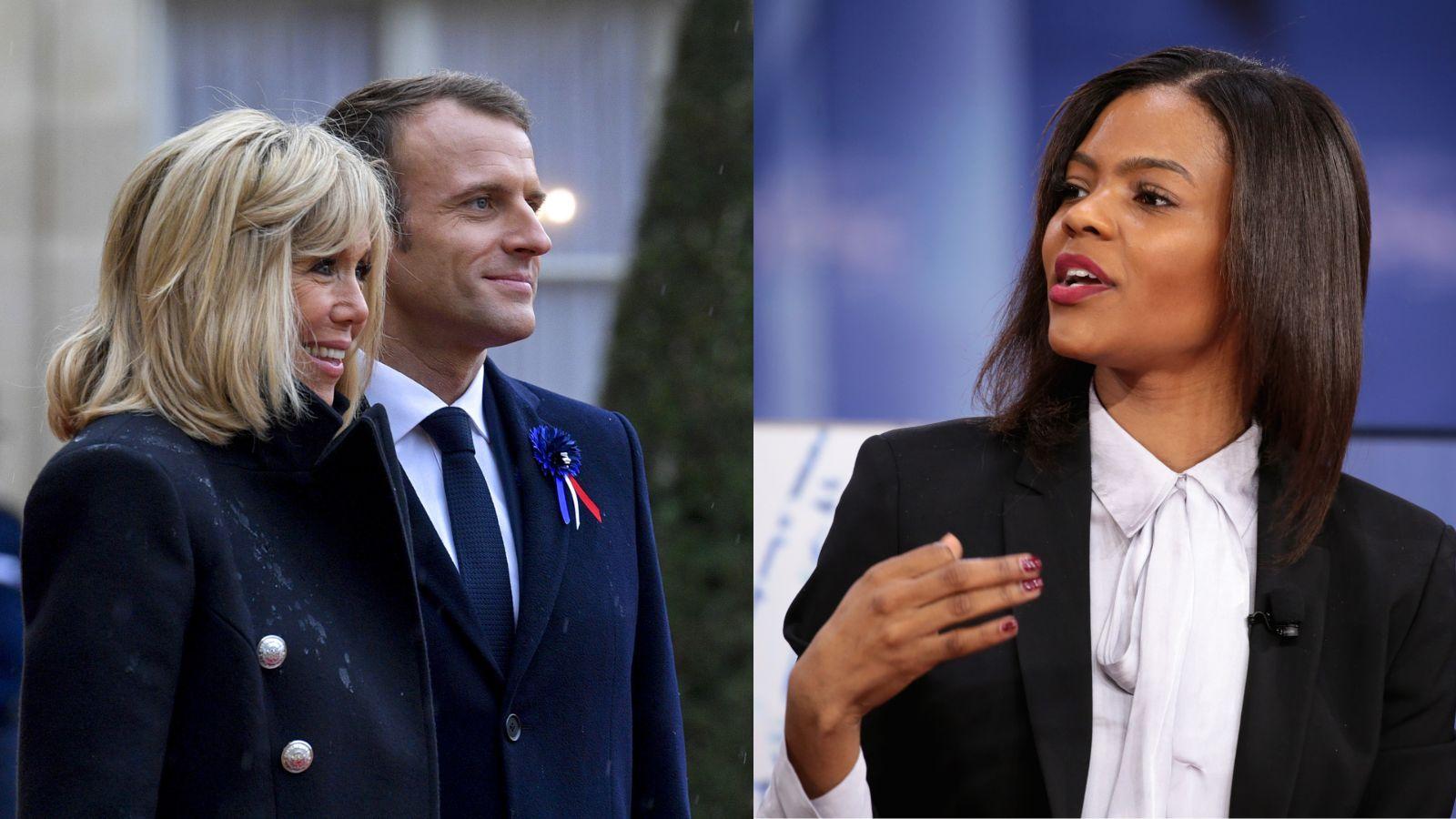
A Delaware judge has dismissed Candace Owens personally from a defamation lawsuit filed by Emmanuel and Brigitte Macron, ruling that the court lacks jurisdiction over her because she lives in Tennessee. The lawsuit can continue for now against Candace Owens LLC and Georgetom Inc because both companies are registered in Delaware. The judge has not ruled on whether the disputed statements were defamatory and has requested further arguments concerning French defamation law, US law and limitation periods.
A Delaware judge has removed American political commentator Candace Owens personally from a defamation lawsuit filed by French President Emmanuel Macron and his wife Brigitte Macron, while allowing the case to continue for now against two companies associated with her. Superior Court Judge Sheldon Rennie ruled that the Delaware court does not have personal jurisdiction over Owens because she resides in Tennessee, but he concluded that Candace Owens LLC and Georgetom Inc can remain defendants because both companies are registered in Delaware. The decision narrows the lawsuit significantly but does not end the legal battle, and the court has not yet ruled on whether any of the statements at the centre of the dispute were defamatory.
The Macrons filed the lawsuit in July after Owens repeatedly promoted claims concerning Brigitte Macron’s sex at birth and identity through podcasts, social media posts and other content distributed to a large international audience. Emmanuel and Brigitte Macron maintain that those allegations are false and defamatory and argue that Owens used them as part of a sustained campaign intended to damage their reputation while increasing attention and commercial interest around her media platforms. Owens has rejected that characterisation and has maintained that the litigation represents an attempt by a powerful foreign political couple to use the American legal system against an independent commentator.
Judge Rennie’s ruling focused first on whether Delaware courts have authority over Owens as an individual. Although the two companies connected to her are incorporated in Delaware, the judge found that Owens herself lives and works primarily from Tennessee and that the connection between her personal activities and Delaware was not strong enough to justify keeping her individually before the court. That finding means she has been dismissed personally from the case as it currently stands in Delaware, representing an important procedural victory for her legal team.
The ruling does not provide the same protection to Candace Owens LLC and Georgetom Inc. Because the companies are registered under Delaware law, the court concluded that they have a sufficient legal connection to the state for the Macrons’ claims against them to remain active. The case can therefore continue through those corporate entities while the court considers several other legal questions raised in the defendants’ request for dismissal.
Those unresolved questions could ultimately prove more important than the jurisdictional ruling. Judge Rennie asked both sides to provide additional legal arguments concerning the relationship between French defamation law and American legal standards, particularly the strong constitutional protections afforded to speech in the United States. The court is also examining limitation periods and whether some claims may have been filed outside the time allowed under the relevant laws.
The case presents an unusually complicated international legal dispute because the plaintiffs are among the most prominent political figures in France, the disputed content was produced primarily in the United States, the companies involved are incorporated in Delaware and the material was distributed globally through digital platforms. Determining which jurisdiction’s law should apply to specific aspects of the case could therefore affect whether the Macrons are able to proceed with some or all of their allegations.
American defamation law gives particularly strong protection to speech concerning public figures. Under long established United States Supreme Court precedent, public officials and other prominent individuals generally have to meet a demanding legal standard when seeking damages for allegedly defamatory statements. They must ordinarily prove not only that the statements were false and damaging but that the defendant made them with the level of fault required under American constitutional law.
The Macrons are expected to argue that the disputed statements were presented as factual assertions rather than opinion, satire or ordinary political criticism. Their legal position is that freedom of expression does not provide protection for statements that they contend were knowingly false and repeatedly distributed despite information contradicting them. Owens and her companies are expected to argue that the lawsuit raises serious First Amendment issues and that American courts should apply the strongest available protections to commentary involving internationally known political figures.
The distinction between fact and opinion is likely to become central if the case survives the remaining efforts to dismiss it. Courts examining defamation claims must determine whether an ordinary audience would understand a disputed statement as an assertion of fact capable of being proven true or false, or as protected opinion, rhetoric, commentary or speculation. That analysis can become particularly difficult in politically charged media content where commentary and factual claims are often presented together.
Brigitte Macron has faced false rumours concerning her identity for several years, particularly through online conspiracy theories originating in France and later spreading to international audiences. Owens significantly amplified similar claims through her own media channels, bringing the controversy to a much larger English speaking audience. The Macrons allege that the repeated distribution of those claims caused substantial reputational harm and transformed what had previously circulated largely in fringe online communities into a major international story.
Owens has responded by questioning the legitimacy of the Macrons’ lawsuit and presenting it as a dispute over media freedom. Following the Delaware ruling, she welcomed the decision removing her personally from the case and criticised the French president and first lady for pursuing litigation in the United States. Her public response emphasised that she considers the case an attempt to financially pressure and silence a commentator rather than a conventional effort to correct false information.
The Macrons have framed the dispute in very different terms. Their complaint argues that they are not attempting to prevent criticism of the French presidency or political commentary about Emmanuel Macron. Instead, they say the case concerns repeated factual allegations about Brigitte Macron that they consider demonstrably false and deliberately promoted for attention and profit.
That disagreement illustrates why the judge has not yet reached the substantive question of defamation. At this stage, the court is still dealing with procedural and legal framework issues that must be resolved before the factual dispute can be tested fully. The dismissal of Owens personally therefore should not be interpreted as a finding that the Macrons’ allegations are without merit, just as allowing the corporate defendants to remain does not mean the court has concluded that defamation occurred.
The Delaware ruling also demonstrates how corporate structure can determine where a lawsuit is allowed to proceed. A person may have limited personal connections to a state even when businesses associated with that individual are incorporated there. In this case, that distinction allowed Owens to exit the Delaware proceeding personally while leaving the two companies exposed to further litigation.
If the case proceeds into discovery, that corporate connection could become important. The Macrons may seek documents, communications, financial records and production information showing how the disputed content was created, distributed and monetised. The corporate defendants could be required to provide information about internal decision making, audience strategy, advertising revenue and communications connected to the publications at issue.
The defence would likely use discovery to examine the basis for the Macrons’ allegations of reputational damage and the extent to which the disputed claims were already circulating before Owens discussed them. Questions could arise over whether Owens relied on third party material, whether she presented the allegations as established facts or as questions and commentary, and whether the plaintiffs can demonstrate financial or reputational harm directly connected to the companies.
The court could still prevent the case from reaching that stage. Owens’ companies have additional dismissal arguments pending, and Judge Rennie’s request for further legal briefing indicates that he has not yet decided whether the Macrons’ claims satisfy the requirements necessary to continue under Delaware and federal constitutional standards. A ruling on those arguments could narrow the lawsuit further or potentially end it entirely.
One issue expected to receive substantial attention is the application of French law. Defamation standards in France differ considerably from those in the United States, particularly in relation to privacy, reputation and the balance between speech and personal rights. American courts are generally reluctant to apply foreign legal standards in ways that would weaken constitutional protections guaranteed by the First Amendment.
United States federal law also places restrictions on recognition of foreign defamation judgments when the foreign legal system does not provide protections comparable to American free speech law. The Macron case does not involve enforcement of an existing French judgment because the couple filed directly in Delaware, but the broader policy concern surrounding foreign defamation standards remains relevant to the court’s analysis.
Judge Rennie therefore asked the parties to explain how French defamation principles should interact with the legal protections governing an American defendant and American companies. That question may become one of the most important issues in the entire case because a determination that United States standards control could significantly increase the burden the Macrons must meet.
The lawsuit also raises questions about limitation periods. Defamation claims are normally subject to strict filing deadlines, and those deadlines can differ substantially between jurisdictions. The court must determine when specific statements were first published, whether later publications count as separate acts and which statute of limitations applies to each claim.
Online media makes those questions especially complicated because content may remain accessible for years and can be republished, clipped, shared and redistributed across multiple platforms. Courts often distinguish between the original publication of allegedly defamatory material and later circulation by users or third parties, meaning the timing of each publication could affect whether a claim remains legally actionable.
The Macrons’ legal team is expected to argue that Owens’ publications formed an ongoing campaign rather than a single isolated statement. The defence may argue that particular statements fall outside applicable limitation periods or that later references do not restart the legal clock.
The dispute has attracted international attention partly because it brings together political power, celebrity, digital media and cross border law. Emmanuel Macron is a sitting French president, while Candace Owens has built a large audience through political commentary, podcasts and social media. The case therefore sits at the intersection of political speech and personal reputation, areas where American courts traditionally proceed cautiously.
It also reflects a broader problem created by the global reach of digital platforms. A commentator can publish material from one American state, operate through companies registered in another and instantly reach audiences in France, Britain, Africa and elsewhere. When an individual claims reputational damage across several countries, determining where the dispute should be heard and which laws apply becomes increasingly complex.
The Macrons chose Delaware partly because the corporate defendants are registered there. That decision gave the court clear jurisdiction over the companies but proved insufficient to establish jurisdiction over Owens personally. Judge Rennie’s ruling therefore demonstrates both the advantages and limitations of bringing an international media dispute in a state closely connected to corporate registration.
Owens’ personal dismissal could affect the practical value of any eventual judgment. If the Macrons ultimately succeed against the companies, financial liability would attach primarily to those corporate entities rather than directly to Owens under the current Delaware action. The precise consequences would depend on the companies’ assets, insurance arrangements and corporate structure.
The plaintiffs could potentially explore other legal options against Owens personally in a jurisdiction where courts have stronger authority over her, although no such new action has been announced in connection with the latest ruling. Any additional lawsuit would create its own jurisdictional, procedural and constitutional questions.
The companies remaining in the Delaware case could also continue seeking dismissal before any trial takes place. Defamation lawsuits involving public figures frequently spend substantial time in preliminary litigation because defendants argue that strong speech protections require courts to dispose of weak claims before costly discovery begins.
If the case survives, discovery could become extensive. Lawyers may seek recordings, emails, internal production notes, source materials and financial data connected to episodes and social media content in which the disputed claims were discussed. Depositions could also involve people involved in producing or distributing the material.
The Macrons would likely have to establish the specific statements they consider defamatory rather than challenging the broader tone of Owens’ commentary. Courts generally require plaintiffs to identify exact statements and demonstrate why each one is false, factual and damaging. Broad complaints about offensive or hostile coverage are ordinarily insufficient on their own.
The defence could argue that some statements were rhetorical, speculative or based on existing public controversy rather than presented as independently verified fact. Determining how an audience would reasonably understand each statement could eventually become a question for the judge or a jury depending on how the case develops.
Damages would represent another major issue if the Macrons eventually prevail. The couple alleges serious reputational injury caused by repeated worldwide publication of the claims. Establishing monetary damages, however, could require evidence showing how the statements affected their professional, personal or public standing beyond the controversy itself.
For a sitting president and first lady, demonstrating financial harm may be different from the challenge faced by an ordinary private individual. The plaintiffs could instead emphasise reputational injury, emotional harm and the scale of distribution, depending on which forms of damages are legally available under the law the court ultimately applies.
Owens’ businesses could also argue that the Macrons’ public prominence makes it difficult to separate damage allegedly caused by Owens from the enormous amount of independent commentary, political criticism and online discussion surrounding them. That causation issue could become important if the lawsuit advances beyond the current procedural stage.
The court has not set out a final timetable for resolution of all outstanding legal questions. The immediate next step is expected to involve further written submissions addressing the judge’s concerns about foreign law, American constitutional protections and limitation periods. After reviewing those arguments, Rennie can decide whether the remaining claims against the companies should continue.
That future ruling will be more consequential to the overall case than the jurisdictional decision alone. If the corporate claims are dismissed, the Delaware lawsuit could effectively come to an end. If they survive, the dispute could move into discovery and become considerably broader, more expensive and more public.
For Owens, the current ruling offers a clear personal victory but not a complete legal victory. She is no longer individually before the Delaware court, yet the companies closely associated with her media operation remain exposed to the Macrons’ claims.
For Emmanuel and Brigitte Macron, the decision represents a partial setback because they can no longer pursue Owens personally in this action, but they have retained a path to continue litigating against the Delaware companies. Their ability to move forward will now depend on whether the judge accepts their legal theories under the applicable speech and defamation standards.
The ruling should therefore be understood as a narrowing of the lawsuit rather than a final determination of responsibility. No court has found that Owens defamed the Macrons, and no court has found that the Macrons’ allegations lack merit. Those substantive questions remain undecided.
The dispute now moves into a more technical stage in which jurisdiction, choice of law, limitation periods and constitutional speech protections could determine whether the underlying allegations are ever tested at trial. That process may take considerable time because international defamation cases often involve complex preliminary disputes before a court reaches the factual merits.
The next significant development will likely come when Judge Rennie rules on the remaining parts of the defendants’ motion to dismiss after receiving the additional legal arguments he requested. Until then, the most accurate position is that Candace Owens has been dismissed personally from the Delaware lawsuit, while Candace Owens LLC and Georgetom Inc remain defendants and the broader defamation dispute continues without any final ruling on the truth, falsity or legal character of the contested statements.