
US MILITARY LAYS GROUNDWORK FOR POTENTIAL ACTION AROUND CUBA AS ARMY RESERVE CHECKS TROOP READINESS
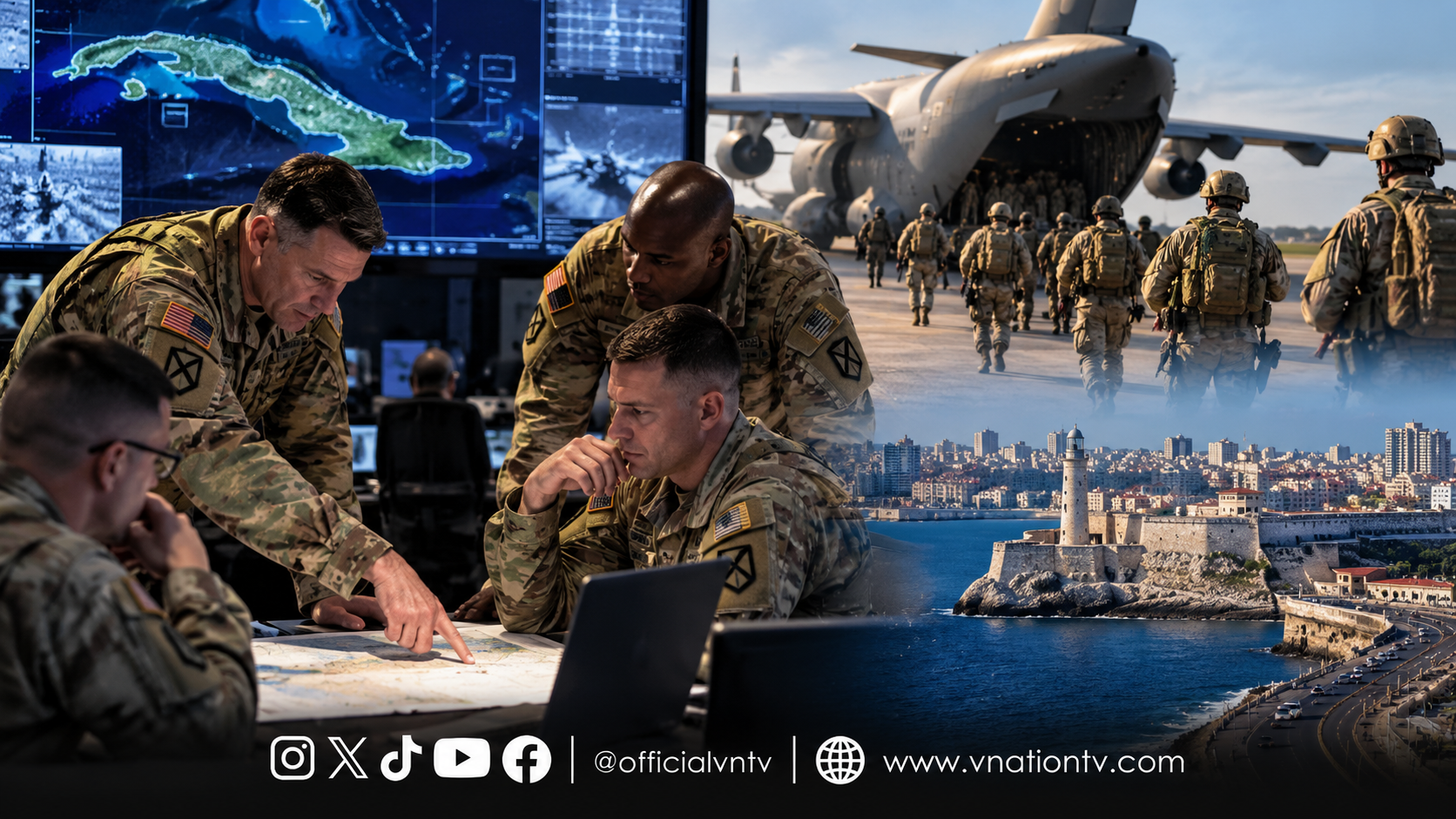
The U.S. military is conducting contingency planning connected to possible action involving Cuba, with the Army Reserve assessing whether medical, military police, engineering and logistics units could support U.S. Southern Command within the next four months. Officials stress that no deployment orders have been issued and President Donald Trump has not made a final decision on military action.
The United States military is laying groundwork for potential action involving Cuba, with the Army Reserve assessing whether specialised units could be made available to U.S. Southern Command within the next 90 to 120 days.
The development represents a significant escalation in contingency planning surrounding Cuba as tensions between Washington and Havana continue to rise.
An internal Army message reviewed by CBS News asks subordinate Army Reserve commands to assess the possible availability of several types of formations that could operate under U.S. Southern Command, which oversees American military operations across Latin America and the Caribbean.
The units being assessed include military police, medical personnel, engineers and logistical support formations.
The document itself does not explicitly mention Cuba.
However, multiple U.S. officials familiar with the planning told CBS News that the request is connected to continued military planning involving the Caribbean island.
Crucially, there is currently no indication that the units have received deployment orders.
Officials have also stressed that President Donald Trump has not made a final decision to launch military action against Cuba.
Military contingency planning does not automatically mean an operation will occur.
Armed forces routinely prepare options for different scenarios so that personnel and equipment can be made available if political leaders eventually order action.
But the latest preparations take on greater significance because they follow months of reports that senior U.S. defence and intelligence officials have been examining potential military scenarios involving Cuba.
Earlier this year, U.S. intelligence agencies began analysing how Havana might respond to potential American military action.
Pentagon officials have also examined a range of military options.
In July, CBS News reported that planners had considered scenarios including an Army-led air assault potentially involving thousands of American troops.
Officials stressed at the time that examining such options did not mean Trump or the Pentagon had authorised an operation.
The latest Army Reserve assessment moves attention towards the personnel and support capabilities that could be required if contingency planning progressed further.
U.S. Southern Command has declined to publicly discuss specific potential deployment timelines or operational planning.
The military preparations are unfolding against a backdrop of mounting political and economic pressure on Cuba from the Trump administration.
Trump has repeatedly criticised Cuba’s communist government and intensified pressure on Havana.
Speaking at the United Nations General Assembly this week, Trump described Cuba as a failed state and declared that “freedom will be coming to Cuba.”
His remarks prompted members of Cuba’s delegation to walk out.
Trump has also adopted a more interventionist approach across the Western Hemisphere, arguing that the United States must prevent hostile governments, criminal organisations and foreign adversaries from threatening American interests.
His administration’s actions in Venezuela have reinforced concerns in Havana about what Washington could ultimately be prepared to do.
The United States has simultaneously maintained diplomatic contacts with Cuban officials.
Those competing tracks of pressure, negotiations and military contingency planning have created uncertainty over Washington’s ultimate strategy.
Cuba has repeatedly rejected American pressure and insisted that it poses no military threat to the United States.
Havana has also warned that it would defend the country’s sovereignty against any military aggression.
The latest development does not establish that an attack on Cuba is imminent.
There are no publicly confirmed deployment orders, no announced military operation and no evidence that Trump has issued an order authorising an attack.
What has now emerged is evidence that military planners are continuing to prepare options and assess whether the personnel required to support potential operations could become available within months.
That distinction is significant.
Contingency planning can remain planning indefinitely or be abandoned entirely.
But the combination of increasingly detailed military preparations and escalating political pressure on Havana means developments surrounding Cuba are likely to face intense scrutiny in the coming weeks.
For now, Washington has not crossed the line from planning to publicly confirmed military action.
The U.S. military, however, is making sure options are available should the White House decide to move further