Washington's Air Traffic Control Problem Just Cost Airlines $345 Million, and Passengers Are Paying Too
What happened: A nationwide FAA ground stop halted departures across the United States. The disruption led to more than 18,500 cancelled flights as it spread through the network. The cost: The four largest US airlines (American, Delta, United, and Southwest) face an estimated $345 million hit to pretax earnings.
For a few hours, the world's busiest aviation system stood still.
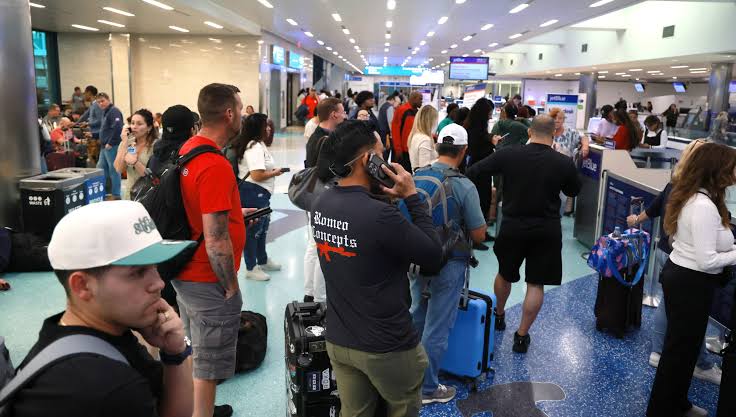
Departure boards across the country flipped from "On Time" to "Delayed" and then to "Cancelled." Gate areas filled with stranded travelers. Planes that should have been in the air sat on tarmacs, and crews slowly ran up against federal duty-time limits. When the dust settled, more than 18,500 flights had been cancelled. The country's four largest airlines were facing an estimated $345 million hit to pretax earnings.
The nationwide FAA ground stop was more than a bad day for air travel. It was a stress test of the infrastructure that underpins American aviation, and by most measures that infrastructure failed.
Now the airlines are saying out loud what industry insiders have said privately for years. The Federal Aviation Administration's ageing systems are no longer just an inconvenience. They are a balance-sheet risk, a competitive liability, and a growing threat to public trust in flying.
The question is no longer whether the FAA needs to modernize. It's who will pay for it, how fast it can happen, and whether Washington can deliver before the next failure.
What Is an FAA Ground Stop, and Why Does It Matter?
A ground stop is one of the most powerful tools the FAA has. When the agency issues one, flights bound for affected airports, or in the most extreme cases flights across the entire national airspace system, are held at their origin. Planes already airborne continue to their destinations. Nothing new takes off until the FAA lifts the order.
Most ground stops are local and short. A thunderstorm over Chicago, a runway closure in Atlanta, or a staffing gap at a regional radar facility can trigger a ground stop lasting 30 minutes to a few hours. Travelers rarely notice them beyond a delay notice on their phone.
A nationwide ground stop is a different animal. It is rare, and it is deliberately reserved for situations where the FAA cannot guarantee safe operations across the system. The most famous example came on September 11, 2001, when the agency cleared US skies entirely. For more than two decades afterward, the idea of a coast-to-coast halt was mostly theoretical.
That changed on January 11, 2023. A failure in the FAA's Notice to Air Missions (NOTAM) system, the database pilots use to check for hazards like closed runways or equipment outages, led the agency to order the first nationwide ground stop since 9/11. The FAA later traced the outage to contractor personnel who unintentionally deleted files while working to correct a synchronization problem between databases. That single day produced well over 10,000 delays and more than 1,300 cancellations.
The most recent ground stop was far larger in its downstream effects. More than 18,500 cancellations is a figure that, in the airline world, belongs in the same conversation as the industry's worst meltdowns of the past decade.
Why a Short Stop Creates a Long Disruption
The core problem with any US air travel disruption of this scale is that airline networks are built like tightly wound clocks. A single aircraft might fly five or six segments a day. A pilot or flight attendant might be scheduled across multiple cities, with legal limits on how long they can work. Planes, crews, gates, and maintenance slots are all planned to fit together with very little slack.
When a ground stop freezes that system, even briefly, the pieces fall out of alignment:
Aircraft end up in the wrong cities. A plane meant to fly Dallas to Denver at 9 a.m. never leaves Dallas, so the Denver-to-Seattle flight it was supposed to operate at noon has no aircraft.
Crews "time out." Federal rules cap how long pilots and flight attendants can be on duty. A crew that spends three hours waiting at a gate may no longer be legal to fly the evening trip they were scheduled for.
Passengers miss connections. Hub-and-spoke networks depend on banks of flights arriving and departing in waves. Break one wave and thousands of connections collapse at once.
Recovery takes days, not hours. Airlines often cancel flights proactively to "reset" the network, so that planes and crews end up where they need to be for the next day's schedule.
This is why a ground stop measured in hours can produce cancellations measured in tens of thousands. The ground stop is the spark. The airline network is the dry brush.
By the Numbers: The Scale of the Disruption
The headline figures tell a clear story.
More than 18,500 flights cancelled. For context, US airlines operate on the order of tens of thousands of scheduled flights on a typical day, with the FAA handling roughly 45,000 flights daily across all types of traffic. A cancellation total of this size, spread across the recovery period, represents a large share of the commercial schedule.
An estimated $345 million in lost pretax earnings for the four largest carriers: American Airlines, Delta Air Lines, United Airlines, and Southwest Airlines. Together, these four carriers control the large majority of the US domestic market.
A rough calculation puts the average pretax hit at around $18,600 per cancelled flight. That figure is only a blunt measure. The real cost varies widely depending on the route, the aircraft size, the time of day, and how many passengers had to be rebooked, refunded, or housed overnight.
Why "Pretax Earnings" Is the Number to Watch
It's worth pausing on the phrase "pretax earnings," because it is easy to misread.
A $345 million impact on pretax earnings is not the same as $345 million in lost revenue. Revenue losses from cancelled flights are often larger, because tickets are refunded or passengers shift to other carriers. Some of that revenue loss is partly offset by savings. An airline that cancels a flight doesn't burn the fuel, doesn't pay certain landing fees, and may not incur some variable costs.
Pretax earnings capture the net damage after those offsets. In other words, $345 million is roughly what this disruption takes out of the bottom line before taxes. That is the number investors care about most.
Why $345 Million Matters in a Thin-Margin Business
To an outsider, $345 million spread across four companies with combined annual revenues well above $150 billion might sound manageable. In the airline business, it isn't trivial.
Airlines operate on notoriously thin margins. Global industry trade groups have long estimated airline net profit margins in the low single digits, often around 3 to 4 percent even in solid years. Fuel prices, labor contracts, aircraft delivery delays, and economic cycles all squeeze those margins.
In that environment, a single disruption that removes hundreds of millions of dollars in earnings can:
Wipe out a meaningful share of a quarter's profit for one or more carriers
Force revisions to earnings guidance, which can unsettle investors
Divert cash that might otherwise fund fleet renewal, debt reduction, or shareholder returns
Damage customer loyalty, a cost that never shows up neatly in a single quarter
And crucially, airlines can do very little to prevent this kind of loss. When the FAA stops traffic, carriers have no choice but to comply.
Anatomy of an Airline Earnings Loss
To understand why airlines are so frustrated, it helps to look at exactly where the money goes when a system-wide disruption hits.
1. Refunds and Lost Ticket Revenue
When a flight is cancelled, passengers who choose not to travel are entitled to a refund. Under rules from the US Department of Transportation that took effect in 2024, airlines must issue automatic cash refunds for cancelled or significantly changed flights when passengers decline rebooking or alternative compensation. Refunds must be paid promptly and in the original form of payment.
That rule closed off an old safety valve. In the past, airlines could steer customers toward travel credits, which kept cash on the balance sheet and often went unused. Today, much more of that cash walks out the door.
2. Rebooking Costs and Displaced Revenue
Passengers who still want to travel must be rebooked. During a mass disruption, that is easier said than done. Seats on subsequent flights are often already sold, which means:
Rebooked passengers displace future paying customers
Airlines may rebook travelers on competitors at their own expense
High-yield business travelers may switch carriers or cancel trips entirely
Every seat filled by a rebooked passenger is a seat that cannot be sold at full fare.
3. Crew Costs and Overtime
Disruptions are expensive in labor terms. Pilots and flight attendants who are stuck, rerouted, or held in reserve still need to be paid. Many labor contracts include premium pay for schedule changes, reassignments, and extended duty days. Airlines also have to pay to reposition crews, often by flying them as passengers to where they're needed.
4. Hotels, Meals, and Ground Transport
Whether airlines must cover hotels and meals depends partly on what caused the cancellation. Carriers have made public commitments, tracked on a federal dashboard, to provide meals, hotel stays, and related services when cancellations stem from issues within the airline's control, such as maintenance or crew scheduling.
A ground stop ordered by the FAA is generally considered outside an airline's control. Even so, the lines blur during recovery. If a cancellation two days later is caused by crews being out of position, that can look more like an airline-controllable issue. Airlines also frequently offer accommodations for goodwill and brand reasons, even when they're not strictly obligated.
5. Aircraft Repositioning and Operational Inefficiency
Planes that are in the wrong place need to be flown empty, or "ferried," to where they belong. Those flights burn fuel and use crew time without earning a dollar. Maintenance schedules get scrambled. Gate and slot assignments at congested airports become harder to manage.
6. Customer Service and Technology Load
Call centers get flooded. Apps and websites strain under heavy traffic. Airlines bring in extra staff, extend shifts, and in some cases pay for outside support. These costs are rarely headline items, but they add up quickly in a crisis.
7. The Long Tail: Lost Loyalty
Perhaps the hardest cost to measure is brand damage. A traveler stranded for two days may decide to fly a competitor next time, drive instead, or skip the trip. Corporate travel managers may rethink preferred-carrier agreements. These losses don't show up in the $345 million estimate, but airlines know they're real.
How the Big Four Are Exposed
Each of the four largest US airlines runs a different kind of network. That shapes how a nationwide ground stop affects them.
Delta Air Lines
Delta runs one of the world's largest hub operations at Hartsfield-Jackson Atlanta International Airport, alongside major hubs in places like Detroit, Minneapolis-St. Paul, and Salt Lake City, plus a significant presence in New York. Its business model leans heavily on premium and corporate travelers, the customers most sensitive to reliability.
Delta has built its brand around operational dependability. That reputation was tested in July 2024, when a faulty CrowdStrike software update crippled Windows systems worldwide. Delta took days longer to recover than its rivals and cancelled roughly 7,000 flights. The carrier later put the cost of that disruption at around $500 million. The episode showed how quickly a technology failure, even one that isn't the airline's own, can become a nine-figure problem.
United Airlines
United's network is anchored by major hubs including Chicago O'Hare, Denver, Houston, Newark, San Francisco, Washington Dulles, and Los Angeles. Its exposure to the New York area through Newark Liberty International Airport makes it particularly sensitive to FAA infrastructure problems.
In 2025, Newark became a national symbol of air traffic control fragility. Controllers handling Newark traffic from a facility in Philadelphia lost radar and radio contact with aircraft for brief but alarming periods. Those failures, combined with staffing shortages and runway construction, led the FAA to cap flights at the airport. United's leadership was among the most vocal critics of the FAA's ageing systems during that period, and the airline publicly cut Newark flights in response.
American Airlines
American, the largest US carrier by many measures, operates its biggest hub at Dallas/Fort Worth International Airport. It also runs major hubs in Charlotte, Chicago, Miami, Philadelphia, Phoenix, and Washington. American's huge domestic connecting network means that disruptions at its core hubs ripple outward to hundreds of smaller cities.
Southwest Airlines
Southwest's model is different. Instead of a traditional hub-and-spoke system, it operates a largely point-to-point network, with aircraft hopping from city to city throughout the day. That model can be efficient in normal conditions. But it can be especially vulnerable when disruptions cascade, because a plane's late arrival in one city affects every subsequent leg on its route.
Southwest learned that lesson painfully in December 2022. A winter storm combined with outdated internal crew scheduling technology to trigger a meltdown that resulted in roughly 16,700 cancellations over about ten days. The airline faced well over $1 billion in combined costs, refunds, reimbursements, and lost revenue. The Department of Transportation later imposed a record $140 million civil penalty as part of a broader settlement.
That episode is instructive for a different reason. It showed that airlines' own systems can fail too, a point critics raise when carriers place all the blame on the FAA.
A Pattern, Not an Anomaly: America's Recent Aviation Failures
The latest ground stop didn't come out of nowhere. It is the newest entry in a lengthening list of disruptions tied to fragile infrastructure, both public and private.
January 2023: The NOTAM Outage
The first nationwide ground stop since 9/11 was triggered not by weather, terrorism, or a mechanical crisis, but by a database failure. The NOTAM system was decades old, and the outage exposed how a single point of failure in the FAA's technology stack could freeze the entire national airspace system. Lawmakers from both parties demanded answers. The FAA promised upgrades, and the episode became a rallying cry for modernization.
December 2022: Southwest's Meltdown
Although the root cause was largely internal to Southwest, the meltdown shaped public perception of American air travel as brittle and unreliable. It also pushed the Department of Transportation toward tougher consumer protection rules.
July 2024: The CrowdStrike Outage
A faulty software update from cybersecurity firm CrowdStrike knocked out millions of Windows computers worldwide. Airlines were among the most visible victims. The episode reminded the industry that its reliance on complex, interconnected technology creates systemic risk.
Spring 2025: Newark's Radar and Radio Failures
In late April 2025, controllers managing Newark arrivals temporarily lost radar and communications. Additional outages followed in the weeks after. Some controllers took trauma leave, staffing shortages worsened, and the FAA reduced the number of flights allowed into and out of the airport. The crisis drew national attention to the copper wiring, ageing telecom lines, and outdated equipment that still underpin parts of the system.
Fall 2025: Shutdown-Era Flight Reductions
During the record-length federal government shutdown in the fall of 2025, air traffic controllers worked without pay for weeks. As staffing strains grew, the FAA ordered airlines to reduce flights at dozens of the country's busiest airports. Thousands of flights were cancelled. The episode highlighted a different kind of fragility: the system's dependence on a workforce that is both understaffed and vulnerable to political standoffs in Washington.
The Common Thread
Each of these events had a different trigger. Together, they point to the same conclusion. The US aviation system has very little margin for error. When a critical system fails, whether it's a database, a radar feed, a telecom line, or a workforce, the effects spread quickly and expensively.
The latest ground stop is a reminder that the problem hasn't been solved.
Inside the FAA's Ageing Systems
To understand why airlines are pushing so hard for FAA system upgrades, it helps to look at what the agency is actually working with.
A Government Watchdog's Warning
In September 2024, the US Government Accountability Office (GAO) delivered one of the starkest assessments yet of the FAA's technology. Drawing on the FAA's own operational review, the GAO found that 51 of the agency's 138 air traffic control systems, about 37 percent, were considered unsustainable. Another 54 systems, roughly 39 percent, were potentially unsustainable.
In plain terms, about three-quarters of the systems that keep American airspace running were flagged as at risk.
The GAO also found that the FAA's efforts to modernize many of the most critical systems were moving slowly. Some investment programs were years away from completion. The watchdog warned that the agency needed to move faster on the systems that posed the greatest risk.
Technology From Another Era
Federal officials have been unusually blunt about the state of the system. In 2025, Transportation Secretary Sean Duffy publicly acknowledged that parts of the air traffic control system still relied on technologies most Americans would associate with the 1980s and 1990s, including:
Floppy disks used to transfer data in some facilities
Paper flight strips used to track aircraft in certain operations
Copper wire telecommunications that are increasingly difficult to maintain
Radar systems that are well past their intended service life
Spare parts that are no longer manufactured, forcing technicians to scavenge or custom-build replacements
These are not cosmetic issues. Each represents a potential point of failure in a system that handles tens of thousands of flights a day.
NextGen: A Long and Expensive Promise
The FAA has been trying to modernize for decades. Its signature program, known as the Next Generation Air Transportation System, or NextGen, was launched in the early 2000s. It aimed to shift US air traffic control from ground-based radar toward satellite-based navigation and surveillance, improve data sharing, and increase airspace capacity.
NextGen has delivered real improvements. These include satellite-based surveillance technology now required on most aircraft in controlled airspace, and digital communication tools that let controllers send clearances to pilots by text rather than voice.
But the program has also drawn sustained criticism from government auditors for delays, cost growth, and benefits that lagged early projections. Many core components of the system, including the facilities, telecom backbone, and some automation platforms, remain old. Modernization has often meant layering new technology on top of old infrastructure rather than replacing it.
The Controller Shortage
Technology is only half the story. The FAA has struggled for years with a shortage of certified air traffic controllers. Officials and industry groups have commonly cited a gap of roughly 3,000 controllers below the level needed to run the system comfortably.
Training a new controller takes years. Washout rates are significant. Many facilities rely heavily on mandatory overtime, with controllers working six-day weeks. The FAA has stepped up hiring and offered incentives, but closing the gap will take time.
A ground stop exposes both problems at once. When systems fail, controllers have to manage traffic with fewer tools. When facilities are short-staffed, there's less capacity to absorb a crisis.
Why Airlines Are Demanding FAA System Upgrades Now
Airlines have long supported FAA modernization in principle. What's changed is the urgency and the tone.
The Financial Argument
For airline executives, the math is getting harder to ignore. A single nationwide ground stop that costs the four largest carriers an estimated $345 million in pretax earnings becomes a powerful data point in budget negotiations. Add in the costs of the Newark disruptions, shutdown-era flight cuts, and other outages, and the industry can credibly argue that FAA failures are costing billions over time.
Airlines also point out that they and their customers already pay for the system. A large share of FAA funding comes from the Airport and Airway Trust Fund, which is fed by taxes and fees on airline tickets, cargo, and aviation fuel. From the industry's perspective, passengers are paying for a world-class system and getting one that frequently breaks.
The Reliability Argument
Reliability is the core of the airline product. Business travelers, in particular, choose carriers based on whether they'll arrive on time. When FAA failures cause mass cancellations, airlines take the reputational hit, not the government. Travelers rarely distinguish between an FAA ground stop and an airline failure. They just know their flight didn't leave.
The Capacity Argument
Airlines have spent heavily on new aircraft and expanded schedules as travel demand has recovered and grown. But the airspace and air traffic control system can only handle so many flights. When the FAA has to cap operations at airports like Newark, it limits how much airlines can grow and how many passengers they can carry. Outdated systems are, in effect, a ceiling on the industry's growth.
The Safety Argument
Airlines, unions, and federal officials all stress that flying in the United States remains extremely safe. But the system's margin for error has drawn sharper scrutiny, especially after the January 2025 midair collision near Reagan Washington National Airport between an American Eagle regional jet and a US Army Black Hawk helicopter, which killed 67 people. That tragedy was not caused by an IT outage. Still, it intensified public focus on air traffic control staffing, procedures, and technology, and it raised the political stakes for modernization.
Washington's Response: Money, Plans, and Unanswered Questions
The federal government has not ignored the problem. In some ways, the past two years have produced more momentum for FAA system upgrades than the previous decade.
The 2024 FAA Reauthorization
In May 2024, Congress passed a five-year FAA reauthorization law, authorizing more than $100 billion for the agency through fiscal 2028. The law included provisions aimed at boosting controller hiring, improving technology, and strengthening consumer protections. Advocates welcomed it, but many in the industry argued it did not provide enough dedicated funding to replace the system's ageing core.
The Push for a "Brand New" Air Traffic Control System
In 2025, Transportation Secretary Sean Duffy unveiled a plan to build what the administration described as a brand new air traffic control system. The plan called for replacing radars, upgrading telecommunications from copper to fiber, satellite, and wireless links, installing new radios and voice switches, and modernizing facilities. The administration set an ambitious target of delivering major parts of the overhaul within roughly three to four years.
Congress approved an initial $12.5 billion for air traffic control modernization as part of a major budget package signed in July 2025. Officials and industry groups have said billions more will be needed to finish the job. Estimates for the full overhaul have run well beyond the first tranche of funding.
The Execution Problem
Money alone doesn't guarantee results. Large federal technology projects have a long history of delays, cost overruns, and integration problems. The FAA's previous attempts to modernize core systems, including major automation platforms, took years longer than planned.
Replacing the air traffic control system is especially difficult because it can't be shut down for the upgrade. Engineers have to swap out critical components while the system continues to handle tens of thousands of flights a day. Industry veterans often describe it as rebuilding an airplane engine in mid-flight.
The latest ground stop raises a pointed question for policymakers: Is the modernization effort moving fast enough to prevent the next failure, or is the country still years away from a meaningfully more resilient system?
The Controversy: Are Airlines Blameless?
Airlines have a compelling case against the FAA's ageing infrastructure. But they are not the only voices in this debate, and critics argue the industry's own decisions make disruptions worse.
The "Too Tight to Recover" Critique
Consumer advocates and some analysts argue that airlines schedule their networks with too little slack. Aircraft utilization is pushed high, crew reserves are kept lean, and turnaround times are compressed to maximize revenue. That approach boosts profits in normal times. But it leaves little cushion when something goes wrong.
Under this view, an FAA ground stop might be the trigger, but the scale of the cancellations, more than 18,500 flights, reflects how fragile airline operations have become. A network with more spare aircraft, more reserve crews, and more buffer time would recover faster.
Airlines push back on this argument. They note that carrying extra slack is expensive, would raise fares, and would leave aircraft and staff idle most of the time. They also argue that no reasonable amount of buffer could absorb a nationwide halt.
The Airline Technology Critique
Southwest's 2022 meltdown and Delta's prolonged recovery from the 2024 CrowdStrike outage both pointed to weaknesses in airline-owned technology, particularly crew scheduling systems. Critics say that before airlines demand upgrades from Washington, they should ensure their own systems can handle large-scale disruptions.
The Funding Fairness Debate
There's also a deeper argument about who should pay for modernization. Airlines say passengers already fund the system through ticket taxes. Some critics counter that the industry has fought certain fee increases and lobbied for tax structures that benefit carriers. Others point out that private and business aviation use the system extensively while contributing a smaller share of its costs, a long-running sore point in aviation funding debates.
The Privatization Question
Every major FAA failure revives an old debate: Should air traffic control be separated from the federal government?
Several countries have done this. Canada, for example, transferred its air navigation services to NAV Canada, a private, non-profit corporation, in the 1990s. Supporters argue that a separate entity with stable funding, its own borrowing ability, and freedom from congressional budget fights could modernize faster.
In 2017, a proposal to spin off US air traffic control into a non-profit corporation gained support from major airlines and the Trump administration, but it stalled in Congress. Opponents, including many in general aviation and some lawmakers, warned it would hand too much power to large airlines and undermine public accountability.
The latest ground stop has given both sides new ammunition. Privatization supporters see proof that the current model can't keep pace. Opponents argue that the problem is chronic underfunding and that restructuring would distract from the urgent work of replacing equipment.
The Political Blame Game
In Washington, aviation failures quickly become political. Lawmakers blame previous administrations for underinvestment. Agencies point to budget constraints and shutdown disruptions. Airlines blame the FAA. Unions blame staffing policies. Passengers, caught in the middle, tend to blame everyone.
That blame game is itself part of the problem. Fixing the system requires sustained, multi-year funding and management focus that outlasts election cycles. The history of FAA modernization suggests that this kind of consistency has been hard to achieve.
What It Means for Passengers
For travelers, the policy debates matter less than a simple question: What happens to me when the system fails?
Your Refund Rights
Under Department of Transportation rules, if your flight is cancelled and you choose not to accept a rebooking or other alternative, you're entitled to a full cash refund, including taxes and fees, in your original form of payment. Airlines are required to process these refunds automatically and promptly. That rule applies regardless of whether the cancellation was caused by the airline, the weather, or an FAA ground stop.
Rebooking
Airlines will typically rebook you on the next available flight at no extra charge. During mass disruptions, that may mean waiting a day or more. Some carriers may rebook passengers on partner or competitor airlines, though this varies by airline and situation.
Hotels and Meals
Here, the cause of the disruption matters. The major US airlines have made public commitments to provide meal vouchers, hotel stays, and ground transportation when cancellations or long delays are caused by factors within their control, such as maintenance or crew issues. Those commitments are listed on the Department of Transportation's customer service dashboard.
An FAA-ordered ground stop is generally treated as outside an airline's control, so these benefits aren't guaranteed. However, if your cancellation happens days later because the airline's crews or aircraft are out of position, the situation may be treated differently. It's worth asking.
A proposal from the previous administration that would have required airlines to pay cash compensation for controllable delays and cancellations has stalled. As a result, US travelers still have fewer compensation rights than passengers in the European Union, where airlines must pay set amounts for many long delays and cancellations.
Practical Tips for the Next Disruption
Download your airline's app and turn on notifications. Rebooking options often appear in apps before agents can help.
Rebook fast. In mass disruptions, seats on the next available flights disappear quickly.
Know your refund rights. If you decide not to travel, request a refund rather than accepting a credit you don't want.
Keep receipts for hotels, meals, and transportation. If the disruption turns out to be within the airline's control, you may be able to claim reimbursement.
Check your credit card benefits. Many premium cards include trip delay and cancellation coverage.
Consider travel insurance for expensive or time-sensitive trips.
Book earlier flights when possible. Morning departures are less likely to be affected by the cascading delays that build throughout the day.
What Real FAA Modernization Would Look Like
If Washington follows through on its promises, what would a modernized system actually involve? Industry experts and federal plans point to several core priorities.
1. New Telecommunications Infrastructure
Much of the system still depends on ageing copper telecommunications lines that connect radar sites, control facilities, and airports. Replacing them with fiber, satellite, and wireless links would reduce the risk of outages like those that hit Newark-area operations in 2025. It would also build in redundancy, so that a single cut cable doesn't leave controllers blind.
2. Radar Replacement
Many FAA radars are decades old and increasingly hard to maintain. Replacing them, and adding backup systems, would improve reliability and reduce dependence on hard-to-find spare parts.
3. Modern Radios and Voice Switches
Controllers and pilots communicate largely by radio. Ageing radio equipment and voice switching systems are a source of outages. Upgrading these systems is central to the modernization plan.
4. Resilient Data Systems
The 2023 NOTAM failure showed how critical databases can become single points of failure. A modern system needs well-tested backups, safer update procedures, and the ability to fail over quickly without halting national operations.
5. Consolidated, Modern Facilities
Some FAA facilities are housed in ageing buildings with outdated power, cooling, and physical infrastructure. Modernizing or consolidating these facilities could improve reliability, though consolidation is politically sensitive because it affects local jobs.
6. A Stronger Workforce Pipeline
Technology upgrades won't fix the controller shortage on their own. Expanding training capacity, cutting washout rates, improving pay and working conditions, and protecting controllers from shutdown-related disruptions are all part of the puzzle.
7. Better Coordination With Airlines
Modernization is not just an FAA job. Airlines need systems that can recover from disruptions faster, especially crew and aircraft scheduling tools. Better real-time data sharing between the FAA and airlines could help both sides make faster decisions during crises.
The Economic Stakes Beyond the Airlines
The $345 million estimate captures only the impact on the four largest carriers' pretax earnings. The broader economic damage from a major US air travel disruption is significantly wider.
Lost Productivity
Business travelers who miss meetings, conferences, or client visits create ripple effects across the economy. Deals get delayed. Projects slip. Employees lose working days stuck in airports.
Tourism and Hospitality
Hotels, restaurants, rental car companies, and attractions lose bookings when travelers can't arrive. At the same time, airport-area hotels may fill with stranded passengers. That shift does little to offset losses elsewhere.
Cargo and Supply Chains
A significant share of high-value and time-sensitive cargo travels in the bellies of passenger aircraft. Cancellations delay shipments of everything from medical supplies to e-commerce parcels.
Regional Airlines and Smaller Carriers
The $345 million figure focuses on the biggest airlines. Regional carriers that operate flights for the major airlines, along with low-cost and ultra-low-cost carriers, also absorb losses. Smaller carriers often have less financial cushion to absorb shocks.
Airports
Airports lose revenue from parking, concessions, and passenger fees when flights don't operate. They also face operational strain managing crowds of stranded travelers.
Add these costs together, and the total economic impact of a nationwide ground stop is likely many times larger than the airline earnings estimate alone.
What Wall Street Is Watching
Investors will be paying close attention to how airlines account for the disruption in their next earnings reports and guidance updates. Key questions include:
How is the $345 million split among the four carriers? Network design, hub locations, and recovery speed will determine which airlines took the biggest hit.
Will airlines revise full-year guidance? A one-time hit can sometimes be absorbed. Repeated disruptions are harder to explain.
How fast did each airline recover? Recovery speed has become a key measure of operational quality. Investors reward airlines that bounce back quickly.
What are airlines saying about FAA risk? Expect FAA infrastructure and air traffic control staffing to feature more prominently in airline risk disclosures and earnings calls.
Will modernization funding move faster? Investors increasingly see FAA modernization as a factor in long-term airline capacity and profitability.
For airline stocks, the bigger concern may not be any single event, but the possibility that disruptions are becoming more frequent. If investors start to price in a recurring "FAA risk discount," it could affect valuations across the sector.
What Happens Next
The latest ground stop arrives at a critical moment for American aviation. Several developments will shape what comes next.
Congressional Action
Lawmakers will face pressure to speed up funding for FAA system upgrades beyond the initial $12.5 billion. Expect hearings, demands for accountability, and debates over whether the modernization timeline is realistic.
FAA Accountability
The FAA will face questions about what caused the ground stop, why it spread so widely, and what is being done to prevent a repeat. Lawmakers and airlines will want clear answers on root causes and a public timeline for fixes.
Airline Strategy
Airlines may adjust schedules, build in more buffer at vulnerable hubs, or invest further in recovery technology. They will also keep pushing for faster federal action. Some may revisit their positions on air traffic control governance, including the privatization debate.
Passenger Protections
Consumer advocates will likely renew calls for stronger compensation rules. The debate over whether airlines should owe passengers more, even when the FAA triggers the disruption, is likely to intensify.
The Next Peak Season
The holiday travel season and next summer's peak will be the real tests. Record passenger volumes on a system that has just shown its fragility leave little room for error. Every outage, staffing gap, or weather event will be measured against this ground stop.
The Bottom Line
The nationwide FAA ground stop was not just a disruption. It was a verdict.
More than 18,500 cancelled flights. An estimated $345 million in lost pretax earnings for the country's four largest airlines. Millions of disrupted travel plans. And, once again, a federal aviation system that couldn't keep pace with the demands placed on it.
Airlines are right that the FAA's ageing systems pose an unacceptable risk. Government auditors have warned about it. Federal officials have acknowledged it. Congress has started to fund the fix. But the airlines are not entirely blameless. Lean schedules and their own fragile technology have helped turn short outages into multi-day meltdowns.
What's clear is that the cost of delay is rising. Each failure chips away at airline profits, passenger trust, and America's reputation as the global leader in aviation. The modernization effort now underway is the most serious in decades. Whether it moves fast enough, and whether Washington can sustain the money and focus needed to finish it, will determine whether this ground stop becomes a turning point or just the latest warning ignored.
For the millions of Americans who fly every week, the stakes are simple. They want to get where they're going. Right now, the system can't always promise that.
Frequently Asked Questions
What is an FAA ground stop?
An FAA ground stop is an order from the Federal Aviation Administration that holds flights at their departure airports. Ground stops can affect a single airport, a region, or the entire national airspace system. They are used when the FAA cannot safely manage traffic because of weather, equipment failures, staffing problems, or security concerns.
How many flights were cancelled during the nationwide ground stop?
More than 18,500 flights were cancelled as the disruption spread through airline networks during the ground stop and the recovery period that followed.
How much did the ground stop cost airlines?
The four largest US airlines (American, Delta, United, and Southwest) face an estimated $345 million combined hit to pretax earnings from the disruption.
Why are airlines blaming the FAA?
Airlines argue that the FAA's ageing technology, including outdated radar, telecommunications, and data systems, makes nationwide disruptions more likely. A 2024 government watchdog review found that about three-quarters of FAA air traffic control systems were unsustainable or potentially unsustainable.
Am I entitled to a refund if my flight was cancelled due to an FAA ground stop?
Yes. Under Department of Transportation rules, if your flight is cancelled and you choose not to accept rebooking or other alternatives, you're entitled to a full cash refund, regardless of the cause.
Will airlines pay for my hotel if an FAA ground stop cancels my flight?
Not necessarily. Airlines' hotel and meal commitments generally apply to disruptions within their control. An FAA ground stop is usually considered outside airline control, though later cancellations caused by out-of-position crews or aircraft may be treated differently.
What is the FAA doing to upgrade its systems?
The federal government has launched a major effort to modernize air traffic control. Congress approved $12.5 billion in 2025 as an initial investment. Plans call for new radars, modern telecommunications, upgraded radios and voice switches, and improved facilities. Officials have said significantly more funding will be needed to complete the overhaul.
Could air traffic control be privatized?
It's possible, but it has been politically difficult. Countries like Canada operate air traffic control through independent non-profit organizations. A US proposal to do something similar stalled in Congress in 2017. The debate tends to resurface after major FAA failures.
How can I protect myself from future flight disruptions?
Use your airline's app for fast rebooking. Book morning flights when possible. Know your refund rights, keep receipts, check your credit card's travel protections, and consider travel insurance for important trips.