

WAYMO SECURES $5 BILLION LOAN TO ACCELERATE SELF-DRIVING TAXI EXPANSION
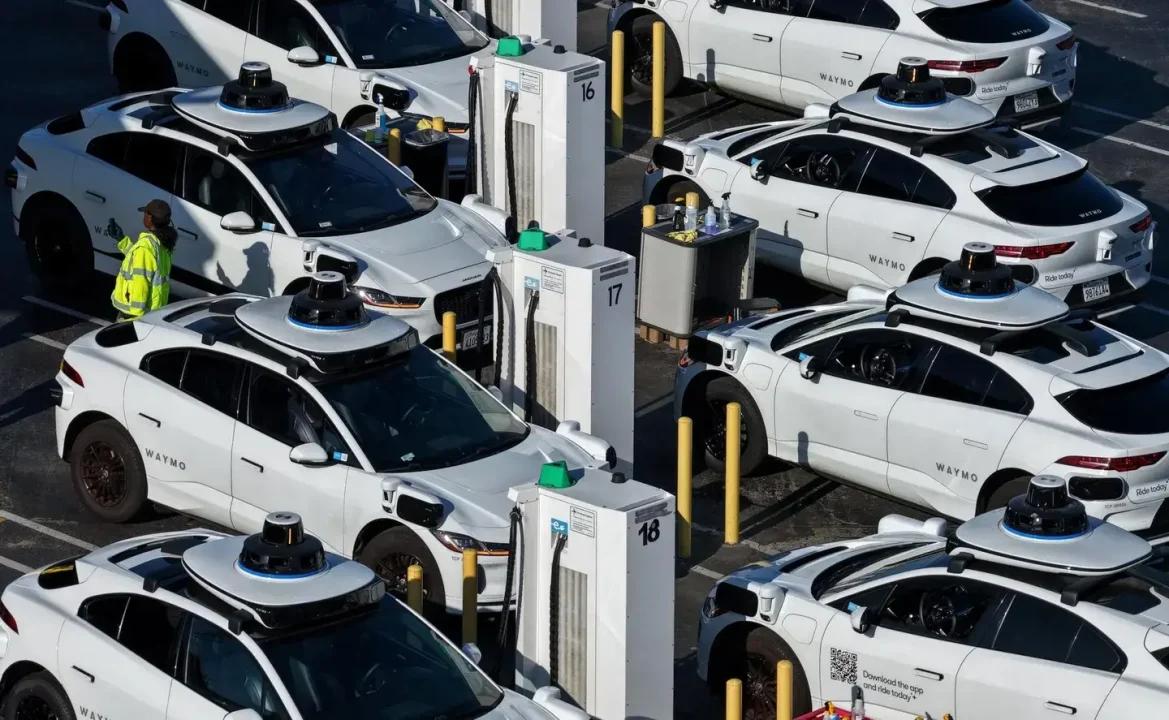
Waymo has completed a $5 billion term loan, its first debt-financing transaction, to support further expansion of its autonomous ride-hailing business in the United States and internationally. PIMCO, Blackstone and Sixth Street led the syndicated lender group, while Goldman Sachs served as sole lead bookrunner. The financing follows Waymo’s $16 billion equity round in February, which valued the Alphabet-controlled company at $126 billion, taking its major announced 2026 fundraising to about $21 billion. Waymo currently serves riders in 15 U.S. markets and is preparing international operations including Tokyo, London and Singapore.
Waymo has secured a $5 billion term loan in its first debt-financing transaction, giving Alphabet’s autonomous-driving company another large pool of capital to expand its driverless ride-hailing operations across the United States and into international markets as the cost of deploying robotaxi fleets, vehicle infrastructure and autonomous-driving technology continues to rise.
The company confirmed Thursday that PIMCO, Blackstone and Sixth Street participated as lead syndicated lenders in the financing, while Capital Group, Loomis Sayles and T. Rowe Price were significant lenders. Other participants included Apollo, Blue Owl, Diameter Capital Partners, Franklin Templeton, Fidelity Management & Research Company, HPS Investment Partners and Oaktree, with Goldman Sachs serving as the sole lead bookrunner.
The transaction marks a significant change in how Waymo is financing its expansion. Until now, the company has relied largely on equity capital from parent company Alphabet and outside investors, including a $16 billion funding round completed in February that valued Waymo at $126 billion after the investment. By adding debt to that funding structure, Waymo is signaling that it increasingly views itself not simply as a technology project requiring repeated equity injections but as a commercial transportation business capable of using multiple forms of capital to finance growth.
Waymo Chief Financial Officer Steve Fieler described the loan as an important step in the company’s evolution into a scaling commercial enterprise, saying the financing would provide greater financial flexibility as Waymo expands its fully autonomous ride-hailing business. The company did not publicly break down precisely how the $5 billion will be allocated among vehicles, depots, technology, international expansion or other operating costs, but said the money would support continued growth across the United States and overseas.
The debt comes only eight months after Waymo raised $16 billion in one of the largest private technology funding rounds of the year. That equity round was led by Dragoneer Investment Group, DST Global and Sequoia Capital, with Alphabet retaining its position as majority investor. Other participants included Andreessen Horowitz, Mubadala Capital, Bessemer Venture Partners, Silver Lake, Tiger Global, T. Rowe Price, CapitalG, Fidelity, GV, Kleiner Perkins, Temasek and several other major investors.
The February transaction valued Waymo at $126 billion on a post-money basis, reflecting growing investor confidence that autonomous ride-hailing may finally be moving from a long research-and-development phase toward a commercially scalable transportation business. Waymo said at the time that it had provided more than 20 million fully autonomous rides over its lifetime and more than tripled its annual ride volume during 2025.
Thursday’s loan raises the amount of major new financing announced by Waymo this year to roughly $21 billion when combined with the earlier equity round. That scale illustrates the capital intensity of autonomous transportation. Building the software that drives the vehicles is only one part of the business. Waymo also needs large fleets of compatible electric vehicles, costly sensor systems, mapping and computing infrastructure, maintenance facilities, charging depots, insurance, operations staff and city-by-city deployment teams.
Unlike a conventional software company, Waymo cannot expand into a new market simply by opening access to an application. Vehicles must physically be produced, equipped with autonomous-driving hardware, tested in each operating environment and maintained in sufficient numbers to provide reliable service. Every new city therefore requires both technology deployment and substantial physical investment.
That helps explain why Waymo is turning to debt even after raising $16 billion in equity earlier this year. Debt financing allows the company to raise additional capital without issuing more ownership stakes at every stage of expansion, while also giving it access to a pool of investors that traditionally finances infrastructure, private credit and large commercial enterprises.
The involvement of firms such as PIMCO, Blackstone and Sixth Street is significant because each manages enormous pools of institutional capital. Their participation indicates that Waymo has reached a point where major credit investors are willing to lend directly against the company’s future business prospects rather than limiting their exposure to equity.
That does not mean the autonomous-vehicle business has become low-risk. Waymo remains in a rapidly evolving industry where regulatory decisions, safety incidents, technological competition and the economics of operating driverless fleets can change quickly. A $5 billion loan also creates repayment and interest obligations that equity financing does not.
The decision to borrow nevertheless suggests that Waymo believes its revenue growth and access to Alphabet’s financial backing give it enough flexibility to support a more conventional capital structure as the business matures.
Alphabet’s continued ownership remains an important part of that equation. Waymo began as Google’s self-driving-car project before becoming a separate subsidiary under Alphabet. The parent company has invested heavily in autonomous-driving technology for more than a decade, absorbing years of research and operating losses while Waymo tested vehicles, built software and worked through regulatory requirements.
The business has now entered a different phase. Waymo currently offers fully autonomous commercial rides in 15 U.S. markets, including the San Francisco Bay Area, Los Angeles, Phoenix, Austin, Atlanta, Miami, Dallas, Denver, Houston, Las Vegas, Nashville, Orlando, San Antonio, San Diego and Tampa. In some markets riders use the Waymo application directly, while in Austin and Atlanta the company operates through Uber.
The company’s U.S. footprint has expanded rapidly during 2026. In September, Waymo began welcoming public riders in Denver, San Diego and Tampa, taking its commercial operations to 14 cities at the time. It subsequently launched another U.S. market, bringing the total to 15 before announcing Thursday’s financing.
Waymo is also preparing for a much broader wave of expansion. Cities listed by the company as future markets include Washington, D.C., New York, Boston, Philadelphia, Chicago, Detroit, Seattle, Portland, Sacramento, Minneapolis, St. Louis, New Orleans, Pittsburgh, Baltimore and Charlotte, among others.
International expansion has become another major part of its strategy. Waymo plans to launch a commercial unmanned ride-hailing service in Tokyo in 2027 through partnerships with Nihon Kotsu and taxi application operator GO. The company began collecting driving data in Tokyo in 2025 and has been operating vehicles there with trained personnel as it adapts its system to Japanese roads, traffic behavior and local regulations.
Waymo has also set out plans for London, where the company intends to seek permission under Britain’s new automated passenger service regulatory system. It has described London as one of its key international markets and said its experience across U.S. cities should allow it to adapt the Waymo Driver to one of Europe’s most complex urban environments.
Singapore is further down the expansion schedule. Waymo announced in September that it is working with Singapore’s Ministry of Transport and Land Transport Authority with the aim of introducing a fully autonomous commercial ride-hailing service there in 2028.
Those projects help explain why Waymo says the $5 billion will be used for both domestic and international expansion rather than a single U.S. rollout.
Each overseas market creates additional costs because autonomous-driving systems must be adapted to different traffic laws, road designs, languages, driving conventions and regulatory structures. Tokyo presents left-hand traffic, dense pedestrian environments and narrow streets. London combines left-hand driving with complex historical road layouts and heavy interaction with buses, bicycles and pedestrians. Singapore has a highly regulated transport system and different requirements for commercial deployment.
Waymo’s technology must prove that it can transfer safely between those environments rather than functioning only in the relatively controlled areas where it was originally developed.
The company argues that years of autonomous driving have given it a significant advantage. In February, Waymo said its vehicles had accumulated 127 million miles of fully autonomous operation and that its data showed a 90 percent reduction in serious injury crashes compared with human-driving benchmarks in comparable environments.
By September, the company said it had surpassed 300 million fully autonomous kilometers and more than 20 million autonomous rides. Waymo has repeatedly used those figures to argue that its system has moved beyond experimental testing into large-scale commercial operation.
Safety remains the central issue for the autonomous-vehicle industry, however, and company-generated comparisons are scrutinized closely by regulators, transportation researchers and competitors. Autonomous systems can eliminate human problems such as fatigue, intoxication and distraction, but they introduce different risks involving software, sensors, unusual road situations and interaction with emergency responders.
Waymo has had to manage recalls and investigations over incidents involving its vehicles, as have other autonomous-driving companies. Regulators including the U.S. National Highway Traffic Safety Administration continue to examine how autonomous vehicles behave in specific road situations and how companies respond to software-related safety problems.
The industry learned how quickly regulatory conditions can change after General Motors’ Cruise subsidiary suffered a severe setback following a 2023 incident in San Francisco in which one of its driverless vehicles dragged a pedestrian who had first been struck by another vehicle. California suspended Cruise’s driverless permits, operations were halted, and GM later sharply reduced its autonomous ride-hailing ambitions.
That episode increased pressure on Waymo to expand cautiously even as demand for robotaxis grows.
Waymo has generally taken a more gradual deployment approach, testing extensively before opening markets to paying riders and expanding service areas in stages. The company has also increased cooperation with emergency services and public agencies as autonomous vehicles become more common on city streets.
Its latest funding round gives it the resources to accelerate that expansion, but speed will still be constrained by regulatory approval and local operating conditions.
Competition is another major factor. Tesla is pursuing its own robotaxi strategy using a fundamentally different technological approach centered more heavily on cameras and artificial intelligence. Amazon-owned Zoox is developing purpose-built autonomous vehicles, while several Chinese companies including Baidu’s Apollo Go and Pony.ai are expanding self-driving services in China and seeking opportunities abroad.
The autonomous-vehicle market therefore increasingly resembles a race not simply to prove that driverless technology works but to demonstrate that it can operate economically at enormous scale.
That economic question remains unresolved.
Removing a human driver can theoretically eliminate one of the largest costs in ride-hailing, but autonomous fleets introduce other expenses that traditional Uber or Lyft drivers largely absorb themselves. Waymo must own or arrange access to vehicles, install expensive sensors and computers, maintain and clean the fleet, operate charging facilities and respond when vehicles require assistance.
The company must eventually demonstrate that revenue from rides exceeds those costs sufficiently to produce a sustainable business.
The introduction of debt makes that requirement more important. Equity investors can wait years for a return and benefit if the company’s valuation rises, but lenders expect contractual payments. Waymo’s transition toward debt financing therefore increases the importance of predictable cash generation as its fleet grows.
The company has not publicly disclosed a detailed profitability timetable or full standalone financial statements, so outsiders still have limited visibility into the economics of each autonomous ride.
Alphabet reports Waymo within its “Other Bets” segment rather than as a separately listed company, making it difficult to isolate revenue, operating expenses and losses associated only with the robotaxi business.
The $126 billion valuation reached in February nevertheless shows that investors are assigning significant value to the possibility that Waymo becomes a dominant transportation platform.
The transportation market is enormous. Ride-hailing alone generates tens of billions of dollars in annual revenue globally, while taxis, private transportation, delivery and eventually autonomous trucking create additional opportunities.
If autonomous technology reduces the cost per mile enough, companies such as Waymo could potentially compete not only with Uber and Lyft but with private car ownership in dense cities.
That is the long-term economic argument behind the extraordinary amount of capital flowing into the sector.
Waymo’s expansion strategy also increasingly includes different vehicle platforms. Its fleet has long relied heavily on modified Jaguar I-PACE electric SUVs, but the company is introducing newer autonomous vehicles designed to lower cost and support larger-scale deployment.
Waymo has begun testing its newest Ojai vehicle platform and has been integrating Hyundai IONIQ 5 vehicles with its sixth-generation autonomous-driving system. Earlier this week it announced that a silver version of Ojai was entering testing and would begin serving riders in San Francisco, Los Angeles and Las Vegas before expanding to more cities.
Reducing the cost of sensors and vehicle integration will be critical to making the business more economical. Earlier generations of autonomous cars relied on highly expensive lidar, radar and computing systems that were practical for research fleets but difficult to justify at mass-market scale.
Waymo says its newer generation of technology uses fewer and more efficient sensors while maintaining the redundancy required for driverless operation.
Vehicle manufacturing capacity is also expanding. Waymo has been increasing production and integration activity at facilities including its plant in Mesa, Arizona, as it prepares to deploy thousands more autonomous vehicles.
That physical expansion is exactly the kind of activity that can absorb billions of dollars quickly.
Fleet size must rise before Waymo can enter more cities, increase ride availability and reduce wait times. Charging capacity must expand alongside the fleet, and each market requires depots where vehicles can be cleaned, serviced and recalibrated.
The $5 billion loan therefore gives Waymo additional flexibility at a moment when its growth strategy is becoming more infrastructure-intensive.
It also arrives during a broader period in which technology companies are increasingly using debt to finance capital-heavy expansion. Artificial intelligence firms, semiconductor companies and data-center operators are borrowing enormous sums because the current generation of technology businesses requires far more physical infrastructure than traditional software ventures.
Waymo fits that pattern in a different form. Its core intellectual property is software and artificial intelligence, but delivering the service requires physical vehicles operating every day on public roads.
Large institutional lenders increasingly appear willing to finance that transition when companies can demonstrate sufficient commercial demand and access to strong corporate backing.
Waymo said the financing would strengthen its balance sheet rather than replace its equity capital. That wording suggests the company wants to preserve cash from the February investment while creating additional capacity to spend aggressively on expansion.
The presence of Goldman Sachs as sole lead bookrunner also indicates the transaction was structured as a major institutional financing rather than a simple bilateral loan.
PIMCO, Blackstone and Sixth Street led the syndicated lender group, while the involvement of firms including Apollo, Oaktree and Blue Owl gives the deal a strong private-credit component.
Private credit has grown rapidly as large asset managers increasingly provide loans that were once dominated by traditional banks. Technology and infrastructure businesses requiring billions of dollars for expansion have become increasingly important borrowers in that market.
For Waymo, those lenders are effectively making a long-term judgment about the commercial viability of autonomous transportation.
The loan does not answer all of the questions around that business model, but it provides Waymo with substantial additional resources to test its strategy at much greater scale.
The most important measure over the next several years will be whether expansion produces economic efficiency rather than simply more vehicles and more cities. A robotaxi network becomes more valuable when higher fleet utilization spreads fixed technology and infrastructure costs across more paying trips.
Density therefore matters. Launching in many cities creates geographic scale, but attracting enough rides within each city will determine whether individual markets become financially attractive.
Partnerships could help. Waymo’s use of Uber in Austin and Atlanta allows it to reach riders through an established ride-hailing platform rather than building demand entirely through its own application. Similar arrangements may become part of future expansion depending on local markets.
International partnerships are also central to the Tokyo strategy, where Nihon Kotsu provides deep knowledge of the local taxi market and GO operates one of Japan’s major mobility platforms.
That model suggests Waymo does not necessarily intend to control every part of the customer relationship in every country.
The company’s financial strategy is showing similar flexibility. Alphabet remains the majority owner and major financial backer, outside investors hold equity, and institutional lenders are now adding debt.
The result is a capital structure increasingly characteristic of a large commercial enterprise rather than a research laboratory.
Thursday’s announcement is therefore more consequential than the addition of another $5 billion to Waymo’s balance sheet. It is evidence of a broader transition in which the company is attempting to finance physical expansion at a scale large enough to establish autonomous ride-hailing as a mainstream transportation service.
The risks remain considerable. Autonomous-driving regulation is still evolving, serious safety incidents could slow deployments, competitors are investing heavily and the long-term profitability of robotaxis has not yet been demonstrated publicly. Debt also adds fixed financial obligations at precisely the moment Waymo is spending aggressively.
At the same time, Waymo enters this expansion phase with a $126 billion valuation, Alphabet’s continued majority backing, a commercial service operating in 15 U.S. markets and plans for Tokyo, London, Singapore and many additional American cities. Those factors help explain why some of the world’s largest investment managers were prepared to participate in the company’s first loan.
The next phase will determine whether the enormous investment behind Waymo can be converted into a financially sustainable transportation network. The $5 billion loan gives the company greater capacity to add vehicles, infrastructure and markets without immediately returning to shareholders for another equity round, but it also raises the standard by which its commercial progress will be judged.
For now, Waymo has secured the financing it says it needs to accelerate expansion, bringing its major new capital raised in 2026 to about $21 billion between debt and equity. The unanswered questions are how quickly that money can translate into larger operating fleets, how successfully the company can enter international cities and whether rapidly rising ride volumes can eventually support the costs of running one of the world’s most ambitious autonomous transportation networks.