
US CONSIDERS ALLOWING MOST CHINESE PHARMACEUTICAL LICENSING DEALS
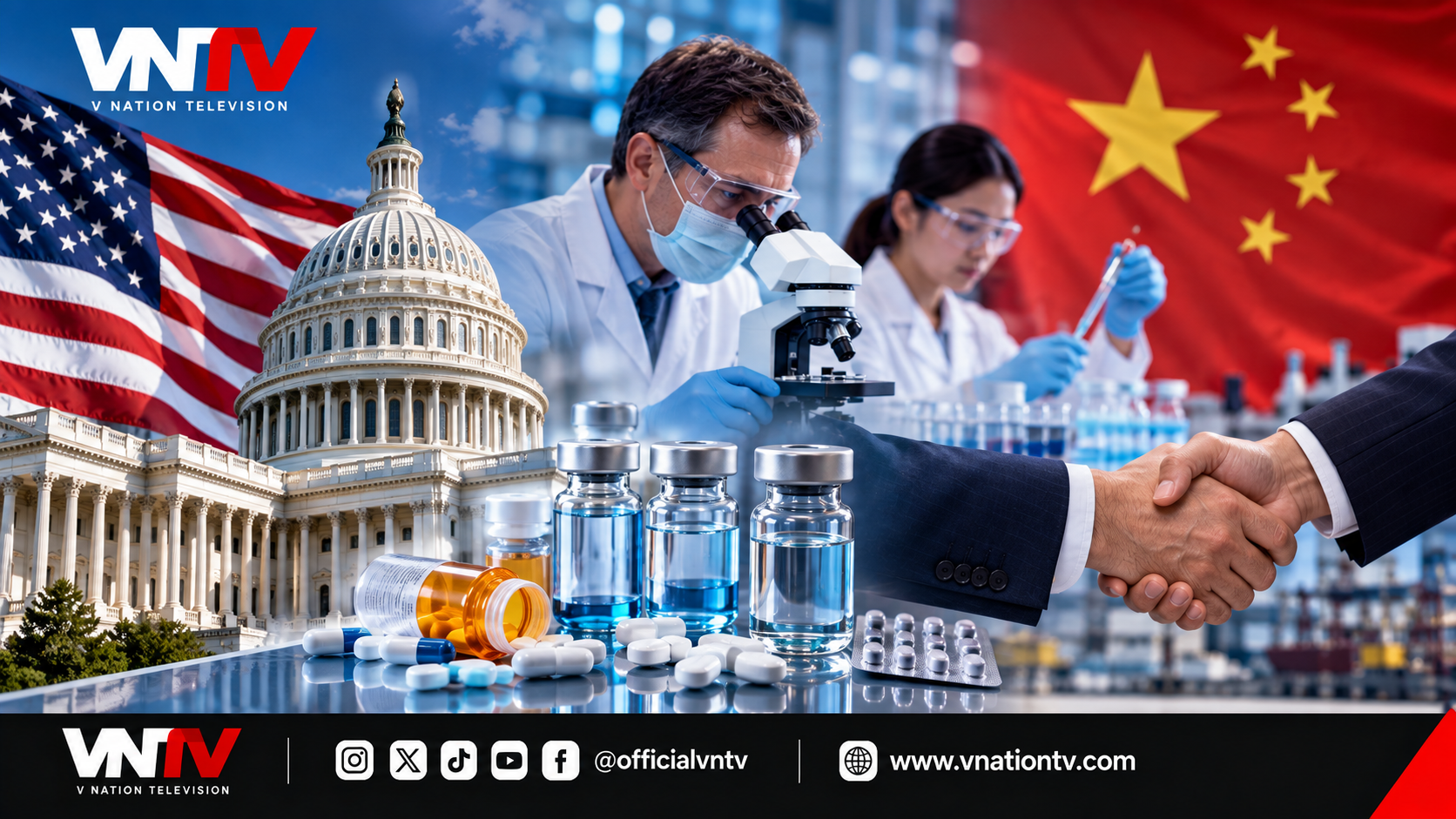
The US Treasury Department is developing rules that could allow American pharmaceutical companies to continue most licensing deals involving Chinese developed drugs. The proposed framework would reportedly focus restrictions on areas involving pathogens and biotechnology that could potentially be weaponized, while allowing most conventional drug licensing partnerships to continue.
The United States is developing new rules that could allow American pharmaceutical companies to continue most licensing agreements involving drugs developed by Chinese companies, even as Washington tightens investment restrictions in other strategic industries.
The rules being drafted by the US Treasury Department are expected to permit American pharmaceutical companies to invest in promising Chinese developed medicines as long as the technologies are not connected to pathogens or biotechnology that could potentially be weaponized.
Three people briefed on the process told Reuters that the proposed framework has not been finalized and remains subject to change.
The approach would represent a less restrictive policy for pharmaceuticals than Washington has adopted toward some other strategically important Chinese industries.
CHINESE DRUGS BECOME IMPORTANT TO US COMPANIES
China has rapidly developed into an important source of new medicines and experimental treatments for major Western pharmaceutical companies.
According to GlobalData figures cited by Reuters, almost half of US deals to license drugs from foreign companies in 2025 involved Chinese firms.
That trend has continued into 2026.
The growing importance of Chinese drug development has led major pharmaceutical companies to warn Washington that broad investment restrictions could prevent American companies from accessing promising new medicines.
Outside licensing deals involving Chinese biotechnology companies were worth about $115 billion last year, according to GlobalData.
BILLIONS OF DOLLARS AT STAKE
Some of the largest pharmaceutical companies have already entered major partnerships with Chinese drug developers.
Bristol Myers Squibb signed a partnership with Jiangsu Hengrui Pharma this year potentially worth up to $15.2 billion.
Pfizer separately announced a collaboration worth up to $10.5 billion with Innovent Biologics covering 12 oncology programmes.
Deals such as these allow Western pharmaceutical companies to acquire rights to promising medicines developed by Chinese biotechnology firms and add them to their drug development pipelines.
The proposed Treasury rules could allow billions of dollars in similar transactions to continue.
MAJOR DRUGMAKERS OPPOSE BROAD RESTRICTIONS
Major pharmaceutical companies including Pfizer have held discussions with Trump administration officials and argued against sweeping restrictions on Chinese drug licensing.
Pfizer chief executive Albert Bourla told Reuters that he had discussed China and national security concerns with Treasury Secretary Scott Bessent, Secretary of State Marco Rubio and representatives of the Department of Health and Human Services.
Bourla argued that licensing medicines developed by Chinese companies should not automatically be considered a national security concern.
The industry's position is that restricting access to Chinese innovation could weaken rather than strengthen the ability of American companies to develop new medicines.
SOME LAWMAKERS WANT TOUGHER RULES
Not everyone in Washington supports the more permissive approach.
Some lawmakers and smaller biotechnology companies argue that allowing large amounts of American investment to flow into Chinese pharmaceutical companies could strengthen China's biotechnology sector at the expense of US competitors.
Republican Representative John Moolenaar and Democratic Representative Debbie Dingell have supported legislation seeking tighter regulation of biotechnology investments, licensing agreements and joint ventures involving Chinese companies.
Supporters of stronger restrictions argue that China's rapid progress in biotechnology could eventually create strategic dependence on Chinese companies for innovative medicines.
Others argue that pharmaceutical research differs significantly from industries such as semiconductors and that broad restrictions could harm American patients and companies by limiting access to new treatments.
RULES HAVE NOT BEEN FINALISED
The Treasury Department and White House declined to comment to Reuters on the proposed framework.
The rules remain under development and could change before they are formally introduced.
Reuters reported that new pharmaceutical investment rules are unlikely to be announced before Chinese President Xi Jinping's expected meeting with President Donald Trump in the United States next week.
The debate highlights the challenge Washington faces as it attempts to restrict Chinese advances in strategically sensitive technologies while maintaining access to a rapidly expanding source of pharmaceutical innovation.
For the global drug industry, the final rules could determine whether the surge in partnerships between American pharmaceutical groups and Chinese biotechnology companies continues largely uninterrupted or faces significantly greater government scrutiny.