
YOU CAN'T SHOOT OUR COLLATERAL INTO SPACE. WALL STREET MOVES TO STOP SPACEX FROM LAUNCHING THE AI CHIPS BEHIND ITS $43 BILLION DEBT DEAL INTO ORBIT
Lenders backing SpaceX's latest $43 billion debt package have tried to bar Elon Musk from launching the advanced AI chips that secure the loans into space. The move ties directly to Musk's plan to build orbital data centres, computing facilities that would run in space instead of on Earth. SpaceX has said it plans to use the chips involved in the deal on Earth. Investors remain worried, though. If the company later decided to send the semiconductors into orbit, lenders would be unable to reclaim and sell them in the event of a default. Collateral only protects a lender if it can be seized, and no court bailiff can repossess a server rack circling the planet. The dispute is a small clause with big meaning. It shows how quickly AI chips have become a major form of borrowing collateral. It also shows how far Musk's space ambitions are pushing the limits of traditional finance, and how much uncertainty still surrounds the future of the infrastructure that powers artificial intelligence.
For centuries, the basic rule of secured lending has been simple. If you borrow money against an asset and fail to pay it back, the lender takes the asset. Banks repossess houses. Finance companies recover cars. Creditors seize factories, ships and aircraft. That rule has never had to deal with collateral that might end up hundreds of kilometers above the Earth.
Now it does. Lenders behind SpaceX's latest $43 billion debt package, which is secured by the company's advanced AI chips, have tried to bar Elon Musk from launching that collateral into space. Their concern is tied to one of Musk's boldest ideas yet: building data centres in orbit.
SpaceX has said it plans to use the chips covered by the debt deal on Earth. But the lenders are not willing to rely on plans alone. They have expressed concern that if the company later decided to send the valuable semiconductors into space, they would have no realistic way to recover and sell them if SpaceX defaulted on its loans. On the ground, a chip is an asset. In orbit, it may be out of reach.
The size of the deal explains why lenders are being so careful. At $43 billion, this is one of the largest debt packages tied to AI hardware ever assembled. The chips underpinning it are worth roughly $40 billion. These are not ordinary computer parts. Advanced AI chips, the kind used to train and run large language models and other artificial intelligence systems, are among the most sought-after products in the global economy. Tech giants have spent hundreds of billions of dollars buying them. Supply has often struggled to keep up with demand. A single high-end chip can cost tens of thousands of dollars, and the largest AI computing clusters use hundreds of thousands of them.
That high value is exactly what makes AI chips attractive as collateral. Over the past few years, a new corner of the financial world has grown around lending against graphics processing units and similar hardware. Cloud computing firms and AI startups have borrowed billions of dollars using their chips as security. The logic is straightforward. If the borrower fails, the lender seizes the chips and sells them to someone else who needs computing power. In a market hungry for AI hardware, buyers should not be hard to find.
The logic only works if the lender can physically get the chips back. That is where Musk's orbital ambitions collide with the fine print.
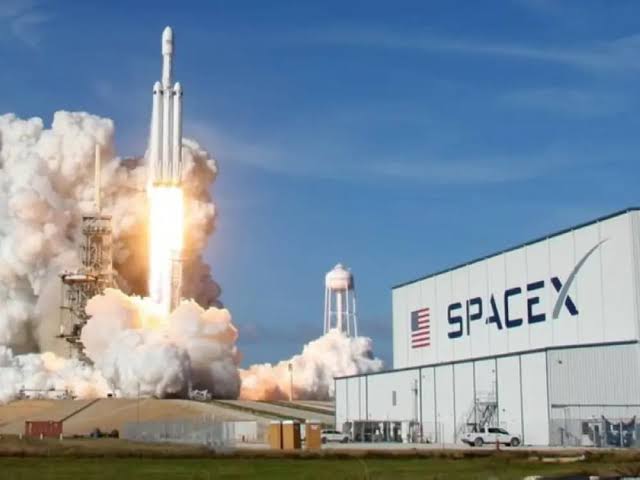
Musk has spent years pushing the idea that space is the next frontier for nearly everything, from internet service to human settlement. Through Starlink, SpaceX already operates the largest satellite network in history, with thousands of satellites delivering internet access to customers around the world, including in Nigeria and many other African countries. Its reusable Falcon 9 rockets have slashed the cost of reaching orbit. Starship, its giant next-generation rocket, is designed to carry far heavier loads at even lower cost per kilogram.
Orbital data centres are the next step in that vision. The idea is to place computing hardware in space, where satellites can draw almost constant solar power and release heat into the cold of space. Supporters argue that this could ease some of the biggest problems facing AI on Earth. Data centres on the ground consume enormous amounts of electricity and water. In many places, power grids are already under strain, and local communities have pushed back against new facilities. Moving some computing into orbit, the argument goes, could unlock almost limitless clean energy and free up land and power on the ground.
Musk is not the only one exploring the idea. Several technology companies and startups have studied or tested the concept of computing in space. But SpaceX has an advantage few rivals can match. It owns the rockets, it runs the launch schedule and it already manages a vast network of satellites. If anyone can make orbital data centres work at scale, many in the industry believe SpaceX has the best chance.
For lenders, that advantage is also the risk. A company with its own rockets does not need anyone's permission to put hardware into orbit. If SpaceX decided its chips would be more valuable in space, it could, in theory, load them onto a launch and send them up. Once there, the collateral would be functionally beyond the reach of creditors. There is no established process for repossessing equipment from orbit. Bringing hardware back down safely would be extremely expensive, if it were possible at all. And chips operating in space are exposed to radiation and harsh conditions that could reduce their life and resale value.
In a default, that could leave lenders holding a claim on assets they cannot touch, cannot inspect and cannot sell. A loan secured by unreachable collateral starts to look a lot like an unsecured loan. That changes the risk entirely, and it changes what lenders would demand in interest and protections.
That is why the lenders have pushed for restrictions. Loan agreements commonly include covenants, legal promises that limit what a borrower can do with the assets securing a loan. A borrower might be barred from selling equipment, moving it to another country or pledging it to a different lender. Here, investors want a covenant that addresses a question few contracts have ever needed to answer: can the borrower launch the collateral off the planet?
The episode may sound almost comic at first. A clause preventing a company from firing its collateral into space reads like something from science fiction. Yet it reflects a serious shift in how finance must adapt to new technology. Contracts are written to manage risk. When a borrower's capabilities change, the contracts have to change too. Lenders have dealt with assets that can move across borders, such as ships and aircraft, for decades. Assets that can leave Earth's jurisdiction entirely are a new challenge.
The dispute also highlights questions about trust and control. SpaceX has said the chips will be used on Earth. For many lenders, that assurance alone is not enough when tens of billions of dollars are at stake. Musk is known for changing course quickly and pursuing ambitious goals that others consider impossible. He has repeatedly surprised investors, regulators and markets. To lenders, a statement of current intent is not the same as a binding promise. They want the restriction in writing.
Critics of Musk may see the lenders' caution as a sign of how unpredictable his empire has become. They point to his habit of moving resources between his companies and making major decisions with little warning. Supporters see it differently. To them, the fact that lenders are drafting rules about space launches shows that Musk's plans are being taken seriously. Nobody writes covenants to stop something they believe could never happen.
Both views reveal something important about the moment. AI has become so central to the world's biggest companies that its hardware now underpins some of the largest financing deals in corporate history. At the same time, the question of where that hardware will live, and who controls it, is far from settled.
The deal also raises wider concerns about the AI investment boom. Huge sums have poured into chips, data centres and power supplies on the belief that demand for AI computing will keep growing for years. Much of that spending has been financed with debt. If the boom continues, lenders will be repaid and the chips will remain valuable. If demand slows or newer chips make current models less useful, the picture becomes harder. AI chips can lose value as more powerful versions arrive. Lenders who rely on them as collateral are betting not just on the borrower, but on the future of the AI market itself.
Adding orbital risk to that equation would make lenders even more nervous. A chip that loses value over time is a manageable problem. A chip that loses value and also sits in orbit, out of reach, is a much bigger one. By trying to keep the collateral on the ground, lenders are protecting themselves against two risks at once.
For Musk's space ambitions, the restriction may not be a major setback. SpaceX could still pursue orbital data centres using hardware that is not tied to this debt package. It could raise separate funding specifically for space-based computing, with terms that reflect the unusual risks. Investors willing to back those projects would know exactly what they were signing up for. In that sense, the lenders' demand may simply help separate two different kinds of bets: a relatively familiar bet on AI computing on Earth and a far riskier bet on computing in space.
Still, the episode offers a glimpse of the hurdles orbital data centres will face. Beyond the engineering challenges of cooling, radiation and maintenance, there are financial and legal questions that have barely been explored. Who insures hardware in orbit? How is it valued? What happens if a satellite carrying billions of dollars of chips fails? How do courts enforce claims on assets in space? International space law offers some guidance on ownership and liability, but it was not designed for a world where companies might use orbiting computers as collateral for loans.
These questions matter far beyond Silicon Valley and Wall Street. AI infrastructure is quickly becoming as important to the global economy as roads, ports and power grids. Countries around the world, including Nigeria, are investing in data centres and digital services as they try to compete in an AI-driven future. Lagos has become one of Africa's growing hubs for data centre investment, with local and international firms building facilities to serve the continent's expanding digital economy. The way the world finances and controls AI hardware will shape who gets access to computing power, how much it costs and where it is located.
If orbital data centres eventually become practical, they could change that map entirely. Computing power might no longer depend on local electricity or land. It might instead depend on access to launch capacity and space-based networks, areas currently dominated by a handful of companies, with SpaceX at the front. That prospect raises its own concerns about concentration of power. A future where much of the world's AI computing runs on infrastructure owned by a single company, operating beyond the easy reach of national regulators, is one many governments may find uncomfortable.
For now, that future remains distant. The chips at the center of this $43 billion deal are, by SpaceX's own account, destined for use on Earth. The lenders want to make sure they stay there. Their demand is a reminder that even the most ambitious visions must eventually pass through the hands of bankers, lawyers and investors who care less about the stars than about getting their money back.
The clash between Musk's ambitions and his lenders' caution captures the tension at the heart of the AI era. On one side is a drive to build faster, bigger and further than anyone has before. On the other is the old financial logic that every loan needs a safety net. Musk wants to take AI to orbit. His lenders want their collateral where they can find it.
Who wins that tug of war could help decide not just the future of SpaceX's finances, but how the world builds and pays for the machines that power artificial intelligence. For the first time, the question is not only how much AI infrastructure is worth, but whether it will stay on the planet at all.