
ZELENSKY SAYS INTELLIGENCE SHOWS RUSSIA IS PREPARING A “MASSIVE ATTACK” ON UKRAINE
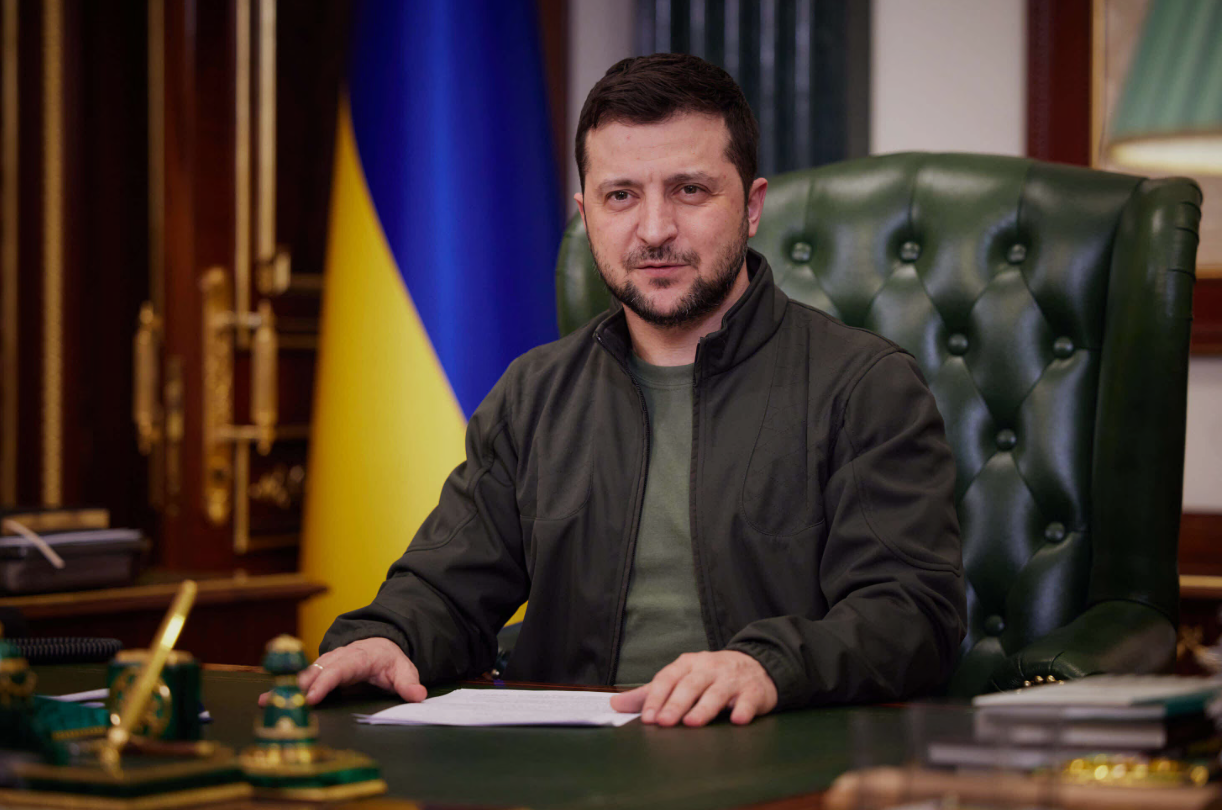
President Volodymyr Zelenskyy says Ukrainian intelligence has detected Russian preparations for another massive attack, prompting Kyiv to strengthen air defenses while urgently seeking additional interceptor missiles and defensive weapons from the United States, Europe and other partner
Ukrainian President Volodymyr Zelenskyy says fresh intelligence indicates that Russia is preparing another large-scale attack on Ukraine, prompting Kyiv to reinforce air defenses, protect critical infrastructure and accelerate efforts to secure additional interceptor missiles and other defensive weapons from its international partners.
Zelenskyy disclosed the warning in his Tuesday evening address on October 6, saying Ukrainian intelligence had provided updated information about Russian preparations for what he described as a “massive attack.” He said the country’s military, air force and other security services were preparing countermeasures, but acknowledged that the strength of Ukraine’s response would depend heavily on the defensive weapons available when the attack comes.
Ukraine has not publicly disclosed the exact intelligence behind the warning, the expected timing of the attack, the number of missiles or drones Russia is believed to be preparing, or the specific Ukrainian regions that may be targeted. Zelenskyy’s statement therefore does not amount to confirmation that a strike will occur at a particular hour or against a particular city, but it reflects the level of concern inside Kyiv as Russia continues to build and deploy large numbers of long-range missiles and attack drones against Ukrainian territory.
Zelenskyy said Ukrainian forces were ready to respond within the limits of the defensive systems currently available to them. He made clear, however, that Kyiv continues to face shortages in some of the weapons needed to intercept Russia’s most dangerous missiles, particularly ballistic missiles, and used the warning to make another direct appeal to the United States, European governments and other countries capable of supplying Ukraine with advanced air-defense ammunition.
“A great deal depends on our partners, on every leader and every country in the world that has the defensive capabilities we need and can provide them to us,” Zelenskyy said. He added that political will would be particularly important in the United States, Europe and among Ukraine’s other partners as Kyiv attempts to prepare for another possible wave of Russian strikes.
The appeal comes as Ukraine tries to strengthen several layers of its air-defense network at the same time. Kyiv has been sourcing ammunition for F-16 fighter jets, expanding the use of interceptor drones and electronic warfare systems, and seeking additional missiles for ground-based air-defense platforms. The most difficult problem remains protection against ballistic missiles, which travel at extremely high speeds and give defenders far less time to detect, track and intercept them than slower drones or many cruise missiles.
Ukraine has repeatedly said that the American-made Patriot system remains one of its most important defenses against Russian ballistic missiles. The country possesses Patriot batteries supplied by Western partners, but the number of interceptors available for those systems has become a persistent concern as Russia increases the frequency of ballistic attacks and Ukraine consumes expensive missiles defending major cities, power facilities and other strategic targets.
Zelenskyy has spent much of the recent period pressing allies for additional Patriot interceptors and alternative systems that could reduce the pressure on existing batteries. Ukrainian officials have argued that producing or purchasing enough missiles has become as important as obtaining the launch systems themselves because an air-defense battery without a sufficient stock of interceptors cannot provide sustained protection during repeated attacks.
The latest warning comes after a period of intensified Russian aerial operations against Ukraine. Russian forces have continued to strike cities, energy infrastructure, transport routes and Black Sea facilities using combinations of ballistic missiles, cruise missiles and several types of attack drones. Ukraine has responded by expanding its own long-range strike campaign against targets inside Russia, including oil refineries, fuel storage facilities and other sites Kyiv says support Moscow’s war effort.
That exchange has become increasingly large in scale. On Tuesday, Russian authorities said their air defenses had intercepted nearly 900 Ukrainian drones over different Russian regions, occupied Crimea and the Sea of Azov, including hundreds directed toward the Moscow region. Ukrainian authorities do not routinely confirm every individual operation inside Russia, and claims by both sides about the number of drones launched or intercepted are often difficult to independently verify while attacks are still unfolding.
The scale of the reported Ukrainian operation demonstrates how rapidly drone warfare has expanded since Russia launched its full-scale invasion in February 2022. What began with comparatively limited numbers of unmanned aircraft has evolved into campaigns involving hundreds of drones over a single night, forcing both countries to invest heavily in radar systems, electronic warfare, fighter aircraft, mobile interception teams and increasingly specialized anti-drone weapons.
Russia retains a major advantage in long-range missile capabilities. Ukrainian Foreign Minister Andrii Sybiha said recently that Kyiv estimates Moscow has accumulated hundreds of ballistic missiles while maintaining the ability to manufacture substantial numbers each month. Those figures have not been independently verified in full, but Ukrainian and Western officials have repeatedly warned that Russia continues to expand production of missiles and attack drones despite years of sanctions targeting its defense industry.
The Russian military has also changed the way it conducts large aerial attacks. Instead of relying on one type of weapon, Moscow has increasingly used mixed strike packages containing large numbers of drones alongside cruise and ballistic missiles. The drones can force Ukrainian air defenses to reveal their positions, consume ammunition and divide attention before faster and more destructive missiles arrive. Decoy drones may also be included to complicate identification and overwhelm radar coverage.
Ukraine has adapted by building a layered defense system in which different weapons are assigned to different threats. Electronic warfare can disrupt some drones without requiring a missile launch. Mobile teams using machine guns and short-range weapons can engage slower unmanned aircraft. Fighter jets can intercept other targets, while advanced surface-to-air systems are preserved for threats that cannot be stopped by cheaper means.
Zelenskyy said Ukraine is increasing the electronic warfare component used to protect critical infrastructure, noting that such systems are already responsible for neutralizing a significant number of Russian Shahed-type attack drones. The government has also given additional instructions to weapons manufacturers, the Defense Ministry and the Armed Forces to expand protection around infrastructure considered particularly important.
That infrastructure is becoming increasingly important as colder weather approaches. Russia has repeatedly targeted Ukraine’s power system during the war, striking generating plants, substations, transmission infrastructure and other energy facilities in an effort to reduce electricity and heating supplies. Ukraine has repaired much of the damage after previous attacks, but repeated strikes force engineers to rebuild the same networks while trying to create redundancy before winter.
Kyiv expects energy infrastructure to remain one of Russia’s principal targets. Ukrainian officials have accused Moscow of attempting to make civilian life more difficult by destroying electricity, heating, water and transport systems far from the battlefield. Russia has said many of the facilities it attacks support Ukrainian military operations and has described its strikes as legitimate attacks on infrastructure connected to the war effort. Civilian areas have repeatedly been damaged during those operations, and numerous civilians have been killed or wounded.
Transport infrastructure has also come under heavier pressure. Russian forces have recently targeted bridges and logistics routes in several parts of Ukraine, including infrastructure around Kyiv and Zaporizhzhia. Ukrainian officials view those attacks as part of a wider effort to complicate the movement of weapons, troops and commercial goods while increasing pressure on civilian communities.
The Black Sea remains another major area of confrontation. Russia has continued attacking Ukrainian ports and shipping infrastructure, while Ukraine has worked to maintain commercial routes needed to export grain and other products. Recent Russian strikes have hit facilities in the Odesa region, and Ukrainian authorities have reported attacks involving civilian commercial vessels operating in the Black Sea.
The expansion of those attacks means Ukraine must defend far more than the front line. Air-defense systems are required around Kyiv and other large cities, energy facilities, military bases, ports, logistics centers and strategically important industrial sites. Ukraine does not possess enough advanced systems to provide the same level of protection everywhere at once, forcing military planners to make difficult decisions about which locations receive the strongest defenses.
That is the problem Zelenskyy is highlighting when he says Ukraine can respond only to the extent permitted by the weapons available. Kyiv has developed new methods for destroying drones and has expanded domestic production of interceptors, but some threats still require expensive Western systems that Ukraine cannot manufacture in sufficient numbers on its own.
Ballistic missiles remain the clearest example. Their speed and trajectory make them considerably more difficult to intercept than the Iranian-designed Shahed drones Russia has used extensively during the war. Ukraine says Patriot missiles have successfully intercepted Russian ballistic weapons on numerous occasions, but each defensive launch consumes ammunition that can be difficult and costly to replace.
The United States therefore remains central to Ukraine’s ability to maintain that layer of defense. European countries have contributed money, systems and missiles, but Washington continues to play an important role in the production and availability of Patriot ammunition. Zelenskyy has repeatedly tried to turn that technical reality into a political argument, telling allied governments that having air-defense systems somewhere in Western inventories provides little protection to Ukrainian civilians unless governments are willing to release the missiles for use.
His appeal on Tuesday followed several weeks of intensive diplomacy focused on air defense. Ukraine has held discussions with the United States, NATO and European governments about additional Patriot missiles, fighter aircraft ammunition and new systems intended to provide cheaper methods of destroying drones. Kyiv has also been trying to increase its own production because Ukrainian officials increasingly acknowledge that the country cannot build its long-term defense around the assumption that foreign supplies will always arrive in sufficient quantities.
That has led to greater investment in interceptor drones and electronic warfare. Using an expensive surface-to-air missile to destroy a comparatively cheap attack drone is financially difficult to sustain when Russia can launch hundreds of unmanned aircraft in a single operation. Ukraine is therefore trying to reserve sophisticated missiles for the threats that truly require them while using cheaper domestic technologies against drones.
Fighter aircraft are also becoming more important. Ukraine says F-16s have proven effective against some of the faster drones now appearing in Russian attacks, and Kyiv has been searching internationally for additional ammunition for those aircraft. Zelenskyy said this week that packages of F-16 ammunition were already on their way to Ukraine and that more deliveries were expected.
Ukraine is also expanding cooperation with France. Zelenskyy said Ukrainian pilots are beginning training on Rafale fighter aircraft, describing the arrangement as another step toward strengthening the country’s future air-defense capability. Training does not mean Rafales are already operating over Ukraine, but the move suggests Kyiv is planning a more diverse combat aviation fleet as it looks beyond the immediate stage of the war.
The warning of another massive Russian strike also comes as the conflict approaches five years since Moscow launched its full-scale invasion. Neither side has achieved the decisive military breakthrough that would bring the war to an end, and aerial warfare has become an increasingly important way for both countries to impose costs far beyond the front.
Russia has used its larger missile arsenal and expanding drone production to attack targets across Ukraine, while Kyiv has developed long-range drones capable of reaching Moscow, oil facilities and industrial targets hundreds or even thousands of kilometers from Ukrainian territory. Those attacks have turned areas once considered far from the battlefield into part of the operational theater.
Ukraine says attacks on Russian refineries and fuel infrastructure are intended to reduce the revenue and supplies available to Moscow’s military. Russian officials have described many Ukrainian strikes as terrorist attacks and have promised retaliation. Moscow has also accused Western countries of enabling Ukrainian strikes by supplying weapons, intelligence and other forms of military assistance.
The Kremlin has not publicly confirmed Zelenskyy’s latest intelligence claim that Russia is preparing a specific massive attack. Russia generally does not announce the precise timing of major missile and drone strikes in advance, and it frequently describes large attacks on Ukraine as operations against military or military-linked targets.
For Kyiv, that uncertainty is part of the problem. Intelligence may indicate that missiles, aircraft and drones are being prepared without revealing precisely when they will be launched or which routes they will take. Ukraine must therefore place air-defense crews on alert, move equipment where necessary, strengthen infrastructure protection and prepare emergency services without knowing whether the anticipated attack will come immediately or after a longer delay.
Zelenskyy has previously issued similar public warnings when Ukrainian intelligence indicated that Russia was preparing large-scale attacks. Those announcements serve several purposes. They alert civilians to take air-raid warnings seriously, place pressure on allied governments to accelerate weapons deliveries and signal to Moscow that Ukrainian intelligence is monitoring preparations.
The public warning can also complicate Russian planning if military commanders believe Ukraine has already identified elements of an operation. Air-defense systems can be repositioned, aircraft dispersed and critical equipment moved before an attack begins. At the same time, Ukraine cannot protect every potential target, and moving systems too aggressively based on incomplete intelligence can create vulnerabilities elsewhere.
This is why the details Zelenskyy did not provide are as important as those he did. He did not publicly identify the intelligence source, disclose a target list or announce the composition of the expected Russian strike. Releasing that information could compromise intelligence collection or reveal how much Ukraine knows about Russian preparations.
His message instead focused on readiness and the shortage of defensive weapons. Ukrainian forces, he said, are preparing to respond, but the country’s capacity to limit damage continues to depend partly on decisions taken in Washington and European capitals.
That dependence has shaped much of Ukraine’s wartime diplomacy. Kyiv can manufacture growing numbers of drones, artillery systems and other weapons domestically, but the most sophisticated air-defense technologies remain tied to foreign production lines and government export decisions. Ukraine has pushed allies to move faster because Russian production does not stop while Western governments debate individual weapons packages.
The result is a constant race between Russia’s ability to generate new missiles and drones and Ukraine’s ability to obtain enough interceptors to destroy them. Every large Russian attack consumes Ukrainian ammunition. Every delay in replenishment reduces the margin available for the next wave.
The challenge becomes more serious when Russia combines large numbers of inexpensive drones with a smaller number of ballistic and cruise missiles. Defenders must determine which objects are real threats, which may be decoys and which weapon should be used against each incoming target. A mistake can mean wasting an expensive interceptor on a decoy or allowing a more dangerous missile through.
Russia has continued refining those tactics throughout the war. Ukraine has done the same with its defenses, developing mobile teams, improving electronic warfare and integrating Western systems into a network that combines equipment produced by several different countries.
No air-defense network, however, provides complete protection.
Even during attacks in which Ukraine reports intercepting most incoming weapons, missiles and drones can still reach their targets or falling debris can cause deaths, injuries and damage. That is why Zelenskyy’s warning is also directed at civilians. Ukrainian authorities routinely urge residents to respond to air-raid alerts, move away from windows and use shelters rather than assuming that air defenses will stop every incoming weapon.
The possibility of another massive attack is particularly serious because Russia has shown the ability to launch several waves over an extended period. Defenders can be forced to remain active for hours while new groups of drones enter Ukrainian airspace from different directions and missiles are launched later in the operation.
Emergency services then face a second challenge. Fires, damaged buildings and disrupted electricity networks may need immediate attention while the threat of further strikes continues. Russia has been accused by Ukrainian officials of carrying out repeated attacks on the same areas during some operations, increasing the risks faced by rescue workers.
The coming winter adds another layer of urgency. Large-scale damage to energy infrastructure can have consequences long after an individual strike ends, particularly during freezing weather. Ukraine has spent months preparing backup generation, repairing networks and seeking equipment from partners, but a sustained Russian campaign could again force authorities to introduce emergency power cuts.
For Moscow, attacks on energy and logistics can support military objectives without requiring a rapid breakthrough on the battlefield. Damaging railways and bridges can complicate Ukrainian resupply, while pressure on electricity and heating systems can force Kyiv to divert resources away from military priorities.
Ukraine is attempting to impose similar pressure inside Russia through its long-range drone campaign. Strikes on refineries, storage sites and industrial facilities are intended to force Moscow to spend more resources defending its own territory and repairing damaged infrastructure.
The increasing reach of both sides has made the conflict more geographically dispersed even as the main ground fighting remains concentrated along a long front in eastern and southern Ukraine. Large-scale drone operations can now affect Moscow, Kyiv, Black Sea ports and industrial areas far from the trenches within the same news cycle.
Against that background, Zelenskyy’s latest warning is significant not because it confirms where the next attack will land, but because it shows how seriously Ukrainian authorities view the intelligence they have received. Air-defense deployments are being reviewed, additional protection is being prepared for critical facilities and Kyiv is once again asking allies to convert promises of support into missiles that can be used immediately.
The warning also places renewed attention on the relationship between military preparedness and political decisions outside Ukraine. A Patriot interceptor used over Kyiv or another Ukrainian city begins with a production line, a government inventory and a decision by an allied country to make it available. Zelenskyy’s argument is that those decisions now have direct consequences for Ukraine’s ability to limit casualties if Russia launches the large attack his intelligence services are anticipating.
Ukraine has not said that every element needed to defend against such an operation is already in place. The government’s position is more measured. Its forces are preparing, some additional ammunition is arriving and domestic defenses are improving, but important gaps remain, particularly against ballistic missiles.
That leaves the country entering another period of heightened alert while the precise scale and timing of Russia’s preparations remain unknown. Ukrainian authorities have not publicly provided enough information to determine whether the anticipated attack would exceed previous Russian missile and drone operations, and Moscow has not confirmed that it is preparing the strike described by Zelenskyy.
What has been confirmed is that Ukraine’s leadership has received updated intelligence serious enough to trigger additional preparations and another direct appeal for international assistance. Zelenskyy’s warning therefore combines two realities that have defined much of the war: Ukraine has built a substantially more sophisticated air-defense network than it possessed at the beginning of the invasion, but its ability to withstand the largest Russian attacks still depends partly on whether partners can keep that network supplied with the weapons it needs.
As Ukrainian forces prepare for the possibility of another major wave of missiles and drones, the immediate focus will be on protecting cities, energy facilities, transport infrastructure and other critical sites while maintaining enough interceptor ammunition for repeated attacks. Zelenskyy has not announced when Russia might act, but his government is treating the intelligence as an operational warning rather than a general assessment, and Ukraine’s next test will be whether those preparations and the weapons available from its partners are sufficient if the anticipated attack materializes.