BANK OF GHANA RESEARCHERS PROPOSE AI SYSTEM TO TRACK INFLATION IN REAL TIME
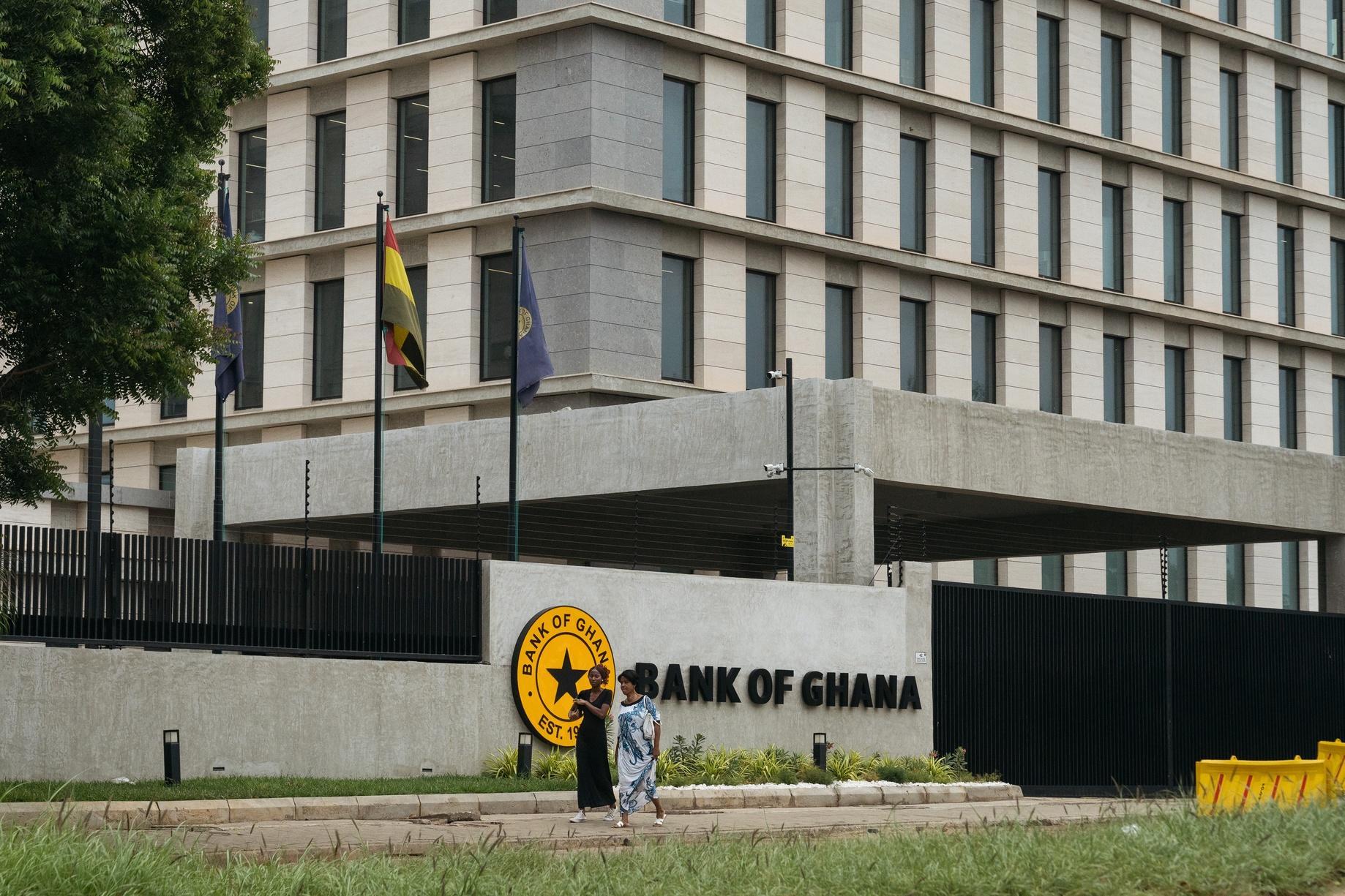
Bank of Ghana researchers Francis Mawuli Abude, Collins Kwesi Appiah and Julius B. Dasah have proposed an artificial intelligence and Big Data framework called e-Inflation to provide faster estimates of consumer-price movements. The experimental system collected roughly 500,000 price observations from 120 websites across the same 307-item consumer basket used in Ghana’s official CPI and closely tracked official headline, food and non-food inflation between May 2021 and December 2023. The researchers say the framework could provide weekly or near-real-time information for monetary-policy analysis, but the Bank of Ghana stresses that the paper is research in progress and e-Inflation has not been adopted as Ghana’s official inflation-measurement system.
Researchers at the Bank of Ghana have proposed a new artificial intelligence-powered framework capable of tracking consumer prices more frequently and estimating inflation before Ghana’s official monthly figures are released, potentially giving monetary-policy authorities an earlier indication of changes in food prices, non-food prices and the broader cost of living. The proposed system, known as e-Inflation, combines automated online price collection, Big Data techniques and artificial intelligence to construct alternative Consumer Price Index estimates using hundreds of thousands of price observations gathered from Ghanaian websites.
The framework is outlined in a Bank of Ghana working paper titled Measuring Inflation in Ghana: Evidence from Big Data and Artificial Intelligence Techniques, published on October 23, 2026, and authored by Francis Mawuli Abude, Collins Kwesi Appiah and Julius B. Dasah. The researchers argue that conventional inflation statistics, while essential and methodologically established, inevitably arrive with a delay because price information must first be collected, verified, processed, weighted and analysed before the Ghana Statistical Service can publish the official Consumer Price Index and inflation rate.
That delay creates a challenge for central banks because monetary-policy decisions often have to respond to inflationary pressures before final official statistics for the current period are available. The researchers therefore designed e-Inflation as a potential nowcasting tool that could give policymakers a near-real-time picture of price movements while they wait for the Ghana Statistical Service’s official releases.
The proposal should not be misunderstood as an announcement that the Bank of Ghana is replacing the Ghana Statistical Service or changing Ghana’s official method of calculating inflation. The Bank of Ghana explicitly states that its working papers contain research in progress, represent the views of the individual authors and do not necessarily reflect the official position of the central bank, its Board or management. There is also no announced implementation date for e-Inflation as an official national measurement system.
Instead, the research examines whether digital prices collected automatically from the internet can complement established statistical methods and provide useful early-warning information for monetary policymakers. The authors argue that rapid technological change, expanding electronic commerce and the increasing availability of digital price information create opportunities for statistical institutions and central banks to measure economic conditions more frequently than was previously possible.
Under the proposed framework, robotic and automated systems collect prices from selected online retailers, institutions and commercial websites. Those observations are then stored, cleaned, categorised and processed to construct consumer price indices corresponding to Ghana’s official expenditure basket. The researchers separately calculate headline inflation, food inflation and non-food inflation, allowing them to compare the digital indicators with the corresponding official Ghana Statistical Service series.
The scale of the experiment is substantial. According to the research, e-Inflation collected information from approximately 120 websites and generated around 500,000 individual price observations. Those observations covered the same 307-item consumer basket used in Ghana’s official CPI framework, allowing the researchers to conduct a direct comparison between their digitally generated inflation measures and official inflation outcomes.
The study examined the period from May 2021 to December 2023, which included both relatively stable periods and episodes of intense economic disruption. Ghana experienced sharp currency depreciation, high inflation, fiscal stress and major changes in food and fuel prices during portions of that period, giving the researchers an opportunity to test whether the AI-supported system could track inflation during difficult economic conditions rather than only when prices were relatively stable.
The results reported in the paper were striking. The researchers found a correlation of 0.9941 between e-Inflation’s headline inflation estimate and the official headline inflation rate over the test period. Food inflation produced a correlation of 0.9836 with official figures, while non-food inflation generated a correlation of 0.9944.
A correlation close to one indicates that the two series moved very closely together over the period studied. In practical terms, the researchers found that when official inflation accelerated or slowed, e-Inflation generally detected a very similar direction and pattern.
The authors also examined the average differences between the two systems. They reported mean deviations of approximately 0.3684 percentage points for headline inflation, 0.6909 percentage points for food inflation and 0.1375 percentage points for non-food inflation. They interpreted those differences as evidence that the automated framework could provide a reasonably accurate indication of inflation before official figures became available.
Those findings do not mean that e-Inflation perfectly reproduced every official monthly inflation rate or that conventional CPI collection has become unnecessary. The Ghana Statistical Service’s official inflation framework remains based on established statistical procedures designed to capture prices across different geographical areas, market types and consumer groups, including many transactions that may never appear online.
The researchers instead present e-Inflation as a complementary indicator. Its major advantage is speed. Unlike traditional collection systems that require large teams of price collectors to visit markets and outlets, an automated digital platform can retrieve updated information repeatedly and at relatively low marginal cost once the necessary infrastructure has been created.
The authors say e-Inflation is capable of collecting price information weekly, providing policymakers with substantially more frequent observations than the conventional monthly inflation cycle. That could allow the Bank of Ghana to detect emerging price pressure earlier, particularly during periods when exchange-rate movements, fuel prices or supply disruptions cause prices to change rapidly.
This has direct implications for monetary policy. The Bank of Ghana’s Monetary Policy Committee sets the central bank’s policy rate partly by assessing current and expected inflation conditions. Because interest-rate decisions affect borrowing, investment, credit creation and economic growth, policymakers benefit from having the most up-to-date information possible when determining whether monetary conditions should be tightened, maintained or eased.
Official CPI data necessarily describe a period that has already ended. A monetary-policy committee meeting in the middle of a month may therefore have official inflation information for the previous month but still need to estimate what prices are doing in the current period. Economists refer to this process as nowcasting.
Central banks already use econometric models, financial-market indicators, commodity prices, exchange-rate movements, surveys and other variables to generate such estimates. Machine learning and Big Data provide additional tools capable of processing far larger volumes of information than traditional models could practically handle.
The Bank of Ghana researchers argue that an automated price system could improve that process by measuring the variable policymakers are ultimately trying to understand directly: the actual prices consumers are seeing.
The framework could become particularly useful during periods of sudden economic stress. When the cedi depreciates sharply, for example, the prices of imported goods, fuel, machinery and products containing imported components can adjust rapidly. Waiting several weeks for official statistics may leave policymakers with an incomplete picture during an important decision-making window.
The same problem can occur during global commodity shocks, natural disasters, public-health emergencies and disruptions to transportation or food supply. The researchers specifically point to the COVID-19 period as an example of how extraordinary circumstances can make conventional data collection more difficult while simultaneously increasing the need for timely economic information.
Digital price collection can continue remotely even when physical access to shops and markets becomes difficult, provided retailers maintain accurate online information. This gives the system potential resilience during circumstances when normal statistical operations may be disrupted.
The concept is part of a broader international trend. Central banks and statistical agencies around the world are increasingly exploring web scraping, scanner data, electronic payments information, satellite imagery and machine-learning techniques as supplements to traditional economic statistics. These tools can allow analysts to observe economic changes faster and at much finer levels of detail.
Big Data does not automatically produce better statistics, however. Large quantities of information can still be biased, incomplete or unrepresentative. The reliability of e-Inflation therefore depends not merely on how many prices it collects but on whether those prices accurately represent what Ghanaian consumers are actually paying.
The researchers acknowledge this as one of the central limitations of the study. A price advertised on a retailer’s website may not always be identical to the price charged in a physical shop. Some businesses offer online discounts, delivery-related pricing or promotions that differ from in-store prices, while many traditional market sellers do not publish prices online at all.
That creates a potential representativeness problem in a country where significant portions of consumer spending still occur through informal markets and physical retail channels rather than e-commerce websites.
The research team therefore conducted a separate assessment comparing online and physical prices. According to the paper, the results indicated that the two sets of prices were statistically similar enough for the researchers to consider the electronic data useful for inflation estimation.
Even so, that relationship would need to be monitored continually if e-Inflation were ever used operationally. Ghana’s retail environment is changing rapidly, and differences between digital and physical markets could emerge over time or vary significantly between individual product categories.
Another challenge is the freshness of the online data themselves. A website may display a price without updating it immediately when the price changes in a physical store. If automated software repeatedly collects stale information, the resulting inflation estimate could lag rather than lead actual market conditions.
The authors therefore warn that the effectiveness of e-Inflation depends heavily on selected businesses maintaining current pricing information on their websites.
Automated data collection also faces technical obstacles. Some websites actively block web-scraping software, restrict automated requests or frequently change the structure of their pages, requiring programmers to update data-collection systems. Others may remove products or alter descriptions, complicating efforts to compare like-for-like items over time.
Artificial intelligence can help classify products and recognise changes, but human oversight remains necessary to identify errors, unusual observations and shifts in product quality.
Inflation measurement is more complicated than simply comparing today’s price with yesterday’s price. Statistical agencies must also determine what consumers purchase, how much weight each item should receive within the index, whether the quality of products has changed and how to treat goods that disappear or are replaced.
The Ghana Statistical Service’s CPI methodology is therefore designed to measure changes in the cost of a representative consumer basket rather than merely calculate an average of available prices. Any automated alternative would need to reproduce those principles carefully if it were ever expected to perform an official statistical role.
The Bank of Ghana researchers attempt to address this by matching the e-Inflation basket to the same 307 items represented in the official CPI. This strengthens the comparison because the digital index is not based on an arbitrary selection of online products.
The paper says Ghana’s traditional inflation process draws on approximately 47,877 price observations collected from 57 market centres. Those observations are designed to provide geographical and market representation that online data alone may struggle to reproduce.
The comparison therefore illustrates the different strengths of the two methods. Traditional statistical collection offers carefully designed coverage and strong methodological control, while electronic collection offers speed, frequency and extremely large volumes of data.
Combining the two could potentially produce better information than relying exclusively on either source. Official CPI data could remain the authoritative national measure, while e-Inflation could function as a supplementary nowcast that gives central bankers an earlier indication of where the official rate may be heading.
That appears to be the most realistic application of the researchers’ proposal. There is no suggestion in the working paper that private websites should determine Ghana’s official inflation rate or that the Ghana Statistical Service should be removed from the process.
Instead, the researchers recommend that central banks and national statistical institutions consider how digital information can complement existing methods.
The project also reveals that artificial intelligence research inside the Bank of Ghana is not entirely new. According to the working paper, the institution began exploring Big Data and AI approaches to inflation measurement in May 2021.
The research involved identifying non-traditional sources of consumer-price information, developing automated systems for collecting and storing data and comparing alternative price indices with official inflation figures.
The October 2026 publication therefore presents the results of several years of experimentation rather than a system conceived only recently.
The authors describe the work as the Bank’s first attempt to integrate artificial-intelligence-powered techniques directly into research supporting monetary-policy formulation.
That distinction is significant. Central banks are often cautious about using new technology in policy decisions because errors can have economy-wide consequences. Publishing the research first allows economists, statisticians and technology specialists to examine the methodology before any operational decision is considered.
Independent scrutiny would be especially important because an inflation estimate can influence expectations throughout the economy. Businesses use inflation information when setting prices and wages, investors use it when deciding where to place capital, and households pay close attention to whether the reported rate matches their lived experience.
If an AI system produced significantly different results from the official CPI, policymakers would need to understand why before relying on it.
The system would also require clear governance rules. Automated data collection may involve commercial websites whose terms of service, data structures and accessibility can change. Statistical authorities would need reliable and lawful access arrangements if digital price information became important to national economic analysis.
Data security would be another consideration. Although publicly displayed product prices generally do not constitute sensitive personal information, the infrastructure used to collect and analyse large economic datasets would still need protection against manipulation or cyberattack.
A malicious actor capable of corrupting the underlying data could theoretically distort the resulting estimates, particularly if policymakers relied heavily on automated indicators. Robust validation would therefore be necessary.
Transparency would matter as well. Ghana’s official inflation methodology is published so researchers and the public can understand how the number is calculated. An AI-based system would need comparable transparency if it played an important policy role.
Machine-learning systems can sometimes become difficult to interpret when increasingly complex algorithms are used. Policymakers would need to ensure that they understand why an estimate changed rather than simply accepting an output because a computer model generated it.
The proposed e-Inflation framework appears less vulnerable to that problem than some AI applications because the core data consist of observable prices and the objective is to reproduce known CPI methodology. Artificial intelligence is used largely to support data collection, classification and processing rather than making an entirely opaque prediction from unrelated variables.
The research also has possible applications beyond inflation. The authors recommend exploring whether similar Big Data and artificial-intelligence methods could support measurement of other economic indicators, including gross domestic product and unemployment.
Those areas present even greater challenges because economic output and employment cannot be observed as easily through online product prices. However, digital payments, job advertisements, company information and other electronic records may provide useful supplementary indicators.
Ghana could potentially benefit substantially from more timely economic data. Official statistics frequently involve unavoidable delays because collecting nationwide information is expensive and time-consuming. Automated digital systems could help policymakers identify emerging trends before conventional surveys are complete.
This does not mean statistical jobs disappear. On the contrary, more digital data can increase the need for statisticians, economists and data scientists capable of determining which information is reliable and how it should be interpreted.
Human judgment remains essential because economic data are shaped by context. A sudden drop in an online product price, for example, may represent genuine deflation, a temporary promotion, clearance of old inventory or a data-entry error. Software can flag the observation, but analysts may still need to determine its meaning.
The proposal therefore fits within the broader evolution of central banking rather than replacing economists with artificial intelligence.
The Bank of Ghana has been investing more heavily in data infrastructure and digital-finance regulation as Ghana’s economy becomes increasingly technology-driven. Mobile money, electronic payments, digital banking and cryptocurrency have all created new sources of financial information that did not exist at meaningful scale a generation ago.
Harnessing those data could improve economic surveillance if privacy, security and methodological standards are maintained.
Inflation is particularly suitable for this kind of experimentation because price changes are observable and frequent. A supermarket can alter the price of rice or cooking oil several times in a month, whereas the official CPI system ultimately condenses those movements into a monthly statistical release.
Weekly e-Inflation readings could reveal whether food inflation is accelerating before the monthly rate is published, giving the central bank additional information when assessing monetary conditions.
The same approach could help government agencies monitor the effects of policy interventions. If taxes, fuel prices or import duties change, automated price tracking could reveal how quickly those changes are being passed on to consumers.
Regional analysis may eventually be possible as well if sufficient digital data become available across different parts of Ghana. That could help authorities identify whether inflation is concentrated in specific areas or driven by particular products.
However, internet commerce is currently more developed in major urban centres than in some rural communities, potentially creating geographical bias. A system dominated by Accra and Kumasi online retailers could fail to reflect prices paid in smaller towns and rural markets.
That is another reason e-Inflation is currently better viewed as a complement rather than a replacement for physical price collection.
The researchers’ findings are nevertheless important because the very high reported correlations suggest that online pricing information contains substantial real-time information about Ghana’s overall inflation trend.
A headline correlation of 0.9941 means the digital and official measures tracked each other extremely closely during the test period. The comparable figure of 0.9944 for non-food inflation was similarly strong, while the 0.9836 food-inflation correlation remained very high despite food prices often being more volatile.
Those results make the proposal worthy of further testing, but correlations over a historical sample do not guarantee equivalent performance in every future economic environment.
Models can perform well when tested against data used during development and become less reliable when consumer behaviour, market structure or technology changes. Continuous out-of-sample testing would therefore be necessary.
The period after December 2023 would provide an obvious opportunity for further evaluation. Researchers could test whether the framework continued tracking official inflation accurately through subsequent movements in Ghana’s economy without recalibrating the model to fit known results.
If it performs well repeatedly, confidence in its usefulness as a policy-support tool would increase.
Integration with Ghana Statistical Service expertise could also strengthen the system. The GSS has institutional knowledge of consumption patterns, sampling methodology and CPI construction that would complement the central bank researchers’ expertise in monetary economics and financial data.
Collaboration would also reduce the risk of the public interpreting two separate inflation indicators as competing official measures.
Communication will matter if the tool ever begins appearing regularly in policy reports. An e-Inflation estimate released before the official CPI could easily be mistaken for an official inflation announcement unless it is clearly identified as a nowcast.
Markets could potentially react to such figures because expectations about inflation influence interest rates, bond yields, the exchange rate and investment decisions.
Central banks therefore need strict communication protocols around experimental indicators.
For now, the Bank of Ghana has avoided that issue by publishing e-Inflation as academic research rather than launching a live public index.
The working-paper disclaimer is explicit: the authors’ conclusions do not necessarily represent the position of the central bank’s management or Board.
That means headlines saying the Bank of Ghana has “adopted AI to calculate inflation” would be premature and inaccurate. The institution has researchers studying the possibility, but official inflation continues to be produced by the Ghana Statistical Service.
The distinction between inflation measurement and inflation forecasting is also important. e-Inflation primarily attempts to estimate the current state of consumer prices more quickly, rather than predict inflation many months or years into the future.
A real-time estimate can still improve forecasts because knowing the current starting point more accurately helps economists project what may happen next.
The Bank of Ghana could therefore combine e-Inflation with exchange-rate data, commodity prices, money supply, credit conditions and other variables in its broader forecasting models.
Such information could become especially useful when headline and food inflation move in different directions. Food represents a major share of household spending in Ghana and can be heavily affected by weather, harvests, transportation and regional supply conditions.
A faster food-price indicator could help policymakers determine whether an inflation spike reflects broad monetary pressure or a temporary agricultural shock.
Non-food inflation provides different information, particularly about exchange-rate pass-through, utilities, services and imported manufactured goods.
The ability to decompose e-Inflation into these components therefore makes the framework more useful than a single headline figure.
For households, the direct benefit would be less immediate because the system does not itself reduce prices. Its potential value lies in giving authorities better information from which to make policy decisions.
Better data can improve decisions, but it does not guarantee the decisions themselves will be correct.
Interest rates, fiscal policy, exchange-rate management, food production and international commodity prices all influence inflation. An AI system can measure those pressures more quickly but cannot eliminate them.
The broader significance of the research is therefore institutional. It demonstrates that Ghana’s central bank is experimenting with data technologies increasingly used by advanced central banks and statistical agencies around the world.
If developed carefully, e-Inflation could eventually become one more instrument available to Ghanaian policymakers as they assess changes in the economy.
If adopted carelessly, however, biases in online data or outdated web prices could create misleading signals.
The researchers themselves appear to recognise that limitation, which is why their paper repeatedly emphasises validation and comparison with official statistics.
The strongest conclusion from the study is not that artificial intelligence should replace Ghana’s existing CPI system. It is that digital price information may allow economists to see inflationary movements earlier and at a lower data-collection cost than would otherwise be possible.
That could become increasingly valuable as more Ghanaian businesses publish prices electronically and e-commerce expands beyond the major urban centres.
The larger and more representative Ghana’s digital marketplace becomes, the stronger the underlying data available to systems such as e-Inflation are likely to become.
For now, however, official inflation remains the responsibility of the Ghana Statistical Service, while e-Inflation remains an experimental research framework developed by Bank of Ghana economists.
Its impressive historical performance will likely encourage further investigation, but adoption would require additional testing, institutional approval and clear coordination with the national statistical system.
The research nonetheless represents an important example of how artificial intelligence could move beyond consumer chatbots and commercial applications into the daily work of economic management.
For a central bank that must frequently make major policy decisions using information that is necessarily backward-looking, the possibility of observing price pressures almost as they happen is potentially significant.
Whether e-Inflation eventually becomes part of Ghana’s official economic-policy toolkit remains to be seen. What the researchers have demonstrated so far is that hundreds of thousands of online price observations can be transformed into an indicator that, during the period they studied, tracked Ghana’s official inflation remarkably closely.
The next challenge is proving that the framework can continue performing reliably as markets, consumer behaviour and technology evolve, while ensuring that speed never comes at the expense of the statistical credibility on which inflation data ultimately depend.