FG SAYS STABLE ELECTRICITY REQUIRES COST REFLECTIVE TARIFFS BUT CONSUMERS MUST NOT PAY FOR SECTOR INEFFICIENCIES
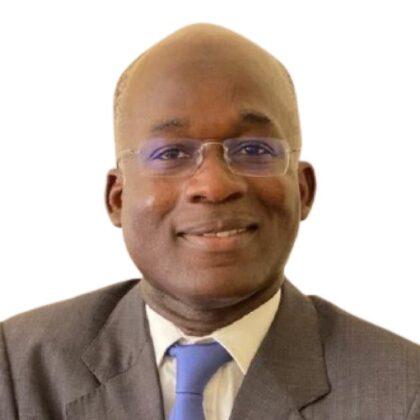
The Federal Government says reliable electricity in Nigeria will require tariffs that reflect the efficient cost of supplying power, but it insists consumers should not be made to pay for waste, operational failures and other avoidable losses within the electricity sector. Presidential power adviser Rilwan Lanre Babalola says government is considering ring fenced revenues, escrow accounts, bilateral contracts and credit guarantees to ensure generators and gas suppliers receive payment, while broader reforms target grid stability, liquidity and infrastructure investment.
The Federal Government has said Nigeria cannot achieve sustainable and reliable electricity supply without a tariff system that allows the power industry to recover the efficient cost of producing and delivering electricity, while warning that consumers should not be forced to finance waste, technical losses and other inefficiencies that have weakened the sector for decades. The government says the central challenge is not simply increasing electricity prices but creating a commercially viable market in which generators, gas suppliers, transmission operators and distributors can recover legitimate costs while being held accountable for poor performance and avoidable losses.
The position was presented at the Lagos Energy Summit 2026 by the Special Adviser to the President on Power and Chairman of the Presidential Task Force on Power Sector Reset and Restoration, Dr Rilwan Lanre Babalola. He was represented at the summit by Engr Uzoma Achinanya, a member of the presidential task force, who outlined measures being considered by the government to address persistent liquidity problems and restore confidence among investors in Nigeria’s electricity market.
Babalola argued that discussions about cost reflective tariffs must focus on efficient costs rather than simply transferring every expense incurred by electricity companies to consumers. His position is that customers should pay a price capable of supporting reliable service, but the amount should not include excessive technical losses, weak revenue collection, poor management or other inefficiencies that operators should be expected to correct themselves.
That distinction is particularly important in Nigeria because electricity tariffs have become one of the most politically sensitive aspects of power sector reform. Millions of households and businesses already struggle with high energy costs while also spending heavily on generators, diesel, petrol, solar systems, inverters and other alternative sources because public electricity remains unreliable in many areas.
The government’s argument is that continuing to provide electricity at prices below the actual efficient cost of service creates a financial gap that somebody must eventually pay. Where consumers do not pay that cost directly, government subsidies are used to cover part of the difference, but the subsidy system has repeatedly failed to provide enough money to settle the obligations owed across the electricity value chain.
Nigeria’s electricity market has therefore developed a long running liquidity problem in which distribution companies collect revenue from customers but the money flowing back through the system is often insufficient to fully pay generation companies, transmission services and gas suppliers. That creates unpaid invoices and debt across the market, limiting the ability of companies to maintain equipment, expand capacity or attract financing for new investments.
Babalola said the power sector has historically focused too heavily on the physical movement of electricity from power plants to consumers while paying insufficient attention to the financial system required to move money back in the opposite direction. His argument is that electricity can only continue flowing if the companies responsible for producing and fuelling that electricity receive reliable payment for their services.
He illustrated the problem by describing the sector as having two interconnected circuits. One carries electricity toward the consumer, while the other carries money back toward generators and the gas suppliers that provide fuel to many Nigerian power stations. If the physical electricity circuit functions while the financial circuit breaks down, power producers eventually lose the ability or incentive to continue supplying energy.
This payment problem has affected Nigeria’s power sector for years. Generation companies routinely complain about large outstanding debts, while gas companies have raised concerns about supplying fuel to power plants without receiving full payment. The result is a cycle in which inadequate payments reduce investment, weak investment contributes to unreliable electricity and unreliable electricity makes consumers more resistant to paying higher tariffs.
The Federal Government is now considering stronger financial mechanisms designed to interrupt that cycle. Among the proposals is the ring fencing of revenues generated from new electricity supply so that money collected from customers is specifically protected for the contracts and companies responsible for providing that power.
Under a ring fenced arrangement, electricity revenues cannot easily be diverted toward unrelated obligations. The money collected from customers receiving a particular supply arrangement can instead be directed according to agreed contractual priorities, ensuring that generators, gas suppliers and other critical market participants receive payment.
Babalola also proposed greater use of bilateral electricity contracts backed by secure payment arrangements. Such agreements could allow electricity producers to contract directly with identified customers, distribution companies or state electricity markets under conditions that clearly define how much power will be supplied, the price to be paid and how revenue will move through the system.
Escrow accounts are among the mechanisms under consideration. An escrow structure can hold customer payments in a controlled account and distribute the funds according to predetermined contractual obligations, reducing the risk that money intended for power producers disappears elsewhere within the electricity market.
Payment waterfalls could perform a similar function by establishing a clear order in which electricity revenues are distributed. Essential suppliers could receive their agreed shares before the remaining funds are used for other expenses, creating greater predictability for investors and companies financing electricity projects.
Government is also examining credit enhancement arrangements that could provide temporary financial protection where the electricity market is not yet strong enough to carry all of the commercial risk associated with a new investment. Such mechanisms can involve guarantees or other forms of government backed support that reassure investors that contractual payments will be honoured.
Babalola stressed, however, that government support should not become a permanent subsidy for inefficient operators. Any credit enhancement provided to support new investment should eventually be recovered from revenues generated by the electricity market rather than becoming an indefinite burden on taxpayers.
The broader objective is to create an electricity industry attractive enough for private investors to commit substantial capital. Nigeria requires billions of dollars to rehabilitate transmission infrastructure, expand generation, build new distribution networks, deploy meters and develop gas and renewable energy projects, and government alone does not have sufficient resources to finance all of those investments.
Private investors, however, are reluctant to provide long term capital to a market in which electricity companies cannot reliably collect enough revenue to meet contractual obligations. A power station may operate efficiently and generate electricity, but if it is repeatedly underpaid by the market, lenders and shareholders will become unwilling to finance additional capacity.
The government therefore sees tariff reform and payment discipline as essential to investment. Cost reflective pricing is intended to ensure that the market generates enough revenue to support service delivery without relying permanently on government intervention.
That does not mean every existing cost in the system should automatically be passed to customers. Babalola has repeatedly argued that Nigeria’s electricity tariffs already contain the effects of significant inefficiencies, including technical, commercial and collection losses that have historically been extremely high.
In October, he warned that aggregate technical, commercial and collection losses in parts of the electricity sector were around 40 percent. Those losses include power disappearing through weak infrastructure, electricity consumed without proper billing, energy theft and bills issued to customers but never successfully collected.
If electricity companies are allowed to simply increase tariffs to recover those losses, efficient customers effectively subsidise the failures of the system. Babalola argues that this would not represent genuine cost reflective pricing because the underlying costs would include inefficiency that should first be reduced.
The presidential adviser has therefore made a distinction between high tariffs and efficient tariffs. An electricity price can be expensive without being economically efficient if a large share of the amount paid by customers is required simply to compensate for losses that better infrastructure, metering and management could eliminate.
Band A customers provide a practical example of the debate. These customers pay substantially higher electricity tariffs in exchange for a promised minimum daily supply level, while users in other tariff bands continue to receive varying levels of government subsidy.
The Band A system was introduced as part of Nigeria’s gradual movement toward cost reflective electricity pricing. Instead of removing subsidies from every consumer simultaneously, government shifted higher service customers toward tariffs that more closely reflect the cost of supply.
The arrangement has remained controversial because some Band A customers complain that they do not always receive the supply hours associated with the higher tariff. Distribution companies can face regulatory penalties where they repeatedly fail to meet agreed service levels, but customer dissatisfaction remains high in areas experiencing outages despite paying premium rates.
Government maintains that the broader transition toward financially sustainable pricing will have to continue if Nigeria wants stable electricity. Previous administrations repeatedly kept tariffs below market costs while attempting to compensate electricity companies through subsidies, creating large financial obligations that were not always paid in full.
The scale of those subsidies has become enormous. Electricity sector figures cited by regulators show government subsidy obligations approaching N2 trillion annually in recent years because the allowed tariffs for many customers remain below the cost reflective level.
Those subsidy obligations ultimately compete with other government priorities, including education, healthcare, roads, security and social welfare. The fiscal argument for reform is therefore that the country cannot indefinitely finance a power market in which consumers pay below cost while government repeatedly accumulates unpaid obligations.
At the same time, electricity tariff increases can place severe pressure on households and small businesses. Power is an essential service, and sharply increasing its price can affect everything from food production and manufacturing to refrigeration, transportation, telecommunications and household expenses.
That creates a difficult policy balance. Government wants a commercially sustainable electricity market, but it must also avoid creating tariffs that millions of Nigerians cannot afford.
Federal officials have therefore repeatedly said vulnerable consumers should be protected through targeted support rather than broad subsidies that benefit every customer regardless of income. The principle is that government assistance should increasingly be directed toward households that genuinely require it while wealthier consumers and businesses pay more of the real cost of their electricity.
Implementing targeted subsidies, however, requires reliable customer data and widespread metering. Nigeria still has a substantial metering gap, leaving millions of electricity users on estimated billing systems that have long generated disputes between consumers and distribution companies.
Metering is therefore critical to any credible tariff reform. Consumers are far more likely to accept higher electricity prices when they can verify precisely how much energy they consumed and how their bills were calculated.
Without meters, tariff increases can deepen mistrust because households may believe they are being charged for electricity they did not actually receive. Distribution companies also lose revenue where unmetered customers consume electricity without accurate billing.
Government and regulators have launched several programmes over the years to accelerate meter deployment, but progress has remained uneven. Closing the gap will require additional investment from distribution companies, meter providers and public financing programmes.
Infrastructure losses represent another major challenge. Some distribution networks are old, overloaded or poorly maintained, causing electricity to be lost before it reaches paying customers.
Transmission infrastructure also requires major investment. Nigeria’s national grid has experienced repeated collapses and partial disturbances, creating widespread outages and reinforcing public frustration with the electricity industry.
Minister of Power Joseph Tegbe said at the Lagos Energy Summit that the government is pursuing a four part roadmap focused on grid stabilisation, sector liquidity and sustainability, optimisation of existing assets, and expansion and enhancement of the electricity network.
The roadmap reflects an acknowledgement that tariff reform alone cannot solve Nigeria’s electricity problems. Consumers will not accept paying more indefinitely if transmission lines continue failing, transformers remain overloaded and distribution networks cannot deliver the electricity being generated.
Government is therefore attempting to link financial reform to physical improvements. The objective is to strengthen generation, transmission and distribution at the same time that payment discipline improves across the sector.
A corridor based approach is also being introduced to connect generation capacity, transmission reinforcement and distribution demand around major economic clusters. Instead of adding electricity generation in locations where transmission networks cannot carry the power or distribution companies cannot sell it efficiently, planners want investment to follow identifiable demand.
Lagos is likely to become one of the most important testing grounds for that strategy. The state government estimates that Lagos requires approximately 12,000 megawatts of electricity to satisfy its full demand, while conventional supply from the national grid remains below 1,000 megawatts.
That enormous deficit forces households and companies to generate much of their own electricity. Diesel and petrol generators remain common across businesses, factories, shops, offices and residential estates, despite the environmental and financial costs.
Self generation has effectively created a parallel electricity economy worth billions of naira. Businesses that cannot rely on the grid purchase generators, fuel, maintenance services, solar panels, batteries and inverters simply to remain operational.
For manufacturers, those energy costs can become a major part of production expenses. Higher operating costs are then passed to consumers through more expensive goods and services, contributing indirectly to inflation.
Lagos wants to reduce that burden by developing a more independent and commercially sustainable state electricity market. The Electricity Act 2023 allowed states to play a much larger role in regulating electricity within their territories, enabling Lagos and other states to establish their own legal and institutional frameworks.
Governor Babajide Sanwo Olu signed the Lagos State Electricity Law in December 2024, creating a foundation for a state regulated electricity market. Lagos has subsequently moved toward establishing its own regulatory commission, independent system operator and other institutions required to attract investment and manage electricity transactions.
The Lagos Energy Summit was organised partly to move that framework from legislation toward actual investment. State officials are seeking developers for grid scale renewable energy, mini grids, embedded generation and other projects capable of increasing electricity supply.
Lagos Commissioner for Energy and Mineral Resources Biodun Ogunleye said the state’s objective is not simply to generate more electricity but to build a functional power economy capable of supporting industrial growth, employment and investment.
The difference is important because adding generation without addressing payment and distribution problems has repeatedly failed to transform Nigeria’s electricity industry. Power stations can have available capacity while consumers continue experiencing outages if transmission and distribution systems cannot deliver the electricity or market participants cannot afford to purchase it.
Lagos is therefore trying to create a market in which generation, transmission, distribution and payment are planned together. Investors would have clearer information about where electricity demand exists, who will purchase the power and how payments will be guaranteed.
The state’s Seven Point Energy Agenda includes federal and state cooperation, market sustainability, electricity wheeling and self generation, additional generation capacity, last mile distribution, stronger regulation and greater use of modern technologies.
Electricity wheeling could become particularly important. It allows power produced in one location to move across an existing network to customers elsewhere under commercial agreements, potentially giving businesses more options than relying exclusively on their traditional distribution company.
Large industrial customers may eventually be able to contract directly with electricity producers while paying network operators to transport the power. Such arrangements could improve reliability for factories and commercial facilities willing to pay for dedicated supply.
The federal government believes bilateral contracting can also reduce pressure on the central electricity market. Instead of every transaction depending on a single national financial structure, willing buyers and sellers could negotiate clearer commercial arrangements.
Those contracts must still be supported by reliable networks and strong regulation. A generator cannot deliver contracted electricity if transmission infrastructure repeatedly fails, while customers need protection against unfair pricing and poor service.
Regulatory enforcement is therefore another major issue raised at the Lagos summit. Achinanya warned that Nigeria has accumulated extensive electricity regulations but often struggles with monitoring and enforcement.
Rules have little effect if companies can repeatedly ignore service standards without consequences. Strong electricity markets require regulators capable of enforcing contracts, protecting consumers and imposing penalties when operators fail to meet obligations.
Nigeria’s decentralised electricity structure makes that challenge more complicated. States are increasingly creating their own regulatory systems while the federal government remains responsible for interstate electricity markets and major national infrastructure.
The Nigeria Governors’ Forum is now developing a uniform electricity tariff methodology intended to help states determine prices consistently as regulatory authority becomes more decentralised.
A common methodology could prevent extreme differences in how states calculate tariffs while still allowing each market to reflect local circumstances. It could also give investors greater confidence that pricing rules will remain predictable across different jurisdictions.
Predictability matters because electricity infrastructure requires long term investment. Power plants, transmission lines and distribution networks can operate for decades, and investors need confidence that future governments will not suddenly change tariffs or payment rules in ways that make projects financially impossible.
Nigeria has struggled with this problem in the past. Political resistance to tariff increases has sometimes resulted in prices being frozen below required levels, leaving government responsible for large subsidy obligations that later become difficult to pay.
The government’s current approach is intended to move away from that cycle gradually. Officials insist that the long term objective is a market where electricity prices reflect efficient costs and government intervention is targeted mainly toward vulnerable consumers.
There is currently no immediate announcement of a new nationwide electricity tariff increase. Federal officials have repeatedly said tariff reform will be phased and linked to improvements in service, meaning consumers should not interpret the Lagos summit remarks as confirmation that every electricity customer is about to receive a higher bill.
Nevertheless, the direction of policy is clear. Broad electricity subsidies are expected to reduce gradually as government pushes the industry toward commercial sustainability.
The success of that transition will depend heavily on whether electricity actually improves. Nigerians have experienced multiple rounds of reform since the power sector was privatised in 2013, yet many households still receive inadequate supply more than a decade later.
Public confidence is therefore low. Consumers frequently hear promises about improved generation, transmission upgrades and new investments without seeing equivalent improvements in their homes and businesses.
Cost reflective tariffs will be politically difficult unless service becomes visibly better. Households are unlikely to accept paying significantly more for electricity if they continue spending heavily on generators during outages.
That is why Babalola’s emphasis on efficiency matters. Government is effectively acknowledging that electricity companies must also improve their performance rather than treating consumers as an unlimited source of revenue.
Reducing technical and commercial losses could lower the amount of revenue that needs to be recovered through tariffs. Better metering could improve collections without increasing prices, while stronger infrastructure could reduce the electricity lost before reaching customers.
Energy theft is another source of losses. Illegal connections and meter bypassing reduce revenue and shift costs toward customers who pay their bills honestly.
Distribution companies have repeatedly called for stronger enforcement against electricity theft, while consumers argue that operators must first improve metering and billing systems. Both problems need to be addressed simultaneously if the market is to become more sustainable.
Gas supply remains equally important because much of Nigeria’s electricity generation depends on thermal power plants. Even when generation companies have functioning turbines, they cannot produce electricity without sufficient gas.
Gas producers have historically complained about unpaid debts and pricing problems in the electricity industry. If supplying gas to power plants is financially unattractive, producers may prioritise industrial, export or other customers that offer more reliable payments.
The proposed ring fencing of electricity revenue is intended partly to solve this problem. Gas suppliers need confidence that once electricity is produced and sold, part of the money collected will reach them.
Without that financial certainty, increasing generation capacity becomes difficult. Investors will not build new gas fired plants if they cannot secure fuel contracts, and gas companies will not expand supply without reliable payment.
The same logic applies to renewable energy. Solar, hydro and other renewable projects require large upfront investment even though their operating fuel costs may be lower.
Investors will still demand predictable tariffs and credible payment arrangements before committing money to those projects. The financial sustainability of the electricity market therefore affects every technology, not only gas generation.
Nigeria has enormous renewable energy potential, particularly solar power in the north and hydroelectric resources in several regions. Greater investment could diversify generation and reduce dependence on gas.
Mini grids are already providing electricity to communities and businesses outside the main national grid. These projects demonstrate that customers are often willing to pay commercially viable tariffs where electricity is dependable and billing is transparent.
The challenge is scaling that model to millions of consumers while maintaining affordability. Electricity that is reliable but completely unaffordable cannot support inclusive economic development.
Government therefore faces a three way balancing act involving reliability, affordability and commercial sustainability. Improving one while ignoring the others will not solve the sector’s deeper problems.
Tariffs that remain permanently below cost may appear affordable but eventually undermine supply because operators cannot invest. Extremely high tariffs may improve revenue but exclude households and damage businesses.
The goal is a price that reflects the efficient cost of a reliable service while targeted government support protects those genuinely unable to afford it.
Achieving that balance will require better data. Regulators need accurate information about electricity costs, customer consumption, operator losses and household income before determining what efficient tariffs should look like.
Transparency will also be important. Consumers are more likely to accept tariff changes if regulators clearly explain how prices were calculated and what service improvements they should receive in return.
Distribution companies will need to publish and meet service commitments. Where customers pay premium tariffs for specific supply levels, regulators must ensure those obligations are enforced.
The Lagos Energy Summit has therefore highlighted a broader shift in Nigeria’s electricity debate. The conversation is moving beyond simply asking how many megawatts the country generates toward asking whether the entire commercial system supporting those megawatts actually works.
Nigeria has repeatedly announced new power plants and generation capacity, but available generation does not automatically translate into reliable electricity for customers. Financial problems, network constraints and weak collection can leave capacity unused or unavailable.
A sustainable market requires electricity and money to move efficiently in opposite directions. Power must reach customers while revenue reaches the companies responsible for providing it.
That principle is at the heart of Babalola’s argument. Nigeria cannot build a reliable electricity system if generators and gas suppliers remain unpaid, but consumers should not be asked to finance every inefficiency simply because the industry needs more money.
The government is therefore proposing a combination of efficient cost reflective tariffs, tighter regulation, stronger payment protection, targeted subsidies and investment in physical infrastructure.
Whether that combination succeeds will depend on execution. Nigeria’s power sector has experienced repeated reform programmes over the past two decades, many of which produced less improvement than originally promised.
The next phase will be judged by practical results rather than policy language. Consumers want longer hours of electricity, accurate bills, fewer outages and faster resolution of faults.
Businesses want predictable energy costs that allow them to plan production and compete with imports. Investors want contracts that are enforced and revenues they can actually collect.
Generators want payment for the electricity they produce, while gas suppliers want payment for the fuel delivered to power stations. Government wants to reduce subsidy obligations without triggering public anger over electricity prices.
These interests are not necessarily incompatible, but bringing them together requires a functioning market and credible regulation.
Lagos may become one of the most important tests of whether Nigeria can create such a market. With estimated demand of about 12,000MW and conventional grid supply below 1,000MW, the economic incentive for new investment is enormous.
If Lagos can create reliable contracts, transparent tariffs and strong payment structures, private investors could see the state as one of Africa’s largest electricity opportunities.
If the reforms fail to solve payment and network problems, however, businesses and households will continue relying heavily on private generators and other self supplied energy systems.
The Federal Government’s latest message is therefore not simply that Nigerians should prepare to pay more for electricity. The more precise position is that stable electricity requires tariffs that recover legitimate efficient costs, while power companies must stop transferring avoidable losses and poor performance onto consumers.
That distinction will become increasingly important as tariff reforms continue. Nigerians will want evidence that every additional naira paid for electricity is producing better service rather than merely covering existing inefficiencies.
The success of the reform agenda will ultimately be measured in homes, factories, hospitals and businesses rather than at conferences. If customers receive reliable power, investors receive predictable returns and government subsidy obligations decline, the market could finally begin breaking the financial cycle that has weakened Nigeria’s electricity system for decades.
If consumers are asked to pay higher prices while outages, estimated billing and infrastructure failures continue, resistance to cost reflective tariffs will only grow. The government therefore faces a clear challenge. It must make the financial system sustainable while simultaneously proving that electricity companies can deliver the quality of service Nigerians are being asked to pay for.