TINUBU CONGRATULATES SON SEYI ON HISTORIC TURBANING AS DAN ZAKI GWANDU IN KEBBI
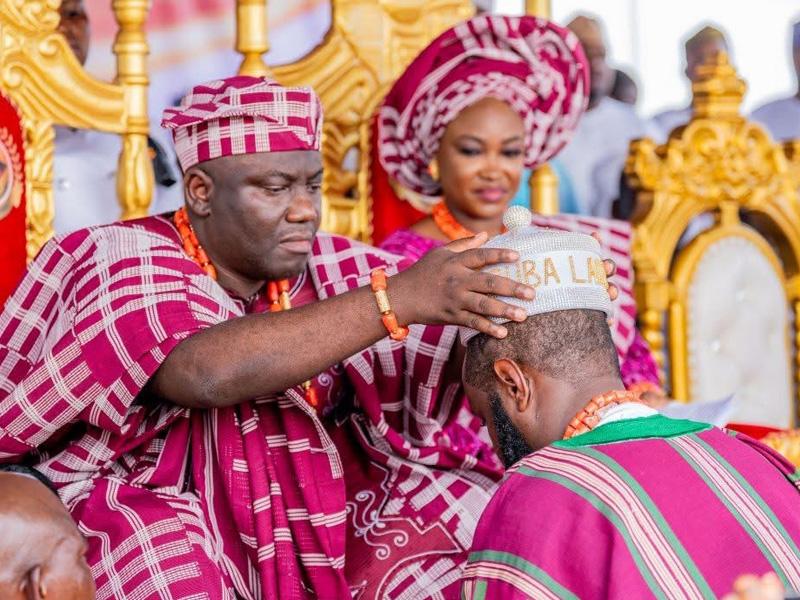
President Bola Tinubu has congratulated his son, Seyi Tinubu, after the Emir of Gwandu, Alhaji Muhammadu Iliyasu Bashar, conferred on him the traditional title of Dan Zaki Gwandu at the Abdullahi Fodiyo Palace in Birnin Kebbi. The title translates to “Son of the Lion of Gwandu” and was described by the Emir as the first of its kind in the history of the Emirate. Tinubu thanked the traditional ruler for the honour but urged Seyi to remain humble and treat the title as a responsibility centered on leadership, courage and service.
President Bola Ahmed Tinubu has congratulated his son, Seyi Tinubu, following his conferment with the traditional title of Dan Zaki Gwandu by the Emir of Gwandu, Alhaji Muhammadu Iliyasu Bashar, in Kebbi State, describing the honour as both a recognition and a responsibility that should deepen his commitment to leadership, humility and service. Seyi received the title on Wednesday at the historic Abdullahi Fodiyo Palace in Birnin Kebbi, with the Presidency saying the title translates to “Son of the Lion of Gwandu.” The Emir and Gwandu Emirate Council described the conferment as the first of its kind in the history of the Emirate, giving the ceremony additional cultural significance beyond the personal recognition extended to the President’s son.
In a statement issued by his Special Adviser on Information and Strategy, Bayo Onanuga, President Tinubu thanked the Emir of Gwandu and members of the Emirate Council for conferring the title on Seyi. He said the honour represented more than a ceremonial distinction and should be understood as a reflection of friendship, mutual respect and unity among Nigeria’s diverse communities. The President also emphasized that traditional institutions remain important custodians of the country’s history, culture and social cohesion, particularly at a time when political, ethnic and religious divisions continue to challenge national unity.
Tinubu said that as a father, he was pleased to see his son recognized by an institution with such a long and distinguished history, but he cautioned that traditional honours are not merely decorative titles. According to him, the name Dan Zaki Gwandu carries values associated with courage, leadership and service, and Seyi should therefore regard the recognition as a call to greater responsibility. He urged him to remain humble, continue supporting young Nigerians and dedicate himself to the wellbeing of others rather than viewing the title simply as a symbol of status.
The President also acknowledged what he described as Seyi’s involvement in youth engagement, community development and empowerment initiatives, particularly through the City Boy Movement and other projects associated with young Nigerians. Tinubu said the new title should encourage his son to expand that work and strengthen his commitment to peaceful coexistence and national development. He wished him wisdom, strength and humility as he assumes the responsibilities connected with the traditional recognition.
The ceremony took place at the Abdullahi Fodiyo Palace in Birnin Kebbi, a location with deep historical connections to the Gwandu Emirate and the wider history of the Sokoto Caliphate. The Emirate traces its origins to Abdullahi dan Fodio, also known as Abdullahi Fodiyo, the younger brother of Usman dan Fodio and one of the major figures in the establishment of the Sokoto Caliphate in the early nineteenth century. Gwandu became one of the important political and religious centers within that historical structure, giving titles conferred by the Emirate significant cultural importance in northern Nigeria.
The Presidency’s description of the title as the first of its kind in the history of the Emirate has made Seyi’s turbaning particularly notable. Traditional institutions across northern Nigeria regularly confer titles on individuals considered to have contributed to community development, public service or relationships across regions, but the specific designation Dan Zaki Gwandu had not previously been awarded, according to the Emir. That makes Seyi the first person formally recognized under the title and gives the conferment a distinctive place in the history of the palace.
The ceremony also adds to a growing list of traditional recognitions received by Seyi Tinubu in different parts of Nigeria. In December 2025, he was installed as the Okanlomo of Yorubaland by the Alaafin of Oyo, Oba Akeem Owoade, during a ceremony in Oyo town. That earlier title was connected to Yoruba traditional authority, while the latest recognition comes from one of northern Nigeria’s historically significant emirates. Together, the honours reflect the increasingly visible relationship Seyi has developed with traditional institutions across different regions of the country.
Those recognitions have also attracted public attention because Seyi is the son of a sitting president and has become increasingly prominent in political and youth oriented activities. Although he does not hold an elected government position, he has regularly appeared at public events, political gatherings, charitable initiatives and youth programs. His involvement with the City Boy Movement, which has become associated with mobilization and political engagement among some supporters of the President, has also increased his profile as Nigeria approaches the 2027 general election.
The Presidency framed Wednesday’s turbaning primarily as a cultural and traditional honour rather than a political event. Tinubu’s statement focused on responsibility, national unity and the role of traditional institutions rather than campaign politics. Nevertheless, the timing of the ceremony inevitably places it within a broader political environment in which Seyi’s public activities are receiving greater attention because his father is seeking another term in office.
Traditional titles have long occupied an important place in Nigerian public life. Politicians, business leaders, professionals and philanthropists are frequently honoured by monarchs and emirates in recognition of service, relationships with communities or contributions to development. Although traditional rulers no longer exercise the same formal governmental authority they held before and during parts of the colonial period, they remain influential in community affairs, conflict resolution, cultural preservation and engagement between citizens and government.
In northern Nigeria, emirates continue to play important roles in local identity and social organization. Emirs frequently serve as intermediaries between communities and political authorities, particularly on issues involving security, religious coexistence, education, traditional values and grassroots development. Their endorsement or recognition can therefore carry social significance even when it has no constitutional effect on political office.
President Tinubu’s response emphasized that dimension. He described traditional institutions as custodians of Nigeria’s history and culture and said they contribute to national unity by preserving connections between communities and generations. His gratitude to the Emir and the people of Kebbi State was presented as appreciation not only for the honour given to his son but also for what he described as the spirit of friendship represented by the conferment.
The President’s message also reflected a recurring theme in his public statements about Nigeria’s diversity. Tinubu has repeatedly argued that the country’s ethnic, religious and regional differences should be treated as sources of strength rather than division. By describing Seyi’s title in Gwandu as a symbol of friendship and mutual respect, the Presidency placed the ceremony within that broader national unity message.
The Emir’s decision to confer the title also highlights the relationship between political families and traditional institutions in Nigeria. Successive presidents, governors, ministers and senior political figures have received chieftaincy and emirate titles across regions outside their places of origin. Such honours are often presented as evidence of cross regional acceptance and cultural solidarity, although critics sometimes question whether political influence plays a role in the selection of recipients.
No such criticism was addressed in the Presidency’s statement, which focused entirely on the symbolic responsibilities associated with Seyi’s new position. Tinubu specifically cautioned his son that every honour comes with obligations and said he should use the recognition to strengthen his commitment to service. The message suggested that the President wanted the public significance of the title to be measured by what Seyi does after receiving it rather than by the ceremony itself.
Seyi’s youth focused activities have become one of the main explanations given by his supporters for the growing number of recognitions he receives. Through various initiatives, he has been associated with empowerment programs, sporting activities, charitable interventions and political engagement involving younger Nigerians. Supporters describe him as using his position and networks to support youth development, while critics have sometimes questioned the degree to which his prominence is connected to his family’s political position.
That debate is likely to continue as his public profile grows. Unlike elected officials, Seyi does not derive authority from a direct electoral mandate, meaning the attention surrounding his activities often comes primarily from his relationship to the President. His supporters argue that this does not prevent him from contributing to social initiatives, while critics insist that the activities of members of presidential families deserve scrutiny because of their access to power and influence.
The latest traditional title is therefore likely to generate both celebration and political discussion. Supporters may see it as recognition of Seyi’s growing involvement in youth and community activities across Nigeria, while opponents may view it within the wider influence of the presidential family. The Presidency, however, has deliberately emphasized the cultural meaning of the ceremony and the responsibilities associated with the title rather than making claims about political significance.
The historical setting of the ceremony also matters. The Abdullahi Fodiyo Palace connects the modern Gwandu Emirate to a religious and political history stretching back more than two centuries. Abdullahi dan Fodio played an important intellectual, military and administrative role in the Sokoto Caliphate and became associated with the western territories administered from Gwandu. The continued existence of the Emirate gives ceremonial events held at the palace a strong link to that historical legacy.
By receiving the title there, Seyi was formally incorporated into a traditional system with roots extending far beyond contemporary party politics. The meaning of Dan Zaki, translated by the Presidency as Son of the Lion, carries imagery of bravery and leadership, while the Gwandu attachment connects the recipient to the Emirate itself. Tinubu’s statement specifically drew attention to those qualities and encouraged Seyi to demonstrate courage through service rather than simply enjoying the prestige of the title.
The President’s remarks were also unusually personal in acknowledging his reaction as a father. Tinubu said he was pleased that his son had been recognized by such a distinguished institution, but he immediately followed that expression of pride with an instruction to remain humble. That combination allowed the statement to acknowledge the family dimension of the ceremony while still framing the honour as a public responsibility.
The Emirate’s description of the title as unprecedented adds another layer to those expectations. Because Seyi is the first person to hold the title, his actions may shape how it is perceived in future and whether the position develops any broader ceremonial role within the Emirate. The Presidency did not specify any formal duties attached to the title beyond general expectations of service, leadership and commitment to peaceful coexistence.
It also remains unclear whether Dan Zaki Gwandu will carry specific responsibilities within cultural or community activities organized by the palace. Traditional titles vary widely across Nigeria, with some involving defined functions and others serving primarily as honorary recognition. Further details from the Gwandu Emirate Council may clarify whether Seyi will be expected to participate in particular ceremonies, development activities or community initiatives.
The event took place in Kebbi at a time when political leaders across the country are intensifying public engagements ahead of the 2027 general election. President Tinubu and senior members of the All Progressives Congress have been travelling to different states for rallies, official events and consultations, while opposition parties are also increasing their activities. Traditional institutions often become important meeting points during such periods because political leaders seek their blessings and support while visiting different communities.
However, the Palace’s honour to Seyi should not automatically be interpreted as a formal political endorsement of any party or candidate unless the Emirate itself says so. Traditional rulers frequently receive and honour people from different political backgrounds, and cultural recognition does not necessarily translate into electoral support. Maintaining that distinction is important as Nigeria enters a highly competitive election period.
The Presidency’s statement similarly avoided presenting the title as an endorsement of Tinubu’s reelection campaign. Instead, Onanuga’s release concentrated on youth development, peaceful coexistence, humility and service. That framing may reflect an effort to preserve the traditional nature of the event while acknowledging the unavoidable public attention surrounding the President’s family.
Seyi’s earlier installation in Oyo provides an interesting comparison. The Okanlomo title placed him within a prominent Yoruba traditional structure in the region where his family has deep political roots. The Gwandu title now extends that cultural recognition into northwestern Nigeria, making his traditional affiliations more geographically diverse.
Such cross regional honours can carry symbolic significance in a country where political and social identities are often strongly linked to ethnicity and geography. Supporters may interpret them as signs of national connection and bridge building. Critics, however, may argue that traditional institutions should remain careful about becoming too closely associated with politically influential families.
The President’s emphasis on national unity appears designed partly to address that broader context. He said the honour reflects enduring bonds of friendship and mutual respect among Nigeria’s diverse peoples. By doing so, Tinubu presented the turbaning as an example of cultural exchange between regions rather than simply an honour bestowed on the President’s son.
The next question will be how Seyi uses the recognition. Tinubu has explicitly challenged him to translate it into continued service, particularly involving young people and community development. That creates a public benchmark against which future activities associated with the title may be assessed.
If Seyi expands youth programs, supports community projects in Kebbi or maintains a long term relationship with the Gwandu Emirate, the title may develop significance beyond Wednesday’s ceremony. If little follows after the initial celebration, it may remain primarily symbolic. The President’s own statement suggests he expects the honour to produce continued engagement rather than end with the turbaning.
For the Gwandu Emirate, the ceremony adds a new title to its contemporary traditional structure while drawing national attention to its historical importance. The palace remains connected to one of the most consequential periods in the political and religious history of northern Nigeria, and the event provided another opportunity for the Emirate to highlight that heritage.
For President Tinubu, the occasion was both personal and national. His message expressed pride in his son while also reminding him that visibility and recognition bring expectations. The President thanked the Emir and the people of Kebbi State and used the ceremony to reaffirm his view that traditional institutions continue to play an important role in holding Nigeria’s diverse communities together.
The official position is therefore clear. Seyi Tinubu has become the first Dan Zaki Gwandu, a title translated as Son of the Lion of Gwandu, after his turbaning by Emir Muhammadu Iliyasu Bashar at the Abdullahi Fodiyo Palace. His father has welcomed the honour but has told him to treat it as a responsibility rather than simply a privilege.
As Seyi assumes the title, attention will likely move from the ceremony itself to whether his activities reflect the values the Presidency says the honour represents. Tinubu has identified those values as courage, leadership, humility and service, while the Emirate has made the recognition historically distinctive by describing it as the first title of its kind. The significance of Dan Zaki Gwandu will ultimately be shaped not only by the history surrounding Wednesday’s ceremony but also by how its first holder chooses to carry the responsibility attached to it.