HAITI PUSHES FIRST PRESIDENTIAL ELECTION IN A DECADE TO JULY 2027 AS SECURITY CRISIS DEEPENS
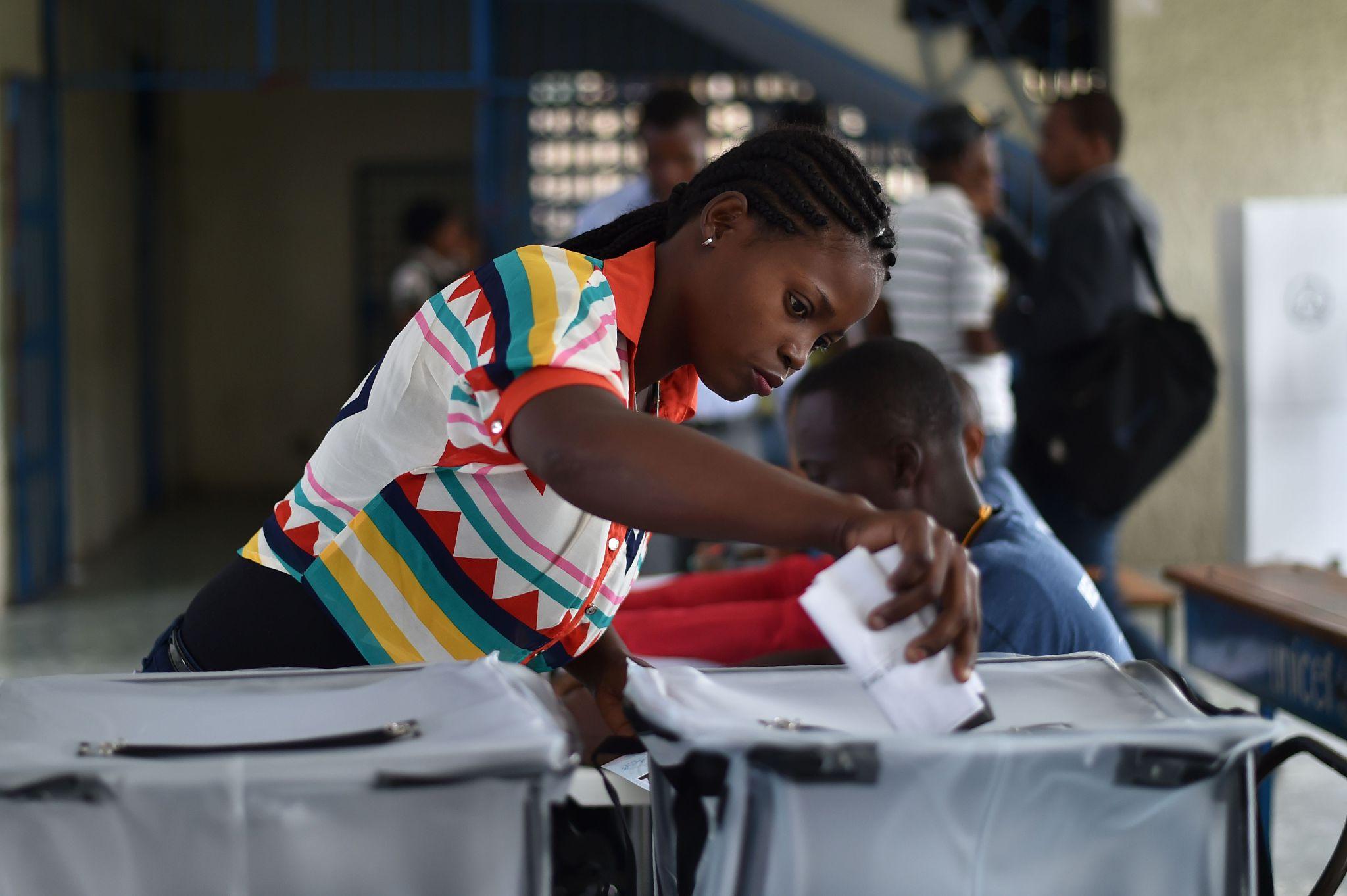
Haiti’s Provisional Electoral Council has postponed the first round of the presidential election from December 13, 2026 to July 18, 2027, with a second round and local elections planned for October 4. Haiti has not held national elections since 2016, while persistent gang violence, displacement and weak state authority continue to complicate electoral preparations.
Haiti has postponed its long-awaited presidential election until July 18, 2027, pushing the country’s first national vote in approximately a decade back by more than seven months and extending a political transition already repeatedly disrupted by gang violence, insecurity and the collapse of elected institutions. The Provisional Electoral Council had previously planned to hold the first round of presidential voting on December 13, 2026, but the revised timetable means Haitians will now have to wait until the middle of next year for another attempt to choose an elected president.
The decision represents another major setback in Haiti’s prolonged effort to restore constitutional government after years without a nationally elected president or functioning elected legislature. According to the new electoral calendar reported by Reuters, the first round of presidential voting is now scheduled for July 18, 2027, while a second round and local elections are expected to follow on October 4. The change leaves Haiti facing several more months under transitional political arrangements at a time when armed gangs continue to challenge state authority across significant areas of the country.
Haiti has not held national elections since 2016, making the current electoral process crucial to efforts to rebuild political legitimacy after years of instability. The country’s last elected president, Jovenel Moïse, was assassinated at his private residence in July 2021, deepening an already serious political crisis and accelerating the deterioration of security institutions. Since then, Haiti has moved through successive transitional arrangements while gangs expanded their control over roads, neighborhoods, ports and other strategic areas.
The original timetable had raised hopes that Haitians could return to presidential polling stations before the end of 2026. That expectation has now been abandoned. The new July 2027 date effectively extends the country’s period without an elected president and increases pressure on transitional authorities to demonstrate that the latest timetable can actually be implemented.
The electoral council’s decision comes after months of warnings from Haitian officials, regional governments and the United Nations that deteriorating security was making the original schedule increasingly difficult to achieve. Voter registration, which had initially been expected to begin earlier in the year, was delayed and only gathered momentum during the summer, reducing the time available to complete preparations for a nationwide election.
Security remains the biggest obstacle. Armed gangs continue to control or contest significant parts of Port-au-Prince and important roads linking the capital to other regions. Their activities have disrupted commerce, transportation, schools, hospitals, humanitarian operations and government services, creating enormous logistical challenges for any attempt to organize voting across the country.
The United Nations has repeatedly warned that gang violence is no longer confined to a limited number of neighborhoods in the capital. Armed groups have expanded their operations geographically, moving into rural communities and transportation corridors while adapting their tactics in response to security operations. That expansion makes the challenge of protecting polling stations, election workers, candidates, voters and ballot materials considerably more difficult.
Between July and September alone, the United Nations Integrated Office in Haiti documented more than 1,000 people killed and more than 100 kidnapped amid continuing violence. Sexual violence has also remained widespread, while self-defense groups have expanded in some communities as residents seek protection from gangs where state security forces are unable to provide effective control.
Those conditions have forced election planners to confront a difficult question over whether a nationwide vote can be considered credible if large numbers of citizens are unable to safely register, campaign or reach polling stations. Elections require more than printing ballots and opening voting centers. They depend on secure transportation routes, functioning local authorities, communication systems, trained workers and the ability of political candidates to campaign without armed groups determining who can enter particular neighborhoods.
The electoral delay therefore reflects a deeper crisis than a simple scheduling problem. Haiti is attempting to reconstruct democratic institutions while simultaneously fighting armed organizations that have weakened the state’s authority and displaced large numbers of civilians from their homes.
More than one in ten Haitians has been displaced by violence, according to the United Nations, creating additional challenges for voter registration. Citizens who have left their home communities may no longer live near the places where they were previously registered, and election authorities must develop procedures allowing displaced people to participate without creating confusion or opportunities for fraud.
The scale of displacement also raises practical questions about where polling centers can safely operate. Schools and public buildings that would normally be used for elections may be damaged, occupied by displaced families or located in areas where security cannot be guaranteed.
Haitian Prime Minister Alix Didier Fils-Aimé has repeatedly said elections remain essential to restoring democratic legitimacy. Speaking at the United Nations in September, he described a population waiting for security, the opportunity to return home and the ability to freely choose political leaders after years of crisis.
Those goals are closely connected. Without greater security, organizing a credible nationwide vote becomes extraordinarily difficult. Without elections, however, Haiti risks remaining trapped in transitional government arrangements that lack the democratic mandate needed to rebuild institutions and restore confidence among citizens.
The country’s most recent national election was held in 2016, when voters participated in presidential and legislative voting. Since then, political paralysis, disputed transitions, institutional breakdown and growing gang power have prevented another national vote from taking place.
The assassination of Moïse in 2021 created a particularly severe constitutional crisis because Haiti had already lost much of its functioning legislature. With elected mandates expiring and no new elections taking place, political authority increasingly shifted toward temporary arrangements rather than institutions chosen directly by voters.
International efforts subsequently focused on creating a transitional framework capable of restoring security and preparing elections. A Transitional Presidential Council was established as part of that process, but its mandate ended in February 2026 without elections having been completed. Executive authority was then transferred to the Council of Ministers led by the prime minister.
In February, Haitian political stakeholders adopted a National Pact for Stability and the Organization of Elections, intended to create greater political coordination around the electoral process. The agreement reflected widespread recognition that an election was necessary to move the country beyond temporary governance arrangements.
Progress followed in several areas. Political parties began registering, voter-registration operations expanded and election officials worked to establish procedures for candidates and voters. The United Nations said earlier this month that electoral preparations had reached their most advanced level in more than a decade despite continuing insecurity.
That progress has now been accompanied by a much longer timetable. Rather than attempting to force the election into December under deteriorating conditions, the electoral council has given authorities until July 2027 to complete preparations and improve security.
The decision may provide additional time for voter registration, candidate certification, electoral logistics and security planning, but it also creates new political risks. Each postponement increases public skepticism over whether elections will ultimately take place at all, particularly after repeated promises to restore democratic government have failed to produce a completed vote.
Political actors could also use the extended transition to compete for influence over state institutions before voters have a chance to decide who should govern. Haiti has experienced repeated disputes among political factions over transitional arrangements, and prolonged uncertainty can create incentives for those holding temporary power to resist changes that could reduce their influence.
The international community has therefore emphasized that the new timetable must be accompanied by measurable progress rather than treated as another open-ended delay. Haiti’s regional partners, including the Caribbean Community, have repeatedly said the restoration of elected institutions is necessary for long-term political stability.
The United Nations has also maintained support for a Haitian-led electoral process, while acknowledging that elections cannot be separated from the country’s security crisis. Its political mission has called for coordinated progress on security, governance, disarmament, political dialogue and elections rather than treating each problem independently.
A multinational Gang Suppression Force has been supporting Haitian authorities in efforts to confront armed groups, although its deployment and effectiveness have faced challenges. Haiti continues to depend heavily on international assistance for security, humanitarian operations and institutional support.
The security mission itself remains part of the uncertainty surrounding the election calendar. Haitian authorities will need sufficient control of major population centers and transportation routes before ballots, staff and voting equipment can be safely distributed nationwide.
Recent events have demonstrated the continuing strength of armed groups. The United Nations has reported attacks in areas beyond traditional gang strongholds and warned that criminal organizations are adjusting their tactics as security operations intensify.
Some groups have expanded into rural regions while others continue to control important routes used for food, fuel and humanitarian supplies. That ability to disrupt movement could directly affect an election if security conditions remain unchanged by next July.
Haiti’s crisis has also created severe economic consequences. Businesses have closed, transportation costs have risen, food insecurity has deepened and many families have lost income because violence prevents them from working normally.
These pressures could shape the eventual election campaign. Candidates are expected to face intense public demands over security, economic recovery, corruption, employment, healthcare, education and the restoration of basic government services.
Whoever eventually wins the presidency will inherit a state with extraordinary institutional challenges. Government authority will need to be restored in areas where armed groups have replaced or intimidated public institutions, police capacity will require strengthening and thousands of displaced families will need assistance returning to their communities.
The government will also face pressure to rebuild public trust after years without elections. Citizens who have lived under successive transitional arrangements may be skeptical that political leaders can deliver lasting stability even after a vote takes place.
That makes the credibility of the 2027 election especially important. A poorly organized or disputed vote could deepen instability rather than resolve it, while an election that excludes significant parts of the population because of insecurity could face questions over legitimacy.
Election officials therefore need to use the additional seven months to expand voter registration, strengthen electoral infrastructure and ensure that candidates can compete under rules considered credible by major political stakeholders.
Security planning will be equally important. Authorities will have to determine which polling stations can operate safely, how election workers will be protected and how ballots will be transported through regions where armed groups remain active.
The electoral council must also manage a complicated political calendar. Under the revised plan, the first presidential round will take place on July 18, followed by a second round and local elections on October 4 if required.
The gap between the two rounds provides time to certify first-round results and prepare for a runoff, but it also extends the election period through several months in which political tensions could intensify.
The international community is expected to provide significant technical and logistical assistance. Haiti’s institutions have limited resources after years of economic crisis and insecurity, making international support important for voter registration, election technology, training and observation.
Foreign governments, however, face their own challenge of supporting the process without being perceived as deciding Haiti’s political future. Haitian political movements have historically been sensitive to outside influence, and international intervention has often generated controversy.
The strongest path toward legitimacy will therefore depend on Haitians being able to participate in an election organized by their own institutions under conditions where voters can make choices without intimidation.
The new timetable also extends the period during which Haiti will remain without a popularly elected president. By July 2027, nearly eleven years will have passed since the country’s last presidential election.
That gap is extraordinary for a country whose constitution is based on representative government. It reflects how completely Haiti’s political and security crises have disrupted normal democratic processes.
The postponement also highlights how quickly previous election timetables have been overtaken by events. Earlier transitional plans had envisioned elected authorities taking office significantly sooner, but insecurity repeatedly made those deadlines unrealistic.
The United Nations noted earlier this year that an earlier electoral calendar had already moved the expected installation of an elected president and legislature approximately one year beyond targets established under previous transitional arrangements. The new postponement extends that delay again.
For Haitian voters, the consequences are straightforward. They will now have to wait until July 18, 2027 for the first round of a presidential election that many had expected to participate in this December.
For political parties and candidates, the revised calendar creates another seven months of organization, campaigning and uncertainty. Those capable of building structures nationally may benefit from the extra preparation time, while smaller movements could face additional financial pressure from maintaining campaigns for a longer period.
For transitional authorities, the postponement creates more time but also greater responsibility. The government will be judged on whether it can improve security and electoral preparation enough to prevent the July deadline from slipping again.
The wider security situation will be decisive. If armed groups continue expanding territorial control, the electoral council could again face the same problem next year that forced the current postponement.
If security forces and their international partners are able to reopen roads, restore state authority and reduce attacks, the additional time could make a meaningful national election more realistic.
That is why the postponement should not be understood only through the calendar. The central question is whether conditions inside Haiti can change sufficiently during the next nine months to allow millions of citizens to vote safely.
The country has already spent years waiting for elected institutions to return. Each delay increases the political cost of failure and raises the stakes surrounding the next attempt.
The July 18 date will therefore become an important test not only for the Provisional Electoral Council but also for Haiti’s transitional government, security forces and international partners.
A successful election would not immediately solve the country’s gang violence, economic crisis or institutional weakness. It could, however, provide Haiti with something it has lacked for years: a government with a direct electoral mandate from the population.
Failure to meet the new timetable would deepen concerns that Haiti’s transition has become indefinite and that insecurity is effectively preventing citizens from exercising one of the most basic functions of democratic government.
For now, the calendar has been reset. Haiti’s first presidential election in about a decade is no longer expected on December 13, 2026. The new first-round date is July 18, 2027, with the second round and local elections planned for October 4.
The postponement gives election officials additional time to prepare, but it also extends one of the longest periods without national voting in Haiti’s modern political history. Whether July 2027 finally becomes the moment Haitians return to the presidential ballot box will depend largely on whether the country can make meaningful progress against the insecurity that has repeatedly pushed democratic restoration further into the future.