
IRAQ MOVES 2 MILLION BARRELS OF CRUDE THROUGH STRAIT OF HORMUZ
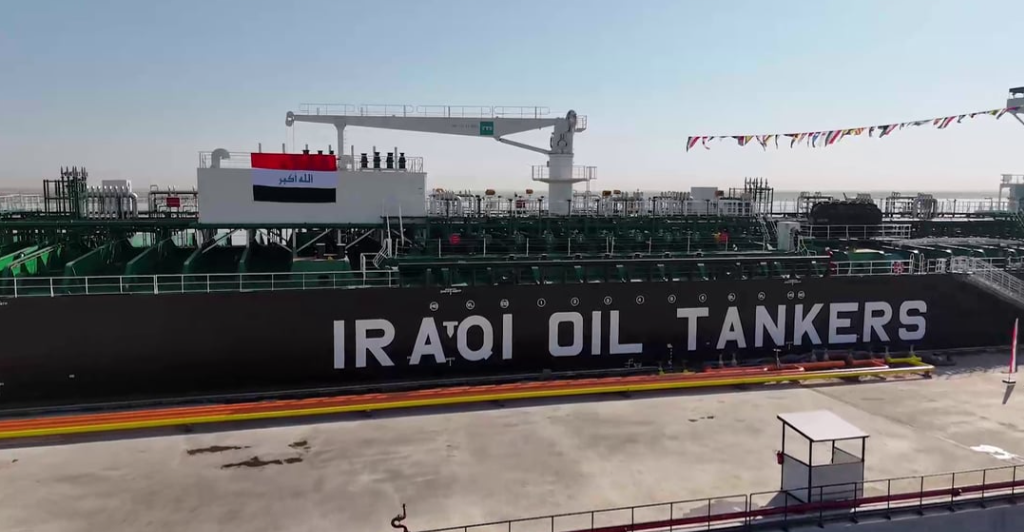
Iraq’s state owned Oil Tankers Company says it has successfully transported 2 million barrels of Iraqi crude through the Strait of Hormuz aboard a very large crude carrier. The company’s director general described the operation as the first of its kind carried out by the state tanker company in decades. The shipment comes at a sensitive time for Gulf energy exports as security concerns and regional conflict continue to disrupt shipping through the Strait of Hormuz. The operation highlights Iraq’s efforts to strengthen its own crude transportation capacity and maintain access to international oil markets.
Iraq’s state owned Oil Tankers Company has transported 2 million barrels of crude oil through the Strait of Hormuz aboard a very large crude carrier, marking what the company says is its first such operation in decades.
The company’s director general announced the successful shipment and described it as an important milestone for Iraq’s state controlled oil transportation sector.
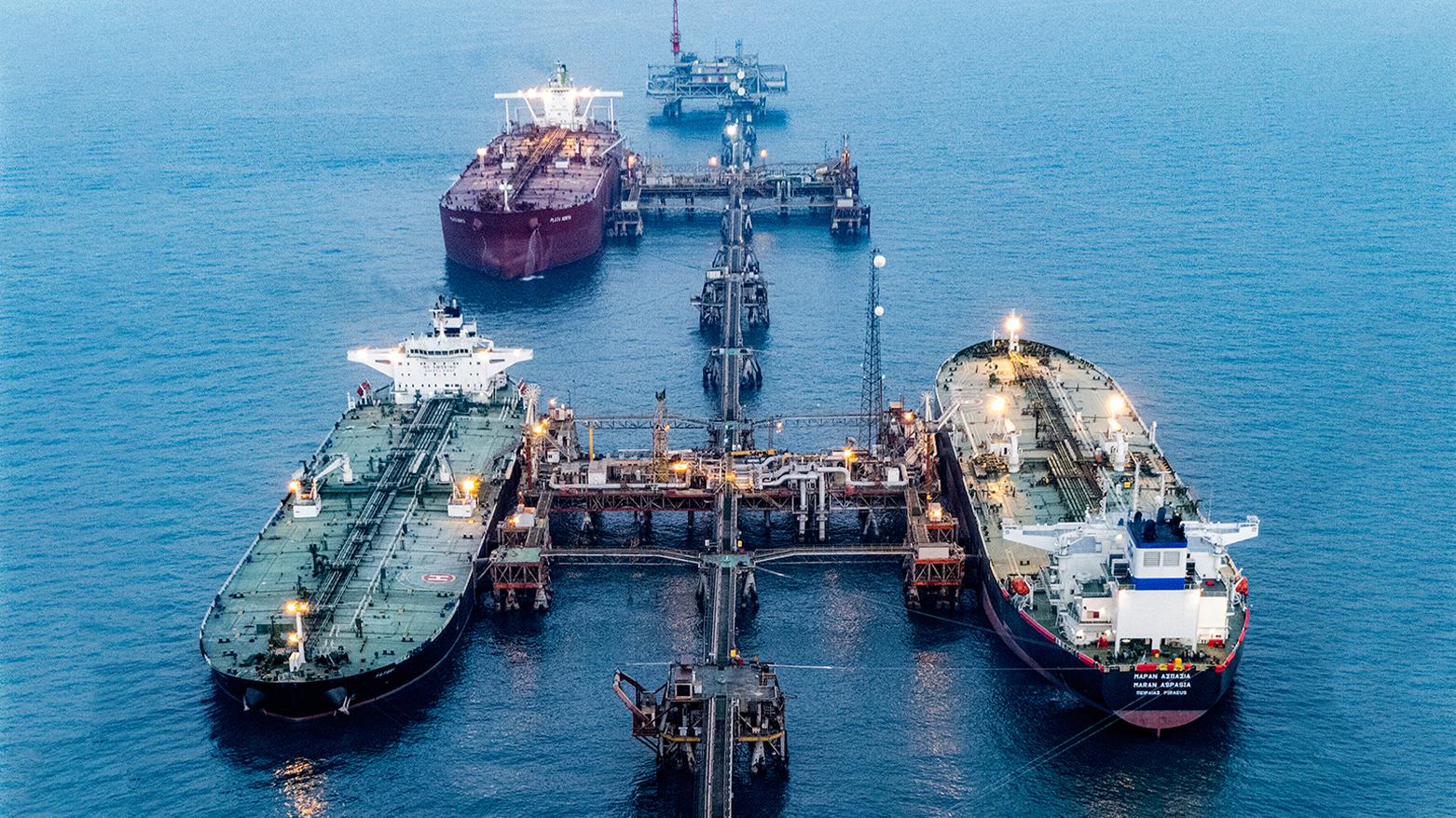
The operation involved a very large crude carrier, commonly known as a VLCC, a class of tanker designed to transport roughly 2 million barrels of oil on a single voyage.
FIRST SUCH STATE TANKER OPERATION IN DECADES
The Iraqi Oil Tankers Company said the voyage represents its first operation of this scale through the Strait of Hormuz in decades.
That distinction is important because Iraq has long relied heavily on foreign owned or commercially chartered vessels to transport crude sold through its southern export terminals.
A successful VLCC shipment by the state tanker company signals an effort to rebuild Iraq’s own maritime transport capacity.
IRAQ DEPENDS HEAVILY ON SOUTHERN OIL EXPORTS
Most of Iraq’s crude exports leave the country through terminals in the south near Basra.
From there, tankers must pass through the Persian Gulf and the Strait of Hormuz before reaching international markets.
That makes the waterway crucial to Iraq’s economy.
Oil exports provide the majority of government revenue and remain the country’s most important source of foreign currency.
STRAIT OF HORMUZ REMAINS A CRITICAL ENERGY ROUTE
The Strait of Hormuz is one of the most important maritime energy routes in the world.
Large volumes of crude oil and natural gas from Iraq, Saudi Arabia, Kuwait, Qatar and the United Arab Emirates normally pass through the narrow waterway.
Any disruption can quickly affect shipping costs, energy prices and global supply expectations.
The strategic importance of the strait has become even more pronounced during the current period of regional conflict.
SHIPPING CONDITIONS HAVE BEEN DIFFICULT
Commercial shipping through the Gulf has faced major challenges in recent months.
Conflict involving Iran and other regional actors has disrupted normal tanker movements and increased security risks.
Some producers have used alternative routes where possible.
Saudi Arabia, for example, has increased use of its East West Pipeline to move crude toward Red Sea export terminals.
Iraq has fewer large scale alternatives and remains particularly dependent on access through Hormuz.
IRAQ HAS LIMITED ALTERNATIVE EXPORT OPTIONS
Iraq’s geography makes southern maritime exports especially important.
Unlike Saudi Arabia, it does not currently have a large operational cross country pipeline capable of replacing most Gulf shipments.
Projects involving northern export routes have faced political, technical and security problems.
That means continued access to southern terminals and the Strait of Hormuz remains essential.
WHY A VLCC MATTERS
Very large crude carriers are among the biggest commercial tankers used in global oil markets.
A single VLCC can carry close to 2 million barrels of crude.
Using such vessels allows exporters to move large quantities of oil more efficiently over long distances.
The ability of Iraq’s own tanker company to conduct a shipment of this size could reduce dependence on outside shipping arrangements over time.
OPERATION MAY SUPPORT IRAQ’S SHIPPING STRATEGY
The Iraqi government has been working to rebuild the capacity of its national tanker fleet.
Years of war, sanctions, underinvestment and institutional decline weakened Iraq’s maritime oil transport sector.
Rebuilding a state operated fleet could give Baghdad greater control over part of its export logistics.
It could also allow the country to capture more value from transportation rather than relying entirely on international tanker operators.
SECURITY RISKS REMAIN HIGH
The successful voyage does not mean that security risks around the Strait of Hormuz have disappeared.
Recent incidents involving commercial tankers have increased concern across the region.
Ships have been advised to remain alert as military tensions continue.
Insurance costs for Gulf transit can also rise rapidly when maritime risk increases.
ENERGY MARKETS WILL WATCH IRAQ’S EXPORT CAPACITY
Iraq is one of the largest oil producers in OPEC.
Any sustained disruption to Iraqi exports can influence global oil markets.
Maintaining the ability to move crude through Hormuz therefore has importance beyond Iraq itself.
Buyers in Asia and elsewhere rely on regular Iraqi shipments.
FIRST OPERATION DOES NOT MEAN FULL FLEET INDEPENDENCE
The shipment is an important milestone, but it does not mean Iraq can now transport all of its crude using state owned tankers.
The country exports several million barrels of crude per day.
A single VLCC carrying 2 million barrels represents only part of that volume.
International tanker operators will continue to play a major role in Iraqi crude exports.
OPERATION COULD BE REPEATED
If the voyage is judged commercially and operationally successful, Iraq may seek to carry out similar shipments.
That would depend on available vessels, insurance, security conditions and contracts with buyers.
The government may also expand investment in its tanker fleet if it considers state transport strategically valuable.
ECONOMIC IMPORTANCE FOR IRAQ
Oil income dominates Iraq’s public finances.
Government salaries, infrastructure spending and many public services depend heavily on crude export revenue.
Any improvement in export reliability can therefore have direct fiscal significance.
At the same time, Iraq remains vulnerable to oil price swings because of its dependence on petroleum income.
REGIONAL INSTABILITY MAKES LOGISTICS MORE IMPORTANT
The current Middle East conflict has shown how vulnerable energy supply chains can become.
Producers are increasingly focused not only on how much oil they can produce but also on whether they can transport it safely.
For Iraq, the successful VLCC passage demonstrates that large scale shipments through Hormuz remain possible despite elevated security concerns.
WHAT IS CONFIRMED
Iraq’s state owned Oil Tankers Company transported 2 million barrels of Iraqi crude through the Strait of Hormuz.
The cargo was carried aboard a very large crude carrier.
The company’s director general described the operation as its first of this kind in decades.
WHAT REMAINS UNCLEAR
The company has not publicly provided full details about the buyer, final destination or commercial terms of the cargo.
It has also not announced how frequently similar state tanker operations will be carried out.
The broader security outlook for the Strait of Hormuz remains uncertain.
WHAT HAPPENS NEXT
Attention will now focus on whether Iraq repeats the operation with additional VLCC shipments.
The Iraqi Oil Tankers Company may also continue expanding its fleet and role in crude transportation.
For Iraq, the significance extends beyond a single cargo.
The operation represents an effort to restore state participation in large scale oil shipping at a time when control over export routes has become increasingly important.