NEARLY 159 MILLION BRAZILIANS SET TO VOTE IN CLOSELY CONTESTED PRESIDENTIAL RUNOFF
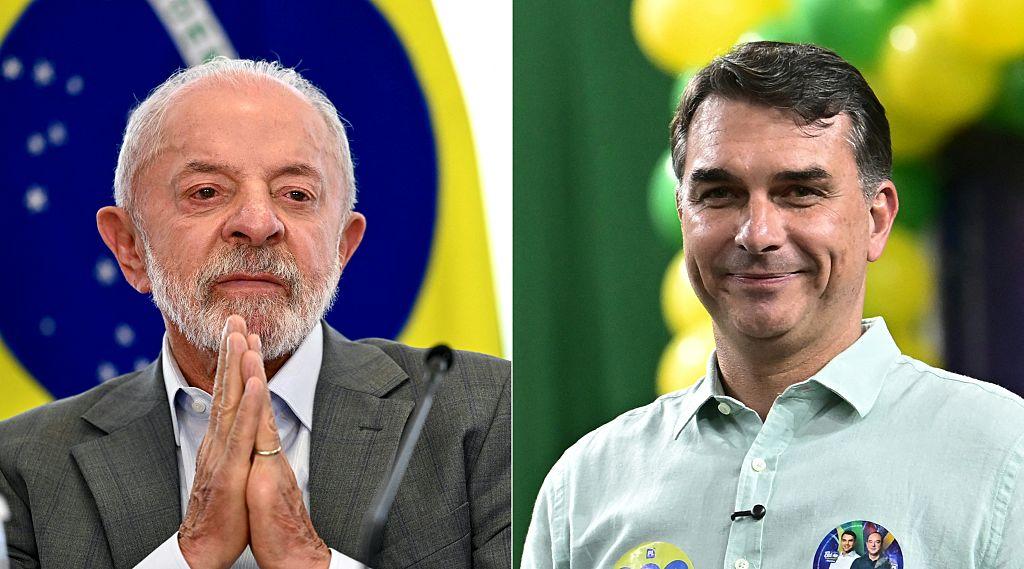
Nearly 159 million Brazilians are eligible to vote on Sunday in the presidential runoff between President Luiz Inácio Lula da Silva and Senator Flávio Bolsonaro. Bolsonaro led the October 4 first round with 47.03% of valid votes, compared with Lula’s 45.16%, but neither secured the majority required to win outright. Voting will run from 8 a.m. to 5 p.m. Brasília time, with electronic counting expected to produce results rapidly after polls close.
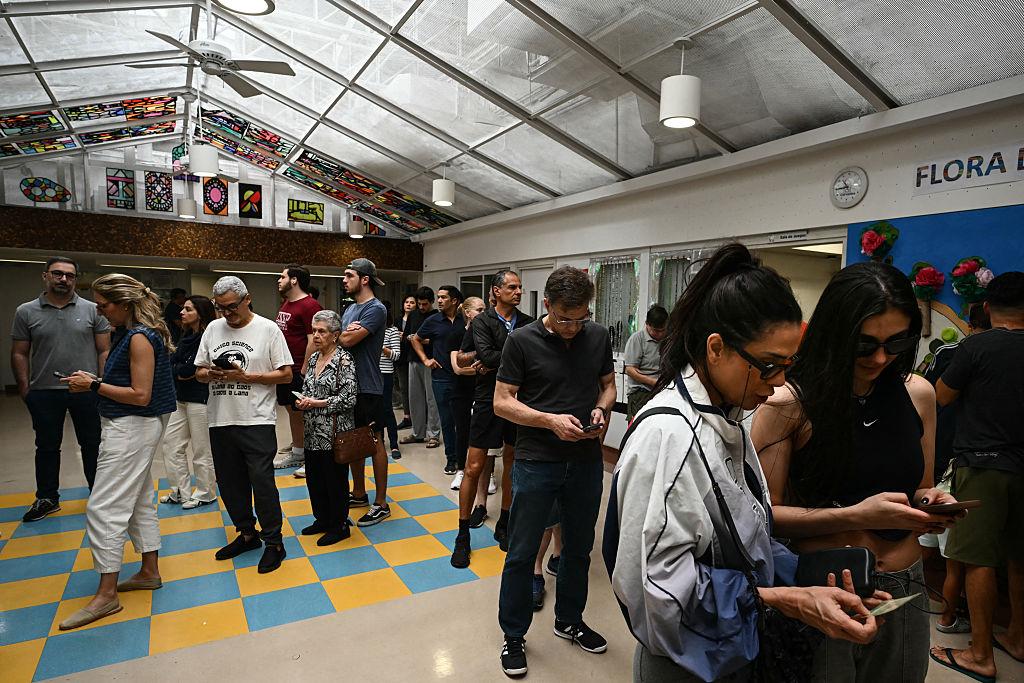
Nearly 159 million Brazilians are eligible to vote on Sunday in a closely contested presidential runoff between incumbent President Luiz Inácio Lula da Silva and Senator Flávio Bolsonaro, bringing Latin America’s largest democracy to the final stage of an election that will determine the direction of the country’s economy, public-security policy, environmental agenda and international relationships for the next four years. Brazil’s Superior Electoral Court says 158,765,543 voters are registered for the 2026 election, with polling stations scheduled to open at 8 a.m. and close at 5 p.m. Brasília time across the country and at designated voting locations overseas.
The runoff follows an unexpectedly tight first round on October 4 in which Bolsonaro finished ahead with 56,104,268 votes, equivalent to 47.03% of valid ballots, while Lula received 53,876,617 votes, or 45.16%. Because neither candidate secured more than half of the valid vote, the two advanced to a second round on October 25, transforming what had already been a polarized campaign into a direct contest between two sharply different political projects.
Bolsonaro, a 45-year-old senator from Rio de Janeiro and the eldest son of former President Jair Bolsonaro, is seeking the presidency for the first time. Lula, 80, is running for another term after previously serving as president from 2003 to 2010 and returning to office in 2023. The contest therefore brings together a sitting president seeking to extend his political legacy and a younger conservative challenger campaigning on a platform that draws heavily from his father’s political movement.
The first-round results immediately reshaped expectations surrounding the race. Bolsonaro’s 47.03% placed him more than two percentage points ahead of Lula, but the result did not establish a decisive advantage heading into the runoff because millions of voters supported eliminated candidates and will now determine the final outcome. Both campaigns have spent the past three weeks attempting to win over undecided voters, first-round supporters of smaller parties and citizens who abstained.
More than 33 million registered voters did not cast ballots in the first round, according to Associated Press reporting, making turnout another important factor in the runoff. Voting in Brazil is compulsory for most adults between the ages of 18 and 70, although abstention remains common and voters can justify their absence or pay a relatively small fine. The large number of first-round nonvoters means both campaigns have strong incentives to mobilize supporters who stayed home earlier this month.
Brazil uses electronic voting machines, and the national electoral authority expects results to begin emerging rapidly after polls close. The Superior Electoral Court plans to provide live coverage throughout Sunday and will begin emphasizing the official count from 5 p.m. Brasília time, when voting ends nationwide. Because the country uses a centralized electronic system, presidential results are typically known within hours rather than days, although a very close race could delay the point at which one candidate establishes a mathematically irreversible lead.
The presidential contest is taking place against a deeply polarized political backdrop. Lula has presented himself as the defender of social welfare programs, labor protections and Brazil’s diplomatic independence, while Bolsonaro has emphasized crime, public order, conservative social values and a more confrontational approach toward criminal organizations. Their campaigns have also differed significantly on taxation, environmental regulation, privatization, labor rules and the role of the state in the economy.
Lula has spent the campaign highlighting his record on poverty reduction and social spending while attempting to convince voters that his administration can protect household incomes during a period of concern about living costs. He has supported expanded welfare programs, reductions in fuel taxes and proposals to shorten Brazil’s maximum workweek from 44 hours to 40, presenting those measures as part of a broader effort to improve living conditions for working families.
Bolsonaro has concentrated heavily on public security, one of the issues that has dominated voter concerns during the campaign. He has advocated tougher penalties for violent crime, stronger action against organized criminal groups and the construction of large prison facilities modeled partly on approaches used elsewhere in Latin America. He has also called for criminal gangs to be treated as terrorist organizations, arguing that Brazil requires a more aggressive national response to organized crime.
The issue of public safety has become particularly important because Brazil continues to struggle with violent crime, powerful drug-trafficking organizations, militia groups and disputes over policing. Bolsonaro’s campaign argues that the federal government has not done enough to confront those threats, while Lula and his allies counter that public security requires not only stronger policing but also social investment, intelligence coordination and reforms aimed at reducing inequality and criminal recruitment.
Economic policy presents another clear division. Lula favors a more active role for government in directing development, supporting public investment and expanding social programs, while Bolsonaro has promoted a more market-oriented approach that includes lower business taxes, privatization and reduced regulation. The next administration will have to address Brazil’s fiscal position, infrastructure needs and pressure to create employment while maintaining investor confidence in one of the world’s largest emerging economies.
The congressional elections held alongside the first presidential round have added another layer of importance to Sunday’s vote because Brazil’s legislature shifted significantly to the right. Bolsonaro’s Liberal Party made substantial gains in the lower house and nearly doubled its representation in the Senate, while right-wing and centrist lawmakers collectively strengthened their ability to shape legislation regardless of who wins the presidency.
That shift means a Lula victory would not automatically give the president a cooperative Congress. His administration could face stronger resistance on environmental policy, labor regulation, Indigenous rights, social policy and judicial issues. Bolsonaro, by contrast, could enter office with a more politically aligned legislature, although Brazil’s fragmented party system would still require negotiation and coalition-building.
Environmental policy is another major dividing line. Lula has made reduction of Amazon deforestation a central part of his government’s climate agenda and has restored enforcement agencies and international cooperation weakened during Jair Bolsonaro’s presidency. Flávio Bolsonaro has called for what he describes as modernization of environmental regulation and greater flexibility for landowners and producers, while also questioning aspects of mainstream climate policy.
Scientists and environmental researchers have warned that the result could influence the pace of Amazon deforestation and degradation, although they also stress that no single election can determine the rainforest’s fate. Brazil contains most of the Amazon basin, meaning federal decisions on environmental enforcement, infrastructure, mining and agriculture have global consequences for biodiversity and carbon emissions.
Foreign policy has also become unusually prominent in the campaign, particularly because of Brazil’s relationship with the United States. U.S. President Donald Trump has publicly aligned himself with Bolsonaro’s political camp, while Lula has accused Washington of interfering in Brazilian affairs through economic and political pressure. The two candidates therefore represent noticeably different approaches toward the United States.
A Bolsonaro victory could bring Brasília and Washington into closer political alignment, particularly on security, trade and conservative political issues. Lula, meanwhile, has emphasized Brazilian sovereignty and a more independent foreign policy built around relations with China, other BRICS countries, Latin American partners and the wider Global South.
The possibility of external political pressure has become sensitive enough that foreign diplomats in Brasília have reportedly discussed quickly recognizing the official winner once Brazil’s electoral authorities complete the count. Those discussions reflect concern that premature statements from foreign leaders could undermine confidence in the result if the race is extremely close.
Brazil’s institutions remain sensitive to election-related disputes because of events following the 2022 presidential election. Former President Jair Bolsonaro eventually lost office after Lula defeated him, but allegations that Bolsonaro and political allies later attempted to overturn the result became the subject of criminal investigations and convictions. That history has placed particular attention on whether political leaders will respect the official result of the 2026 runoff.
Flávio Bolsonaro has sought to distance his own campaign from any suggestion that he would reject a legitimate result, while also criticizing electoral and judicial institutions his political movement has long argued are hostile to conservatives. Lula has called for institutional stability and repeatedly stressed that the official count should determine the outcome.
Brazil’s voting system has been subjected to repeated scrutiny over several election cycles, but no credible evidence has established widespread fraud capable of changing the outcome of recent national elections. The Superior Electoral Court continues to defend the security of electronic voting machines and conducts verification procedures before, during and after Election Day.
The final days of the campaign have been intense. Lula and Bolsonaro faced each other in their second and final televised debate on Friday, with exchanges focused on minimum wage policy, healthcare, public security, agribusiness and the broader character of each candidate’s political project. The debate was less explosive than their earlier confrontation but still included sharp personal attacks and attempts by both men to appeal to undecided voters.
Bolsonaro apologized during the debate after using a derogatory reference to Lula’s missing finger, while Lula accused his opponent of encouraging vigilantism. The discussion also became emotional when the candidates addressed policing, criminal violence and the case of a police officer previously represented by Bolsonaro in legal proceedings connected to the death of a young child.
Both campaigns moved immediately from the debate into final rallies and voter-mobilization efforts. Bolsonaro and Lula are expected to spend Saturday reinforcing their support in major population centers including São Paulo and Rio de Janeiro before campaign restrictions tighten on Election Day.
Recent opinion polling has continued to show a close race. A CNT/MDA survey released Saturday placed Bolsonaro at 46.3% and Lula at 45%, a difference of 1.3 percentage points that falls within the poll’s 2.2-point margin of error. The survey interviewed 2,032 people between October 21 and 23, meaning neither candidate held a statistically clear advantage in that poll.
Polling should not be treated as a prediction of the final result, particularly in a race where turnout and late voter decisions may be decisive. The first round itself demonstrated the limitations of campaign expectations, with Bolsonaro performing strongly and forcing the contest into a second round despite some earlier surveys suggesting a different balance.
The decisive factor may therefore be which campaign performs better at converting sympathy into actual votes. Bolsonaro’s first-round advantage gives him a strong starting position, but Lula’s campaign is counting on support from voters who backed eliminated candidates as well as stronger turnout among poorer and working-class constituencies where the president’s social programs remain popular.
Bolsonaro is seeking to expand his support among conservative voters, evangelical Christians, business owners and voters concerned about crime. His campaign has also attempted to reassure economically moderate voters that a conservative government would maintain institutional stability while pursuing deregulation and tougher public-security policies.
Lula’s strategy has been to frame the runoff as a choice between social inclusion and a return to the political style associated with Jair Bolsonaro. He has emphasized democratic institutions, poverty reduction and state-led development while warning that a Bolsonaro presidency could weaken environmental protections and social programs.
Bolsonaro rejects that characterization and presents the contest instead as a choice between continued left-wing government and a more conservative administration focused on security, lower taxes and stronger private-sector activity. He has argued that voters dissatisfied with crime, public spending and the cost of living should use the runoff to change the country’s political direction.
The election will also determine who governs Brazil as it navigates a changing international economic environment. The country is a major agricultural exporter, energy producer and emerging industrial power, and its relationships with China, the United States, Europe and neighboring Latin American countries have important implications for trade and investment.
China remains Brazil’s largest trading partner and an important buyer of commodities such as soybeans, iron ore and oil. Lula has generally supported deeper economic engagement with Beijing while maintaining relationships with Western partners. Bolsonaro has indicated greater political alignment with Washington, although Brazil’s dependence on Chinese trade means any government would have strong incentives to preserve commercial ties.
The next president will also inherit pressure to improve productivity, modernize infrastructure and manage public debt while maintaining social programs. Brazil’s economic size gives it significant regional influence, but persistent inequality, weak productivity growth and fiscal constraints continue to limit the government’s room for maneuver.
The outcome will therefore matter well beyond Brazil’s borders. As Latin America’s largest economy and most populous democracy, Brazil often shapes regional political and economic debates, particularly on climate policy, trade, security and relations with global powers.
The runoff is also being closely watched because of the broader ideological shift taking place across Latin America. Several countries have experienced strong movements toward both the political left and right in recent years, and Brazil’s choice between Lula and Bolsonaro will influence how those regional trends are interpreted.
Sunday’s vote will not resolve every political conflict facing the country. Whoever wins will govern alongside a Congress that has moved to the right, powerful state governments, an assertive Supreme Court and a deeply divided electorate. The next president will therefore need to negotiate across institutions even after securing a national mandate.
For voters, however, the immediate choice is direct. Lula is asking Brazilians to extend his presidency and continue the social, economic and environmental policies of his current administration, while Bolsonaro is offering a conservative alternative centered on security, deregulation and a stronger relationship with the political movement created by his father.
More than 158.7 million eligible voters now have the final say. Polling stations will open across Brazil on Sunday morning, ballots will be cast electronically throughout the day and official counting will begin immediately after voting ends at 5 p.m. Brasília time.
Because the electronic system allows rapid tabulation, Brazilians and international observers could know the direction of the result within hours of the polls closing. Until then, the contest remains unresolved, with the first-round gap narrow, opinion surveys tightly divided and millions of voters preparing to decide which candidate will lead Latin America’s largest economy into its next political chapter.