THREE ZAMFARA CLERICS KIDNAPPED ON WAY TO TINUBU PRAYER SESSION RESCUED AS THREE REMAIN IN CAPTIVITY
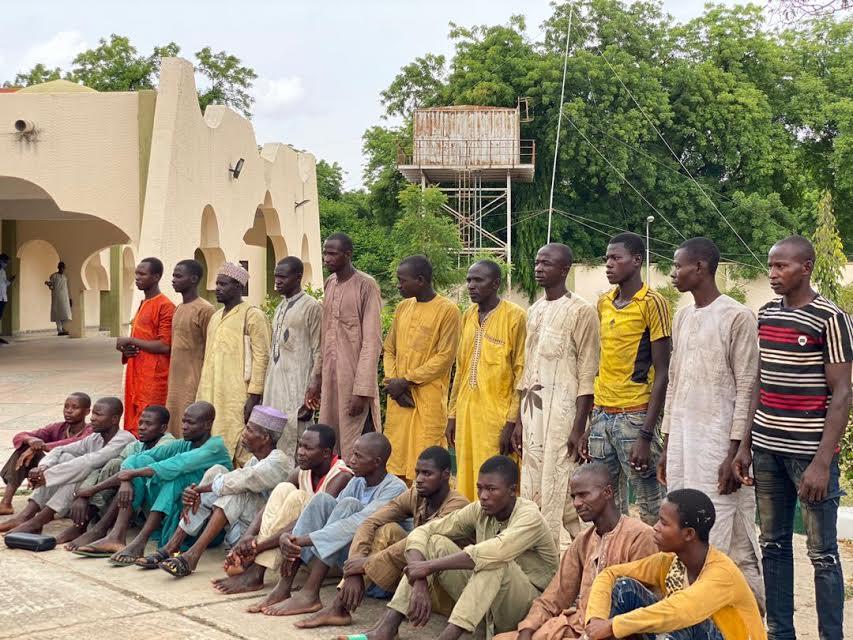
Three of the six Islamic clerics kidnapped in Zamfara State while travelling to a special prayer session for President Bola Tinubu have been rescued in a joint operation involving ONSA, the DSS and the Nigeria Police Force. The clerics were abducted on September 12 along the Dakko-Damri feeder road near Sububu Forest in Bakura LGA. Their captors reportedly demanded ₦30 million, but authorities have not confirmed any ransom payment. The rescued men are stable after medical checks and debriefing, while operations continue to free the remaining three clerics. Channels TV
Three Islamic clerics kidnapped while travelling to attend a special prayer gathering for President Bola Ahmed Tinubu in Zamfara State have regained their freedom following a coordinated intelligence-led operation involving the Office of the National Security Adviser, the Department of State Services and the Nigeria Police Force. The rescued clerics were among six Imams abducted on September 12 while travelling along the Dakko-Damri feeder road in Bakura Local Government Area, close to the Sububu Forest axis, an area that has remained vulnerable to repeated bandit attacks and kidnappings. Security agencies say the three men were recovered unharmed, underwent medical examinations and security debriefings and are in stable condition, while tactical operations are continuing to locate and free the three clerics who remain in captivity.
The abduction occurred at about 11:30 a.m. on September 12 as the group travelled toward Talata Mafara for a prayer session organised to seek divine guidance and favour for the Tinubu administration. Armed men reportedly intercepted their vehicle along the Dakko-Damri road, near Gidan Suleiman Bature and roughly three kilometres from Damri village, before taking all six clerics away into the surrounding area. The location lies close to the Sububu Forest axis, a region repeatedly associated with the movement of armed groups and kidnapping networks operating across Zamfara’s rural communities.
Police confirmed the abduction shortly after it occurred and launched a coordinated search involving officers from the Bakura Division, the Violent Crime Response Unit and other security agencies. At the time, the Zamfara State Police Command said armed bandits carrying sophisticated weapons had ambushed the clerics’ vehicle and taken them to an unknown location. The command subsequently deployed operational personnel and appealed to communities for credible information that could help locate the abducted men and identify the group responsible.
Reports following the kidnapping said the abductors demanded ₦30 million in ransom for the release of the six clerics. Security agencies have now confirmed the rescue of half of the group, but no official statement has said that ransom was paid as part of the operation. Authorities have instead described the recovery as the result of intelligence-led activity and inter-agency coordination, suggesting that operational pressure and information from local communities played a central role in securing the clerics’ release.
Zamfara State Commissioner of Police Muhammad Bello confirmed the rescue in Gusau and praised what he described as close cooperation between ONSA, the DSS and the police. Bello said tactical operations are still underway and are relying heavily on real-time intelligence from residents to locate the remaining kidnappers and secure the release of the other three clerics still being held. His statement makes clear that the operation is not yet complete and that security agencies continue to treat the abduction as an active case rather than a fully resolved incident.
A senior security operative involved in the recovery also said the rescued clerics were brought out of captivity without injuries and were immediately subjected to medical evaluation and debriefing. Such procedures are standard after hostage rescues because authorities need to assess victims’ physical condition while also gathering information about where they were held, how their captors operated, the number of armed men involved and possible routes used by the group. Information provided by freed victims can become critical in identifying camps, logistics networks and movements that may lead security forces to remaining hostages.
The rescued clerics are expected to be formally handed over to the Zamfara State Government before being reunited with their families. Security agencies have not publicly identified which three members of the original group were rescued, and responsible reporting should therefore avoid assigning names to the freed men until authorities provide a confirmed list. Several news reports identify members of the abducted group, including Imam Yahuza, Magawata Abdullahi, Malam Shehu Dakko, Imam Bala Fagon and Na’ibi Tasi’u, but the public reporting does not yet establish which individuals are among those now free.
The fact that three clerics remain in captivity continues to cast a shadow over the rescue operation. Police say efforts are ongoing to track the bandits and free the remaining victims, and residents have been urged to provide timely and actionable intelligence rather than circulate rumours or information that could compromise ongoing security operations. The continued captivity of half the group also illustrates the difficulty of hostage-recovery missions in Zamfara, where kidnappers often move victims through forests and remote rural areas designed to make conventional security operations more difficult.
Zamfara has remained one of the most heavily affected states in Nigeria’s long-running banditry crisis. Armed groups operating across parts of the northwest have been responsible for village raids, highway kidnappings, cattle rustling, attacks on farmers and abductions for ransom. Their activities have disrupted agriculture, commerce, education and ordinary travel while forcing security agencies to maintain repeated operations across forests and rural road networks.
The Sububu Forest area in particular has attracted repeated security attention because of its difficult terrain and links to routes used by armed groups. Communities surrounding forest corridors are often vulnerable because attackers can strike settlements or intercept travellers before retreating quickly into areas where pursuit becomes more complicated. Roads connecting smaller villages to larger towns can therefore become high-risk zones even during daytime travel.
The September abduction demonstrated that danger. The clerics were reportedly taken in broad daylight, at about 11:30 a.m., while travelling toward Talata Mafara. That timing showed that the abductors were sufficiently confident to operate during a period when roads would normally be active, reinforcing concerns about the ability of bandit groups to exploit gaps in rural security coverage.
The prayer-session context has also attracted national attention because the victims were reportedly travelling specifically to join religious leaders seeking divine guidance and political favour for President Tinubu’s administration. That detail gave the abduction a symbolic dimension, with clerics travelling to pray for national leadership becoming victims of the very insecurity that remains one of the government’s most significant challenges.
The security operation that freed three of the men therefore carries political as well as humanitarian significance. For the families involved, the central issue is the safe return of loved ones, but for the government, the rescue provides another test of whether intelligence-sharing and inter-agency cooperation can produce tangible results in areas where bandit groups have operated for years.
The involvement of the Office of the National Security Adviser reflects the increasingly central role of national-level intelligence coordination in major kidnapping cases. The ONSA brings together information from military, police and intelligence agencies and can help coordinate operations where victims may be moved across jurisdictions or where several agencies possess different pieces of relevant intelligence.
The DSS contributes intelligence-gathering and surveillance capabilities, while the police retain a central role in criminal investigation, local operations and the eventual prosecution of suspects. Joint operations can therefore combine different capabilities in ways that single agencies may struggle to achieve alone.
Authorities have repeatedly emphasised this collaborative model in recent rescue operations across the northwest. In several cases, security agencies have described success as the result of intelligence generated by communities and shared among multiple services. That approach is particularly important against kidnapping networks because hostages are frequently moved through areas known primarily to local residents.
Community intelligence can help identify unusual movements, abandoned camps, strange vehicles or individuals suspected of supplying food, fuel or information to armed groups. Security officials have therefore urged residents to continue providing credible information while warning that leaked operational details can endanger both hostages and personnel.
The ₦30 million ransom demand highlights the economic structure underlying much of the region’s kidnapping crisis. Ransom payments have become an important source of revenue for criminal groups, providing money that can be used to purchase weapons, motorcycles, supplies and communications equipment while financing further attacks.
This is one reason security agencies rarely publicly confirm ransom payments even when victims are eventually released. Authorities generally argue that publicly validating ransom negotiations can encourage further kidnappings and strengthen the perception that hostage-taking is a reliable source of income.
In the case of the Zamfara clerics, reports consistently say the abductors demanded ₦30 million, but there is no confirmed evidence in the public record that such an amount was paid. The police and security sources have instead presented the operation as an intelligence-led rescue, and there is currently no basis for reporting otherwise.
The distinction matters because “rescued” and “released” can imply different circumstances. When security agencies publicly describe an operation as a rescue, the term suggests direct operational involvement in recovering victims rather than a simple negotiated handover. However, without detailed operational disclosure, the precise mechanics of the recovery remain classified or undisclosed.
Security agencies often withhold such details to protect intelligence sources, avoid revealing tactics and prevent armed groups from understanding how they were located. That secrecy can create uncertainty in public reporting, but it can also be necessary if operations to rescue additional hostages are still underway.
In this case, three clerics remain captive, making operational secrecy especially important. Any information released about the rescue routes, intelligence methods or locations could potentially cause the kidnappers to move the remaining victims or change their security arrangements.
The continuing operation also means that families of the remaining clerics remain under intense pressure. While three households can now prepare for reunion, three others are still waiting for information about whether their relatives are safe and when they may return.
This uneven outcome is one of the most painful features of hostage rescues involving groups. Partial freedom can bring relief while simultaneously increasing anxiety for those whose relatives remain behind.
Security agencies will likely use information from the rescued clerics to reconstruct what happened during their weeks in captivity. Investigators may ask where they were taken immediately after the abduction, whether they were moved repeatedly, how many guards were present, whether they heard names or saw landmarks and whether the kidnappers communicated with ransom negotiators in their presence.
Such details can help map the structure of a kidnapping network and may reveal connections to other attacks. Bandit groups often operate through loose alliances rather than formal command structures, and individuals involved in one abduction may also participate in cattle theft, village raids or highway attacks.
The security challenge is therefore not only rescuing hostages but dismantling the network that made the kidnapping possible. Without arrests, weapon recoveries and disruption of supply chains, the same group or associated fighters may simply target new victims.
The police commissioner’s emphasis on tracking down the abductors reflects that broader objective. Rescue is the immediate priority, but prosecution and disruption are necessary if the operation is to produce longer-term security gains.
Zamfara’s insecurity has also created a substantial humanitarian burden. Repeated attacks have displaced rural residents, disrupted farming and contributed to abandoned communities in areas where people no longer believe they can travel safely.
Farmers have been forced to negotiate access to land, traders have reduced journeys along risky routes and families have sometimes relocated permanently to larger towns where security is stronger. These changes weaken local economies and make communities more dependent on government assistance.
Religious leaders are not immune from the violence. Clerics often travel between communities for sermons, ceremonies, mediation and other religious gatherings, making them vulnerable on rural roads where armed groups frequently operate.
Their social influence can also make them attractive kidnapping targets because abductors may assume communities or political figures will mobilise quickly to raise ransom money for their release.
The prayer gathering in Talata Mafara was reportedly organised to seek divine favour for Tinubu’s administration and political future, giving the clerics’ journey a national political connection despite the essentially religious nature of the event.
That context has led some reports to frame the case primarily around the president, but the core issue remains the kidnapping of six private citizens by armed bandits and the continuing security operation to recover the remaining victims.
The Tinubu administration has made security one of its major priorities and has repeatedly directed military and intelligence agencies to intensify operations against armed groups. The rescue of kidnapped citizens is frequently highlighted by the government as evidence of improved coordination, although abductions continue to occur across several northern states.
The persistence of kidnappings demonstrates that individual rescue successes do not necessarily mean the underlying threat has been eliminated. Security agencies may recover victims from one group while another gang carries out a fresh attack elsewhere.
This creates a cycle in which authorities must simultaneously conduct offensive operations, respond to new incidents, protect roads and communities and maintain intelligence coverage across vast rural territories.
Technology can assist in that effort through aerial surveillance, communications tracking and data analysis, but local intelligence remains essential because armed groups often operate in terrain where technology alone cannot provide a complete picture.
The collaboration credited in the clerics’ rescue suggests that authorities are increasingly combining national intelligence assets with locally generated information. If that model produces more recoveries without ransom payments, it could become an important part of the broader anti-kidnapping strategy.
However, the effectiveness of any strategy must ultimately be measured not only by how many hostages are rescued but by whether the number of new kidnappings begins to fall. Prevention is more important than recovery because every successful abduction exposes victims to violence, trauma and uncertainty even when they later return home unharmed.
The rescued clerics will likely need continued support after their formal handover. Medical examinations can identify immediate physical problems, but kidnapping victims may also experience anxiety, sleep disturbances, fear and other psychological effects after weeks in captivity.
Security debriefings can be stressful as well because victims are asked to recall details of their imprisonment shortly after release. Authorities therefore need to balance investigative needs with the victims’ physical and emotional recovery.
Their eventual reunion with families will represent a major moment of relief after roughly seven weeks in captivity. The remaining three families, however, are still waiting for the same outcome.
Police have therefore stressed that the operation remains active and that the public should continue supporting security personnel with credible information. This is not yet a completed rescue story.
The most accurate headline is consequently that three of the six clerics have been rescued, while three remain captive.
That distinction prevents the impression that all the victims have regained freedom when half of the original group are still being held.
The identities of the particular clerics rescued also remain undisclosed in the strongest available reporting, which means news organisations should avoid guessing based on photographs or partial name lists.
The official focus now turns to the continuing search through the bandit networks and terrain surrounding the wider Zamfara forest corridors. Security agencies will be hoping that intelligence obtained during the first recovery provides new leads capable of reaching the remaining victims.
For the families, every additional day remains significant. For security agencies, the operation will not truly be complete until the final three clerics are brought home and those responsible for the abduction are identified and prosecuted.
What is already confirmed is that three men who spent weeks in captivity are now safe, medically assessed and preparing to return to their families. That is a significant success for the joint security operation, but it is only half of the mission.
The remaining task is clear: free the other three clerics and break the kidnapping network that intercepted them on the Dakko-Damri road in the first place.