TRUMP’S NEW PRESS SECRETARY LASTS JUST FIVE DAYS AS KATIE ZACHARIA EXITS WHITE HOUSE AFTER ROCKY DEBUT AND QUESTIONS OVER LEGAL CREDENTIALS
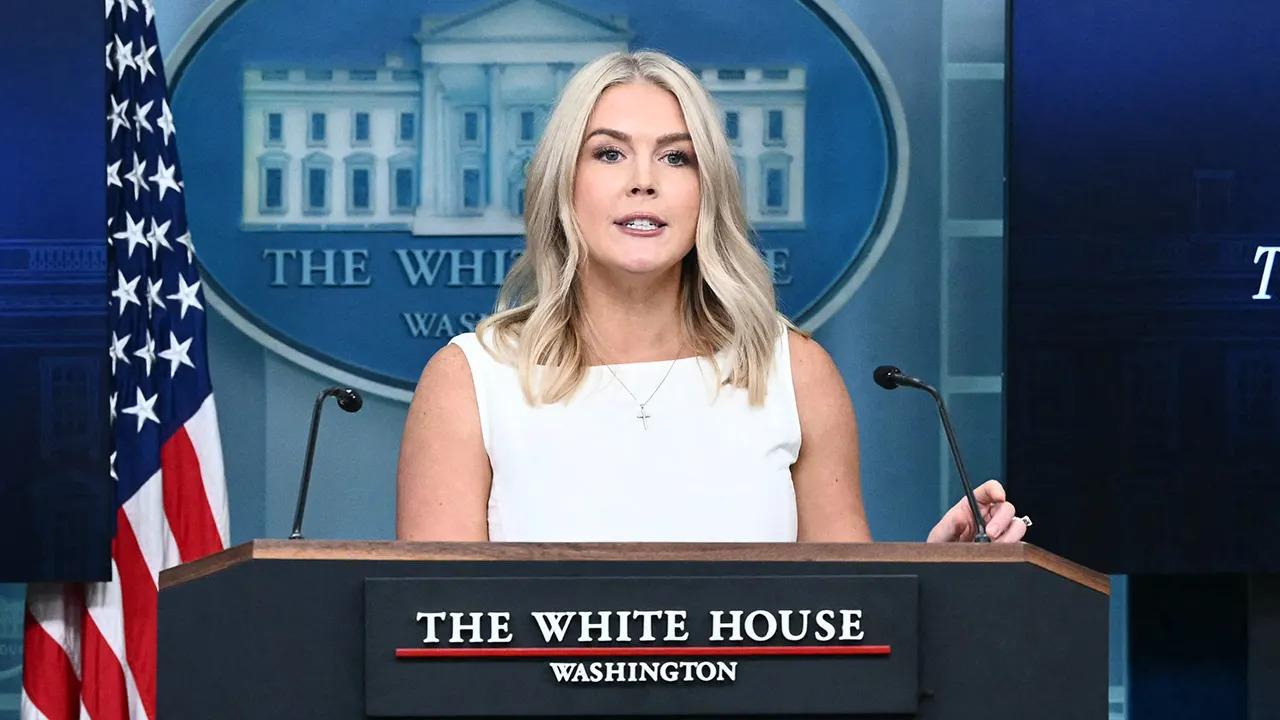
Katie Zacharia has left the White House press secretary role after only about five days, following criticism of her debut briefing and intense scrutiny over how she described her legal background. Zacharia acknowledged that she had not passed the California bar examination and was not licensed to practise law in the United States. President Donald Trump publicly said she had been treated harshly by the media but also advised her to reconsider whether the job was right for her. Reuters described her as dismissed, while AP and other outlets reported that she was stepping down or transitioning out of the position. Reuters
Katie Zacharia has left her role as White House press secretary less than a week after taking the job, ending one of the shortest tenures in the history of the position and plunging President Donald Trump’s communications operation into another round of uncertainty only weeks before the United States midterm elections. Zacharia’s departure came after days of criticism over her debut behind the White House briefing room podium, questions about how she had described her legal background and growing doubts inside and outside the administration over whether she was prepared for one of the most demanding communications jobs in American politics. The episode escalated rapidly after Trump publicly suggested that she should reconsider whether the position was right for her, even as he defended her personally and accused the media of treating her too harshly. By Friday, October 16, multiple U.S. outlets reported that she was leaving the post after only five days, making her brief stay notable even by the standards of an administration that has experienced frequent personnel turnover.
Zacharia had taken over the role at a politically sensitive moment for the White House, with Trump preparing for a difficult midterm election period and facing intense scrutiny over both domestic and foreign policy. The press secretary is responsible for communicating the administration’s message, defending presidential decisions and handling often aggressive questioning from journalists, making the job one of the most visible positions in the federal government outside the presidency itself. Her appointment had therefore drawn immediate attention, particularly because she was less experienced in traditional White House communications than many of her predecessors. The administration initially presented her as a strong new voice capable of defending Trump’s agenda, and the White House even issued an official release praising her first briefing as commanding and successful. Within days, however, that positive narrative had collapsed.
Her first official briefing became the centre of the controversy. The session lasted about 14 minutes and was widely described by journalists and political observers as awkward and heavily scripted. Zacharia took questions from only a small number of outlets, including Breitbart, Fox News and the Daily Mail, and critics said she appeared uncomfortable and insufficiently prepared for the demands of the podium. The White House had publicly promoted the briefing as a strong debut, but outside reviews were considerably harsher, including from media organisations that are often friendly to Trump. The contrast between the administration’s praise and the reaction among journalists quickly turned her performance into a national political story rather than the routine introduction the White House had hoped for.
The controversy then widened beyond her performance and focused heavily on her professional credentials. Zacharia has a law degree from Pepperdine University and had previously described herself in public settings as a lawyer or attorney. Questions emerged after reporters found no evidence that she had been admitted to practise law in a U.S. jurisdiction. She later acknowledged during interviews that she had taken the California bar examination but did not pass it and had not retaken it. She defended her earlier use of legal terminology by saying she had worked in a law firm and had been advised that someone with a law degree could describe themselves as a lawyer even if they were not a licensed practising attorney. Critics said that explanation was misleading, particularly because Trump had himself introduced her using language suggesting she was an attorney.
The issue became even more damaging when media appearances intended to defend her background created additional scrutiny. During television interviews, Zacharia acknowledged that she had never passed a U.S. bar exam and was not licensed as an attorney. She said her legal education and work experience had formed the basis for how she described herself. The distinction between holding a law degree and being licensed to practise law became a major subject of discussion, with legal commentators pointing out that those are not the same thing. Her explanations were closely analysed because credibility is especially important for a press secretary whose core responsibility is communicating accurate information on behalf of the president.
The controversy rapidly reached Trump himself. Speaking to reporters on Friday, the president said he believed Zacharia had been treated badly by the media but also indicated that he had advised her to reconsider whether she wanted the job. Trump said, in effect, that the role might not be worth the pressure she was experiencing and publicly questioned whether it was the right fit. That intervention was widely interpreted as a sign that her future in the role had become uncertain, particularly because presidents rarely make such comments about a newly appointed senior spokesperson unless a change is already under discussion. Within hours, reports emerged that she was leaving the position.
The exact characterisation of the departure has varied. Reuters reported that she was dismissed, while AP and the Washington Post described her as stepping down or transitioning out of the role after the president publicly encouraged her to reconsider. What is not disputed is that Zacharia’s tenure ended after roughly five days and that it followed intense criticism over her media performance and professional background. The speed of the departure made it one of the shortest press secretary tenures in White House history and immediately invited comparisons with Anthony Scaramucci, whose famously brief period as White House communications director during Trump’s first administration lasted only 10 days.
Zacharia’s time in the job was even shorter. Business Insider described it jokingly as “half a Scaramucci,” reflecting how quickly the appointment unravelled. The comparison became popular online because Scaramucci’s short tenure had previously become a political shorthand for rapid turnover in the Trump White House. Zacharia’s exit now potentially establishes an even more extreme benchmark for instability in senior communications roles.
The White House has not rushed to announce a permanent replacement. Trump indicated that he was not in a hurry to fill the position, reinforcing his long-standing tendency to act as his own primary spokesperson. Unlike many presidents who rely heavily on communications staff to deliver daily messages, Trump frequently speaks directly to reporters, uses social media extensively and holds lengthy exchanges with journalists. That approach has sometimes reduced the practical importance of the press secretary compared with previous administrations, but the role remains central to organising the administration’s official message and responding to daily controversies.
The timing of the departure is especially significant because the midterm elections are approaching. The White House is trying to shape public perceptions of Trump’s record while Republicans fight competitive races for control of Congress. Communications discipline becomes particularly important during such periods because almost every statement from the administration can quickly become part of campaign messaging. A sudden vacancy in the press secretary role risks adding uncertainty at a time when the White House would ordinarily want consistency and a clear line of communication.
Zacharia’s appointment itself had reportedly bypassed some usual internal processes. The Washington Post reported that Trump made the decision without fully consulting key advisers, contributing to questions over how thoroughly she had been vetted before being placed in such a high-profile role. That issue has become a broader concern because the controversy over her credentials emerged almost immediately after her appointment. Critics inside Washington have argued that a basic vetting process should have identified the bar admission issue before she was introduced publicly as someone with a legal background.
The episode has therefore raised questions not only about Zacharia but about the administration’s personnel procedures. Appointing a senior public official whose professional description could be challenged within days created unnecessary political damage for the White House. Communications roles are especially vulnerable to such problems because the person responsible for defending the administration becomes the subject of the controversy, making it much more difficult for the White House to shift attention elsewhere.
The White House’s initial public defence also complicated matters. Its October 13 release described Zacharia’s first briefing in overwhelmingly positive language, saying she had delivered a powerful and commanding performance. That description sat awkwardly beside widespread media criticism of the same appearance. The gap between the official portrayal and what many viewers saw became another part of the story, reinforcing accusations that the administration was unwilling to acknowledge obvious problems.
Trump nevertheless continued to defend Zacharia personally. His public comments suggested that he viewed her as someone who had been overwhelmed by the job rather than someone he considered personally disloyal. He described her as a good person and blamed the media for putting excessive pressure on her. At the same time, by publicly advising her to reconsider, he effectively made it difficult for her to remain in the role without further speculation.
That combination of personal praise and professional doubt is characteristic of how Trump has handled some previous staff departures. He often separates criticism of an individual’s suitability for a position from criticism of their personal character, particularly when he wants to avoid appearing to admit that an appointment was a mistake. In Zacharia’s case, his comments allowed him to portray the departure as a consequence of media pressure rather than poor White House decision-making.
Critics were not persuaded. Opponents of the administration argued that the incident showed poor vetting and internal disorganisation. They pointed to the speed with which questions over Zacharia’s legal credentials became public and asked why those issues had not been resolved before she took one of the most visible positions in government. Some also argued that her first briefing revealed insufficient preparation for dealing with difficult questioning.
Supporters of the administration responded that the press corps had focused excessively on personal details and had not given Zacharia a fair opportunity to settle into the role. They accused journalists of attempting to embarrass a newly appointed official instead of evaluating her over a longer period. Trump himself echoed that argument, saying she had been treated unfairly.
The controversy over her legal credentials, however, was difficult to dismiss because it involved factual questions about whether she was licensed to practise law. Holding a Juris Doctor degree does not automatically make someone a licensed attorney in the United States. Graduates generally must pass a state bar examination and satisfy additional requirements before being authorised to practise. Zacharia acknowledged that she had not passed the California bar examination and had not subsequently become licensed elsewhere in the country.
She did have legal-related experience. Reports indicate that she worked with the Zhong Lun law firm in China and had described that period as involving international transactional work. She also worked in conservative media and political advocacy before joining the administration. Her supporters argued that those experiences gave her a legitimate legal and communications background even if she was not a licensed attorney.
The issue became damaging largely because of how she and the administration had presented that background. Once reporters began finding old references to her as an attorney or lawyer, every subsequent explanation received further scrutiny. The controversy therefore moved from a technical question over professional terminology into a credibility issue.
For any White House press secretary, credibility is a central part of the job. The spokesperson must repeatedly provide information on military operations, economic policy, national security, personnel decisions and political controversies. Reporters need to know that descriptions of facts and credentials are accurate. A debate over the spokesperson’s own biography therefore creates an unusual problem because it weakens the person’s authority before they begin defending more consequential matters.
Her departure also comes during a period of broader turbulence within the Trump administration. Reports from Washington have described growing internal competition and concerns among Republican officials over the midterm elections. Some advisers are already looking toward possible changes in senior White House leadership depending on the election results. The abrupt loss of a press secretary adds another element of uncertainty to that environment.
There have also been other recent personnel controversies. Several senior officials and diplomatic appointees have faced dismissals or departures, reinforcing the perception of an administration undergoing frequent change. Trump supporters argue that rapid turnover can reflect his willingness to make changes when staff are not working effectively. Critics see it as evidence of poor hiring decisions and inconsistent management.
Zacharia’s case stands out because of how extraordinarily quickly events unfolded. She was introduced, delivered her first briefing, faced intense questioning over her background, went on television attempting to explain the issue, received a public suggestion from the president that she reconsider the job and then left, all within a single working week.
That sequence ensured that her short tenure became a story in itself. Instead of using the podium to promote the administration’s political message, Zacharia became the subject journalists were asking the White House about. Once that happened, retaining her risked extending the controversy indefinitely.
Her exit also highlights the unusual nature of the press secretary position under Trump. In previous administrations, presidents tended to use the spokesperson as a buffer between themselves and the daily press corps. Trump has frequently preferred direct engagement, sometimes answering questions multiple times in a single day and communicating policy decisions through social media. That can make the formal spokesperson role harder because the press secretary may need to explain or defend statements made by the president only minutes earlier.
The job also requires immediate familiarity with an enormous range of subjects. Reporters can ask about foreign wars, immigration, economic data, criminal investigations, congressional negotiations and personal controversies within the same briefing. Even experienced political communicators can struggle with the pace. Zacharia entered the position with relatively little traditional White House briefing-room experience, making the transition especially demanding.
Her first briefing appeared to confirm some of those concerns. Rather than taking a broad range of questions, she answered only a limited number before ending the session. Critics interpreted that as an attempt to protect her from difficult follow-up questions. Administration supporters said first briefings are often carefully managed while a spokesperson settles into the role.
There was little opportunity for a second briefing before her position collapsed.
The White House must now decide how to fill the vacancy during the final stretch before the midterms. A new press secretary will inherit an extremely difficult environment, including disputes over Ukraine, immigration enforcement, election security, the economy and domestic political tensions. The administration will also be conscious that the next appointment will be scrutinised far more aggressively after the failure of the Zacharia experiment.
A lengthy search could leave other communications officials responsible for daily press operations. Trump himself may also continue doing much of the public communication directly, particularly during campaign travel.
Whatever the administration decides, Zacharia’s five-day tenure is likely to remain one of the most unusual episodes in the history of the White House press office. Few people have risen to such a visible position and left it so quickly.
The incident also demonstrates how rapidly modern political controversies can develop. Questions that might once have taken weeks to emerge can now spread within hours as journalists search professional records, social media accounts and archived interviews. A statement made years earlier can suddenly become central to a national story once someone enters government.
That reality makes rigorous vetting more important than ever. Any inconsistency in an appointee’s public biography can quickly become a credibility problem for the administration that selected them.
For Trump, the immediate objective will be moving past the controversy and restoring focus to his political message ahead of the elections. For Zacharia, the abrupt end of her tenure leaves her with the distinction of serving as White House press secretary for only a matter of days.
The White House had introduced her as its new public voice on Monday. By Friday, she was leaving.
In an administration accustomed to dramatic personnel changes, even Washington was surprised by how quickly this one ended.