10-WOMAN BLACK MAIDENS STUN ARGENTINA IN PENALTY DRAMA TO STORM INTO WORLD CUP QUARTER-FINALS
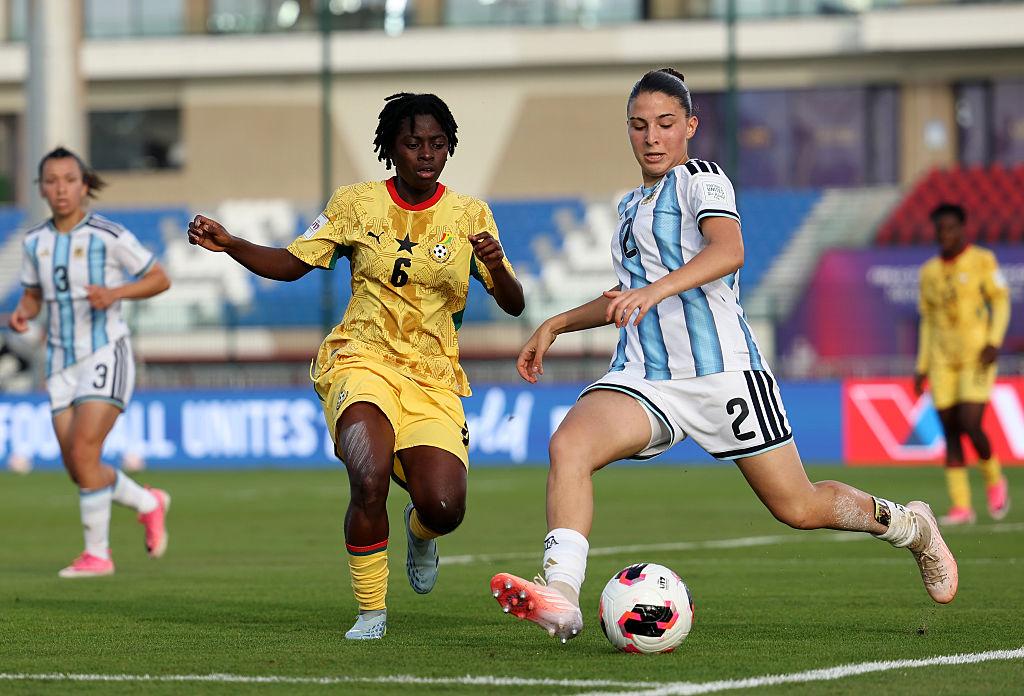
Ghana’s Black Maidens have reached the quarter-finals of the 2026 FIFA U-17 Women’s World Cup after defeating Argentina 5–4 on penalties following a 1–1 draw in Rabat. Jessica Appiah gave Ghana the lead in the 16th minute before Hajara Adam was sent off in the 77th minute. Argentina’s Mercedes Diz equalized late, but Ghana converted all five penalties and Appiah scored the decisive spot kick to send the Black Maidens through. FIFA
Ghana’s Black Maidens produced one of the most dramatic performances of the 2026 FIFA U-17 Women’s World Cup on Wednesday, surviving a late Argentine fightback and playing the closing stages with 10 players before winning 5–4 on penalties to book their place in the quarter-finals in Morocco. The Round of 16 encounter finished 1–1 in regulation time at the Mohammed VI Football Complex in Rabat, but Ghana held its nerve perfectly from the penalty spot, converting all five attempts to eliminate Argentina and continue an impressive campaign on the world stage.
Jessica Appiah emerged as the central figure in Ghana’s victory after scoring the opening goal during regulation time and later stepping forward to convert the decisive penalty in the shootout. The young forward was eventually named Player of the Match after a performance that combined attacking quality with composure under enormous pressure. Ghana’s qualification also marked a significant return to the latter stages of the tournament, with the Black Maidens reaching the quarter-finals of the competition for the first time since 2018.
Ghana began the match with confidence and immediately attempted to impose its attacking rhythm on Argentina. The Black Maidens pressed aggressively, moved the ball quickly through midfield and looked particularly dangerous whenever they were able to release their forwards into space. Their early dominance was rewarded in the 16th minute when Cynthia Obinsrewuo created the opening for Appiah, who finished decisively to give Ghana a deserved 1–0 advantage.
The goal strengthened Ghana’s control of the contest and forced Argentina to chase the game much earlier than the South American side would have wanted. Argentina attempted to respond with direct attacks and quick transitions, but Ghana’s defensive organization limited the number of clear opportunities they were able to create during the opening stages. When Argentina did threaten, Ghana’s defenders and goalkeeper remained composed enough to protect the advantage.
Mercedes Diz came close to restoring parity for Argentina when she found herself in a dangerous position and struck the crossbar, offering Ghana an early warning that the match remained far from settled. The Black Maidens continued pushing for a second goal rather than retreating completely into defense, and Obinsrewuo appeared to have doubled Ghana’s advantage after racing onto a long pass and lifting the ball beyond goalkeeper Bianca Virga. The assistant referee’s flag ruled the effort out for offside, denying Ghana what could have been a crucial second goal.
The disallowed goal became increasingly important as Argentina continued pressing after the interval. Ghana remained dangerous on the counterattack but had to absorb longer periods of pressure as Argentina increased the speed and intensity of its attacking play. The Black Maidens continued defending collectively and appeared capable of protecting the narrow advantage until the match changed dramatically with 13 minutes remaining.
Hajara Adam was shown a second yellow card and sent off in the 77th minute, reducing Ghana to 10 players at the most difficult stage of the contest. The dismissal immediately shifted the momentum toward Argentina, which now had both a numerical advantage and little time remaining to save its World Cup campaign. Ghana was forced to reorganize defensively, sacrifice some of its attacking ambition and concentrate on protecting the penalty area against increasingly desperate Argentine attacks.
For several minutes, the Black Maidens appeared capable of surviving the pressure. Ghana crowded central areas, challenged aggressively for second balls and attempted to slow Argentina’s attacks whenever possible. Goalkeeper Belinda Maku Aklie also remained alert as Argentina pushed more players forward and delivered crosses into the Ghanaian penalty area.
Argentina eventually found the breakthrough in the 86th minute when Diz connected with a looping free kick and directed a header beyond the Ghana goalkeeper to make the score 1–1. The late equalizer was a crushing moment for a Ghana side that had led for most of the match and had already been forced to compete with one player fewer, but the Black Maidens refused to collapse after conceding.
Argentina attempted to use its numerical advantage to find a late winner, but Ghana held its defensive structure and survived the remaining minutes to force the contest into a penalty shootout. The psychological challenge was considerable. Ghana had been only minutes away from winning in regulation time before conceding, and the team was entering the shootout immediately after playing under intense pressure with 10 players.
Instead of allowing the late equalizer to affect them, the Black Maidens produced a flawless performance from the penalty spot. Ghana converted all five of its penalties, placing increasing pressure on Argentina with every successful attempt. Jessica Appiah, Juliana Gyekyewaa, Rafia Osman, Christiana Ashiaku and Saraphina Essenam were credited by the Ghana Football Association with converting Ghana’s kicks during the shootout.
Argentina matched Ghana through most of the shootout, but Oriana Gomez eventually missed the target, creating the opportunity for Ghana to seal qualification. Appiah then stepped forward for the decisive penalty knowing that a successful conversion would send the Black Maidens into the final eight of the World Cup. Having already scored during regulation time, she maintained her composure and converted the spot kick to complete a 5–4 shootout victory and trigger celebrations among the Ghanaian players and coaching staff.
The victory was particularly impressive because of the circumstances in which it was achieved. Ghana had to deal with the emotional disappointment of conceding a late equalizer, the physical difficulty of playing the closing stages with 10 players and the pressure of a knockout penalty shootout against a determined Argentine team. The Black Maidens responded to all three challenges with remarkable composure and discipline.
Head coach Joe Nana Adarkwah praised his players after the game and said the team had followed tactical instructions even after the red card changed the contest. He acknowledged that Argentina’s late equalizer had made the situation difficult but said the players were able to recover mentally and finish the job during the shootout. The coach was visibly delighted with the result and said the team’s focus would immediately shift toward qualifying for the semi-finals.
Adarkwah’s comments reflected the growing confidence around a Ghana side that has demonstrated both attacking talent and resilience during the tournament. Knockout football often requires teams to survive difficult periods as well as dominate opponents, and Ghana’s performance against Argentina offered an example of both qualities within the same match.
The Black Maidens controlled significant parts of the first half and created opportunities to increase their lead, but they were later forced into a defensive battle after Adam’s dismissal. Their ability to switch from attacking football to emergency defensive organization without completely losing concentration became one of the defining features of the victory.
Appiah’s individual contribution was equally important. Her opening goal rewarded Ghana’s early dominance, while her successful penalty under pressure completed the victory. FIFA and the Ghana Football Association subsequently recognized her performance, with the forward receiving the Player of the Match award after playing a decisive role in both regulation time and the shootout.
The result eliminated an Argentina team that had continued competing until the final minutes and showed considerable resilience of its own. Diz’s late equalizer appeared to have shifted momentum completely in Argentina’s favor, particularly with Ghana playing with 10 players, but the South Americans were unable to turn their numerical advantage into a winning goal before penalties.
For Ghana, the shootout performance demonstrated extraordinary calm for a youth team competing in one of the most important matches of their young careers. Every Ghanaian penalty was converted, leaving Argentina with virtually no margin for error. Once Gomez missed, Appiah had the chance to finish the contest, and she did so without hesitation.
Ghana’s qualification continues a proud history in the FIFA U-17 Women’s World Cup. The Black Maidens have previously produced strong performances in the tournament and famously finished third in 2012, becoming the first African country to win a medal at the competition. Their latest run has revived hopes that another Ghanaian generation can make a deep impact on the world stage.
The quarter-final qualification is also significant for Ghanaian women’s football more broadly. Strong performances at youth level can create pathways into the senior national team, while success at major international tournaments gives young players experience against different football cultures and tactical systems. Several Black Maidens players could eventually progress into the Black Princesses and Black Queens if their development continues.
The victory comes at a time when greater attention is being placed on the development of women’s football across Ghana and Africa. Youth tournaments offer countries an opportunity to establish stronger foundations before players reach senior level, and Ghana’s ability to compete successfully against Argentina provides another indication of the talent available within the country’s women’s football system.
The Black Maidens will now turn their attention to the quarter-finals, where they are due to meet the winner of the Round of 16 clash between Japan and Kenya. Both potential opponents would present a different tactical challenge from Argentina, making recovery and preparation especially important after the physical and emotional demands of Wednesday’s match.
Japan has traditionally been one of the strongest technical teams in women’s youth football, while Kenya’s presence in the knockout stages reflects the continuing development of women’s football across the African continent. Whoever advances will face a Ghana side carrying considerable confidence after surviving one of the tournament’s most dramatic knockout matches.
Coach Adarkwah has already made clear that simply reaching the quarter-finals is not enough for his team. He said after the Argentina victory that Ghana must now target qualification for the semi-finals, demonstrating that the coaching staff believes the Black Maidens are capable of extending their run even further.
That ambition will require Ghana to maintain the defensive concentration shown during the final stages against Argentina while continuing to create opportunities through players such as Appiah and Obinsrewuo. Discipline will also be important, particularly after Adam’s dismissal left the team in a difficult position during the Round of 16.
The coaching staff will likely review the red card and the late defensive pressure carefully before the quarter-final. Ghana showed it can survive adversity, but avoiding unnecessary numerical disadvantages will become increasingly important as the quality of opposition rises deeper into the tournament.
The match also provided important lessons about finishing opportunities. Ghana came close to extending its lead before Argentina equalized, including the Obinsrewuo effort that was ruled out. Converting additional opportunities when in control could reduce the risk of being forced into another late defensive battle.
Nevertheless, the overriding story from Rabat was Ghana’s resilience. The Black Maidens led early, lost a player, conceded late and still found enough composure to defeat Argentina from the penalty spot. For a group of teenage footballers competing under World Cup pressure, the psychological strength required to recover from those moments was significant.
Images from the final whistle showed Ghanaian players and officials celebrating wildly after the decisive penalty, reflecting both relief and the magnitude of the achievement. The victory guaranteed Ghana a place among the final eight teams at the tournament and extended a campaign that is increasingly attracting attention back home.
For supporters in Ghana, the result offered another memorable international football moment. Youth football has historically played an important role in Ghana’s national sporting identity, with the country producing successful teams at both male and female junior levels. The Black Maidens’ latest performance adds another chapter to that history.
The penalty shootout itself could hardly have been executed better. Five attempts produced five goals, leaving Argentina unable to recover from a single miss. That level of efficiency under pressure ultimately separated two teams that could not be divided after regulation time.
Appiah’s decisive contribution ensured that her name will remain closely associated with the match. She gave Ghana the lead, remained involved even after the team was reduced to 10 players and then took responsibility for the penalty that secured qualification. FIFA’s recognition of her as Player of the Match reflected the importance of her performance throughout the contest.
For Ghana, however, the result was also a collective achievement. The defense survived sustained pressure after the red card, the goalkeeper helped keep Argentina from finding a second goal, the midfield continued competing despite the numerical disadvantage and every player selected to take a penalty delivered successfully.
That collective resilience will be essential in the quarter-final, where Ghana will be only one victory away from reaching the final four of the World Cup. The Black Maidens have already demonstrated that they can compete technically, defend under pressure and survive the psychological demands of a penalty shootout.
The immediate task will be recovery. Players will need to manage fatigue after an emotionally intense knockout match, while the technical team studies the next opponent and prepares a tactical plan. Ghana’s disciplinary situation following Adam’s dismissal will also have to be considered when selecting the starting lineup.
The Black Maidens have nevertheless earned the right to approach the quarter-final with confidence. Their victory over Argentina was not simply the result of fortune in a shootout. Ghana led for most of regulation time, created opportunities, defended with 10 players and then converted every penalty when the match reached its decisive moment.
The result means Ghana remains alive in the race for the 2026 FIFA U-17 Women’s World Cup title in Morocco. Argentina’s campaign is over, while the Black Maidens move into the quarter-finals carrying momentum from a match that tested almost every aspect of their character.
Ghana’s next challenge will determine whether this campaign ends as a strong quarter-final appearance or develops into something even more historic. For now, however, the Black Maidens can celebrate a dramatic victory earned through skill, resilience and five perfect penalties, with Jessica Appiah providing the final touch that sent Ghana into the last eight.