12 INJURED, INCLUDING SIX MINORS, IN SHOOTING NEAR FLORIDA A&M STADIUM
Twelve people were injured near Florida A&M University’s Bragg Memorial Stadium in Tallahassee on October 24, with 11 suffering gunshot wounds and another person injured while fleeing. Six of the victims are minors, including an 11-year-old, and one person remained in critical condition Sunday. Police say preliminary evidence suggests an altercation involving a small number of people preceded the shooting. No arrests have been made, and investigators are asking the public to submit videos, photographs and information.
Police in Tallahassee, Florida, are investigating a mass shooting near Florida A&M University’s Bragg Memorial Stadium that left 12 people injured on Saturday night, including six minors, after what authorities believe began as an altercation between a small number of people and escalated into gunfire in a crowded area during the university’s homecoming weekend. Eleven of the 12 injured suffered gunshot wounds, while a twelfth victim, identified by police as the grandmother of one of those hurt, was injured while fleeing the scene.
The shooting occurred shortly before 8 p.m. near the intersection of Perry Street and Manatee Street, only a short distance from Bragg Memorial Stadium. Florida A&M had hosted the University of Arkansas at Pine Bluff earlier in the day in a homecoming football game that began at 3 p.m. and ended around 6 p.m., leaving the surrounding area heavily populated with students, alumni, families and other visitors. Police said the shooting happened after the game and have not established that it was directly connected to the university or the football event itself.
Tallahassee Police Chief Lawrence Revell said six adults and six juveniles were among the injured, with the youngest victim believed to be 11 years old. One of those injured is believed to be a Florida A&M student. At least three victims suffered serious injuries, while the others were initially described as stable. By Sunday morning, five of the injured had been released from hospital, six remained hospitalized and one of those six was in critical condition.
Revell said preliminary evidence suggests an altercation involving two or three individuals occurred shortly before the shooting. Police are currently treating the violence as an isolated incident rather than an attack directed at the university, although investigators are still working to determine who opened fire, how many people discharged weapons and what triggered the confrontation. No arrests had been announced as of Sunday.
The chief cautioned against speculation while detectives reconstruct the sequence of events. Officers are reviewing physical evidence, interviewing witnesses and collecting video from the area, while police have appealed to members of the public to provide photographs, phone recordings or any information that may help identify those responsible. Authorities have emphasized that even seemingly minor details could prove important in determining how the confrontation unfolded.
About two dozen officers were already in the broader area before the gunfire because of the large homecoming gathering, according to police. Revell praised officers and emergency responders who moved through the crowded scene, at times physically carrying injured people to vehicles because congestion made it difficult for ambulances to move directly through the crowd.
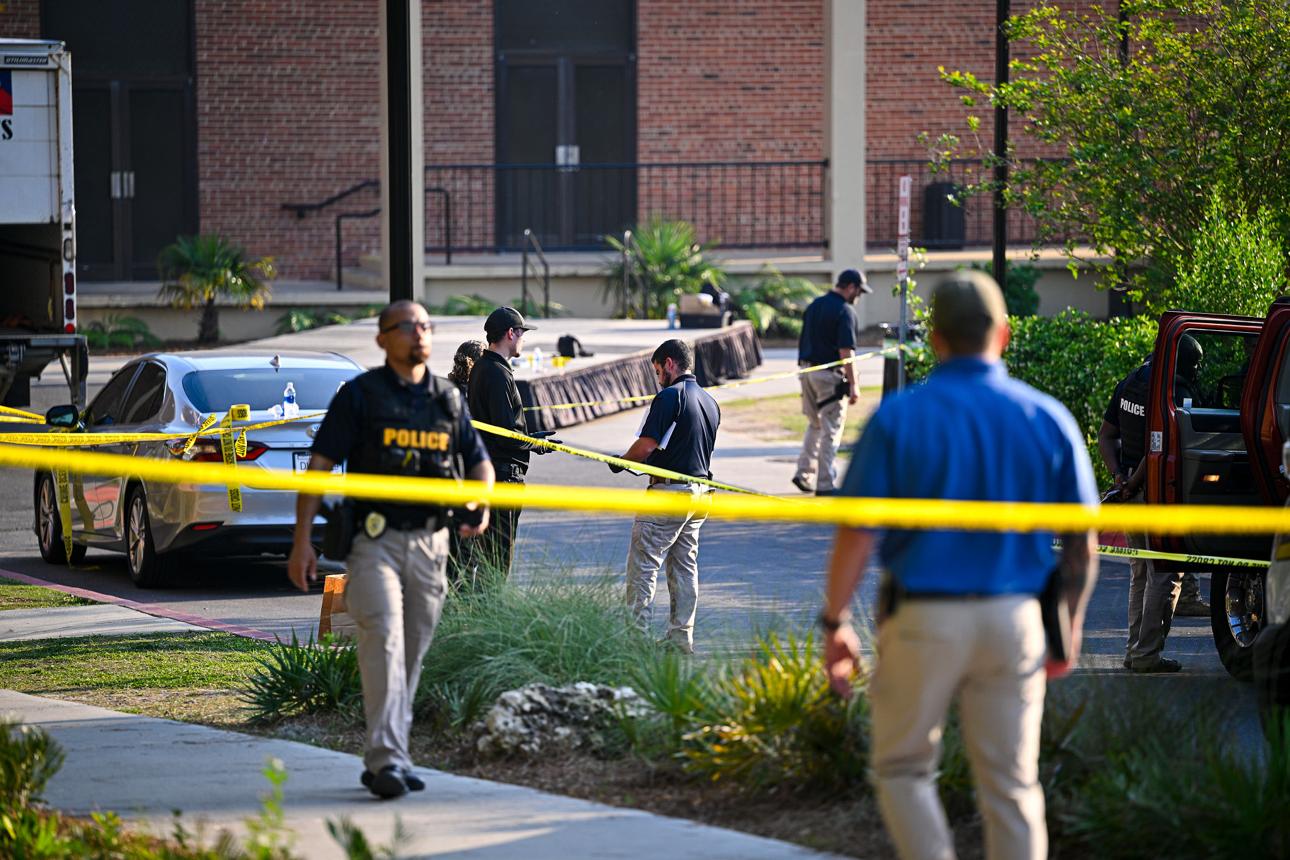
Witness video and local television footage showed people running from the area after shots were fired, while police established a large crime scene near Perry Street. Investigators remained at the location through the night and into Sunday as detectives from the department’s violent-crimes unit examined evidence and interviewed witnesses.
Florida A&M University said the shooting occurred near, rather than on, the main campus and stressed that the university remained secure. In a public statement, the university said its thoughts were with the victims and everyone affected while urging people to avoid the Perry Street area so law-enforcement personnel could continue their investigation without interference.
The presence of six minors among those injured has intensified concern surrounding the shooting. Homecoming events typically attract not only students and alumni but families and children, and the youngest reported victim was only 11. Police have not released the identities of the juveniles, and there is no public indication that any of them were specifically targeted.
Authorities are also being careful about terminology surrounding the incident. Although 11 people were shot, police have not described the violence as an attack on Florida A&M or as a random attempt to shoot a large crowd. Their preliminary assessment instead points toward a confrontation involving a small number of people that erupted in a heavily populated setting, causing a much larger number of casualties.
That distinction will remain important as investigators work to identify suspects. A targeted interpersonal dispute that spills into a crowd presents a different investigative picture from an indiscriminate attack planned against a university event, even though the physical consequences for bystanders can be equally severe.
No motive has been publicly established. Police have not said whether the original confrontation involved students, non-students, gang activity, an earlier dispute or another cause. They have also not disclosed how many firearms may have been used or whether any weapons were recovered at the scene.
The absence of arrests means the investigation remains in an early and potentially critical phase. Detectives will likely rely heavily on surveillance footage, mobile-phone video, ballistic evidence, witness statements and forensic analysis of shell casings to determine whether more than one person fired shots.
Police have specifically appealed for privately recorded footage because the area was crowded and many people were carrying phones during homecoming celebrations. Such recordings could show events immediately before the first shots, the direction from which gunfire came or people leaving the scene.
The large number of people present may therefore become both a challenge and an advantage for investigators. Crowds can make eyewitness accounts contradictory because different people see different parts of an incident, but they can also generate substantial digital evidence capable of reconstructing the sequence of events from multiple angles.
Florida A&M’s homecoming weekend traditionally draws large numbers of visitors to Tallahassee, making security around Bragg Memorial Stadium and surrounding streets especially important. The shooting occurred approximately two hours after the football game ended, during a period when celebrations and gatherings were still underway in the surrounding neighborhood.
Police have said roughly two dozen officers were already nearby, a fact likely to become part of the investigation into response time and crowd management. Their presence allowed officers to reach victims quickly, but it also demonstrates how difficult it can be to prevent sudden violence when a personal dispute escalates rapidly in a large public gathering.
Five victims being released from hospital by Sunday morning provided an early sign that many of the injuries were survivable, but the continued critical condition of one victim means the medical situation remains serious. Authorities have not released detailed injury information for privacy reasons.
The grandmother who was not shot but was injured while fleeing illustrates another danger created by mass panic. Large crowds moving suddenly in response to gunfire can produce additional injuries even among people who are not struck by bullets, particularly where escape routes are congested.
Police and emergency planners often consider those secondary injuries when designing crowd-management strategies for stadiums, concerts and large public events. The Tallahassee shooting demonstrates how quickly a localized confrontation can create fear across a much larger gathering.
The incident also raises broader questions about security around large university celebrations. Homecoming weekends can involve official campus events alongside private parties and gatherings on surrounding streets, meaning universities and local police may have limited control once crowds move beyond campus boundaries.
Florida A&M has so far emphasized that the campus itself remained safe. That distinction matters for students and families who may initially have interpreted reports of a shooting near the stadium as an active campus attack.
There was no university lockdown reported as part of the initial response, and authorities did not describe an ongoing active shooter moving through campus buildings. Instead, police isolated the area around Perry Street and focused on investigating the specific shooting scene.
The incident follows continuing national concern over gun violence in and around public gatherings across the United States. Mass casualty shootings receive particular attention when they occur near schools or universities because of the vulnerability of young people and the potential for large numbers of victims.
However, the circumstances of each shooting differ significantly. Police have not yet established that this case involved a planned mass attack, and it would be premature to treat it as identical to school shootings in which an assailant deliberately targets an educational institution.
What is already clear is that the presence of firearms transformed an apparent altercation into an event in which 11 people were shot. That reality will likely renew local discussion about violence prevention, policing around large events and how firearms are carried or used in crowded public spaces.
Tallahassee authorities will also face questions about whether there were earlier warning signs of conflict in the area before the shooting. No such evidence has been publicly disclosed, and police have not suggested that officers ignored a known threat.
The immediate priority remains identifying those responsible. Revell said investigators are committed to providing answers to victims and families but will avoid prematurely announcing conclusions while evidence is still being collected.
That caution is important in a case involving many witnesses and rapidly circulating social-media claims. Early reports after shootings can contain mistaken descriptions of suspects, inaccurate casualty counts or unverified claims about motive.
VNTV is therefore relying on the confirmed police account: 12 people were injured, 11 suffered gunshot wounds, six victims are minors, one is believed to be a Florida A&M student, no arrests had been made by Sunday and investigators believe an altercation preceded the gunfire.
Authorities have not released names or descriptions of suspects, and there is no confirmed information indicating that anyone has been taken into custody. Any social-media claims identifying shooters should therefore be treated as unverified unless Tallahassee police make a formal announcement.
The same caution applies to motive. Police have not established whether the confrontation was personal, gang-related, connected to homecoming activities or driven by another dispute.
The university is likely to continue coordinating with Tallahassee police as the investigation progresses. Although the shooting occurred off campus, the proximity to Bragg Memorial Stadium and involvement of at least one suspected FAMU student make the event directly relevant to campus security and student welfare.
Counseling and support services may also become important for students and staff who witnessed the shooting or knew those injured. Mass violence can have psychological effects beyond the immediate victims, particularly when it occurs during what was intended to be a celebratory community event.
Homecoming is traditionally one of the largest annual gatherings for historically Black colleges and universities such as Florida A&M, bringing generations of alumni back to campus. The shooting has therefore cast a shadow over a weekend ordinarily associated with celebration, school pride and family gatherings.
The fact that minors were among those injured could also influence how future homecoming events are planned. Authorities may review street closures, access points, police deployment and crowd-dispersal procedures around the stadium and nearby private gathering areas.
Any such review, however, should follow the evidence rather than assume that a failure in event planning caused the shooting. If the violence began suddenly between individuals, complete prevention may have been difficult even with significant police presence.
The investigation will also examine the physical location of the shooting relative to the stadium and whether the people involved had attended the football game or arrived separately for post-game gatherings. That information could help determine how directly the incident was connected to the official homecoming program.
So far, police have said the preliminary evidence suggests the shooting was isolated. That assessment should reassure the wider campus community to some extent, but it does not diminish the seriousness of the injuries or the need to identify those responsible.
The next major developments are likely to involve suspect identification, arrests, updated medical conditions and a more detailed reconstruction of the altercation that preceded the gunfire.
Police are encouraging witnesses to come forward rather than assuming someone else will provide the same information. In a crowded scene, even a short video showing people arguing before the shooting could become critical evidence.
The release of additional surveillance footage could also clarify whether one or multiple shooters were involved. Ballistic evidence will help investigators determine how many firearms discharged rounds and whether recovered casings can be linked to weapons or prior crimes.
For now, the community remains focused on the victims. Six of the injured are children, and at least one person remains in critical condition. The absence of deaths as of Sunday is significant, but authorities remain cautious because serious injuries can change in the hours after a shooting.
Florida A&M’s statement that the campus remains safe is also important for avoiding unnecessary panic. The shooting occurred near the university but has not been described by police as an ongoing threat to students inside campus facilities.
The event nevertheless represents a serious public-safety incident involving a major university community during one of its busiest weekends of the year.
As investigators continue their work, accurate reporting will depend on resisting the temptation to fill gaps in the police account with speculation. There are currently unanswered questions about the shooter or shooters, motive, firearm types and the precise relationship between the people involved.
Those questions are likely to be answered through evidence rather than social-media rumor.
The confirmed picture is already grave enough: a dispute erupted near Bragg Memorial Stadium during Florida A&M’s homecoming weekend, gunfire followed, 11 people were shot and a twelfth was injured while fleeing. Six victims are minors, the youngest is 11, and one victim remained in critical condition Sunday.
No arrests had been made at the time of the latest police update, leaving investigators under pressure to identify those responsible and explain how a confrontation involving only a few people ended with a dozen victims.
For Tallahassee and Florida A&M, the aftermath will involve both accountability and recovery. Police must establish what happened and bring any offenders before the courts, while the university community will have to process a violent event that transformed a celebratory homecoming weekend into a major criminal investigation.