AMERICAN JOURNALIST UNDERGOES SURGERY AFTER BRUTAL WEST BANK ATTACK AS DOCTORS FIND FOUR FRACTURED VERTEBRAE, BROKEN RIB AND SEVERE FINGER DAMAGE
American photojournalist Heidi Levine is undergoing surgery after suffering serious injuries during an attack by Israeli settlers while covering Palestinian olive harvesters near Abu Falah in the occupied West Bank. Her daughter says doctors found four fractured vertebrae, a broken rib and severe damage to a finger that was nearly severed. Levine said she was knocked to the ground and repeatedly kicked while wearing protective press identification. Israeli police have opened an investigation, and Israeli officials have condemned violence while saying the circumstances of the confrontation are still being examined.
Veteran American photojournalist Heidi Levine is undergoing surgery after suffering serious injuries during an attack by Israeli settlers while covering Palestinian olive harvesters in the occupied West Bank, with doctors discovering four fractured vertebrae, a broken rib and severe damage to one of her fingers after she was repeatedly beaten and kicked during Friday’s violence near the village of Abu Falah. The latest medical update, provided by Levine’s daughter and reported by the Associated Press, reveals that the photographer’s injuries were substantially more severe than initially understood when she was first taken to hospital in Ramallah. Levine had initially spoken from her hospital bed with visible wounds to her hand, leg and back, but subsequent examinations found multiple spinal fractures and a finger that was reportedly almost severed, requiring surgery as doctors continued treating injuries sustained during the assault.
Levine, an award-winning American photographer who has spent decades covering conflict across the Middle East and elsewhere, was working for The Washington Post when the attack took place on Friday, October 16. She had joined journalists documenting Palestinian families harvesting olives in Abu Falah, northeast of Ramallah, during a period of heightened violence surrounding the annual harvest. According to witnesses, video footage and Levine’s own account, dozens of masked Israeli settlers descended from a nearby hill and attacked Palestinian farmers, journalists and others in the area. Some attackers threw stones, while olive trees were set on fire and groups of people were chased from the fields.
Levine was wearing protective equipment and clothing identifying her as a member of the press when she was overtaken by attackers. She told journalists from her hospital bed that she was pushed to the ground and repeatedly kicked for several minutes. Video from the scene showed men surrounding her while she lay on the ground and others rushing toward her to help her escape. She later said her camera equipment, phone and bag were taken during the attack. At the time she first spoke publicly, Levine knew she had suffered cuts and a serious hand injury but was still awaiting a full medical assessment.
The new medical findings have transformed the understanding of the attack. According to the Associated Press, Levine’s daughter said doctors found four fractured vertebrae, meaning several bones in her spinal column were broken. She also sustained a fractured rib and extensive damage to one finger, which required surgery. Her daughter described the finger injury as particularly severe, saying it had almost been severed. The photographer’s family said doctors were continuing to evaluate her condition as she received further treatment.
The fact that Levine was able to speak following the assault had initially created hope that her injuries might be limited primarily to cuts and bruising. However, spinal fractures can sometimes be discovered only after imaging and more detailed hospital examinations, particularly after violent blunt-force trauma. The medical update therefore provides a clearer picture of the intensity of the beating described by Levine and captured in videos circulating after the incident.
The attack occurred during one of the most important periods of the year for Palestinian farming communities. The olive harvest is both an economic activity and a deeply significant part of Palestinian agricultural and cultural life. Tens of thousands of families rely directly or indirectly on olive cultivation, and many farmers spend only a limited number of weeks each year collecting crops that provide income for the months ahead. The harvest has also increasingly become a flashpoint for confrontations involving Palestinians, Israeli settlers, activists and Israeli security forces.
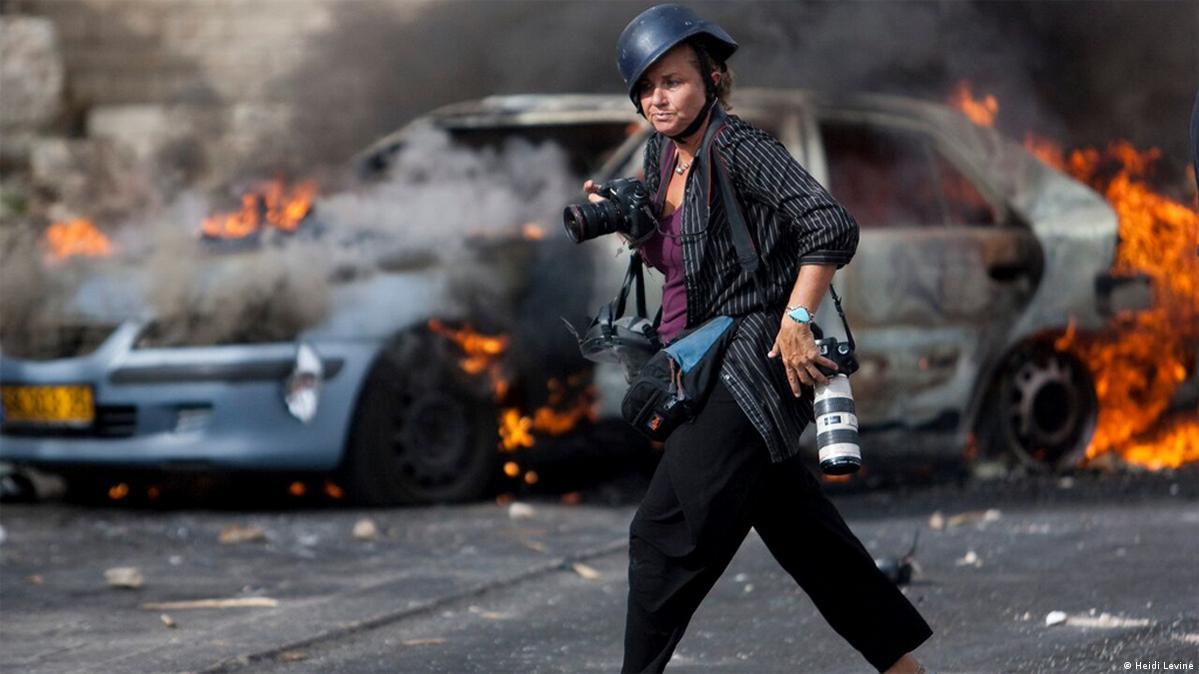
Witnesses said Friday’s violence involved dozens of masked settlers who moved into the agricultural area while Palestinians were harvesting. Reports from the scene described stones being thrown with slingshots, olive groves being set on fire and farmers and journalists being chased. Levine was among those caught in the assault even though she was clearly identifiable as a journalist.
The Washington Post strongly condemned the attack on its photographer. Executive Editor Matt Murray said Levine had been attacked while carrying out legitimate journalistic work and called for a thorough investigation and accountability. The newspaper stressed that she was wearing visible press markings when the assault occurred.
The Committee to Protect Journalists also condemned the violence and said the incident could not be viewed in isolation. The organisation said it had documented a growing number of attacks, threats and obstruction affecting local and international journalists operating in the West Bank. CPJ said Levine’s beating reflected a broader pattern in which journalists covering settler violence and the olive harvest have faced physical attacks and intimidation.
Israeli police later announced that an investigation had been opened. Police said officers and forensic investigators were being sent to gather evidence and testimony from the area. The Israeli military also said its forces had responded following reports of a violent confrontation and used riot-control measures and warning shots at the scene.
The precise conduct of Israeli forces during the attack remains disputed. Witnesses, journalists and activists at the location have accused soldiers of failing to stop settlers as the violence unfolded. Some said Israeli troops were present nearby and focused their actions on Palestinians rather than the settlers carrying out attacks. Levine herself said from hospital that she did not clearly see soldiers during the assault, although she recalled tear gas and stun grenades being fired, indicating security forces were operating nearby.
The Israeli military has said the incident is being investigated and has publicly condemned violence against civilians. Prime Minister Benjamin Netanyahu also called for an investigation while saying that some aspects of the confrontation remained unclear. Netanyahu said Israel condemns violence against Jews, Arabs, Christians and journalists and that anyone responsible for criminal violence should face accountability.
The attack has also drawn concern from the United States because Levine is an American citizen. U.S. officials condemned the violence and said consular assistance was available. The assault is particularly sensitive because Washington has repeatedly expressed concern over escalating settler violence in the West Bank while continuing its close political and military relationship with Israel.
American lawmakers have also begun publicly condemning what happened to Levine. Several members of Congress called for a transparent investigation and demanded accountability for those responsible. Some lawmakers focused specifically on allegations that Israeli security forces did not intervene effectively while the attack was underway.
The October 16 attack came during a wider surge in violence across Palestinian agricultural areas. The Associated Press reported coordinated settler attacks affecting several villages during the olive harvest period, including incidents involving burned vehicles, damaged trees and assaults on Palestinians. Rights organisations have warned that the harvest season has become increasingly dangerous in parts of the West Bank as farmers attempt to reach land located near Israeli settlements or outposts.
United Nations monitoring has documented more than 1,600 incidents of settler violence causing injury or property damage during the year, according to reporting surrounding the latest attack. Human rights groups say prosecutions remain rare compared with the number of complaints filed by Palestinians.
Israel disputes broader claims that its authorities systematically permit settler violence and says police and military authorities investigate criminal attacks when evidence is available. Israeli officials have repeatedly said individual settlers who commit violent crimes do not represent the broader settler population and should be held accountable under the law.
The question of accountability has nevertheless become one of the most controversial aspects of West Bank violence. Palestinian residents and international rights organisations have long complained that attacks involving settlers frequently end without arrests or convictions. Israeli authorities say investigations can be complicated by insufficient evidence, unidentified masked attackers and difficulties obtaining reliable testimony.
In Levine’s case, the presence of multiple journalists and extensive video footage may give investigators more evidence than is available in many rural incidents. Footage from Friday shows groups of masked men moving through the area and contains images of the photographer being attacked. Investigators are expected to examine those recordings alongside witness accounts and any physical evidence gathered from the scene.
Levine’s experience has attracted international attention partly because of her long record covering wars and violent unrest. She has photographed conflicts in Israel, Gaza, Iraq, Lebanon, Syria and Ukraine and has received international awards for her work. Her career has repeatedly placed her in dangerous environments, often documenting civilians living through conflict.
The irony that a journalist accustomed to front lines and war zones was seriously injured while photographing an olive harvest has not been lost on colleagues. The harvest itself is ordinarily an agricultural activity, but in the West Bank it has become intertwined with disputes over land, settlement expansion, military restrictions and access to farmland.
Many Palestinian farmers own fields located close to settlements, military zones or roads that require security coordination before they can safely access them. In some areas, Israeli authorities coordinate specific days when Palestinians are permitted to enter land near settlements because of fears of confrontation. Farmers and activists say even those arrangements do not always prevent attacks.
The olive tree carries enormous symbolic significance in Palestinian society because trees can survive for generations and families often cultivate the same plots for decades. Damage to olive groves therefore represents more than a temporary financial loss. Mature trees can take years to replace, and farmers may lose both income and land access when groves are destroyed.
Reports from Friday said some olive trees were deliberately set on fire during the attacks. Similar incidents have been documented during previous harvest seasons, with settlers accused of cutting, burning or damaging trees. Israeli settler groups sometimes reject those accusations or say clashes begin because Palestinians or activists enter disputed areas.
The attack on Levine also highlights the increasingly dangerous environment facing journalists covering the Israeli-Palestinian conflict. Media organisations have repeatedly documented injuries, arrests, equipment seizures and deaths among reporters working across Gaza, Israel and the West Bank since the escalation that followed the October 2023 Hamas attack and subsequent war.
Journalists operating in the West Bank face risks from multiple directions. Israeli military raids, armed Palestinian groups, demonstrations, clashes and settler attacks can all create danger, while reporters often operate in areas where crowds and security forces are moving rapidly.
Press markings are intended to distinguish journalists from participants in unrest, but those markings do not always provide protection. Levine said she was wearing a helmet and a protective vest clearly marked as press when she was attacked.
Her account that attackers took her cameras and phone has also raised concern among press freedom groups. Removing or destroying equipment can prevent journalists from documenting what happened and may eliminate evidence of violent incidents. Police investigators will likely examine whether her equipment can be recovered and whether recordings from other photographers captured the people who took it.
The attack came only days after another journalist was reportedly assaulted while covering the olive harvest. Agence France-Presse photographer Jaafar Ashtiyeh was beaten in a separate West Bank incident earlier in October, according to press freedom organisations. CPJ has documented multiple additional cases involving journalists facing violence or interference during the current harvest season.
Those incidents have increased fears among media organisations that the risks are no longer isolated. Some journalists covering rural West Bank areas now travel in protective helmets and body armour even when the assignment involves agriculture rather than active combat.
Levine’s injuries illustrate why. Doctors are now treating damage that includes four fractured vertebrae, a broken rib and a severely injured finger. Depending on the location and severity of spinal fractures, recovery can require extended rest, rehabilitation and careful medical monitoring. The full long-term impact on her mobility and ability to work has not yet been publicly disclosed.
The finger injury is particularly important for a professional photographer because photographers depend heavily on hand strength, dexterity and fine motor control to operate cameras and lenses. Surgery may be intended not only to repair tissue damage but also to preserve as much function as possible.
Family members have not provided a detailed prognosis, and it would be premature to speculate about the length of Levine’s recovery. The new update confirms only that the injuries are serious and that surgery is required.
The Associated Press report represents an important change from the information available immediately after the assault. Initial statements focused primarily on visible lacerations and the fact that Levine needed stitches. Doctors later discovered injuries that were much more extensive.
Friday’s events also occurred amid broader political tensions in Israel and the Palestinian territories. Settlement expansion has accelerated in recent years, while violence involving settlers and Palestinians has become an increasingly prominent international issue. Israel’s government contains political parties and ministers who strongly support settlement growth, while Palestinians and much of the international community view Israeli settlements in the occupied West Bank as illegal under international law. Israel disputes that interpretation and maintains historical and legal claims to the territory.
Roughly half a million Israeli settlers live among approximately three million Palestinians in the West Bank, excluding East Jerusalem. Their communities range from large settlements that function like towns to smaller outposts, some of which are considered illegal even under Israeli law.
Tensions are particularly high around outposts located close to Palestinian farming communities. Activists say some settlers use intimidation and violence to push Palestinians away from agricultural land, while settler organisations argue that some areas are subject to ownership disputes and that settlers themselves also face Palestinian attacks.
That wider conflict does not change the central facts being investigated in Levine’s case. She was a journalist covering an olive harvest, she was seriously injured in an attack involving masked settlers, and videos show her being beaten on the ground. Israeli authorities have opened an investigation into who was responsible.
The U.S. government’s response will also be closely watched because Levine is an American journalist working for a major American newspaper. Washington has previously imposed sanctions on several Israeli settlers accused of violence against Palestinians, although U.S. policy on those measures has shifted under different administrations.
The attack raises a direct question about how strongly the United States will press Israeli authorities when an American citizen is seriously injured. Expressions of concern and requests for investigation are one level of response, while demands for arrests or further sanctions would represent a stronger step.
For now, the focus remains on Levine’s health and the criminal investigation. She survived the attack and reached medical care, but the extent of her injuries means recovery could be substantial.
The latest medical findings also reinforce the seriousness of the violence shown in videos from Abu Falah. What initially looked like a disturbing assault that left a journalist bruised and cut has now been confirmed to have caused multiple broken bones and damage requiring surgery.
For Levine’s family and colleagues, attention has shifted from the shocking images of the attack to her recovery. For Palestinian farmers in Abu Falah, however, the event forms part of a much wider struggle to access and harvest agricultural land amid rising violence.
And for Israeli authorities, the case has become a high-profile test of whether attackers captured on video can be identified, arrested and prosecuted.
The investigation remains open. No suspects had been publicly convicted in connection with the assault at the time of reporting, and Israeli officials say they are gathering evidence.
Levine, meanwhile, is no longer simply being treated for cuts sustained while covering the West Bank olive harvest. Doctors have found four fractured vertebrae, a broken rib and potentially devastating damage to one of the hands she has used for decades to document war, protest and human suffering around the world.
She is now undergoing surgery after becoming part of the violence she had gone there to photograph.