APC REMOVES ALWAN HASSAN FROM SPOKESPERSON ROLE AFTER FAILED 112 EMERGENCY NUMBER DEMONSTRATION
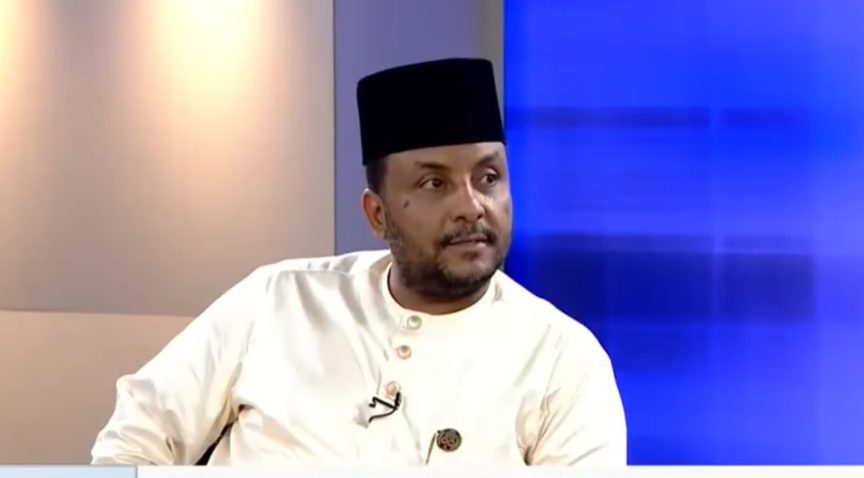
The APC Presidential Campaign Council has removed Alwan Hassan from its authorised spokesperson list less than 24 hours after his failed live demonstration of Nigeria’s 112 emergency number on Channels Television. The council has restricted official public communication to Abdulaziz Yari, Dele Alake and Mohammed Idris, while Hassan and other former spokespersons remain members of the wider media directorate. The council says the restructuring is intended to improve discipline and cohesion but has not explicitly linked Hassan’s removal to the television incident. Punch Newspapers
The All Progressives Congress Presidential Campaign Council has removed Alwan Hassan from the list of officials authorised to speak publicly on behalf of the campaign, barely 24 hours after a widely discussed television appearance in which his attempt to demonstrate the effectiveness of Nigeria’s 112 emergency number failed live on air. The council announced a major restructuring of its Directorate of Media and Strategic Communications on Wednesday, November 11, restricting official spokesperson duties to just three senior figures in what it described as an effort to ensure more cohesive, disciplined and effective public engagement.
Under the new arrangement, only the campaign’s Director General, Abdulaziz Yari, the Minister of Solid Minerals Development, Dele Alake, and the Minister of Information and National Orientation, Mohammed Idris, are authorised to speak officially for the council. The changes were announced in a statement signed by the Chief of Staff to the President and Deputy Director General for Administration of the campaign council, Femi Gbajabiamila. All previously announced spokespersons, including Hassan, will remain within the media and strategic communications directorate but will no longer have automatic authority to speak publicly on behalf of the campaign.
The council also directed radio and television stations to take note of the new communication structure and said the campaign would assign appropriate representatives for media appearances whenever necessary. The move represents a significant tightening of message control inside the Tinubu re-election campaign at a time when the governing party is attempting to avoid public communication controversies ahead of the 2027 presidential election.
Although the council’s statement did not directly say Hassan was removed because of his television appearance, the timing has drawn considerable attention. The restructuring was announced less than a day after Hassan appeared on Channels Television’s Politics Today, where he strongly promoted the 112 emergency number as one of the achievements of President Bola Tinubu’s administration and challenged presenter Seun Okinbaloye to test it during the live programme.
Hassan told viewers that 112 was Nigeria’s equivalent of the United States’ 911 emergency service and could be used for medical emergencies, security threats and other distress situations. He said callers would be connected to emergency communication centres in their respective locations, where operators would determine the nature of the emergency and contact the relevant response agency.
He then challenged Okinbaloye to take out his phone, dial 112 and put the call on speaker so viewers could hear the system work in real time. Hassan appeared confident that the call would connect immediately and repeatedly encouraged the presenter to proceed with the demonstration.
The situation quickly became uncomfortable when the call failed to connect. Okinbaloye tried the number several times during the live broadcast but reported that it was not ringing through. Hassan continued to insist that the number was operational and suggested that the failure might be related to a network problem.
Okinbaloye challenged that explanation by pointing out that other calls from the same studio were connecting normally. He also said viewers were sending messages indicating that they too were having difficulty reaching the emergency number. The exchange became one of the most widely discussed moments from the programme and quickly spread across social media.
Hassan maintained throughout the interview that he had successfully called 112 in the past and that the service was functional. He explained that the emergency system was designed to route callers to response centres capable of contacting ambulance services, police or other emergency agencies depending on the situation.
The controversy intensified because Hassan had framed the emergency line as a significant achievement of the current administration. The failure of the live demonstration therefore became politically damaging because the system did not perform as he had confidently predicted while millions of viewers were watching.
However, later reporting introduced an important complication. TheCable said it independently dialled 112 while preparing its report and successfully connected to the Lagos State emergency centre, where an operator answered the call. That result suggests the service may operate inconsistently depending on location, network conditions or technical circumstances rather than being completely nonfunctional nationwide.
The National Economic Council approved 112 as Nigeria’s national emergency number in July 2026, with the goal of creating a unified emergency response system across federal, state and local government institutions. The number is intended to provide Nigerians with a single point of contact during medical emergencies, security incidents, accidents and other urgent situations.
Supporters of the system argue that a unified emergency number can significantly improve response times because citizens no longer need to remember different telephone numbers for police, ambulance services, fire departments and other agencies. In principle, operators receiving a 112 call should be able to identify the nature of the emergency and transfer information to the appropriate response organisation.
The challenge for Nigeria has been ensuring that the service works consistently across the country. Emergency infrastructure varies widely between states, and some areas have better communication centres, ambulance coverage and police response capacity than others. A national number can only be effective if the local institutions receiving calls are properly equipped and staffed.
The live failure therefore raised broader questions about whether Nigeria’s emergency response system is fully ready for nationwide reliance. Opposition groups quickly used the incident to argue that government officials were promoting a service that had not yet achieved reliable coverage.
The Nigeria Democratic Congress described the failed demonstration as a serious embarrassment and said it exposed weaknesses in the country’s emergency response infrastructure. The opposition group argued that a national emergency line should be consistently available because citizens may need it during life threatening situations where delays can have serious consequences.
The APC and the federal government have not accepted the broader claim that the system has failed. Hassan himself insisted repeatedly that the problem during the Channels Television interview was temporary and did not reflect the overall functionality of the service.
The subsequent restructuring of the APC campaign media team has nevertheless created the perception that party leaders were dissatisfied with how the television appearance unfolded. By limiting official public communication to three senior officials, the council appears to be reducing the number of individuals able to make unscripted claims on behalf of the campaign.
The statement signed by Gbajabiamila said the objective was to improve discipline and coherence in public engagement. It did not mention Hassan by name as the reason for the changes and did not describe the move as punishment.
That distinction is important because several other spokespersons were affected alongside Hassan. Ayobami Oyalowo, Kemi Asekun Shittu and Adamu Fanda also lost their previous spokesperson status under the restructuring and will now serve as ordinary members of the Directorate of Media and Strategic Communications.
The changes therefore go beyond a single individual and appear to represent a broader reorganisation of the campaign’s communications machinery. The council has effectively centralised public messaging around Yari, Alake and Idris, all of whom are senior political or government figures with significant experience dealing with the media.
Dele Alake has long been associated with President Tinubu’s political communication structure and previously served as a presidential spokesman before becoming Minister of Solid Minerals Development. Mohammed Idris, as Information Minister, already serves as one of the administration’s principal public communicators and frequently responds to major policy and political issues.
Abdulaziz Yari, as Director General of the campaign council, occupies the highest formal position within the campaign organisation. Giving him direct spokesperson authority allows the council to ensure that major political messages come from someone with responsibility for the overall campaign strategy.
The restructuring may also reflect the increasingly competitive political environment ahead of the 2027 election. Campaign organisations often tighten communication procedures as elections approach because inconsistent statements from multiple spokespersons can create confusion, provide material for opponents and force campaign leaders to spend time correcting their own representatives.
Hassan had already attracted attention before the 112 controversy. In previous television appearances, he made statements on sensitive political matters that later required clarification from other APC officials. The latest incident therefore adds to questions about the risks associated with giving a large number of individuals authority to speak for a national presidential campaign.
The emergency number exchange became particularly damaging because it involved a claim that could be tested immediately. Unlike broader political arguments about economic performance or future policy, viewers could simply dial the number themselves and see whether it connected.
That made the television demonstration unusually risky. Hassan’s confidence turned the issue into a real time test of a government service, and the failure created an instant contradiction between his words and what viewers were watching on screen.
The incident also demonstrates the growing importance of live television and social media in modern political communication. A few minutes of awkward footage can be clipped, shared and viewed millions of times within hours, often reaching a much larger audience than the original interview.
Campaign officials therefore face increasing pressure to verify claims carefully before making them publicly. A statement that might once have generated limited attention can now become a national political controversy if video of the exchange spreads online.
For the APC, the new communications arrangement appears designed partly to reduce that risk. By limiting official spokesperson responsibilities, the campaign can exercise tighter control over who appears on major television programmes and what positions they are authorised to present.
The change does not mean Hassan has been expelled from the campaign. He remains within the media directorate and may still participate in campaign activities, strategy discussions or other communications work.
The key difference is that he no longer has standing authority to present himself as an official spokesperson for the council. Media organisations have been specifically instructed to recognise the revised structure.
That means television and radio stations seeking an official APC presidential campaign response will now be expected to contact one of the designated officials or wait for the campaign to assign another representative.
The distinction between being removed as spokesperson and being removed from the campaign entirely is important. Early descriptions of the development suggested Hassan had been sacked completely, but the council’s statement makes clear that he and the other affected officials remain members of the communications directorate.
The political symbolism of the timing remains difficult to ignore. The reorganisation occurred within hours of one of the most embarrassing media moments involving an APC campaign representative during the current election cycle.
Even if party leaders had already been considering changes, the proximity of the announcement to the 112 incident has naturally led to speculation that the television appearance accelerated the decision.
There is currently no public evidence proving that connection. Gbajabiamila’s statement did not say Hassan’s performance caused the restructuring, and party officials have not publicly described the move as disciplinary action against him.
Professional reporting should therefore avoid presenting that interpretation as established fact. The verified sequence is that Hassan’s demonstration failed on Tuesday night and the council announced a broader communications restructuring on Wednesday.
The 112 controversy itself remains relevant beyond campaign politics because emergency numbers can determine whether people receive timely assistance during accidents, violent attacks or health emergencies. A national system must be reliable enough that citizens trust it during moments of crisis.
If callers repeatedly experience failed connections, they may stop attempting to use the service and return to informal alternatives such as calling local police numbers, hospitals or relatives. That defeats the purpose of creating a unified national emergency system.
Nigeria’s size makes the challenge particularly complex. A single number can be standardized nationally, but actual response capacity depends on emergency infrastructure across 36 states and the Federal Capital Territory.
Lagos has relatively developed emergency response systems compared with many other parts of the country. TheCable’s successful connection to the Lagos State emergency centre therefore does not necessarily prove that service quality is identical nationwide.
The federal government will likely face pressure to publish clearer information about coverage, call completion rates and response times. Such data would make it easier to evaluate whether 112 is functioning effectively rather than relying on isolated successful or failed calls.
Public awareness is another issue. Hassan himself said many Nigerians did not know about the number, which suggests the system may require a stronger public education campaign even where technical infrastructure is functioning properly.
Emergency numbers are most effective when citizens know them automatically and understand when to use them. The success of 911 in the United States and similar numbers elsewhere depends partly on decades of public familiarity.
Nigeria’s transition to a nationally recognised 112 system will therefore require both technical reliability and sustained public communication.
The failed television test may ironically increase awareness of the number because millions of people who previously knew little about 112 are now discussing it. However, that increased awareness could be counterproductive if the dominant public perception becomes that the service cannot be trusted.
Government agencies will need to reassure citizens through performance rather than messaging alone. A reliable emergency number must work when people need it, regardless of political arguments about who introduced it.
The episode also provides a lesson for political campaigns about using public services as campaign achievements. Government programmes are open to immediate scrutiny, and representatives who promote them must be prepared for evidence based questioning.
Okinbaloye’s decision to test the number transformed the conversation from political talking points into a direct demonstration. The moment showed how quickly a confident claim can collapse when a journalist asks for real time verification.
Hassan’s attempt to explain the failure as a network issue did not end the controversy because the presenter said other calls from the same device and location were working. That contradiction became the central element of the exchange.
The later successful test by TheCable adds nuance but does not erase what viewers witnessed. Both facts can be true at the same time. The service could be operational in some circumstances while still failing during the live television test.
That possibility points to reliability as the real issue. Emergency infrastructure must function consistently rather than only occasionally because callers cannot predict when a life threatening event will happen.
The federal government may therefore need to investigate why the call did not connect during the broadcast. Possible explanations could include network routing, geographic configuration, technical outages or temporary system problems.
No official technical report explaining the specific failure has yet been publicly released. Hassan’s suggestion of a network problem remains his explanation rather than a confirmed diagnosis.
The campaign council’s restructuring will likely shift attention away from Hassan personally over time, but the emergency service question may continue. Opposition groups have already indicated they will use the incident as part of their criticism of the administration’s public service record.
The APC will likely respond by pointing to successful 112 operations and improvements being made to emergency communication infrastructure. The credibility of either argument will depend on verifiable performance data.
For Hassan, the political consequence is immediate. He has lost the status that allowed him to speak officially for the presidential campaign without requiring separate authorisation.
That is a meaningful demotion even though he remains inside the campaign structure. Spokesperson roles provide significant visibility and political influence, particularly during a national election.
The fact that several other officials were moved at the same time reduces the extent to which the change can be described as a personal dismissal. The council has instead created a much narrower communications hierarchy affecting multiple people.
The phrase “sacked as spokesman” is therefore broadly understandable but requires context. Hassan was removed from the spokesperson role, not expelled from the APC campaign council or dismissed from the media directorate.
The three remaining authorised officials will now carry greater responsibility for defending the campaign publicly. Their statements will be treated as official positions, and media organisations have been told to adjust their booking practices accordingly.
The decision also signals that the campaign wants greater control as the 2027 election approaches. With economic conditions, security, infrastructure and government performance likely to dominate political debate, communication mistakes can become costly.
Opposition parties will continue scrutinising every claim made by campaign representatives. Journalists are also likely to become more aggressive in demanding evidence during live interviews, particularly after the 112 episode demonstrated the value of immediate verification.
The incident may therefore have consequences beyond a single spokesperson. It could encourage campaigns across parties to prepare representatives more carefully before television appearances and to avoid making claims they cannot demonstrate.
For Nigerian viewers, the larger public interest remains whether 112 works reliably enough to save lives. Political embarrassment matters less than whether someone experiencing a robbery, accident, fire or medical emergency can actually reach help.
That question cannot be answered conclusively by one failed television call or one successful media test. It requires nationwide performance data and independent assessment.
The government has an opportunity to provide that information. Publishing statistics on the number of 112 calls received, average response times, state coverage and successful emergency dispatches would give citizens a much clearer understanding of the system.
Without such transparency, political arguments will continue to dominate the discussion. Supporters of the administration will point to successful calls while critics highlight failures.
The APC campaign’s restructuring does not resolve that issue. It simply changes who is authorised to speak about it on behalf of the campaign.
The verified facts are that Alwan Hassan appeared on Channels Television on November 10, promoted 112 as an effective national emergency service and challenged Seun Okinbaloye to dial it. Repeated attempts failed during the programme, and Hassan blamed a possible network problem.
The following day, the APC Presidential Campaign Council announced that only Abdulaziz Yari, Dele Alake and Mohammed Idris would remain authorised spokespersons. Hassan and several others were moved into the wider media directorate without spokesperson authority.
The campaign said the restructuring was intended to create more cohesive, disciplined and effective communication. It did not officially state that Hassan’s television performance triggered the decision.
That distinction should remain central to coverage. The timing creates an obvious association, but association is not proof of causation.
For Hassan, however, the result is the same. One day after a live television demonstration turned into a public embarrassment, he is no longer among the officials authorised to speak publicly for the APC Presidential Campaign Council.
The episode has become both a political communications story and a test of public infrastructure. It has raised questions about campaign discipline, emergency service reliability and how quickly political claims can be challenged in real time.
As Nigeria moves closer to the 2027 election, the APC’s decision suggests its leadership wants fewer voices speaking officially and tighter control over what is said in the campaign’s name. Whether that strategy prevents further controversies remains to be seen, but the restructuring has already made one point clear. Alwan Hassan may remain inside the campaign, but his days as one of its authorised public spokespersons are over.