CHINA ACCUSES U.S. OF ‘TARGETED SMEARING’ AFTER PENTAGON LABELS CONFUCIUS INSTITUTES SECURITY THREAT
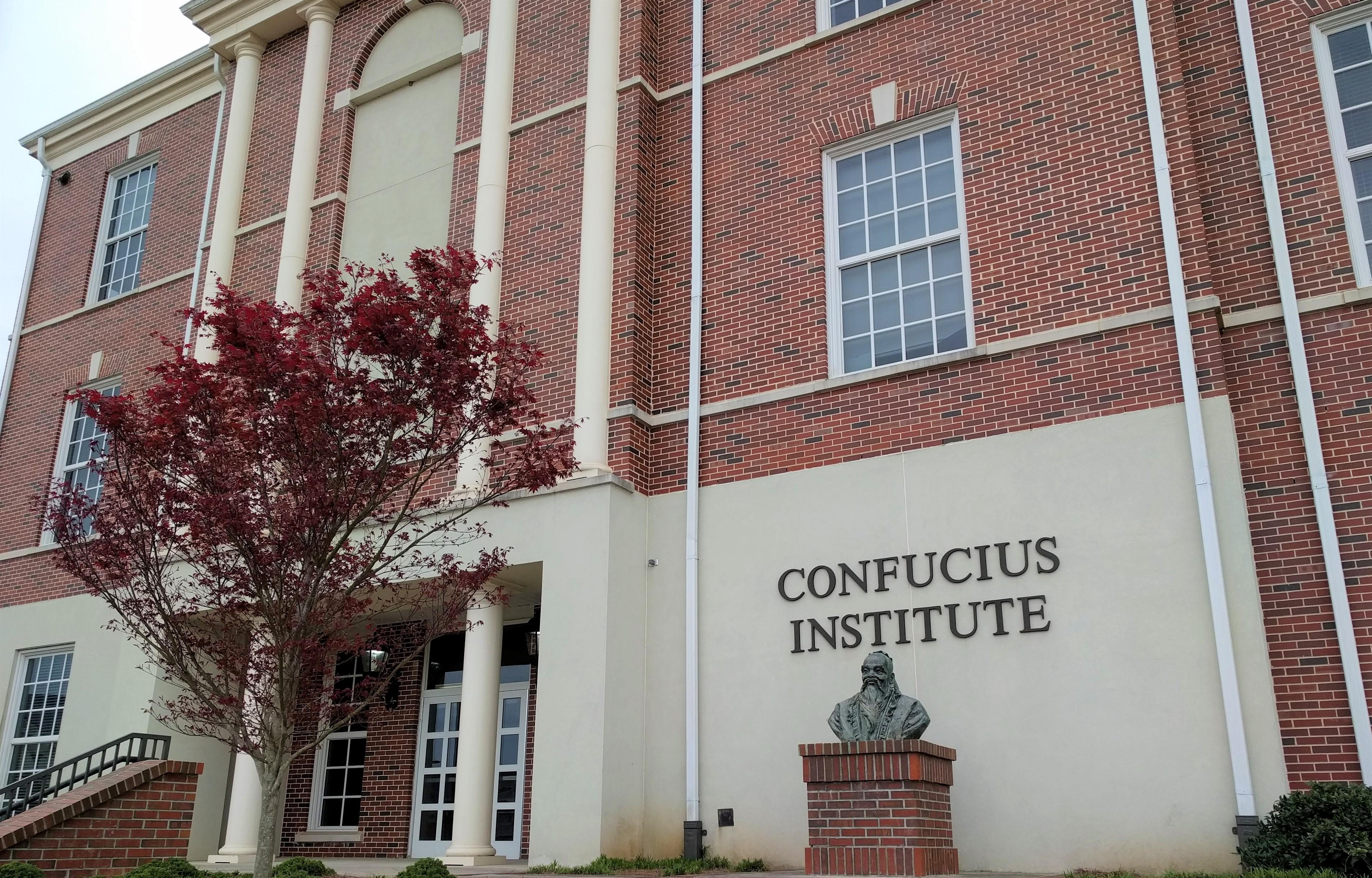
China has accused the United States of “targeted smearing and stigmatization” after the Pentagon designated Confucius Institutes and related organizations at American universities as national-security threats. Defense Secretary Pete Hegseth says about 80 successor organizations at 30 universities were identified under different names and dismantled through federal funding restrictions, alleging they posed risks involving influence and intellectual property. Beijing rejects the allegations and says Chinese-American educational exchanges promote mutual understanding and should not be undermined. Punch Newspapers
China has accused the United States of engaging in “targeted smearing and stigmatization” after the Pentagon designated Chinese-funded Confucius Institutes and related organizations operating around American universities as national security threats, deepening an increasingly contentious dispute over education, scientific research and Chinese influence on U.S. campuses. Beijing rejected Washington’s allegations on Monday, October 26, arguing that educational and cultural exchanges between the world’s two largest economies help improve mutual understanding and should not be undermined by what China sees as an expanding American effort to treat academic cooperation as a security problem.
Chinese Foreign Ministry spokesman Guo Jiakun delivered Beijing’s response during a regular news briefing in Beijing, saying the government opposed what he described as deliberate attempts to discredit the Confucius Institute program. Guo defended educational exchanges between China and the United States as mutually beneficial and argued that academic cooperation should be protected rather than restricted by national-security policies. His remarks came three days after U.S. Defense Secretary Pete Hegseth announced that the Department of Defense had moved against dozens of organizations that American officials allege were effectively successors to Confucius Institutes even though they had been reorganized, renamed or given different institutional structures.
Hegseth said in a video statement on Friday that the Pentagon had identified roughly 80 organizations operating across about 30 U.S. universities that officials believed had reappeared under different names and charters while continuing what he described as the same underlying mission. According to the defense secretary, those organizations were connected to efforts to influence American students, obtain access to research and intellectual property and maintain Chinese government-linked influence inside higher education. Hegseth said the Defense Department had systematically dismantled those relationships over approximately two months by using federal research-funding restrictions and other security authorities.
The Pentagon’s allegations are serious, but they remain allegations by the U.S. government rather than judicial findings establishing that every institution identified engaged in espionage, intellectual-property theft or unlawful political influence. Neither Hegseth nor the Defense Department publicly released evidence proving that all 80 organizations committed criminal activity, and no blanket criminal case has been announced against the universities involved. The American position is instead based on a broader national-security assessment that institutions financially or organizationally connected to the Chinese state can create unacceptable risks when they operate alongside universities conducting federally funded or defense-related research.
China disputes that characterization completely. Beijing has long maintained that Confucius Institutes are educational and cultural institutions comparable in purpose to organizations such as Germany’s Goethe-Institut, Spain’s Instituto Cervantes or the British Council, providing Chinese-language instruction, cultural programs and opportunities for academic exchange. Chinese officials argue that Washington has increasingly used national security as a justification for restricting ordinary academic relationships and that portraying Chinese cultural organizations as instruments of espionage damages people-to-people relations at a time when political distrust between Washington and Beijing is already high.
The latest confrontation marks another escalation in a dispute that has been developing for more than a decade. Confucius Institutes began appearing on American university campuses in the mid-2000s, offering language courses, cultural events, scholarships and exchange programs. At their peak, more than 100 institutes operated in the United States, while hundreds more were established internationally. Supporters argued that they expanded access to Chinese-language education at universities that might otherwise struggle to fund such programs, but critics increasingly questioned how much influence Chinese partners exercised over curriculum, staffing, speakers and discussion of politically sensitive subjects.
U.S. lawmakers from both major parties raised concerns that agreements governing some Confucius Institutes were insufficiently transparent and that financial dependence on Chinese funding could discourage universities from discussing issues considered politically sensitive by Beijing, including Taiwan, Tibet, Xinjiang, the Tiananmen Square crackdown and criticism of the Chinese Communist Party. Congressional reports and government reviews also raised questions about academic freedom and the possibility that some relationships could provide Chinese institutions greater access to American research environments.
The federal restrictions did not begin only in 2025. Congress had already adopted significant limits years earlier. The 2019 National Defense Authorization Act restricted Defense Department money from being used for Chinese-language instruction provided by Confucius Institutes, while the 2021 defense authorization law went further by generally prohibiting the Pentagon from funding American universities that hosted such institutes unless they obtained a waiver. That broader funding prohibition took effect on October 1, 2023. Additional legislation and administrative actions introduced in 2025 and afterward expanded scrutiny of university relationships with Chinese entities, meaning the current crackdown is an extension of an older policy trajectory rather than an entirely new policy created last year.
Those federal funding restrictions gave universities a powerful incentive to close or restructure their Confucius Institutes. Universities receiving substantial Pentagon, science or homeland-security research money often had far more financially at stake in federal grants than they received from Chinese cultural programs, and many institutions terminated their agreements. The number of formally operating Confucius Institutes in the United States consequently fell from more than 100 at their peak to only a small number.
That reduction did not end Washington’s concerns. U.S. lawmakers and security officials increasingly argued that some universities had simply replaced the original institutes with new Chinese-language centers, cultural partnerships or academic collaborations maintaining similar relationships with the same Chinese universities and organizations. The Pentagon’s latest action appears directed primarily at those successor arrangements.
Hegseth’s claim that approximately 80 organizations had reappeared under different names at 30 universities is therefore significant because it shifts the U.S. policy debate from whether explicitly named Confucius Institutes should receive federal support to the broader question of what constitutes a Confucius Institute-like relationship. If Washington defines the threat according to underlying funding, personnel, partnerships and mission rather than an institution’s formal name, universities could face scrutiny even after eliminating the Confucius Institute label entirely.
That creates potentially complicated compliance questions for American universities. Academic institutions frequently maintain partnerships with foreign universities, governments, foundations and research organizations, and China is one of the world’s largest sources of international students and academic collaboration. A university could therefore terminate a Confucius Institute while continuing separate Chinese-language teaching or research partnerships that federal officials later determine create similar risks.
The Defense Department’s approach is particularly consequential because major research universities rely heavily on federal funding for work involving artificial intelligence, aerospace engineering, advanced materials, quantum science, cybersecurity, biotechnology and other fields with both civilian and military applications. The possibility of losing Defense Department grants can therefore influence institutional decisions far beyond the relatively small budgets associated with language and cultural programs.
Washington’s concerns over Confucius Institutes are also increasingly connected to a much broader effort to reduce Chinese access to sensitive American technology and research. Earlier this month, Republican Representative John Moolenaar, chairman of the House Select Committee on the Chinese Communist Party, called for the Defense Department to add another 58 Chinese universities and 62 technology laboratories to a list of institutions whose collaborations could place U.S. universities at risk of losing Pentagon funding. The institutions identified include organizations working in strategically important areas such as artificial intelligence, semiconductors and quantum computing.
The Pentagon said in August that it was examining relationships involving 30 American universities and Chinese institutions already on its restricted list. The emerging policy therefore goes far beyond language instruction. Washington increasingly views academic cooperation as part of the larger technological competition between the United States and China, particularly where research has potential defense applications.
Beijing has responded to that broader policy with similar criticism. China’s Commerce Ministry said on October 23 that the United States should end what it called discriminatory restrictions against Chinese research institutions and warned that forcing American universities to sever scientific partnerships would ultimately damage U.S. innovation as well. Chinese officials argue that international scientific cooperation has historically benefited both countries and that restricting researchers based primarily on institutional nationality risks politicizing science.
The Confucius Institute dispute sits directly inside that larger confrontation. From Washington’s perspective, cultural and educational programs can become channels through which a strategic competitor gains influence over universities, cultivates relationships with students and academics and obtains access to research environments. From Beijing’s perspective, Washington is expanding the definition of national security until normal academic, scientific and cultural activities are treated as inherently suspicious whenever China is involved.
Both sides also interpret the institutions through very different political systems. China’s government does not separate the state, Communist Party and many nominally nongovernmental organizations in the same way Western governments traditionally distinguish public and private institutions. U.S. officials therefore argue that Chinese organizations with links to ministries or government-sponsored foundations cannot necessarily be treated as politically independent.
China counters that many Western cultural organizations receive public funding or government support and nevertheless operate internationally without being portrayed as espionage organizations. Beijing argues that Chinese cultural institutions are being judged under a different standard because of worsening geopolitical rivalry.
The structure governing Confucius Institutes has itself changed. The original program was overseen by Hanban, formally known as the Office of Chinese Language Council International under China’s Ministry of Education. In 2020, Beijing reorganized that arrangement, with language-education functions moving toward the Center for Language Education and Cooperation and a newly created Chinese International Education Foundation assuming a larger role in supporting Confucius Institute partnerships.
U.S. critics viewed the restructuring skeptically, arguing that changing the institutional architecture did not necessarily reduce Chinese government influence. Chinese officials said the reforms demonstrated that the institutes were increasingly administered through partnerships among universities and educational organizations rather than direct government control.
The disagreement over those reforms now appears to lie at the center of Hegseth’s statement. His assertion that organizations returned “using different names” suggests the Pentagon does not accept rebranding or administrative restructuring as sufficient evidence that the national-security concerns associated with the original institutes have disappeared.
Beijing sees precisely the opposite problem. Chinese officials argue that if Washington continues targeting programs after they change structures, federal policy is effectively aimed at Chinese educational cooperation itself rather than specific governance shortcomings. Guo Jiakun’s Monday statement therefore emphasized that exchanges between American and Chinese students and institutions should not be disrupted.
The argument has implications beyond the universities directly affected. Tens of thousands of Chinese students continue to study in the United States, while American universities have historically benefited financially and academically from Chinese enrollment. Research collaboration between scientists from both countries has contributed to work across medicine, engineering, climate science and basic research, making restrictions potentially consequential for fields unrelated to national defense.
At the same time, legitimate U.S. security concerns have been reinforced by documented cases in which researchers failed to disclose Chinese government funding, concealed institutional affiliations or improperly transferred sensitive information. American officials argue that those cases demonstrate that universities require stronger safeguards even if most Chinese students and researchers are engaged in legitimate academic work.
Critics of Washington’s approach warn that policies built around broad suspicion can create a different set of risks. Universities and Asian-American advocacy groups have previously argued that aggressive investigations of Chinese academics can produce racial profiling, discourage talented scientists from working in the United States and damage an academic system whose global strength partly depends on attracting international researchers.
The debate over the former Justice Department China Initiative illustrated those concerns. The program sought to combat economic espionage and research-security violations linked to China but was discontinued during the Biden administration after criticism that some cases were based more heavily on disclosure failures than evidence of espionage. The Trump administration has since returned to a more confrontational approach toward Chinese technology and academic ties.
Hegseth’s latest declaration fits that strategy. The defense secretary presented the dismantling of the 80 organizations as part of a wider effort to protect the American defense research ecosystem from foreign influence. His argument is that universities receiving Pentagon money cannot simultaneously maintain relationships the department believes expose sensitive knowledge to a strategic competitor.
For universities, the practical message is increasingly clear: partnerships with Chinese institutions may be judged not only on whether they comply with academic rules but also on whether federal agencies believe those relationships create national-security exposure. Institutions that depend on defense funding may therefore choose to end relationships even where no misconduct has been proved simply to avoid compliance risk.
That preventative approach is likely to remain controversial. National-security policy frequently relies on risk assessment before a crime occurs, but academic institutions traditionally operate under principles of open exchange, publication and international collaboration. The challenge for policymakers is determining where openness becomes vulnerability without undermining the very research environment they are attempting to protect.
Confucius Institutes are especially symbolic because they combine language education, state-linked funding and cultural diplomacy. Governments around the world routinely fund cultural programs abroad because language and culture are forms of soft power. France promotes French through Alliance Française, Germany supports Goethe-Institut programs and Britain operates the British Council. China has repeatedly invoked those comparisons when defending Confucius Institutes.
American officials argue that the comparison is incomplete because the Chinese Communist Party exercises significantly greater political control over domestic institutions and because some Confucius Institute contracts historically gave Chinese partners influence over staffing and operations. Beijing rejects the suggestion that this automatically converts educational work into malign interference.
Resistance to the institutes has not been confined to the United States. Universities in countries including Sweden, France, Australia and Canada have closed Confucius Institutes amid debates about academic freedom, governance and Chinese political influence. Some governments imposed formal restrictions, while other closures resulted from individual university decisions.
China nevertheless continues to support Confucius Institute programs internationally. The body overseeing the network says hundreds of institutes and related programs have operated across more than 150 countries over the last two decades, making the initiative one of Beijing’s most visible international cultural projects.
Chinese President Xi Jinping has previously promoted the institutes as examples of international cultural cooperation and argued that they help foreigners better understand China. That mission is important to Beijing because Chinese leaders frequently argue that Western narratives about the country are shaped by political hostility and insufficient understanding of Chinese history, language and development.
Washington interprets the same soft-power objective much more critically. American strategists increasingly view information, education, technology and culture as parts of strategic competition rather than areas insulated from geopolitical rivalry. Under that framework, influence over how China is discussed inside U.S. universities becomes a national-security concern even if no classified information is involved.
The resulting dispute therefore reflects a larger transformation in U.S.-China relations. Activities that might once have been regarded primarily as academic diplomacy are now being examined through the same strategic lens applied to semiconductors, artificial intelligence, telecommunications, critical minerals and military technology.
That trend is unlikely to reverse quickly. Republicans and Democrats in Washington have increasingly agreed that research security and Chinese influence require stronger oversight, even when they differ over how aggressively restrictions should be enforced. Congressional policy toward Confucius Institutes became more restrictive before the current Trump administration, demonstrating that skepticism toward the programs is not limited to one party.
China likewise appears unwilling to concede Washington’s underlying argument. Beijing continues to characterize American restrictions as ideological discrimination and excessive use of national-security justifications. Guo Jiakun’s Monday response suggests China will defend educational exchanges as legitimate cooperation rather than accept the Pentagon’s description of the institutes as security threats.
The confrontation could further complicate efforts by President Donald Trump and President Xi Jinping to stabilize broader bilateral relations. Washington and Beijing remain deeply economically interconnected despite disputes over trade, technology, Taiwan, security and foreign policy. Both governments have periodically attempted to prevent strategic competition from destroying educational and cultural ties entirely, but each new restriction makes that separation more difficult.
For American universities, the dispute will likely produce additional audits of agreements, funding sources and Chinese institutional partnerships. Universities may examine whether successor language centers could trigger federal restrictions even when they no longer use the Confucius Institute name, while researchers may face increasingly detailed disclosure requirements involving foreign affiliations.
For China, the Pentagon designation creates another obstacle to one of its most visible soft-power programs in the United States. Even if Beijing continues to insist that the institutes are harmless cultural organizations, the threat of losing federal research money gives American universities strong financial incentives to distance themselves from any arrangement Washington considers equivalent to a Confucius Institute.
The issue is therefore no longer simply about signs bearing the Confucius Institute name. It is increasingly about how the United States defines Chinese influence inside its educational system and how broadly that definition will be applied.
The Pentagon says it has identified and dismantled approximately 80 successor organizations across roughly 30 universities because they represented essentially the same security threat under different names. China says the campaign amounts to targeted stigmatization of legitimate educational cooperation. Those positions are fundamentally incompatible, and neither government currently appears prepared to retreat.
What happens next will depend in part on how transparent Washington becomes about the institutions it has targeted and the evidence underlying its allegations. If the Pentagon publicly identifies specific cases involving research theft or covert political interference, its argument could gain additional support. If institutions are penalized without clear evidence of wrongdoing, critics are likely to intensify claims that national-security policy is being used too broadly.
For now, the latest exchange has pushed academic cooperation further into the center of U.S.-China strategic competition. A network originally promoted as a mechanism for teaching Mandarin and introducing students to Chinese culture is now being discussed by the Pentagon in the same language used for national-security threats, while Beijing increasingly portrays American university restrictions as another front in Washington’s effort to contain China.
The dispute illustrates how little space remains outside geopolitical competition between the two powers. Universities, cultural centers and language programs that once symbolized engagement are now becoming battlegrounds over influence, research security and political trust. Unless Washington and Beijing can establish rules that protect legitimate academic exchange while addressing credible security concerns, the educational relationship between the two countries is likely to continue shrinking alongside their wider strategic rivalry.