GHANA CEDI RECORDS SLIGHT GAINS AGAINST US DOLLAR AS BANK OF GHANA RELEASES LATEST INTERBANK EXCHANGE RATES
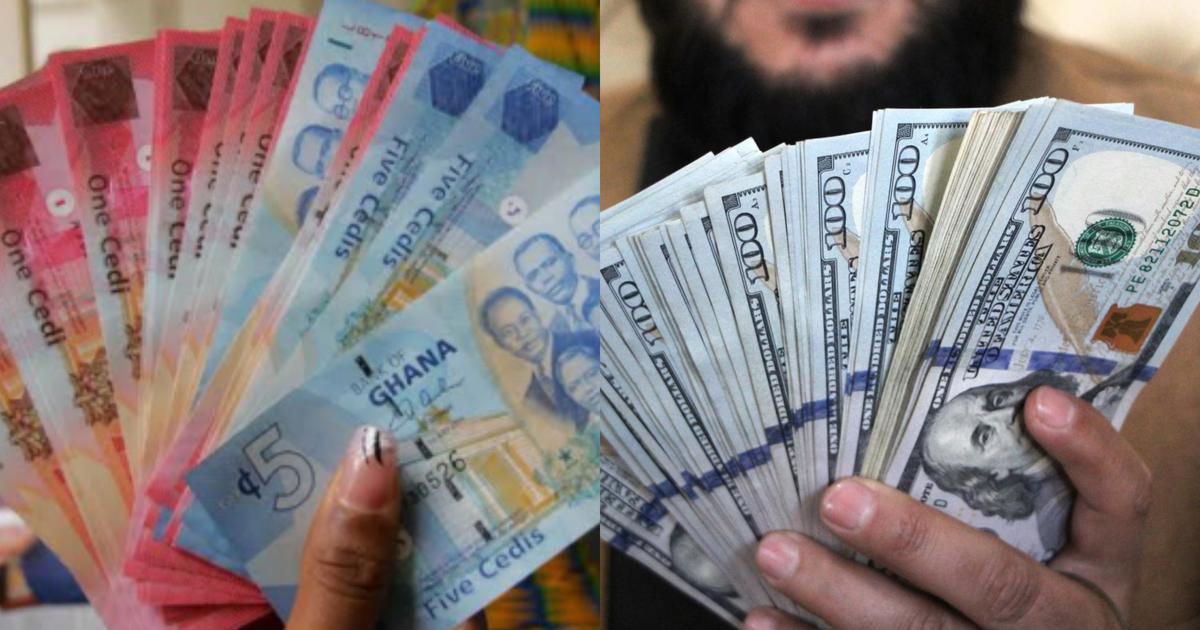
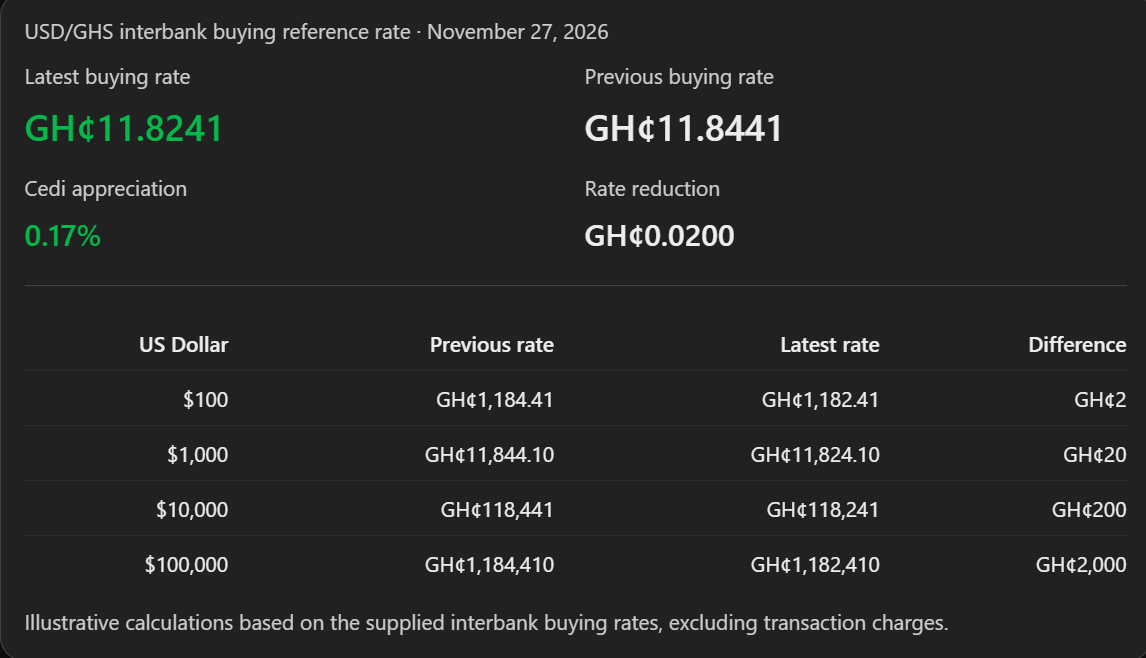
The Ghanaian cedi recorded a slight appreciation against the United States dollar on Friday, November 27, 2026, as the Bank of Ghana's reported interbank buying reference rate declined from GH¢11.8441 to GH¢11.8241, representing an improvement of approximately 0.17 percent. The development reflects a reduction of two pesewas in the quoted exchange rate for each dollar and comes as businesses and consumers monitor foreign exchange conditions ahead of the December festive season. Although sustained currency appreciation could help ease import costs and inflationary pressures, the latest movement remains modest, and commercial bank and foreign exchange bureau rates may differ from the central bank's reference figures.
The Ghanaian cedi recorded a modest appreciation against the United States dollar on Friday, November 27, 2026, according to the latest interbank exchange rate figures attributed to the Bank of Ghana. The dollar's buying rate declined from GH¢11.8441 to GH¢11.8241, reflecting a marginal improvement in the domestic currency's position against its American counterpart. The movement represents a reduction of two pesewas in the cedi cost of purchasing one United States dollar at the quoted reference rate, equivalent to approximately 0.17 percent. Although relatively small, the appreciation comes as businesses, importers, financial institutions and consumers continue to monitor developments in Ghana's foreign exchange market amid ongoing efforts to maintain macroeconomic stability.
The latest exchange rate movement provides a modest indication of improved performance by the cedi during the period under review. Currency movements of this nature can result from changes in foreign exchange demand, international financial conditions, export earnings and the availability of dollars within the domestic banking system. However, the Bank of Ghana's reference rate alone does not establish the precise factors responsible for Friday's appreciation, and attributing the improvement to a particular government intervention or economic development would require additional market information.
Under the latest quoted buying rate, the cedi equivalent of $1,000 stands at GH¢11,824.10, compared with GH¢11,844.10 under the previous rate. The difference amounts to GH¢20 for every $1,000 converted at the respective reference rates. While the adjustment may appear insignificant to individuals conducting relatively small transactions, similar movements can have more substantial financial implications for businesses handling considerable volumes of foreign currency.
For an importer conducting transactions valued at $100,000, the difference between the two quoted rates amounts to approximately GH¢2,000. However, those calculations are illustrative and do not necessarily represent the actual amount an importer would pay to acquire dollars from a commercial bank or licensed foreign exchange bureau. The Bank of Ghana's interbank buying rate should be distinguished from the selling rates applied by financial institutions when supplying foreign currency to customers.
The distinction remains particularly important because exchange rates available to ordinary consumers frequently differ from the official reference figures published by the central bank. Commercial banks and licensed foreign exchange bureaus determine their customer rates based on prevailing market conditions, transaction costs, foreign currency availability and operating margins. Consequently, an improvement in the interbank market may not immediately produce an equivalent reduction in the dollar selling rate available at every financial institution.
Businesses involved in importing goods remain among the economic participants most directly affected by fluctuations in the cedi's value. Ghana relies on international markets for a range of products, including petroleum-related goods, pharmaceutical supplies, machinery, vehicles, electronic equipment and industrial materials. When the domestic currency appreciates against the dollar, importers may experience reductions in the cedi cost of settling foreign currency obligations, depending on their contractual arrangements and the actual exchange rates available to them.
However, a modest appreciation does not necessarily translate into immediate reductions in retail prices. Businesses may still be selling inventory purchased when exchange rates were less favorable, while transportation expenses, taxes, financing costs and other operational expenditures can influence the final prices charged to consumers. Sustained currency stability, rather than isolated daily improvements, is generally more significant in determining whether lower foreign exchange costs eventually benefit households.
The performance of the cedi also carries important implications for Ghana's inflation outlook. Exchange rate depreciation can increase the domestic cost of imported goods and production materials, potentially contributing to broader price increases throughout the economy. Conversely, sustained appreciation or stability can reduce some of those pressures, although the extent of the effect depends on other economic conditions, including domestic food production, energy prices and consumer demand.
For the Bank of Ghana, maintaining orderly conditions within the foreign exchange market remains an important component of its wider monetary policy responsibilities. The central bank's operations are intended to support price stability, safeguard the financial system and manage conditions affecting the availability of foreign currency. Its policy decisions can influence exchange rate developments through interest rates, liquidity management and foreign exchange operations, although the cedi also responds to factors beyond the regulator's direct control.
Ghana's export sector remains an important source of foreign currency, particularly through earnings generated by gold, cocoa and crude oil. Revenue from these commodities contributes to the country's capacity to meet international payment obligations and can influence the availability of dollars within the financial system. Changes in global commodity prices, export volumes and the timing of foreign currency receipts can consequently affect domestic exchange rate conditions.
Gold occupies a particularly significant position within Ghana's economic structure because of its contribution to export earnings and foreign exchange inflows. Strong international gold prices can support export revenue where production and sales remain stable, although the resulting benefits depend on the mechanisms through which earnings enter the domestic economy. Cocoa and petroleum exports similarly contribute to foreign currency receipts, while remaining exposed to fluctuations in global prices and production conditions.
Remittances from Ghanaians living abroad provide another source of foreign currency within the economy. Individuals working overseas frequently transfer money to relatives, businesses and other beneficiaries in Ghana, supporting household expenditure and investment activities. Those inflows can contribute to foreign exchange availability, particularly during periods when families receive additional financial assistance for festive celebrations, educational expenses and other seasonal commitments.
The latest appreciation comes as Ghana approaches the December festive season, a period that can generate changes in foreign exchange demand. Businesses frequently increase imports to prepare for higher consumer spending, while international travel and commercial transactions can create additional demand for dollars and other major currencies. At the same time, increased remittance inflows and tourism-related expenditure may provide additional foreign currency to the domestic market. The interaction between those developments can influence the direction of exchange rates during the final weeks of the year.
For Ghanaian exporters, currency appreciation can produce different financial consequences from those experienced by importers. Export-oriented businesses earning revenue in dollars may receive fewer cedis when converting their foreign currency income into domestic currency. However, exporters that rely on imported equipment, production materials or international financing may also benefit from reduced foreign exchange costs. The overall impact depends on the structure of individual businesses and the balance between their foreign currency earnings and expenditure.
The stability of the domestic currency also remains important for businesses attempting to establish reliable budgets and financial forecasts. Significant exchange rate fluctuations can make it difficult to determine future procurement costs, negotiate supplier agreements and establish appropriate retail prices. A relatively predictable exchange rate environment can improve financial planning, even where the currency does not record substantial appreciation over short periods.
Small and medium-sized enterprises are particularly vulnerable to exchange rate uncertainty because many possess limited financial resources to absorb unexpected increases in procurement expenses. Unlike larger corporations, some smaller businesses may have restricted access to sophisticated financial instruments designed to protect against currency fluctuations. Sustained stability can therefore provide greater certainty for entrepreneurs whose operations depend directly or indirectly on imported goods and services.
Ghana's foreign currency obligations represent another consideration in assessing developments within the exchange rate market. Government institutions and private businesses with debts denominated in dollars must obtain foreign currency to meet repayment obligations. A stronger cedi can reduce the domestic currency equivalent of certain foreign-denominated payments, while depreciation can increase those financial commitments. Nevertheless, the broader sustainability of public and private debt depends on several additional factors, including repayment schedules, interest rates and the availability of government revenue.
International economic developments also remain relevant to the performance of the cedi. Decisions by the United States Federal Reserve, changes in global investor sentiment and movements in international commodity markets can affect demand for the dollar across emerging economies. A strengthening dollar internationally can create pressure on other currencies, while periods of reduced demand for dollar-denominated assets may provide some relief. Ghana's domestic economic conditions interact with those international developments in determining the direction of its exchange rate.
The administration of President John Dramani Mahama continues to face public expectations concerning economic stability, inflation management, employment creation and the protection of household purchasing power. The performance of the cedi remains one of several indicators through which businesses and citizens assess the country's economic conditions. However, determining the effectiveness of government economic policies requires examination of broader trends rather than attributing individual daily currency movements exclusively to decisions made by political leaders.
Friday's appreciation should consequently be viewed within the wider context of Ghana's foreign exchange performance over an extended period. Daily exchange rate movements can reflect temporary adjustments that may subsequently be reversed, particularly where market conditions remain sensitive to changes in supply and demand. Establishing whether the cedi has entered a sustained period of appreciation requires comparison across several trading sessions, together with information concerning foreign exchange reserves, inflation and external financial flows.
Attention will now turn toward the Bank of Ghana's subsequent reference rates and the extent to which the latest improvement is reflected in the wider commercial foreign exchange market. Businesses and consumers will be particularly interested in whether the appreciation leads to more favorable customer selling rates and greater stability in the cost of imported goods. The absence of a corresponding confirmed selling rate in the initial figures means that the immediate financial implications for customers purchasing dollars cannot yet be fully established.
For now, the movement from GH¢11.8441 to GH¢11.8241 represents a modest but measurable improvement in the cedi's quoted interbank position against the United States dollar. While the adjustment provides a positive short-term development for the domestic currency, it does not independently establish a sustained recovery or guarantee immediate reductions in consumer prices. The longer-term significance will depend on whether Ghana can maintain stable foreign exchange conditions, strengthen external earnings and manage inflationary pressures while supporting sustainable economic activity. For households and businesses, the most meaningful outcome would be a prolonged period of currency stability that improves purchasing power, reduces financial uncertainty and creates more predictable conditions for investment and commercial planning.