GHANA CEDI STRENGTHENS AGAINST US DOLLAR AND EURO BUT SLIPS SLIGHTLY AGAINST BRITISH POUND
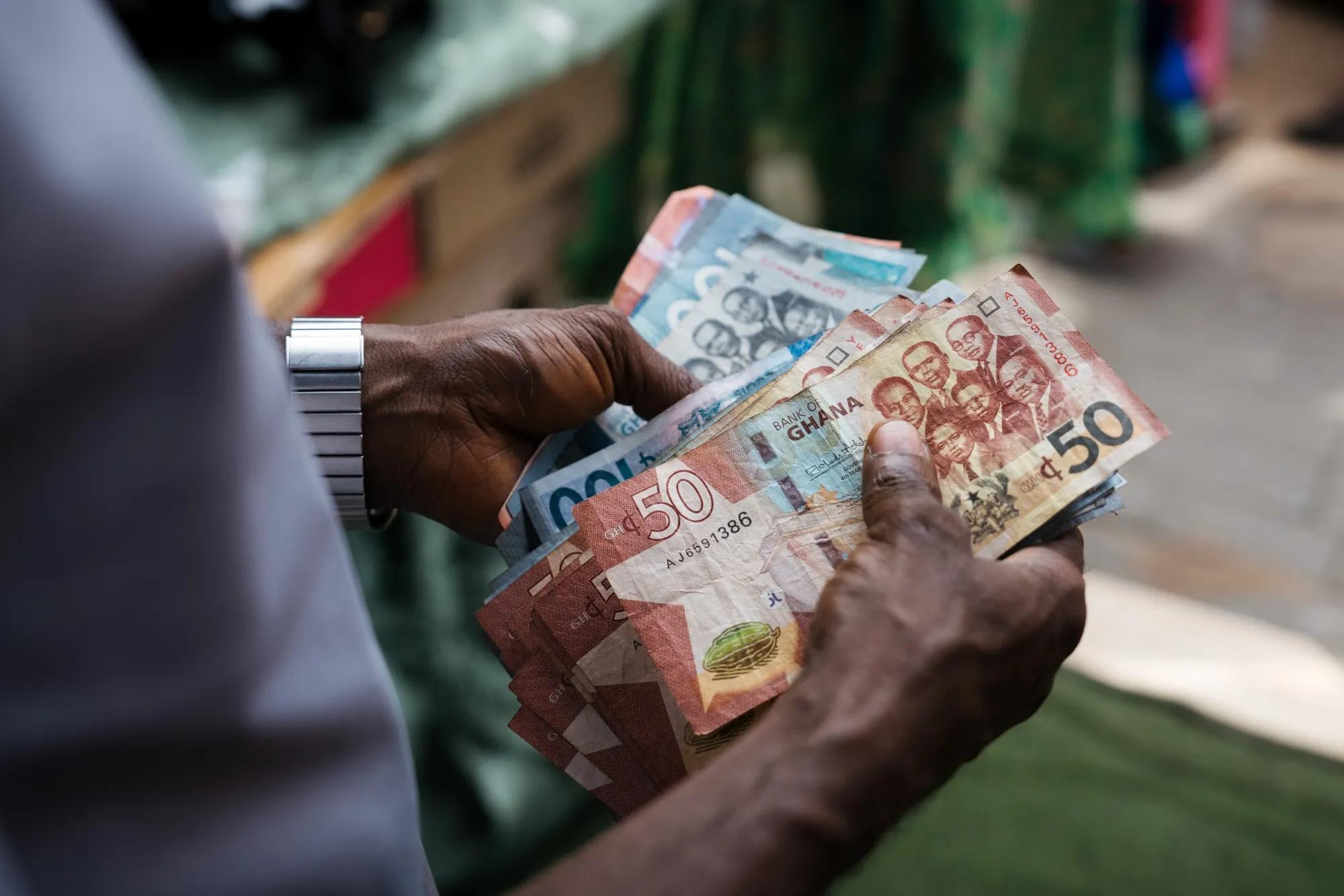
The Ghana cedi strengthened against the US dollar and euro in the latest Bank of Ghana interbank figures for October 21, while weakening only marginally against the British pound. The dollar moved to GH¢11.6000 buying and GH¢11.6116 selling, while the euro fell to GH¢13.0252 and GH¢13.0370 respectively. Sterling moved slightly higher to GH¢15.5104 buying and GH¢15.5270 selling. The figures indicate a generally positive session for the cedi, although retail forex rates may differ from the Bank of Ghana’s interbank reference rates.
The Ghana cedi recorded a mixed but generally positive performance against three major international currencies on Wednesday, October 21, strengthening against the United States dollar and the euro while weakening marginally against the British pound. The latest Bank of Ghana interbank figures show that fewer cedis were required to purchase the dollar and euro compared with the previous trading session, while sterling moved slightly higher against the local currency. The movement reflects another day of relatively narrow fluctuations in Ghana’s foreign-exchange market, with the cedi continuing to trade around the GH¢11.60 level against the dollar after periods of stronger volatility earlier in the year.
According to the latest interbank rates published for Wednesday, the US dollar’s buying rate declined from GH¢11.6592 on Tuesday to GH¢11.6000, while the selling rate fell from GH¢11.6708 to GH¢11.6116. Both sides of the quoted rate therefore declined by GH¢0.0592, indicating an appreciation of the cedi against the American currency. Using the midpoint of the Bank of Ghana figures, the average dollar rate moved from roughly GH¢11.6650 to GH¢11.6058, equivalent to a strengthening of approximately half of one per cent over the reported period.
The euro moved in the same direction, with its buying rate falling from GH¢13.0638 to GH¢13.0252 and the selling rate declining from GH¢13.0756 to GH¢13.0370. The average interbank rate therefore eased from approximately GH¢13.0697 to GH¢13.0311, representing a more modest appreciation of the cedi of roughly 0.3 per cent. Although the move was smaller than the gain against the dollar, it reinforces the broader picture of a cedi that strengthened against two of Ghana’s most important international trading currencies in the latest Bank of Ghana reference figures.
The British pound was the exception. Sterling’s buying rate increased slightly from GH¢15.5067 to GH¢15.5104, while the selling rate rose from GH¢15.5234 to GH¢15.5270. The movement amounts to only a few pesewas and represents a very small weakening of the cedi, but it highlights the fact that exchange-rate performance is influenced not only by domestic developments in Ghana but also by how major currencies are moving against one another internationally.
Sterling itself strengthened on international markets on Wednesday after stronger-than-expected United Kingdom inflation data increased expectations that the Bank of England could raise interest rates in November. Reuters reported that the pound gained against both the dollar and the euro after UK consumer price inflation accelerated to 3.5 per cent in September from 3.1 per cent in August. That stronger global performance helps explain why the cedi could appreciate against the dollar and euro while simultaneously losing a small amount of ground against sterling.
The international backdrop was also relatively supportive for emerging-market currencies against the dollar. Reuters reported that the US dollar index eased on Wednesday as traders assessed inflation risks, concerns about heavy artificial-intelligence investment and expectations surrounding upcoming Federal Reserve policy decisions. A softer dollar internationally can create more favourable conditions for currencies such as the cedi, although domestic foreign-exchange supply and demand remain equally important in determining Ghana’s actual interbank rate.
The latest Bank of Ghana rates are average interbank reference figures rather than the exact prices every individual or company will receive when exchanging currency. Commercial banks, forex bureaus and remittance providers normally apply their own margins, transaction charges and liquidity conditions, meaning retail customers may see rates that differ from the central bank figures. The Bank of Ghana data are nevertheless closely watched because they provide one of the clearest official indicators of the direction of the cedi in Ghana’s formal foreign-exchange market.
The Wednesday movement also follows several days of relatively mixed performance. On October 19, the cedi had weakened against the dollar, pound and euro, while earlier in the month it recorded periods of broad appreciation against all three currencies. That pattern shows that the current market remains sensitive to changing demand for foreign exchange, global currency movements and domestic liquidity conditions rather than moving in one uninterrupted direction.
For businesses, even small movements in the exchange rate can matter because Ghana imports significant quantities of fuel, machinery, pharmaceuticals, raw materials, vehicles and consumer goods. Importers who need dollars or euros benefit when the cedi strengthens because the local-currency cost of settling foreign invoices falls, provided other costs remain unchanged. A stronger cedi can therefore help reduce some imported inflationary pressure, although the effect on final retail prices depends on whether businesses believe the currency movement will be sustained.
Exporters can experience the opposite effect because foreign-currency earnings convert into fewer cedis when the local currency appreciates. Ghanaian exporters of commodities, manufactured products and services therefore often prefer a stable exchange rate rather than extreme appreciation or depreciation. Stability makes it easier for companies to price goods, plan investment and manage contracts without facing sudden changes in the cedi value of foreign revenue or imported inputs.
For ordinary households, the dollar rate remains particularly important because it influences school fees abroad, travel expenses, online subscriptions, imported goods and remittances. Families supporting students overseas or paying international medical and education expenses may benefit from even modest cedi appreciation, while recipients of dollar-denominated remittances may receive slightly fewer cedis when converting the same foreign-currency amount.
The euro rate matters especially for businesses and households dealing with countries in the euro area, while sterling remains significant because of Ghana’s deep economic, educational and migration links with the United Kingdom. The cedi’s slight depreciation against the pound therefore has practical consequences for people paying tuition, accommodation or other expenses in Britain, even though Wednesday’s move was extremely small.
The current levels also need to be understood within the wider history of the cedi’s performance over the past two years. Ghana experienced one of the world’s strongest currency rallies during parts of 2025 after a combination of stronger gold prices, improved foreign-exchange reserves and progress under the country’s IMF-supported programme boosted confidence. The currency subsequently gave back part of those gains as import demand increased and market conditions shifted, showing how quickly sentiment can change in a relatively small foreign-exchange market.
At the beginning of 2026, Bank of Ghana data showed the cedi had already depreciated by about four per cent against the dollar during January, with losses also recorded against the pound and euro. That early weakness reflected seasonal foreign-exchange demand and portfolio adjustments, but the currency’s performance became more mixed later in the year as gold earnings, reserves, monetary policy and international currency conditions evolved.
Ghana’s gold sector remains one of the most important sources of foreign exchange supporting the cedi. Strong gold prices increase the dollar value of export earnings and can strengthen the Bank of Ghana’s reserve position when those revenues enter the formal financial system. The government’s GoldBod arrangements and other measures designed to increase official capture of gold-related foreign exchange have therefore become closely connected to the broader debate over currency stability.
Foreign-exchange reserves are another important factor because a central bank with stronger reserves has greater capacity to meet legitimate demand and intervene when market conditions become disorderly. Ghana has spent recent years rebuilding reserves after the country’s debt crisis and restructuring process, making reserve accumulation an important part of the authorities’ effort to restore confidence in the cedi.
The country’s transition away from the IMF Extended Credit Facility and into a non-financing Policy Coordination Instrument has also placed more attention on whether macroeconomic stability can be maintained without relying on further large IMF disbursements. The Fund’s current review of Ghana’s economic programme is therefore closely watched by investors because fiscal discipline, reserve accumulation and inflation performance can all influence confidence in the currency.
Inflation is another important variable. If Ghanaian inflation remains significantly above that of major trading partners for a long period, the cedi can face underlying depreciation pressure because domestic prices rise faster than external prices. Conversely, sustained disinflation can improve confidence in the currency and reduce the need for households and businesses to move rapidly into dollars as a hedge against rising prices.
Interest rates also matter because they influence the attractiveness of cedi-denominated assets. Higher local interest rates can encourage investors to hold cedi instruments if they believe the returns compensate for currency risk, while aggressive rate cuts can reduce that advantage. The Bank of Ghana therefore has to balance the need to support economic growth with the need to maintain price stability and confidence in the currency.
The central bank’s policy decisions are especially important because Ghana’s financial system remains highly sensitive to expectations. If businesses and households expect the cedi to depreciate sharply, they may rush to buy dollars, creating additional demand that can itself weaken the currency. If they expect stability, demand can become more orderly and reduce the pressure created by precautionary foreign-exchange purchases.
Wednesday’s relatively small movements are therefore not necessarily dramatic in isolation, but they matter because they contribute to the broader picture of whether the cedi is stabilising around a new range. A move of roughly half a per cent against the dollar in one session is modest compared with the sharp swings Ghana experienced during the debt crisis, and continued narrow trading could be interpreted as a sign that the market is becoming more orderly.
However, one day of appreciation does not establish a lasting trend. Foreign-exchange markets can reverse quickly in response to import demand, energy prices, global interest-rate expectations or political and fiscal developments. Businesses and households should therefore be cautious about assuming that a short-term gain against the dollar and euro guarantees continued strengthening.
The pound’s performance on Wednesday is a useful example of that complexity. The cedi weakened slightly against sterling even while strengthening against the dollar and euro because the pound itself gained internationally after UK inflation data changed expectations around British interest rates. This means Ghana’s exchange rates can move even when there is no significant change in domestic conditions simply because the major currencies are moving against one another.
International oil prices can also influence the cedi indirectly because Ghana imports refined petroleum products and requires foreign exchange to settle those transactions. Higher oil prices can increase dollar demand from energy importers, while lower prices reduce the foreign-exchange burden. The impact is partly offset by Ghana’s own oil exports, but the overall relationship depends on production levels, import needs and international prices.
Government debt payments are another source of potential foreign-exchange demand. As Ghana gradually normalises relations with external creditors after restructuring, scheduled payments to bondholders and other lenders can require significant foreign currency. Authorities therefore need to manage reserves carefully so that debt servicing does not destabilise the domestic market.
Foreign direct investment and portfolio inflows can provide the opposite effect by bringing dollars and other currencies into Ghana. Investors are more likely to commit capital when they believe fiscal policy is credible, inflation is under control and the exchange rate is unlikely to suffer extreme depreciation.
Political stability also supports the currency because investors place a premium on predictable institutions and economic policy. Ghana has historically benefited from relatively stable democratic transfers of power, although fiscal slippages around election cycles have sometimes created concerns about public spending and exchange-rate pressure.
The government’s 2027 Budget will therefore become an important focus for currency markets because investors will examine whether expenditure and revenue plans are consistent with Ghana’s post-IMF fiscal commitments. If markets believe government spending is rising too quickly, expectations of inflation and foreign-exchange pressure could increase. If the budget reinforces fiscal discipline, confidence in the cedi could strengthen.
For now, however, the latest Bank of Ghana figures show a relatively straightforward daily movement. The cedi gained against the dollar and euro and slipped only slightly against the pound, with the largest move occurring in the dollar pair.
The US dollar buying rate of GH¢11.6000 and selling rate of GH¢11.6116 represent a noticeable improvement from Tuesday’s GH¢11.6592 and GH¢11.6708. The euro similarly fell to GH¢13.0252 on the buying side and GH¢13.0370 on the selling side, while sterling rose only marginally to GH¢15.5104 and GH¢15.5270.
Those official interbank levels are lower than some live market rates visible later in the day because foreign-exchange prices continue changing after the Bank of Ghana reference period closes. Live currency data on Wednesday evening showed the dollar around GH¢11.62, the euro around GH¢13.09 and the pound around GH¢15.60, demonstrating why the time and source of an exchange-rate quote always matter.
For VNTV readers, the most accurate interpretation is therefore that the Bank of Ghana’s latest official interbank reference figures show the cedi strengthening against the dollar and euro while weakening marginally against the pound. That does not mean every bank or forex bureau will offer the same rate, and it does not mean the cedi will necessarily continue in the same direction during the next trading session.
What the figures do show is that Ghana’s currency remains relatively stable compared with the extreme volatility recorded during earlier periods of economic stress. The dollar remains close to the GH¢11.60 range in official interbank trading, the euro is around GH¢13.03 and sterling is near GH¢15.52, with daily fluctuations currently measured in pesewas rather than the much larger changes that characterised some previous episodes.
The significance of that stability will depend on whether it can be sustained through the rest of the year. Import demand normally increases as businesses prepare for the Christmas trading season, which can place additional pressure on foreign-exchange supply. Ghana’s ability to meet that demand without another sharp depreciation will provide a stronger test of the cedi than any single day’s movement.
For now, Wednesday’s Bank of Ghana figures offer modestly positive news for the local currency. The cedi strengthened by roughly half of one per cent against the US dollar and around 0.3 per cent against the euro, while losing only about 0.02 per cent against the British pound. The moves are small, but after years in which exchange-rate volatility became one of the biggest pressures on Ghanaian households and businesses, even a relatively quiet trading session can be meaningful evidence of a market trying to find greater stability.