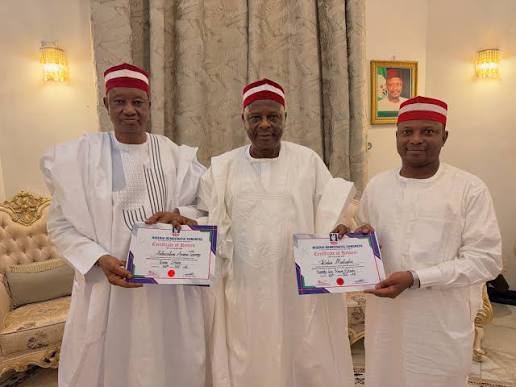
GUMEL EMIRATE BANS UNAUTHORIZED PHOTOGRAPHY, VIDEO RECORDING AND PUBLICATIONS AMID DAURA EMIR SEXUAL ASSAULT CONTROVERSY
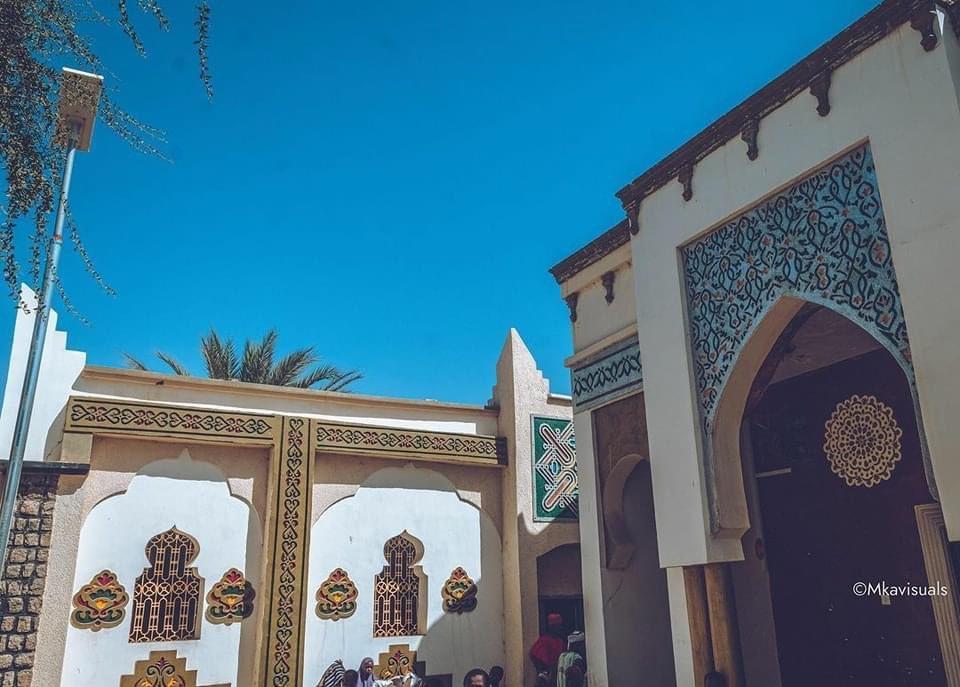
The Gumel Emirate Council in Jigawa State has prohibited unauthorized photography, video recording, information dissemination and the creation of social media accounts associated with the traditional institution, warning that violators could face legal action. In a statement issued on November 25, 2026, council secretary Murtala Aliyu explained that the measures were introduced to regulate official communications and protect the emirate's information and reputation. The announcement comes one day after the Katsina State Government suspended the official engagements and travels of the Emir of Daura, Umar Faruk Umar, pending an investigation into sexual assault allegations made by a foreign tourist. Although the timing has raised questions concerning transparency and public accountability, the Gumel Emirate has not explicitly connected its restrictions to the Daura controversy.
The Gumel Emirate Council in Jigawa State has introduced sweeping restrictions on photography, video recording and the publication of information concerning the traditional institution, warning that individuals who violate the new directives could face legal action. The announcement, contained in a statement issued on Wednesday, November 25, 2026, and signed by the council's secretary, Murtala Aliyu, requires individuals and media representatives to obtain authorization before undertaking activities covered by the restrictions. The council also prohibited the unauthorized creation of social media accounts bearing names associated with the emirate, presenting the measures as part of an effort to strengthen control over its official communications and protect its institutional reputation. The development comes just one day after the Katsina State Government suspended the official engagements and travels of the Emir of Daura, Alhaji Umar Faruk Umar, following allegations of sexual assault made against him by a foreign female tourist, although Gumel authorities have not explicitly linked their decision to the controversy.
According to the announcement reported by Punch, individuals who have not been accredited by the Gumel palace are prohibited from independently undertaking photography, video recording or information-gathering activities on behalf of the emirate. The council has also introduced restrictions on using its name in publications and establishing social media platforms that could be associated with the traditional institution without permission. Aliyu explained that the measures were intended to ensure that information released to the public originated from recognized and authorized sources. The directive represents a significant expansion of the council's control over communications at a time when digital platforms have made it increasingly easy for visitors, journalists and members of the public to document activities involving traditional rulers and distribute the resulting material to large audiences.
The announcement also addressed the redistribution of information already circulating on digital platforms, indicating that the council expects individuals to share only material authenticated by sources recognized by the palace. That provision potentially extends the restrictions beyond the activities of photographers and videographers to include social media users, online publishers and individuals who regularly circulate information concerning traditional institutions. Although the council warned of possible legal consequences for noncompliance, its statement did not identify specific criminal offenses, penalties or statutory provisions under which individuals could be prosecuted. It also did not provide a detailed explanation of whether the restrictions apply exclusively to official palace activities or extend to independent reporting conducted outside the palace premises.
The timing of the announcement has attracted particular attention because it follows a growing controversy involving another prominent traditional institution in northern Nigeria. The Emir of Daura became the subject of public scrutiny after a foreign tourist identified in media reports as Mirka Czee alleged that the monarch had subjected her to unwanted physical contact during a visit to his palace on November 14, 2026. The woman subsequently shared footage of the encounter on social media, accompanied by an account of what she said had occurred during her visit. Her allegations generated widespread discussion concerning personal safety, consent and accountability within traditional institutions, prompting responses from palace representatives, human rights advocates and the Katsina State Government.
The tourist alleged that the Emir touched her inappropriately without her consent during an encounter that was originally intended to form part of her experience of Nigerian culture and traditional leadership. She maintained that she had not welcomed the alleged conduct and subsequently decided to make her experience public. The footage circulated extensively across social media, attracting reactions from individuals who expressed support for her decision to speak out and others who questioned the circumstances surrounding the recording. However, the allegations remain subject to investigation, and the circulation of video material does not eliminate the need for investigators to establish its authenticity, examine the complete circumstances and provide the accused an opportunity to respond.
Before the intervention of the Katsina State Government, representatives of the Daura Emirate Council confirmed that they were examining the footage to determine whether it accurately represented the encounter. Ibrahim Murtala, a spokesperson for the traditional institution, told Channels Television that the council was aware of the material and had commenced a review. Palace representatives indicated that they wanted to establish whether the footage had been altered or manipulated before issuing a definitive response. That position reflected the institution's stated intention to investigate the material, but no completed forensic assessment establishing that the video had been manipulated was identified in the reporting available at the time of publication.
The controversy subsequently escalated on Tuesday, November 24, when the Katsina State Government announced that it had suspended all official engagements and travels involving the Emir while establishing an investigative committee to examine the allegations. The decision was communicated through the state's Commissioner for Information and Culture, Dr. Bala Salisu Zango, who conveyed the government's concerns regarding the seriousness of the accusations. The administration of Governor Dikko Umaru Radda indicated that the matter required formal examination rather than being resolved exclusively through public commentary or internal palace deliberations. The intervention represented an important development because it transferred scrutiny of the allegations into a government-supervised process intended to establish the relevant facts.
The suspension of the Emir's official activities should not be confused with his removal from the throne. The government has restricted his official engagements and travel pending the investigation, but no verified announcement has established that he has been dethroned or permanently stripped of his traditional position. Similarly, the establishment of an investigative committee does not constitute a criminal conviction or a definitive finding that the allegations against him are true. The eventual consequences will depend on the evidence examined, the committee's findings and any subsequent decisions taken by the appropriate administrative or judicial authorities. Maintaining these distinctions is particularly important in a case that has already generated considerable public attention and emotionally charged reactions.
The Gumel Emirate's announcement has consequently emerged against a wider backdrop of debate concerning the relationship between traditional authority, digital technology and public accountability. Smartphones, wearable cameras and social media platforms have fundamentally changed the circumstances under which public figures interact with visitors and members of their communities. Encounters that might previously have remained undocumented can now be recorded and distributed to international audiences within a short period. For traditional institutions accustomed to managing their public image through official photographers, palace representatives and established communication channels, these technological developments present challenges involving privacy, security, reputation and the accuracy of information.
However, the desire of an institution to manage its official communications raises different questions from an attempt to restrict independent journalism or prevent individuals from sharing accounts of their personal experiences. Traditional institutions can have legitimate reasons for regulating access to private areas, protecting sensitive ceremonies and preventing unauthorized individuals from presenting themselves as official representatives. Such measures may help reduce impersonation, misinformation and confusion about whether particular statements genuinely reflect the position of the palace. Nevertheless, restrictions that extend to independent reporting or the publication of information concerning matters of public interest require careful consideration of the legal rights enjoyed by journalists and ordinary citizens.
Nigeria's constitutional framework provides protections for freedom of expression and the dissemination of information. Section 39 of the Constitution recognizes the right of individuals to express opinions and receive and communicate information, subject to legally recognized limitations. Section 45 allows certain restrictions where they are established by law and reasonably justified within a democratic society, including measures intended to protect public safety, public order and the rights of others. The existence of these provisions does not mean that every restriction imposed by a traditional institution is automatically unlawful, but it equally does not establish that a palace directive can independently override constitutionally protected freedoms. The legal position would depend on the scope of the restrictions, their statutory basis and the particular circumstances in which they are enforced.
An important distinction therefore exists between requiring permission to photograph activities within restricted palace premises and demanding authorization before anyone publishes information about an emirate. The former may involve questions of property access, privacy, security and established protocols for official engagements. The latter potentially affects a substantially broader range of activities, including reporting on government decisions, interviews with residents, historical research and public discussions concerning traditional leadership. The Gumel Emirate Council's statement has not yet provided sufficient detail to determine precisely where it intends to draw that distinction. Consequently, the practical and legal implications of the announcement will become clearer only when authorities explain how the restrictions are expected to operate.
The council's decision also raises questions about the position of independent journalists covering traditional institutions. Reporters may routinely seek permission to attend private ceremonies, obtain official statements and photograph individuals within controlled premises. However, journalistic independence generally requires the ability to investigate matters of public importance without making publication conditional on the approval of the institution being examined. A requirement that all information about an emirate receive prior authorization could create difficulties where reporting concerns allegations of wrongdoing, disputes within traditional leadership or decisions affecting members of the wider community. Whether the Gumel directive is intended to restrict such activities remains uncertain.
The restrictions concerning social media accounts present a somewhat different issue because institutions have a legitimate interest in preventing unauthorized individuals from impersonating their official representatives. An account using the name, photographs or symbols of a traditional institution could potentially mislead members of the public into believing that its statements have received official approval. Establishing recognized communication channels can help distinguish authentic announcements from unofficial commentary. However, there is also a difference between an account falsely claiming to represent an emirate and an independent community page that reports on developments within its jurisdiction. Clear definitions would be necessary to ensure that efforts to prevent impersonation do not inadvertently restrict legitimate public discussion.
The announcement comes during a relatively new period of leadership for the Gumel Emirate. According to the Gumel Emirate Foundation, Dr. Lawan Ahmed Mohammed Sani was appointed the 17th Emir of Gumel on September 6, 2026, following the death of his father, Alhaji Ahmad Muhammad Sani II, who had occupied the throne for approximately 46 years. His appointment was approved by Jigawa State Governor Umar Namadi following the recommendation of the emirate's kingmakers and consideration by the state's traditional leadership structures. The new emir's professional background includes experience in academia, cybersecurity and public service, placing him at the head of the institution during a period when digital communication is becoming increasingly important to traditional governance.
Although the new communication restrictions have been introduced during his reign, the statement was issued by the emirate council through its secretary. No independently verified personal explanation from the emir establishing his precise involvement in developing the measures has been identified. It would therefore be inaccurate to attribute a specific private motivation to him or suggest that he personally introduced the restrictions in response to the controversy in Daura. The council's stated reasons remain the regulation of communication, protection of institutional information and preservation of its official image. Any interpretation extending beyond those declared objectives must be clearly distinguished from established facts.
Traditional rulers continue to occupy an influential position within northern Nigerian society, particularly in matters involving cultural preservation, religious leadership, community development and the resolution of local disputes. Their institutions frequently work alongside government authorities in promoting peaceful coexistence, supporting public initiatives and communicating with residents. Although their formal constitutional responsibilities differ from those of elected political officials, their social influence can be substantial. That influence creates an important relationship between traditional leadership and public confidence, making questions of transparency and accountability relevant to the continued legitimacy of these institutions.
The allegations involving the Emir of Daura have brought those questions into particularly sharp focus. Traditional authority does not remove the obligation to respect personal boundaries or exempt individuals from applicable criminal laws. At the same time, individuals facing serious allegations remain entitled to fair treatment and an impartial assessment of the evidence. The investigation announced by the Katsina State Government will therefore need to balance the rights of the complainant with the procedural protections available to the accused. Its credibility will depend on the independence of those responsible for examining the allegations and the extent to which their conclusions are supported by reliable evidence rather than political pressure or public sentiment.
The controversy also highlights the importance of ensuring that individuals who report alleged sexual misconduct can do so without intimidation or harassment. Public attention surrounding accusations against influential figures can create considerable pressure on complainants, particularly where supporters of the accused regard the allegations as an attack on an institution or community. Such reactions can discourage other individuals from reporting their experiences and complicate efforts to establish what occurred. The responsibility of investigators is to examine the allegations objectively, while public institutions and community leaders have an important role in discouraging threats and ensuring that disagreements do not develop into hostility toward those involved.
For traditional councils seeking to strengthen the management of information, the introduction of clear and proportionate communication policies could help reduce confusion about what constitutes an official announcement. Publishing accreditation procedures, identifying authorized spokespersons and explaining restrictions applicable to particular palace activities would provide journalists and visitors with a clearer understanding of institutional expectations. Such arrangements could also help distinguish genuine security or privacy requirements from restrictions affecting independent public discussion. The effectiveness of any communication policy will depend partly on whether its provisions are sufficiently precise to prevent arbitrary enforcement and unnecessary conflict.
The Gumel Emirate Council has not publicly identified any individual against whom legal proceedings have been initiated under its new directives. Nor has a specific court ruling been identified establishing the enforceability of the announced restrictions against independent journalists or members of the public. There has also been no verified confirmation that the Jigawa State Government has adopted the council's announcement as a statewide legal requirement. Until further clarification is provided, the measures should be understood as directives announced by the traditional institution, rather than as a newly enacted criminal law applicable throughout Jigawa State.
As developments in both emirates continue attracting attention, the distinction between institutional reputation and public accountability remains central to the controversy. Gumel authorities have asserted their intention to protect official information and regulate communication, while the Katsina State Government has initiated an investigation into serious allegations involving a neighboring traditional ruler. Neither development independently establishes that traditional institutions are attempting to conceal misconduct, and no direct evidence has been presented connecting the Gumel restrictions to the Daura investigation. Nevertheless, the proximity of the two announcements has placed questions concerning photography, independent reporting and the documentation of interactions with traditional authorities at the center of a wider public discussion.
The immediate challenge for the Gumel Emirate Council will be explaining the scope, legal foundation and enforcement procedures associated with its new communication policy. For the Katsina State Government, the priority remains conducting a credible investigation into the allegations against the Emir of Daura and communicating its findings through appropriate channels. Both developments illustrate the changing environment in which Nigeria's traditional institutions operate, where cultural authority increasingly exists alongside digital transparency, constitutional protections and demands for public accountability. How these institutions respond to those challenges will influence their relationships with journalists, visitors and the communities whose confidence remains fundamental to their continued relevance.