KATSINA GOVERNMENT APPOINTS NINE-MEMBER PANEL TO INVESTIGATE DAURA EMIR OVER SEXUAL ASSAULT ALLEGATION
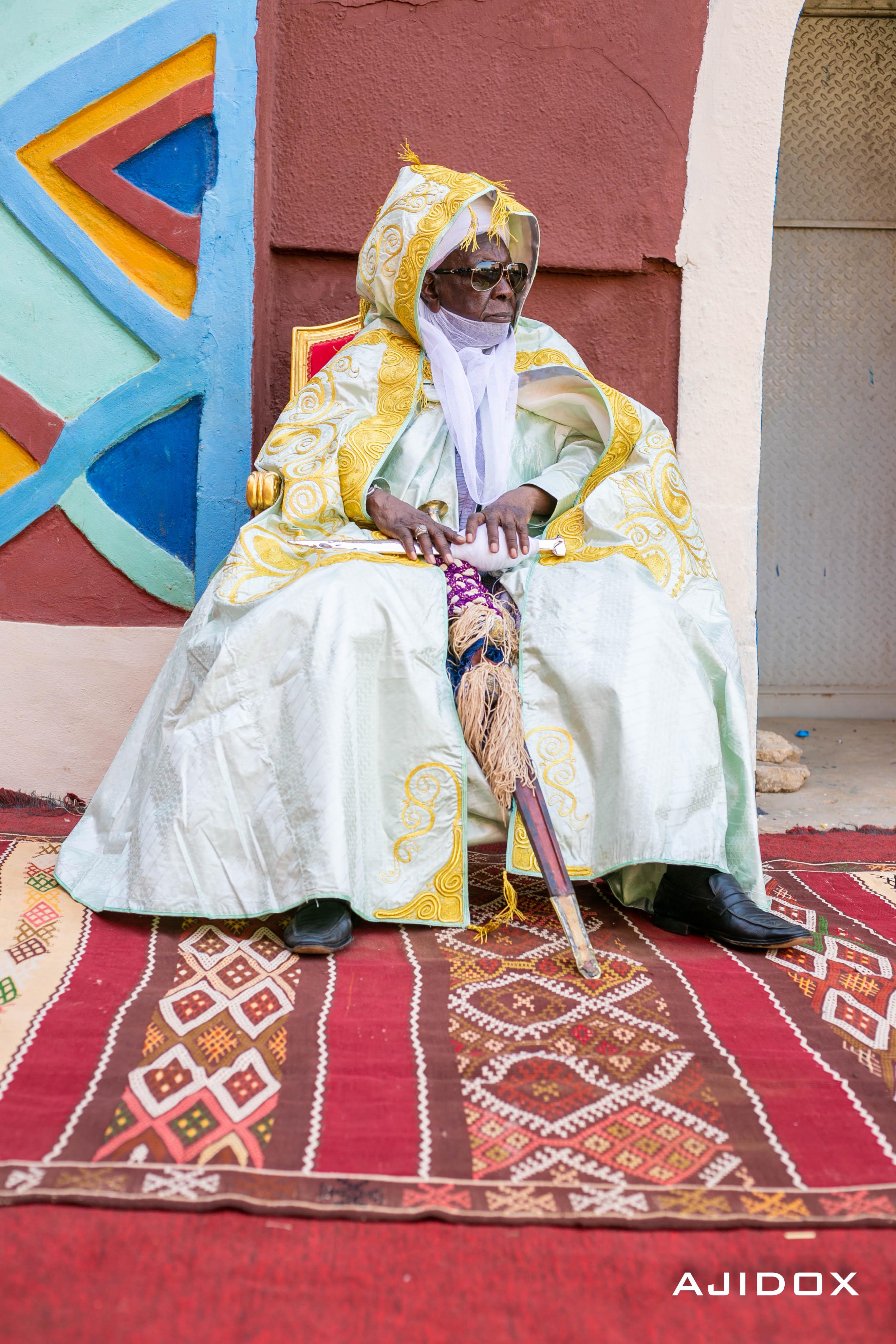
The Katsina State Government has constituted a nine-member investigative committee to examine sexual assault allegations against the Emir of Daura, Alhaji Umar Farouk Umar, following an encounter involving Polish tourist Mirka Czee at his palace on November 14, 2026. Governor Dikko Umaru Radda appointed retired Supreme Court Justice Amiru Sanusi as chairman of the committee, with Attorney-General and Commissioner for Justice Fadila Muhammad Dikko serving as secretary. The panel has been mandated to interview individuals connected to the incident, examine relevant evidence, establish the circumstances surrounding the tourist's visit and recommend appropriate sanctions where necessary. The appointment follows the government's suspension of the Emir's official engagements and travels on November 24, amid demands from Amnesty International and other concerned individuals for an independent and transparent investigation.
The Katsina State Government has constituted a nine-member investigative committee to examine allegations of sexual assault against the Emir of Daura, Alhaji Umar Farouk Umar, following widespread public concern over an encounter involving a foreign female tourist at his palace. Governor Dikko Umaru Radda approved the appointment of the committee, which will be chaired by retired Supreme Court Justice Amiru Sanusi, with the mandate to establish the circumstances surrounding the alleged incident, examine available evidence and recommend appropriate sanctions where necessary. The composition of the panel was disclosed in a statement made available to journalists on Thursday, November 26, 2026, by the state Commissioner for Information and Culture, Dr. Bala Salisu Zango. The development marks a significant escalation in the government's response to the controversy, coming two days after it suspended the traditional ruler's official engagements and travels pending the outcome of an investigation.
The committee brings together individuals with backgrounds in law, traditional administration, religious affairs, cultural studies and international diplomacy, reflecting the different institutional considerations surrounding the allegation. Katsina State Attorney-General and Commissioner for Justice, Fadila Muhammad Dikko, will serve as the committee's secretary, while retired Justice Sadiq A. Mahuta and the Special Adviser on Emirate Affairs, Usman Abba, have also been appointed as members. Other individuals named in the announcement include Commissioner for Religious Affairs Isah Dabai, Lawal Aliyu Daura, Professor Halima Kabir of the Department of Languages and Cultures at Ahmadu Bello University, Zaria, Information Commissioner Bala Zango and Khadija Abdulkadir, identified as an economic diplomacy adviser to the Kingdom of Belgium. Their appointment provides a formal structure for an investigation that has attracted attention both within Nigeria and internationally.
According to the government's announcement, the committee has been authorized to invite individuals connected to the matter, examine relevant documents and records, establish the circumstances surrounding the tourist's visit and determine whether the traditional ruler bears responsibility for the alleged misconduct. Its mandate also includes recommending appropriate measures if the available evidence establishes wrongdoing. Although the committee includes experienced judicial figures, its establishment does not mean that criminal proceedings have already commenced against the monarch. It remains a government-appointed investigative body whose findings may inform subsequent administrative decisions or referrals to appropriate law enforcement and judicial authorities.
The controversy originated from allegations made by a Polish tourist identified in media reports as Mirka Czee, who visited the Emir's palace in Daura on November 14, 2026, during a tour of Nigeria. The woman subsequently published footage of her encounter with the traditional ruler on social media, accompanied by an account alleging that he touched her inappropriately without her consent. She explained that her visit to Daura formed part of a wider journey across Nigeria, during which she had spent approximately 30 days exploring different communities and cultural environments. According to her account, what was expected to be an opportunity to experience the traditions associated with one of northern Nigeria's prominent emirates instead became an encounter that left her deeply uncomfortable.
The tourist alleged that she was taken into a room where she sat with the Emir for a conversation, during which he repeatedly held her hands, embraced her, kissed her on the cheeks and touched her breasts without her permission. She maintained that the physical contact was unwanted and subsequently decided to make the experience public after leaving Nigeria. The footage accompanying her account circulated widely across social media, drawing attention to the circumstances surrounding the encounter and prompting demands for an official investigation. Although the allegations are serious, the complete circumstances remain subject to examination, and the newly constituted committee has yet to issue findings establishing whether the monarch committed the alleged acts.
The woman explained that she had documented the encounter using smart glasses equipped with recording capabilities, allowing her to capture parts of the interaction as it occurred. Her decision to release the material after departing Nigeria contributed to the widespread attention surrounding the incident, particularly because the recording involved a prominent traditional ruler within his palace. The available footage has become a central element of the public discussion, but investigators will need to examine its authenticity, completeness and relevance alongside other available evidence. Establishing the circumstances surrounding the encounter will require more than an assessment of public reactions to selected video excerpts.
Before the Katsina State Government announced its intervention, representatives of the Daura Emirate Council indicated that they were reviewing the footage to determine whether it accurately represented the events alleged by the tourist. Palace representatives raised the possibility that the material might have been manipulated or artificially generated, maintaining that its authenticity needed to be established before definitive conclusions could be reached. However, no completed forensic examination demonstrating that the footage was fabricated has been publicly established. The council's earlier response should therefore be understood as an expression of concern about the recording rather than conclusive evidence that the allegations were false.
The controversy intensified as human rights organizations and prominent Nigerians called on the state government to ensure that the allegations received an independent examination. Amnesty International Nigeria urged both the Katsina State Government and the police to investigate the matter transparently, emphasizing the importance of protecting individuals who report sexual misconduct and ensuring accountability where wrongdoing is established. The organization's intervention placed additional attention on the distinction between the social standing of an accused individual and the legal protections available to a complainant. Its position reflected the wider principle that allegations of sexual violence should be examined on the basis of evidence regardless of the influence or traditional authority of the people involved.
Former military governor of Kaduna State, Abubakar Dangiwa Umar, also intervened through an open letter addressed to Governor Radda, urging the administration to suspend the Emir's official activities while a thorough investigation was conducted. His appeal preceded the government's decision on November 24 to restrict the monarch's engagements and travels. The intervention demonstrated the extent to which the controversy had developed beyond the circulation of a social media video into a matter involving public administration, traditional leadership and the responsibilities of state authorities. Calls for investigation, however, do not independently establish the truth of the underlying allegation.
Governor Radda's administration announced on Tuesday that it regarded the matter as sufficiently serious to warrant formal intervention. Through a statement issued by Zango, the government suspended the Emir's official engagements and travels pending the investigation and assured the public that it intended to act on the committee's findings and recommendations. Residents were also encouraged to remain calm and continue their normal activities while the authorities examined the complaint. Thursday's announcement naming the committee members establishes the personnel responsible for carrying out that earlier directive.
The restrictions imposed on the Emir's activities should not be confused with his removal from the throne. The Katsina State Government has suspended his official engagements and travels while the investigation remains active, but it has not announced that he has been dethroned or permanently stripped of his traditional title. Similarly, the appointment of an investigative committee does not amount to a finding of criminal guilt. Any administrative sanctions or criminal proceedings would depend on the evidence obtained, the committee's conclusions and the legal authority of the institutions responsible for taking subsequent action.
The appointment of Justice Amiru Sanusi as chairman is significant because the investigation involves allegations requiring careful consideration of evidence, individual rights and procedural fairness. His experience as a former justice of Nigeria's Supreme Court provides the committee with a background in judicial reasoning, while the inclusion of the state's attorney-general establishes a connection between the investigation and the government's legal administration. The presence of another retired judge and representatives responsible for emirate and religious affairs may also assist the panel in understanding the institutional arrangements within which the alleged incident occurred.
However, the professional backgrounds of its members do not transform the committee into a criminal court. Its findings may establish a basis for administrative recommendations or further investigation, but the legal determination of criminal responsibility ordinarily requires proceedings before a court of competent jurisdiction. That distinction is important given the seriousness of the accusations and the potential consequences for both the traditional ruler and the complainant. Maintaining clear boundaries between administrative fact-finding and criminal adjudication will be essential to ensuring that subsequent decisions are consistent with established legal procedures.
One aspect of the committee's mandate involves determining the purpose of the tourist's visit to the Emir's palace. Establishing how the meeting was arranged, who facilitated access to the traditional ruler and what occurred before and during the encounter may provide investigators with relevant contextual information. Nevertheless, the purpose of a person's visit does not independently determine whether subsequent physical contact was consensual. A visitor's willingness to participate in a cultural engagement, attend a private conversation or accept traditional hospitality should not automatically be interpreted as agreement to every form of physical interaction.
The committee will also need to distinguish between cultural practices associated with hospitality and conduct that may violate an individual's personal boundaries or applicable laws. Traditional institutions frequently receive visitors from different countries, religious backgrounds and social environments, creating circumstances in which expectations concerning greetings and personal interaction may differ. Those differences can provide relevant context when examining an encounter, but they do not eliminate the importance of consent. The investigation must therefore consider the specific conduct alleged rather than relying exclusively on generalized assumptions about cultural customs or the intentions of either participant.
Digital evidence is expected to form an important part of the inquiry because the allegations became widely known through footage published online. Assessing the original recording, rather than relying solely on copies circulated across social media platforms, could help investigators establish whether the material has been altered or presented without relevant context. Other evidence, including witness accounts, records of the visit and statements from individuals responsible for facilitating the meeting, may also assist the committee. The government has not yet publicly disclosed the evidence it has obtained or indicated whether the original recording has been submitted for technical examination.
The involvement of a foreign complainant introduces additional practical considerations because she reportedly left Nigeria before publishing her account. Investigators may need to establish appropriate arrangements for obtaining her testimony and securing any relevant original materials while respecting her privacy and personal security. Her departure from the country does not independently prevent authorities from examining the allegations, although it could affect the manner in which interviews and other investigative activities are conducted. The committee's broad mandate to invite relevant individuals provides a framework for seeking her cooperation, but no confirmed announcement has established that she has already appeared before the panel.
The inclusion of an individual with a background in international economic diplomacy may provide additional institutional perspective given the international attention surrounding the controversy. However, Khadija Abdulkadir's appointment does not independently establish that the Belgian government is participating in the investigation or that the matter has become a formal diplomatic dispute involving Belgium. The tourist has been identified in Nigerian media reports as Polish, and the committee remains an investigative body constituted by the Katsina State Government. Any formal involvement of foreign governments would require separate confirmation from the relevant authorities.
Beyond the immediate allegations, the case has generated discussion about the relationship between traditional authority and public accountability in Nigeria. Traditional rulers occupy influential positions within many communities, frequently contributing to cultural preservation, conflict resolution, religious leadership and cooperation with government institutions. Their responsibilities and social standing can give them considerable influence over community attitudes and public affairs. Nevertheless, that influence does not exempt individuals occupying traditional offices from applicable laws or eliminate the responsibility of authorities to investigate credible allegations of misconduct.
For the Daura Emirate, the controversy presents a challenge involving both institutional reputation and the treatment of visitors. Daura occupies an important place in the history and cultural identity of northern Nigeria, attracting visitors interested in its traditional institutions and historical significance. Allegations involving a senior traditional figure can generate concerns extending beyond the individual's personal conduct, particularly where questions emerge about visitor safety and the procedures governing access to palace officials. A credible investigation could help distinguish established facts from speculation while identifying whether improvements are necessary in the arrangements surrounding public and private engagements.
The controversy has also coincided with the introduction of communication restrictions by the Gumel Emirate Council in neighboring Jigawa State. The council announced measures requiring approval for certain photography, video recording and information dissemination involving the emirate. Although the timing of that announcement attracted attention in light of the Daura controversy, Gumel authorities did not explicitly establish that their restrictions were introduced in response to the sexual assault allegation. The two developments should therefore be treated as separate institutional decisions unless further evidence establishes a connection between them.
Public discussion of the allegation has additionally highlighted the difficulties that can arise when sensitive accusations are examined through social media rather than formal investigative procedures. Online platforms can enable individuals to disclose experiences that might otherwise receive little public attention, but they can also facilitate the rapid spread of speculation, misleading information and hostile commentary. Some public reactions reported by Nigerian media have questioned the tourist's motives, while others have called for accountability and an independent investigation. Neither public criticism of the complainant nor widespread condemnation of the accused should substitute for a fair examination of the available evidence.
Protecting complainants from intimidation remains particularly important in cases involving allegations against individuals who possess considerable social influence. Fear of harassment, public humiliation or retaliation can discourage people from reporting sexual misconduct and may affect their willingness to participate in subsequent investigations. Authorities responsible for examining such allegations must establish procedures that allow individuals to provide information without unnecessary exposure to threats or hostility. At the same time, the accused must be given an opportunity to respond to the allegations and challenge evidence presented against him.
The government's commitment to implementing the committee's recommendations will become particularly relevant once the panel completes its work. Depending on its findings, the recommendations could concern administrative sanctions, palace procedures or referrals for further investigation by competent authorities. The precise range of available measures will depend on applicable legislation and the powers exercised by the state government in relation to traditional institutions. No specific sanction has been predetermined in the announcement, and it would be premature to suggest that the Emir will necessarily be removed or prosecuted.
For Governor Radda, the establishment of the panel represents an important institutional response to a controversy that has generated considerable domestic and international attention. The credibility of the investigation will depend on its independence, the quality of the evidence examined and whether the individuals involved receive fair treatment throughout the process. The administration's assurance that it will implement the committee's recommendations establishes a public commitment against which its subsequent actions can be assessed.
The immediate focus now shifts to Justice Sanusi and the other committee members as they begin examining the circumstances surrounding the November 14 palace visit. The complainant's account, the available recording, statements from palace representatives and any additional documentary or testimonial evidence will be relevant to establishing what occurred. Until the committee completes its investigation, the sexual assault allegation remains unresolved, and the Emir's restrictions on official activities should not be interpreted as a determination of guilt. The eventual findings will be important not only to the individuals directly involved but also to public confidence in the ability of Nigerian institutions to investigate serious allegations impartially, irrespective of the authority or social standing of those accused.