LULA WINS BRAZIL ELECTION, SECURES HISTORIC FOURTH TERM AFTER DRAMATIC RUNOFF COMEBACK
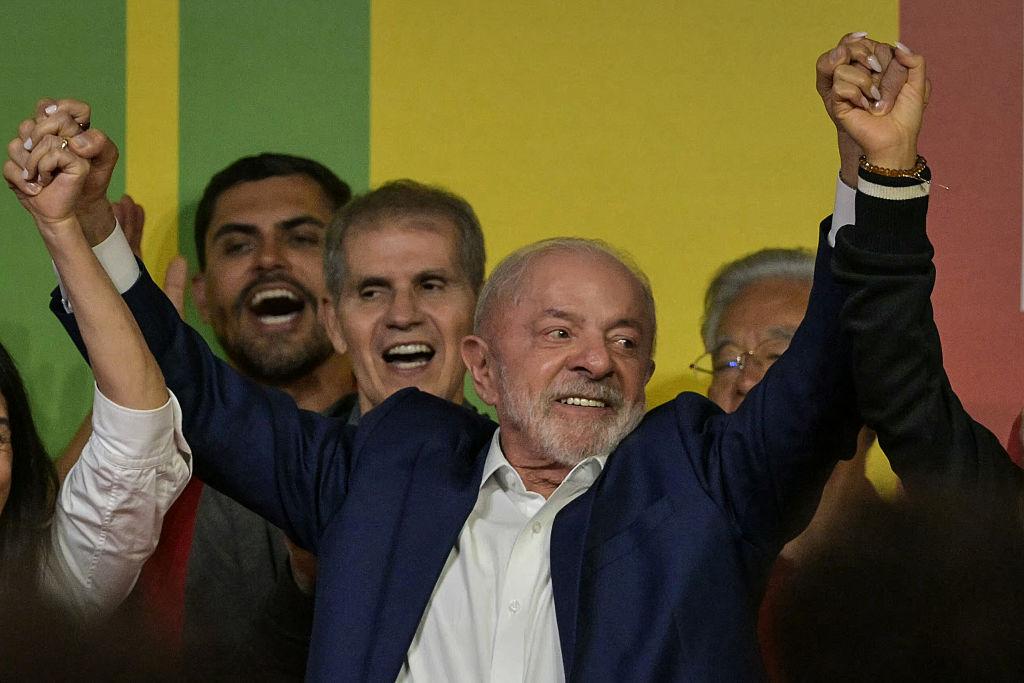
Brazilian President Luiz Inácio Lula da Silva has defeated Senator Flávio Bolsonaro in the October 25 presidential runoff, winning approximately 51.8% of valid votes against Bolsonaro’s 48.2% and securing an unprecedented fourth non-consecutive term. Lula becomes the first Brazilian presidential candidate in the country’s modern democratic era to finish second in the first round and then win the runoff. Bolsonaro has refused to concede and says he will challenge the result in court, while Lula now faces a strongly conservative Congress, fiscal pressures, public-security concerns and a deeply divided electorate as he prepares for another four-year mandate.
Brazilian President Luiz Inácio Lula da Silva has secured an unprecedented fourth term in office after defeating right-wing Senator Flávio Bolsonaro in a closely fought presidential runoff, completing a dramatic electoral comeback after finishing behind his challenger in the first round and extending the political career of one of Latin America’s most influential leaders. Brazil’s Superior Electoral Court declared Lula the winner after the October 25 runoff, with the final count giving the 80-year-old Workers’ Party leader approximately 51.8% of valid votes against about 48.2% for Bolsonaro, a margin of roughly 4.4 million votes in a country whose sharply divided electorate once again produced an exceptionally competitive presidential contest.
The victory is historic on several levels. Lula becomes the first Brazilian politician to be elected president four times, adding another term to the two consecutive administrations he led between 2003 and 2010 and the third presidency he began in January 2023 after defeating Jair Bolsonaro in the 2022 election. He also becomes the first presidential candidate since Brazil restored direct democratic presidential elections to finish second in the opening round and then overturn the result in the runoff. Flávio Bolsonaro had entered the second round with the advantage after securing 47.03% of valid votes on October 4 compared with Lula’s 45.16%, finishing more than two million votes ahead of the incumbent and entering the decisive vote with considerable momentum.
Lula’s reversal therefore represents not simply reelection but one of the most remarkable late-stage turnarounds in modern Brazilian presidential politics. Polls immediately before the runoff generally showed the two candidates virtually tied, with several surveys giving Bolsonaro a narrow advantage, meaning neither campaign entered election day with a secure path to victory. Lula ultimately benefited from stronger voter mobilization, especially among lower-income Brazilians, women, older voters and communities where his social welfare record retained significant support, while his campaign intensified digital organizing and street mobilization during the three weeks between rounds.
The final result also demonstrates how closely divided Brazil remains. Almost half of valid ballots went to Flávio Bolsonaro, confirming that the conservative political movement built around his father, former President Jair Bolsonaro, remains a powerful electoral force even with the former president imprisoned and barred from seeking office. Lula’s victory keeps the presidency under left-wing leadership, but it does not represent the disappearance of Bolsonarismo. Instead, Brazil now enters another presidential term with a narrow national split between two political blocs that disagree fundamentally over economic policy, public security, social welfare, the role of the Supreme Court, relations with the United States and the direction of Brazil’s democracy.
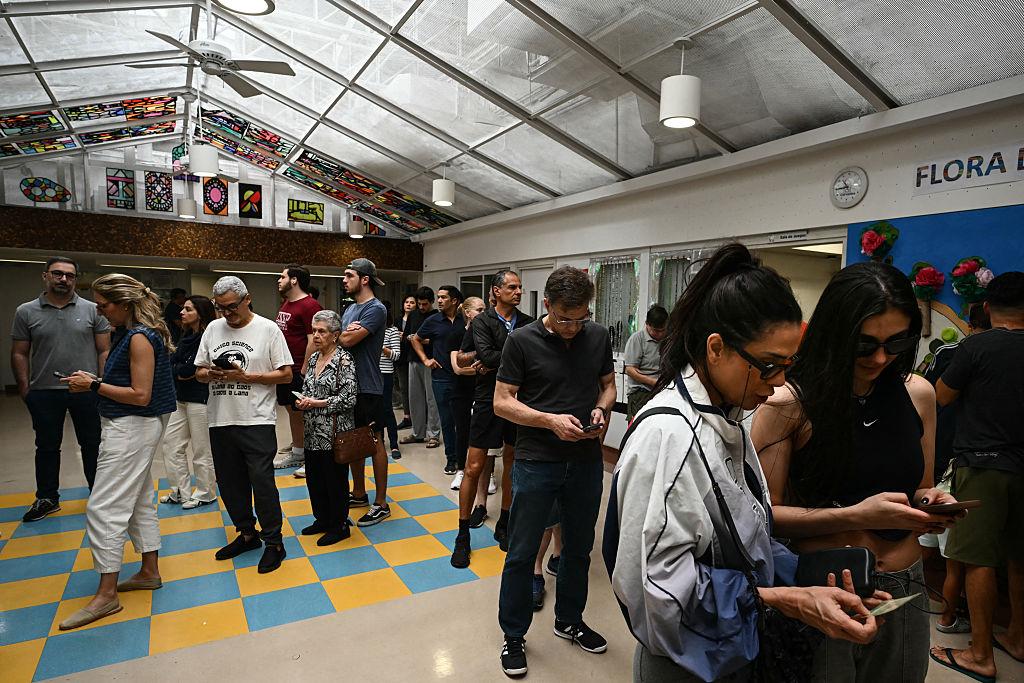
Flávio Bolsonaro has refused to concede defeat and says he intends to challenge the election through the courts. The senator has called for the result to be annulled, criticizing a decision taken during election day to extend voting at some locations after transportation disruptions and heavy rain created difficulties for voters attempting to reach polling stations. Bolsonaro has alleged that changes made during voting were improper and has raised questions about access by Liberal Party representatives to parts of the electoral process, but no evidence has been presented publicly showing that irregularities changed the national result.
Brazilian election authorities have defended the administration of the vote. The extension applied to polling places affected by operational difficulties and did not reopen voting machines that had already closed. Both campaigns had raised concerns about access problems during election day, particularly after reports that public transportation disruptions and severe weather were preventing voters from reaching some polling stations. The Superior Electoral Court subsequently completed the count and officially declared Lula the winner, meaning any challenge by Bolsonaro will now have to proceed through Brazil’s established judicial process rather than alter the certified result automatically.
The legal confrontation adds another layer of tension to an election already carrying the weight of Brazil’s recent democratic crisis. Jair Bolsonaro, Flávio’s father and Brazil’s president from 2019 to 2022, was convicted over an effort to overturn the result of the 2022 election after losing to Lula. That history made acceptance of the 2026 result an especially sensitive issue throughout the campaign, with election authorities repeatedly emphasizing the security of Brazil’s electronic voting system and the importance of respecting institutional procedures.
For Lula, the immediate political challenge will be moving from electoral victory to governing a country where the legislature has shifted significantly to the right. Bolsonaro’s Liberal Party and allied conservative parties performed strongly in congressional elections and are expected to control more than 280 seats in the Chamber of Deputies and as many as 50 seats in the Senate. That would give the conservative bloc substantial influence over legislation, the federal budget, investigations and presidential appointments, potentially making Lula’s fourth term more difficult than any of his previous administrations.
Brazil’s presidency is powerful, but presidents rarely govern successfully without building large congressional coalitions. Lula has decades of experience negotiating with centrist parties, governors and congressional leaders, but the ideological distance between his Workers’ Party and the incoming legislature could make those negotiations especially difficult. Conservatives are expected to push for tighter spending controls, business-friendly reforms and tougher security policies, while Lula campaigned on expanding welfare programs, improving worker protections and maintaining a strong role for the state in reducing inequality.
The possibility of persistent confrontation between the executive and Congress therefore represents one of the defining questions of Lula’s new term. A president elected with nearly 52% of the vote will still face a legislature in which many lawmakers were elected by voters who rejected his political program. That divided mandate could force Lula to moderate portions of his agenda, negotiate issue by issue and rely heavily on centrist parties whose support may come at a substantial political or budgetary cost.
Brazil’s economy will provide the next major test. Lula enters his fourth term with several indicators stronger than critics predicted when he returned to office in 2023, including improvements in employment, reductions in poverty and inequality and stronger social indicators. His government has also highlighted progress in literacy, food security and Amazon deforestation as evidence that its social and environmental agenda has produced measurable results.
The economic picture is nevertheless complicated. Brazil’s government expects growth of around 2.3% next year, while public debt has climbed above 82% of gross domestic product, its highest level since the pandemic. Interest rates remain high, household indebtedness is significant and concerns about government spending continue to shape financial-market expectations. Lula therefore enters the next term needing to balance campaign promises for expanded social programs with pressure from investors, lawmakers and economists demanding greater fiscal discipline.
The cost of living was one of the most important vulnerabilities for Lula throughout the election. Although employment remained relatively strong, voters repeatedly expressed frustration over food prices, household expenses, housing pressures and the difficulty of translating national economic growth into improvements in everyday purchasing power. Flávio Bolsonaro focused heavily on those concerns, arguing that Brazil required lower taxes, reduced government expenditure and a more market-oriented economic policy.
Lula countered by emphasizing his long political association with poverty reduction and social inclusion. During the campaign he promised expanded welfare protections, measures to address household debt, labor reforms and free public transportation on weekends. Delivering those promises while controlling Brazil’s public finances will be one of the central economic tensions of the next administration.
Markets are likely to watch the composition of Lula’s economic team, his relationship with Finance Ministry officials and his approach to Brazil’s fiscal rules particularly closely. Investors will also monitor whether the conservative Congress forces deeper spending reductions than Lula would prefer and whether disputes over fiscal policy create political instability. The president’s ability to maintain social spending without allowing debt to rise uncontrollably could determine whether his fourth term is remembered as a continuation of Brazil’s social-policy expansion or as a period dominated by fiscal confrontation.
Public security will be equally important. Crime and organized criminal networks played a prominent role in Bolsonaro’s campaign, and conservative politicians have gained support by arguing that Brazil requires tougher enforcement against gangs, drug trafficking and violent crime. Lula will therefore face pressure to demonstrate that a left-wing government can combine social prevention programs with effective law enforcement rather than allowing security to become an issue monopolized politically by the right.
The federal government’s powers over policing are limited because Brazil’s states control many frontline security forces, meaning Lula will need cooperation from governors, including several politically opposed to him. Organized crime networks operate across state boundaries and have increasingly expanded into financial crime, illegal mining, fuel distribution, transportation and other economic sectors, making security policy inseparable from questions of corruption and institutional capacity.
The Amazon will remain another major domestic and international issue. Lula has made protection of the rainforest a central element of Brazil’s global diplomacy, arguing that environmental protection can coexist with economic development and stronger support for communities living in the region. Reductions in deforestation during his third term strengthened Brazil’s credibility in international climate negotiations, but agricultural interests and conservative legislators continue to resist regulations they consider excessive.
The president will therefore have to navigate tension between environmental commitments and Brazil’s enormous agribusiness sector, which remains central to exports, employment and political power. Agricultural states have often leaned strongly toward conservative candidates, and many rural voters supported Bolsonaro. Lula’s ability to maintain environmental progress without provoking deeper conflict with producers will shape both domestic politics and Brazil’s international climate leadership.
Foreign policy may produce some of the sharpest changes compared with what would have followed a Bolsonaro victory. Lula has consistently favored what Brazil describes as an independent, multipolar foreign policy in which Brasília maintains relationships with the United States, China, Europe, the Global South and the BRICS states without aligning completely with any single bloc. His victory therefore preserves Brazil’s current diplomatic direction rather than moving the country sharply toward Washington under a Bolsonaro administration.
That could produce renewed friction with U.S. President Donald Trump. Flávio Bolsonaro presented himself as a natural ally of Trump and advocated closer strategic ties with Washington, while Lula has repeatedly criticized American pressure on Brazil and resisted policies he views as interference in the country’s domestic affairs. The Trump administration has clashed with Lula’s government over trade, tariffs, security and legal actions involving the Bolsonaro family, making the relationship between the Western Hemisphere’s two largest democracies an important issue for Lula’s next term.
Despite those tensions, neither government can easily afford a complete breakdown in relations. The United States remains an important trading, investment and security partner for Brazil, while Brazil is central to American policy in Latin America because of its size, economic influence and diplomatic reach. Lula is therefore likely to continue combining criticism of Washington with practical engagement on trade, climate, energy and regional stability.
China will remain equally important. China is Brazil’s largest trading partner and a major buyer of soybeans, iron ore, oil and other Brazilian commodities. Lula has supported expanding commercial relations with Beijing while resisting pressure to treat the U.S.-China rivalry as a choice requiring Brazil to pick one side. His reelection therefore strengthens Brazil’s position as a major country attempting to maintain productive relationships with both global powers.
The BRICS grouping will remain another important platform. Lula has championed greater influence for emerging economies in international institutions and has argued for reforms to global financial governance that give developing countries a larger voice. His foreign policy has frequently emphasized South-South cooperation, regional integration and greater autonomy from the traditional Western-led international system.
That diplomatic positioning makes Lula’s victory significant far beyond Brazil. Latin America has experienced a series of recent rightward electoral shifts, and Flávio Bolsonaro’s victory would have added the region’s largest economy to a growing group of governments more closely aligned with Trump and conservative political movements. Lula’s reelection interrupts that trend and preserves a major center of left-wing political power in the hemisphere.
The result should not, however, be interpreted as evidence that Latin America has reversed its broader conservative shift. Political movements across the region remain fluid and are driven heavily by national concerns including inflation, crime, corruption and dissatisfaction with incumbents. Lula’s victory was extremely narrow and came despite his status as the sitting president, illustrating that Brazil itself remains part of the same anti-incumbent pressures affecting governments elsewhere.
Regional leaders moved quickly to congratulate Lula. Mexican President Claudia Sheinbaum celebrated the result as a victory for democracy and the Brazilian people, while leaders from Paraguay, Uruguay, Bolivia, Cuba and Panama issued messages recognizing his victory and calling for continued cooperation with Brazil. The reactions underscore the country’s importance to regional trade, diplomacy and political balance.
For neighboring countries, Brazil’s direction matters because of its enormous economic weight. Brazilian investment, agricultural trade, energy connections and infrastructure links affect economies from Paraguay and Bolivia to Argentina and Uruguay. Decisions taken in Brasília therefore have consequences across South America regardless of the ideological preferences of individual governments.
Lula is also likely to continue advocating stronger regional integration, though attempts to revive South American political institutions have encountered ideological divisions among governments. His capacity to build consensus will depend on whether he can separate practical cooperation on trade and infrastructure from partisan arguments over the region’s political direction.
At home, the election exposes a country almost evenly divided between Lula’s social-democratic and left-wing coalition and a powerful conservative movement. Geographic differences remain pronounced, with Lula drawing especially strong support in poorer northeastern states while Bolsonaro performed strongly in parts of the south, southeast and agricultural regions. Income, religion, gender, age and urban-rural divisions also shaped voting patterns.
Those divisions mean national reconciliation will become more than a ceremonial question. Lula cannot govern effectively by treating nearly half of voters as politically irrelevant, while the opposition will face its own decision over whether to work within institutions or pursue relentless confrontation with the presidency. The behavior of both camps in the weeks after the election may determine how stable Brazil’s political environment remains.
Flávio Bolsonaro’s refusal to concede makes that question more urgent. Legal challenges are a legitimate part of a democratic system when supported by evidence, but attempts to delegitimize an election without evidence can deepen public distrust. Brazilian institutions will therefore face pressure to process any complaints transparently and quickly while preventing political rhetoric from escalating into instability.
The memory of January 8, 2023, when supporters of Jair Bolsonaro stormed government buildings in Brasília after Lula’s previous election victory, remains powerful. Security authorities will be highly alert to the possibility of demonstrations or attempts to disrupt the transition into Lula’s fourth term. The president is already in office, meaning the constitutional process is technically a reelection rather than a transfer of power, but his new mandate begins in January 2027.
Lula’s victory also adds another extraordinary chapter to a political career defined by dramatic rises, falls and returns. A former metalworker and trade-union leader, he became president in 2003 after several unsuccessful campaigns and left office in 2010 with extremely high approval ratings. He was later imprisoned on corruption convictions that prevented him from contesting the 2018 election before those convictions were annulled after judicial rulings raised serious questions about jurisdiction and the impartiality of proceedings.
He returned to electoral politics and defeated Jair Bolsonaro in 2022, beginning his third presidential term in 2023. Four years later, at the age of 80, he has now survived another intensely polarized election and overturned a first-round deficit to secure a fourth mandate.
That history makes Lula one of the most consequential politicians in modern Latin America, but longevity does not guarantee an easy presidency. His age, the conservative Congress, fiscal constraints, public-security concerns and the strength of the Bolsonaro movement will all shape his ability to govern.
The fourth term could therefore be defined less by ideological ambition than by negotiation. Lula may have to choose which social and economic priorities are achievable, determine where compromises with Congress are possible and decide which confrontations are worth pursuing. The political skills that allowed him to build broad coalitions during earlier presidencies will once again be tested under more polarized conditions.
Brazilian businesses will be watching for signs that the administration intends to pursue predictable economic policy. International companies will focus on taxation, regulation, energy policy and fiscal stability, while domestic industries will assess how the government balances industrial development with environmental commitments and foreign competition.
The energy sector could become especially important. Brazil is a major oil producer while simultaneously positioning itself as a leader in renewable energy and climate diplomacy. Lula has supported both environmental protection and development of Brazil’s energy resources, creating tensions within his coalition between environmentalists and advocates of expanded oil exploration.
Those competing pressures reflect the broader challenge of governing a country as economically and geographically diverse as Brazil. Policies popular in industrial São Paulo may not satisfy voters in the agricultural interior, while environmental policies supported internationally can face resistance from communities seeking jobs and infrastructure.
Education, health care and poverty reduction will remain central to Lula’s political identity. His campaign emphasized achievements in reducing inequality and expanding access to social programs, and supporters will expect those efforts to continue. A conservative Congress may accept some targeted social spending while resisting broader expansion of the state, creating repeated budget battles.
The outcome of those battles will help determine whether Lula can maintain the coalition that carried him through the runoff. His victory required mobilizing voters beyond the traditional Workers’ Party base, including moderates who may have supported him more as a defense of stability than as an endorsement of every element of his economic program.
The narrow result therefore gives Lula a clear democratic mandate to serve another term but not an unrestricted mandate to reshape Brazil without compromise. Nearly 48.2% of valid votes went to Flávio Bolsonaro, and the conservative bloc strengthened its presence in Congress. Any interpretation of the election must take both realities seriously.
Internationally, Lula’s fourth term gives Brazil continuity at a period of enormous geopolitical change. Competition between Washington and Beijing, wars and security crises abroad, shifts in global trade and increasing pressure over climate policy all create opportunities for a country seeking to position itself as a major independent diplomatic actor.
Brazil’s size gives Lula leverage, but international influence will ultimately depend heavily on domestic performance. A government struggling with debt, political paralysis or security problems will have less diplomatic credibility than one capable of combining economic stability with social improvements.
That makes the economic agenda particularly important to the legacy of Lula’s fourth presidency. He has already governed during periods of both strong commodity-driven growth and more difficult economic conditions. The next four years will test whether his social-policy model can adapt to a country with higher debt, changing labor markets, a growing digital economy and younger workers increasingly employed through informal or app-based platforms.
Those workers became an important political battleground during the campaign. Bolsonaro appealed strongly to voters who distrust regulation and taxation, while Lula attempted to convince gig workers and informal employees that social protections could be expanded without destroying economic opportunity. The unresolved debate over how to regulate platform work will likely become an important legislative issue.
Lula will also need to confront the perception among some younger Brazilians that his political movement belongs to an earlier economic era. His campaign responded by increasing its social-media presence significantly between rounds, helping to close a digital organizing gap that had historically favored the Brazilian right.
That transformation may have contributed to the runoff victory, but maintaining political support will require more than digital campaigning. Young voters concerned about housing, wages, education, crime and employment will judge the government on material results rather than campaign messaging.
For Flávio Bolsonaro, defeat does not necessarily end his political rise. Securing more than 48% of valid votes in his first presidential campaign establishes him as a major national figure and potentially the leading electoral representative of the movement built by his father. His performance could position him for another presidential campaign, depending on the legal and political developments surrounding the Bolsonaro family and the direction of the Liberal Party.
The 2026 election may therefore represent the beginning of another prolonged Lula-Bolsonaro era rather than its conclusion. One family remains the dominant force on the right, while Lula remains the most successful electoral figure on the left.
Brazilian democracy will have to absorb that rivalry without repeating the institutional crisis that followed the 2022 election. The credibility of the courts, Congress, the presidency and electoral authorities will all be tested as Bolsonaro pursues his challenge and supporters on both sides react to the result.
For the wider region, Lula’s victory ensures that Latin America’s largest country will continue to pursue a foreign policy emphasizing strategic autonomy, social development, environmental diplomacy and engagement with both Western and non-Western powers. That will influence regional institutions, climate negotiations, trade talks and relations between Latin America and the Trump administration.
For Brazil itself, however, the result is less an ending than the beginning of another difficult political chapter. Lula has achieved something no other Brazilian politician has accomplished by winning a fourth presidential election and becoming the first candidate in the modern democratic period to recover from a first-round defeat and win the runoff. But the narrow margin, Bolsonaro’s refusal to concede and the conservative Congress awaiting him ensure that the next presidency will begin under intense pressure.
The election has therefore produced two simultaneous messages. Lula has secured a legitimate and historically significant victory, demonstrating that his political coalition remains capable of mobilizing a national majority even after more than two decades at the center of Brazilian politics. At the same time, almost half of voters chose a radically different direction, and conservative forces strengthened their institutional position even while losing the presidency.
How Lula responds to that contradiction will shape his fourth term. If he can preserve social gains, stabilize public finances, address crime, work with a hostile Congress and manage Brazil’s relationships with Washington, Beijing and its Latin American neighbors, the victory could reinforce his position as one of the defining leaders of Brazil’s democratic era. If political confrontation overwhelms economic and legislative progress, the historic fourth mandate could become his most difficult.
For now, the result itself is settled by Brazil’s electoral authorities: Luiz Inácio Lula da Silva has defeated Flávio Bolsonaro and will remain president of Latin America’s largest economy. The campaign is over, but the struggle over Brazil’s political direction, economic model and place in the world is entering another chapter.