MAHAMA REVEALS TALKS WITH EUROPEAN COUNTRIES OVER SLAVE TRADE REPARATIONS AS GHANA PUSHES FOR ARTEFACT RETURNS, DEBT RELIEF AND ECONOMIC JUSTICE
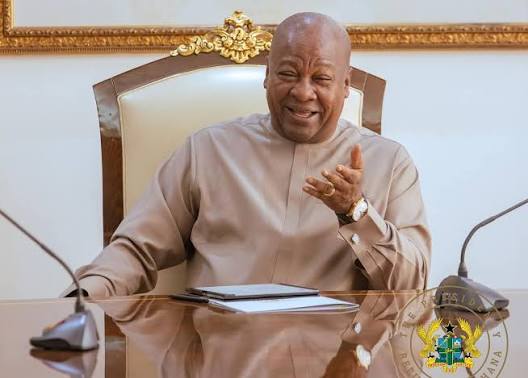
President John Dramani Mahama says Ghana is holding discussions with several European governments over reparatory justice for the transatlantic slave trade. The talks include the return of looted cultural artefacts and broader economic measures such as debt relief, while eventual financial compensation remains part of a wider African and Caribbean reparations framework. Germany and France are among the countries directly engaged, with Britain, the Netherlands, Denmark and Portugal also indicating willingness to participate. No direct compensation agreement has yet been announced.
President John Dramani Mahama has revealed that Ghana is in discussions with several European governments over reparatory justice for the transatlantic slave trade, as Accra intensifies a campaign seeking the return of looted cultural artefacts, formal acknowledgement of historical abuses and wider economic measures aimed at addressing the long-term effects of slavery and colonial exploitation. The President said the conversations are already taking place with countries including Germany and France, while Ghanaian officials have also reported engagement or expressions of willingness to cooperate from the Netherlands, United Kingdom, Portugal and Denmark. No agreement for direct cash compensation has been announced, and the discussions remain part of a wider diplomatic process rather than a completed reparations settlement.
Mahama’s position is that reparations should not be reduced to governments writing cheques for historical wrongs. Ghana is instead advocating a broader framework that combines cultural restitution, formal apologies, debt relief, changes to international economic structures and, potentially, financial compensation at a later stage. The government argues that the effects of the transatlantic slave trade did not end when slavery was formally abolished because the extraction of people, resources and cultural property contributed to inequalities that remain visible between Africa and wealthier parts of the world.
The return of African cultural property is currently one of the most advanced parts of Ghana’s campaign. Thousands of objects originating from Ghana and other African societies remain inside European museums, universities and private collections after being removed during slavery, colonial occupation, military expeditions and other periods of unequal European control. Ghana is pressing for those objects to return permanently rather than remain overseas under arrangements in which African countries must borrow their own cultural heritage.
President Mahama has highlighted the Netherlands as one country where substantial progress is already being discussed. Dutch authorities have catalogued approximately 2,000 Ghanaian artefacts that could be considered for return, while Germany has engaged Ghanaian traditional authorities over cultural objects connected to communities including the Kpando Traditional Area. France has also introduced legal reforms designed to make it easier for certain cultural objects removed during colonialism to be permanently returned to African countries.
Ghana’s argument is that these individual returns should eventually become part of a standard international framework rather than depend entirely on the goodwill of each museum or European government. Mahama has said restitution should become predictable, transparent and based on established legal and diplomatic procedures covering provenance research, archives, negotiations and the unconditional return of human remains, sacred objects and other cultural property.
The government has rejected arguments that artefacts should remain in Europe because African countries may lack appropriate museums or conservation facilities. Mahama’s position is that inadequate preservation infrastructure should become a reason for international investment in African museums rather than a justification for retaining cultural property abroad. Ghana wants institutions that possess African collections to cooperate on conservation, training, documentation and infrastructure while ultimately returning ownership to the communities and countries from which the objects originated.
The wider reparations campaign has gained momentum during 2026. Ghana has positioned itself as one of the leading African states pushing for a coordinated international conversation involving governments in Africa, the Caribbean, Europe and the Americas. Mahama has repeatedly framed the campaign as an effort toward reconciliation and structural fairness rather than an attempt to punish present generations for crimes committed centuries ago.
That distinction is politically important because reparations remain deeply controversial in many Western countries. Governments generally acknowledge the brutality of slavery and colonialism, but there is considerably less agreement over whether modern states should provide financial compensation, cancel debt or accept legal responsibility for actions committed under previous political systems.
Ghana is therefore approaching the process in stages. The first stage focuses heavily on cultural restitution because it is an area where some European governments have already demonstrated willingness to act. Later stages under the wider African and Caribbean framework could include formal state apologies, debt relief, development financing and direct financial compensation.
The campaign took a major step forward in March when the United Nations General Assembly adopted a Ghana-led resolution recognising the trafficking and enslavement of Africans as among history’s gravest crimes against humanity and calling for greater international action on reparatory justice. The resolution received support from 123 countries, although several Western countries abstained and the United States, Israel and Argentina voted against it.
Ghanaian officials later said some countries that abstained subsequently approached Accra and expressed a willingness to participate in further discussions. That change has been presented by the government as evidence that diplomatic engagement may be producing movement even among governments that were initially reluctant to support stronger UN language.
In June, Ghana hosted African and Caribbean leaders and officials in Accra for a major conference on reparatory justice. The meeting produced a 19-point framework intended to give the campaign a more structured international strategy. Rather than treating reparations as one demand, the framework addresses cultural restitution, historical acknowledgement, economic inequality, development financing, debt, education, institutional reform and possible compensation.
The conference also strengthened cooperation between the African Union and Caribbean governments that have long campaigned for reparations from former colonial powers. Caribbean states have spent years developing formal reparation proposals, particularly toward Britain, France, the Netherlands and other European states whose colonial economies depended heavily on enslaved African labour.
Mahama has argued that Africa and the Caribbean are more influential when they negotiate together rather than pursuing separate claims. Millions of Africans were transported across the Atlantic between the 16th and 19th centuries, creating societies throughout the Caribbean and Americas whose populations remain directly connected to the continent through ancestry and shared historical experience.
The combined approach seeks to create one political movement representing both the places from which enslaved people were taken and the societies their descendants built after surviving slavery. Ghana has embraced a particularly prominent role because of its historical connection to the transatlantic slave trade through coastal forts including Cape Coast Castle and Elmina Castle.
Those sites remain among the strongest physical symbols of the trade. Captive Africans were held in dungeons before being forced onto ships bound for the Americas, while European commercial and military powers operated fortified trading posts along the Gold Coast for centuries. The castles now function as memorials, museums and destinations visited by members of the African diaspora attempting to reconnect with the history of their ancestors.
Ghana has spent years building that connection through initiatives encouraging people of African descent to visit, invest and reconnect culturally with the country. The reparations campaign extends that historical outreach into international diplomacy by arguing that remembrance should eventually be accompanied by measurable actions addressing the legacy of exploitation.
Mahama has stressed that those actions must include economic questions. Ghana and other African states remain heavily indebted despite possessing substantial natural resources, while much of the value generated from African gold, cocoa, minerals and other commodities is created after those products leave the continent.
The President has connected reparatory justice to his broader argument that Africa must move away from simply exporting raw materials. Ghana plans to significantly expand domestic processing of commodities and has discussed restrictions on raw-material exports by 2030 as part of a strategy to retain more value inside the country.
That economic agenda helps explain why the government does not view reparations simply as historical compensation. Officials argue that contemporary global trade, finance and debt structures developed partly from systems established during slavery and colonialism and that genuine reparatory justice should therefore address the economic relationships that followed those periods.
Debt relief has consequently emerged as one of the possible measures under discussion. Many African governments spend substantial portions of national revenue servicing external debt, reducing the resources available for healthcare, infrastructure and education. Reparations advocates argue that cancelling or restructuring some of those debts could have a more lasting economic impact than one-off payments.
Critics of that argument maintain that modern debt contracts are legally separate from historical slavery and that connecting the two could create difficult questions over responsibility. Supporters respond that reparations are ultimately political and moral rather than narrowly contractual and that debt relief is one possible mechanism for narrowing inequalities created over centuries.
Direct financial compensation remains even more contentious. No figure has been agreed for Ghana, and Mahama has not announced that any European government has committed to paying Ghana cash compensation for the slave trade. That distinction is important because current discussions should not be presented as a completed financial settlement.
The government’s immediate diplomatic strategy is instead focused on building enough international consensus for negotiations to continue. Ghana believes cultural restitution provides a practical starting point because museums and European governments are already confronting pressure over collections acquired under colonial rule.
The Netherlands has taken steps to review collections and establish restitution procedures, while Germany has returned important cultural objects to African countries in recent years and is discussing further cases. France has also changed aspects of its legal framework after longstanding criticism that national law made permanent restitution from state collections extremely difficult.
Britain presents one of the most sensitive cases because British institutions hold enormous African collections and the British Empire played a major role in both slavery and colonialism. British museums have frequently used long-term loans rather than full transfers of ownership when allowing disputed objects to return temporarily to African countries.
Reparations campaigners argue that loans are inadequate when ownership itself is disputed. From their perspective, an African country should not have to accept conditions or temporary possession when seeking an artefact removed from its territory under coercive historical circumstances.
Mahama’s government is attempting to move the conversation from individual museum negotiations to government-to-government arrangements. Formal involvement by European states could make it easier to resolve legal barriers that museums themselves may not have authority to change.
Ghana has already engaged France at presidential level. During Mahama’s earlier talks with French President Emmanuel Macron in Paris, Ghanaian officials said France expressed openness to discussions about reparations, including cultural restitution. French officials confirmed talks on the return of culturally significant objects and human remains, although they did not publicly endorse every wider economic proposal put forward by Ghana.
That difference illustrates why the current process remains exploratory. European governments may support the return of artefacts while remaining reluctant to accept financial compensation or debt cancellation. Ghana’s diplomatic challenge is to keep countries engaged while gradually expanding the conversation beyond the areas where agreement already exists.
Germany and France later joined Ghana in co-hosting a reparatory justice event on the sidelines of the United Nations General Assembly. Ghanaian officials presented their participation as evidence that European engagement is beginning to move from private discussions into public diplomatic cooperation.
Foreign Affairs Minister Samuel Okudzeto Ablakwa has said the United Kingdom, Netherlands, Denmark and Portugal are among European governments that have indicated willingness to engage. The exact level of commitment differs from country to country, however, and willingness to hold talks should not be interpreted automatically as acceptance of Ghana’s full reparations programme.
President Mahama has repeatedly emphasised that the objective is not to reopen historical hostility between Africa and Europe. He has framed the campaign around reconciliation, acknowledging the past and building what he describes as a fairer global system.
That argument is designed partly to address resistance from governments concerned that reparations could produce unlimited historical financial claims. Ghana is attempting to establish a negotiated framework in which governments agree on practical measures instead of relying entirely on litigation or demands for retrospective legal damages.
The subject nevertheless remains emotionally charged because slavery produced suffering on an enormous scale. Millions of Africans were forcibly transported across the Atlantic, while many more died during capture, forced marches to the coast, confinement inside slave forts or the brutal ocean journey known as the Middle Passage.
Communities also lost large portions of their working-age populations over generations, while political systems were destabilised by European demand for enslaved people and the weapons and commercial networks that supported the trade. Reparations supporters argue that those consequences must be considered alongside the wealth accumulated by European merchants, institutions and governments.
Some British banks, insurance companies, universities, churches and wealthy families have already investigated historical connections to slavery. Similar research has occurred in the Netherlands and other European countries, generating debate about what institutions should do when evidence shows that their wealth or development benefited directly from the slave economy.
Several churches have issued apologies or established funds connected to historical involvement in slavery. Ghana sees those voluntary initiatives as useful but argues that reparatory justice ultimately requires government-level structures capable of delivering broader change.
The Church of England, for example, has committed substantial resources to addressing links between its historical investment funds and slavery. While such programmes do not constitute state reparations, they demonstrate that institutions can acknowledge historical benefit and create modern financial responses.
Mahama’s government wants the same principle considered at international level. That could involve investments in education, healthcare, infrastructure and cultural institutions in African and Caribbean societies alongside debt relief and restitution.
The President has also connected the campaign to broader demands for reform of international financial institutions. African leaders have long criticised global financing arrangements in which developing countries frequently pay higher borrowing costs than wealthy states despite sometimes carrying lower absolute debt burdens.
Reparations advocates see those disparities as part of a global economic architecture shaped during colonial rule. Critics argue that modern investment risk and economic governance provide more immediate explanations for borrowing costs. Ghana’s position is that historical and contemporary factors should be examined together.
For ordinary Ghanaians, the reparations debate may eventually become significant if it produces tangible economic agreements, although no such package currently exists. There is no announced compensation payment to Ghanaian citizens, no confirmed European fund paying Ghana billions of dollars and no agreement cancelling Ghana’s national debt.
Current developments are diplomatic negotiations and commitments to continue discussing possible measures. The strongest concrete progress relates to the potential return of cultural property.
That makes accuracy particularly important because reparations stories can quickly generate exaggerated claims on social media. A European government agreeing to discuss reparations is not the same as accepting legal liability, and an artefact being catalogued for possible restitution is not necessarily the same as its immediate physical return.
Similarly, Mahama saying Ghana is in discussions does not mean that a compensation figure has secretly been finalised. The public evidence supports the existence of diplomatic engagement, growing European participation in discussions and progress on cultural restitution.
The process could take years. Questions involving museum ownership, government legislation, historical evidence and financial responsibility are legally complex even where political goodwill exists.
Ghana nevertheless believes momentum is building. The UN resolution, Accra conference and subsequent discussions with European governments have transformed reparatory justice from an issue discussed mainly by activists into one appearing regularly at high-level diplomatic meetings.
Mahama’s role as an African advocate for reparations has also given Ghana an opportunity to position itself as a bridge between African governments, Caribbean states and Western countries.
That diplomacy carries potential benefits beyond reparations themselves. Cultural cooperation can strengthen tourism, museums and academic research, while economic discussions may produce investment even where governments do not formally describe it as compensation for slavery.
There is also a broader geopolitical dimension. Mahama has argued that Western investors need to become more active in Africa because Chinese and Indian investors increasingly recognise opportunities across the continent.
Africa’s ability to negotiate with multiple economic partners gives countries such as Ghana alternatives that were less available during earlier decades when Western institutions dominated development finance.
The President appears to be connecting that changing global balance to reparatory justice. Rather than approaching European governments solely as former colonial powers being asked to apologise, Ghana is presenting itself as an independent state seeking a different type of future economic relationship.
That may make negotiations politically easier for European governments that are reluctant to frame cooperation entirely through guilt or liability. Investments, debt reform, cultural restitution and new trade arrangements can all be presented as forward-looking partnerships while still responding to historical demands.
For reparations activists, however, language matters. Many argue that ordinary development assistance cannot be labelled reparations because aid is discretionary, while reparations imply recognition that a specific harm occurred and an obligation exists to repair it.
Ghana will therefore have to navigate the difference between gaining practical economic concessions and maintaining the principle of historical responsibility underpinning the campaign.
Mahama has indicated that truth and acknowledgement are essential starting points. His government’s position is that countries can only build genuine reconciliation after recognising the scale of the damage inflicted by transatlantic slavery and colonial exploitation.
The return of cultural artefacts is particularly symbolic in that regard because the objects embody histories that were physically removed from African communities. Their return can be both materially important and a visible acknowledgement that past methods of acquisition were unjust.
Cape Coast Castle and Elmina Castle meanwhile remain reminders that Ghana was geographically central to the trade. Millions of visitors can physically walk through spaces where captives were imprisoned before being transported across the Atlantic.
Those sites give Ghana’s diplomatic campaign a powerful historical foundation. Reparations are not an abstract issue when the buildings associated with the slave trade remain standing along the coast.
The government intends to continue using international institutions to push the conversation forward. Ghana has advocated mechanisms under the United Nations and UNESCO that would help resolve cultural restitution claims and create consistent procedures for future negotiations.
Such a framework could be especially useful for smaller African countries that lack the financial and legal resources required to negotiate individually with dozens of European museums and governments.
The ultimate outcome remains uncertain. European countries have very different historical relationships with Africa and different domestic political attitudes toward reparations.
Some may move quickly on artefacts but reject financial measures. Others could support development funds or debt initiatives while avoiding the term reparations entirely.
Ghana’s challenge will be converting expressions of willingness into agreements containing measurable commitments.
For now, President Mahama’s disclosure confirms that the conversation has advanced to direct engagement with multiple European countries. Germany and France are among the governments involved, while the Netherlands, Britain, Denmark and Portugal have also been identified in Ghana’s wider diplomatic engagement.
What has not happened is equally important. No comprehensive reparations settlement has been signed, no direct financial compensation amount has been agreed and no European government has announced that it will pay Ghana a fixed sum for the transatlantic slave trade.
The discussions are ongoing.
Their significance lies in the fact that a demand once largely rejected by former colonial powers has now entered formal diplomatic conversations involving African, Caribbean and European governments.
If Ghana succeeds in turning those discussions into permanent restitution arrangements, debt measures, economic programmes or eventual financial compensation, the implications could extend far beyond Ghana.
Other African and Caribbean countries could pursue similar frameworks, potentially transforming how former colonial powers address historical responsibility.
For Mahama, that is the larger objective. Ghana’s campaign is attempting to move reparatory justice from speeches about the past into negotiations over what governments are prepared to do in the present.
Whether Europe ultimately agrees to the most ambitious parts of that agenda remains unresolved, but the diplomatic process has clearly moved forward.
Ghana is now asking its European partners to go beyond symbolic acknowledgement, return cultural property that belongs to African communities and begin discussing economic structures capable of addressing the lasting consequences of one of the darkest periods in global history.