MY LOYALTY IS TO NIGERIA’S CONSTITUTION AND ELECTORAL ACT, INEC CHAIRMAN AMUPITAN SAYS AHEAD OF 2027 ELECTIONS
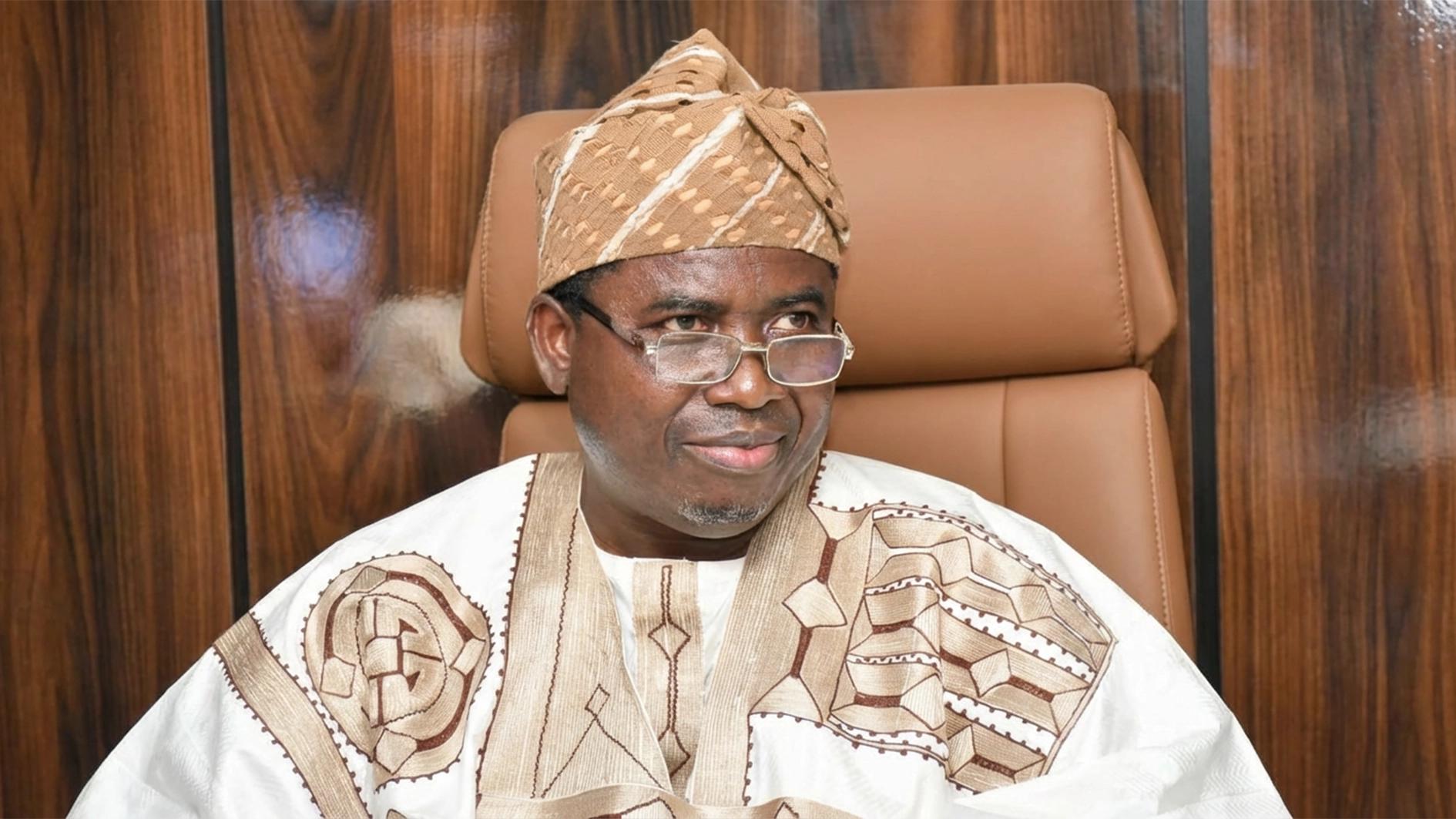
INEC Chairman Professor Joash Amupitan says his loyalty is solely to Nigeria’s Constitution and Electoral Act as the commission prepares for the 2027 general elections. Speaking at Chatham House in London, he acknowledged the trust deficit created by controversies surrounding the 2023 elections, rejected claims linking him to a partisan social-media account and identified security, logistics, technology and unresolved litigation as major challenges ahead of the January 16 presidential vote. (thisdaylive.com)
Chairman of the Independent National Electoral Commission, Professor Joash Amupitan, has declared that his loyalty as Nigeria’s chief electoral officer is solely to the Constitution of the Federal Republic of Nigeria and the Electoral Act, insisting that neither political parties nor individual politicians will determine how the commission conducts the 2027 general elections. Speaking during an appearance at Chatham House in London, Amupitan acknowledged the significant trust deficit facing INEC following controversies surrounding the 2023 elections and said rebuilding public confidence would require transparency, adherence to the law and credible management of security, logistics and election technology. He also rejected allegations that a partisan social-media account circulating in his name belonged to him, describing the controversy as an example of the misinformation and suspicion the commission will have to confront as Nigeria approaches another major national vote.
Amupitan’s intervention comes at a particularly sensitive moment for INEC because the commission is preparing for the January 16, 2027 presidential election while simultaneously managing hundreds of pre-election lawsuits, unresolved party disputes and intense public scrutiny over whether the weaknesses exposed in 2023 have been sufficiently addressed. The chairman used the London engagement to argue that the commission understands the depth of the credibility challenge and that its responsibility is to apply Nigeria’s electoral laws consistently rather than respond to pressure from the ruling party, opposition parties or powerful political interests. His comments amounted to an attempt to establish institutional distance between INEC and the increasingly heated political competition surrounding the 2027 polls.
The declaration of loyalty to the Constitution and Electoral Act was particularly significant because allegations of political bias have long followed Nigeria’s electoral institutions. Opposition parties frequently accuse INEC of favouring incumbents, while ruling parties often accuse the commission of obstructing legitimate political processes when decisions go against them. Amupitan said the only sustainable response to those competing pressures is for the commission to rely on the legal framework governing elections and to ensure that decisions can be defended through transparent procedures rather than political explanations.
According to the INEC chairman, election administrators cannot operate effectively if they attempt to satisfy every political actor. Political parties naturally evaluate the commission through the lens of whether its decisions help or hurt their interests, meaning the same institution can be accused of bias by different groups at the same time. Amupitan therefore argued that legal consistency rather than political popularity must become the standard by which INEC measures its conduct.
The 2023 general elections remain the most important background to that argument. The presidential election that produced Bola Tinubu as president was followed by extensive litigation and public controversy over the performance of INEC’s electronic systems, particularly the failure to upload presidential polling-unit results to the commission’s public viewing portal as quickly and consistently as many Nigerians had expected. Although the courts ultimately upheld the declared outcome, the technical problems and communication failures contributed to a significant loss of public confidence.
Amupitan acknowledged that legacy rather than attempting to dismiss it. He said the commission understands that many Nigerians remain sceptical of the electoral process and that credibility cannot simply be restored through statements from INEC officials. Instead, the commission must demonstrate through the conduct of the 2027 elections that lessons have been learned and that previously identified weaknesses are being addressed.
That acknowledgement distinguishes the chairman’s approach from a purely defensive response to criticism. Rather than arguing that public distrust is entirely unfair, Amupitan has repeatedly said that confidence in the electoral process is a practical operational requirement. Elections cannot function effectively when voters assume institutions are compromised before ballots are cast, because distrust can discourage participation, increase tension and make every administrative decision vulnerable to conspiracy theories.
The commission therefore faces a dual challenge. It must organise the technical process of voting across thousands of polling units while simultaneously persuading citizens that those procedures are credible. Security, logistics and technology will influence both objectives.
Security is one of the most immediate concerns. Nigeria continues to face armed conflict, terrorism, banditry, communal violence and criminal activity across multiple regions, creating significant difficulties for election officials attempting to reach vulnerable communities. INEC relies heavily on cooperation with the police, military and other security agencies to protect personnel, voters and sensitive materials.
Amupitan said the commission is working with relevant agencies to develop security plans for the election, particularly in areas where violence could disrupt voting. The challenge involves more than protecting polling stations on election day. Materials must be transported to difficult locations, officials must travel safely and collation centres must remain secure until results are completed.
The South-East presents one category of risk because of separatist violence and recurring threats linked to election participation. The North-West and parts of the North-Central face different dangers involving armed bandit groups, while the North-East continues to experience insurgent activity. Other regions have histories of political violence, communal disputes or criminal attacks that can also interfere with voting.
INEC cannot directly solve those security problems because it is not a law-enforcement agency. Its responsibility is to identify vulnerable locations, coordinate with security institutions and make operational decisions about where and how elections can safely proceed. Amupitan’s emphasis on security therefore reflects one of the most significant factors outside the commission’s direct control.
Logistics represents another major challenge. Nigeria’s elections require the movement of millions of ballot papers, result sheets, accreditation devices and other sensitive materials across 36 states and the Federal Capital Territory. Delays in the deployment of materials have historically caused voting to begin late in some areas, creating frustration and accusations that particular communities are being deliberately disenfranchised.
The scale of the operation makes perfection difficult, but Amupitan has indicated that the commission intends to improve planning and distribution systems. Procurement schedules, transportation contracts and the location of materials must all be finalised early enough to reduce last-minute problems.
Weather and geography can complicate those plans. Some communities are accessible only by waterways, motorcycles or difficult rural roads, while flooding can cut off entire areas during certain periods. INEC must therefore prepare alternative transport arrangements and contingency plans rather than relying on one uniform approach nationwide.
The January election date may reduce some weather-related challenges associated with the rainy season, but it creates other logistical pressures because the commission has less time to resolve the numerous legal disputes currently affecting candidate lists and party structures. Amupitan disclosed separately during the Chatham House engagement that INEC is dealing with more than 300 court cases while the election is only weeks away.
Those cases cover issues including party leadership disputes, candidate nominations and other pre-election matters. The chairman has warned that late judicial decisions can disrupt logistics because the commission may be forced to change ballots or candidate lists after procurement and printing processes have already begun.
The African Democratic Congress dispute involving former Vice President Atiku Abubakar is one of the most prominent examples. A Federal High Court judgment nullified the David Mark-led ADC leadership and affected the process that produced Atiku as presidential candidate, while the party has appealed. Amupitan said INEC will obey whatever final binding order emerges from the courts, even if implementation places the commission at the centre of political controversy.
That position reinforces his broader argument about institutional loyalty. INEC does not have the authority to disregard a valid judgment simply because enforcing it may anger a political party or alter the presidential ballot. The chairman says the commission’s responsibility is to follow the law and leave political actors to pursue their remedies through the courts.
Technology is another area where credibility will be tested. The Bimodal Voter Accreditation System and INEC Result Viewing portal became central to the 2023 election debate, with supporters arguing that the systems improved transparency and critics pointing to failures and inconsistencies. Amupitan has indicated that technology will continue playing a major role in 2027 but that systems must be more reliable and better understood.
BVAS is used to authenticate voters using biometric information and is intended to reduce multiple voting and the use of fraudulent voter cards. The technology also supports the transmission or uploading of election information, though the legal status of electronic transmission has been the subject of significant political debate.
The commission will therefore need to explain clearly what each technology does and what voters should expect on election day. Confusion about whether electronic systems automatically determine results contributed to controversy in 2023, and unclear communication could create similar problems in 2027.
Cybersecurity has also become increasingly important. Electoral institutions around the world face threats ranging from hacking attempts to coordinated disinformation campaigns. Nigeria’s large online population and politically active social-media environment make false information particularly capable of spreading quickly during elections.
Amupitan’s rejection of the alleged partisan social-media account demonstrates the scale of that challenge. Critics had circulated claims that an account associated with his name had expressed political preferences, raising questions about whether the INEC chairman had previously demonstrated partisan leanings. He denied ownership of the account and said he was not responsible for the posts attributed to him.
The controversy illustrates how digital misinformation can directly affect trust in election officials. A screenshot or social-media profile can circulate widely before its authenticity is verified, and political actors may use such material to reinforce existing claims of bias. By the time corrections are issued, the original allegation may already have reached millions of people.
INEC will therefore need a rapid communication strategy capable of responding to false reports before they become established narratives. That requires not only official press statements but active engagement across social platforms where misinformation spreads.
The commission’s credibility also depends on the behaviour of its own staff. Thousands of temporary officials are recruited for national elections, including university lecturers, youth corps members and other personnel. Training and supervision are critical because misconduct by even a small number of officials can damage confidence in the entire process.
Amupitan has stressed professionalism and accountability within the commission. Electoral officers who manipulate results, collaborate with politicians or deliberately obstruct voting can undermine years of institutional planning. Enforcement mechanisms therefore need to be credible enough to discourage misconduct.
Political parties themselves also bear responsibility for election integrity. Vote buying, voter intimidation, violence and attempts to compromise officials are often organised by partisan actors rather than INEC. The commission can issue regulations and work with security agencies, but political culture ultimately influences how competitive elections unfold.
Vote buying remains particularly difficult to eliminate because transactions can occur close to polling units without directly interfering with ballot secrecy. Parties may distribute cash or goods before voting and attempt to monitor whether beneficiaries comply. Such practices weaken democratic accountability because electoral choices become tied to immediate financial incentives rather than policy preferences.
Security agencies therefore have an important enforcement role. Arresting individuals involved in vote buying and political violence can discourage future offences, but prosecutions must follow if enforcement is to have lasting deterrent value. Previous elections have produced numerous arrests but relatively few high-profile convictions.
Amupitan’s constitutional argument also relates to the commission’s relationship with the executive branch. INEC receives public funding and its chairman is appointed through constitutional processes involving the president and National Assembly, but the commission is expected to function independently during elections. Public confidence therefore depends on whether voters believe that independence exists in practice.
The chairman’s statement that his loyalty is not to politicians appears designed to address precisely that concern. As Nigeria approaches an election in which the sitting president is seeking another mandate, opposition parties will scrutinise every INEC decision for evidence of institutional favouritism.
The ruling All Progressives Congress will similarly monitor decisions affecting its candidates and may challenge those it believes are unlawful. INEC must therefore apply the same standards across parties if it wants claims of neutrality to be credible.
The commission must also manage candidate nominations without becoming drawn into internal party conflicts. Nigerian political parties frequently experience parallel primaries, leadership disputes and litigation, forcing INEC to determine which officials or candidates should initially be recognised before the courts intervene.
Amupitan has argued that political parties need stronger internal democratic procedures to reduce such disputes. When every leadership disagreement reaches the courts, election preparation becomes increasingly unpredictable.
The Chatham House appearance itself carries symbolic significance because Nigerian electoral officials often use international forums to explain preparations and reassure foreign observers. Nigeria’s elections are closely watched across Africa because the country is the continent’s most populous democracy and one of its largest economies.
International attention does not determine the legitimacy of the election, but foreign governments, investors and regional organisations monitor the process because instability in Nigeria can have consequences beyond its borders. Credible elections therefore have diplomatic and economic significance as well as domestic importance.
Amupitan’s message to the international audience was that the commission understands the failures and criticisms associated with 2023 but intends to operate within the law in 2027. He presented constitutional fidelity as the foundation of that approach.
Whether voters accept that argument will depend largely on what happens during the election itself. Institutional credibility cannot be created solely through speeches, and Nigerians will judge the commission by whether polling units open on time, accreditation works, results are accurately recorded and disputes are handled transparently.
The first major test will occur before election day through the publication and management of candidate lists. Ongoing litigation could require changes, and the commission will need to communicate those decisions carefully.
The second will involve the distribution of sensitive materials. Delays or irregularities can immediately generate accusations of manipulation, particularly in politically competitive areas.
The third will involve voting and accreditation. Any widespread BVAS failure could recreate many of the frustrations seen in 2023, while successful operation could strengthen confidence.
The fourth and most politically sensitive stage will be collation and result publication. This is where competing parties are most likely to challenge figures and where technology failures can become national controversies.
INEC has therefore been reviewing both technical and procedural systems. The commission will need backup arrangements where electronic devices fail and clear rules governing replacement equipment.
Power and telecommunications infrastructure can also affect election technology. Some rural areas have poor network coverage, meaning devices must be capable of storing information until transmission becomes possible.
The distinction between accreditation and result upload will need to be communicated accurately. BVAS can authenticate voters offline, while the public viewing portal depends on data connectivity for uploaded documents.
Public expectations must therefore align with technological reality. Promising instant digital transmission everywhere in a country with uneven network infrastructure could create unrealistic assumptions and subsequent distrust.
At the same time, technical limitations cannot become an excuse for avoidable failures. INEC has several years of experience operating BVAS and should be expected to improve reliability with each election cycle.
Civil society organisations will also play an important monitoring role. Domestic observer groups deploy thousands of volunteers who independently report polling-unit conditions and can compare official results with their own observations.
Parallel monitoring can strengthen confidence where figures match and provide evidence where discrepancies emerge. INEC’s willingness to cooperate with credible observers will therefore influence perceptions of transparency.
The media has a similar responsibility. News organisations must distinguish confirmed results from unofficial figures and avoid declaring winners before the commission completes legally required collation.
Social media makes that increasingly difficult because party agents and individual voters can publish polling-unit results immediately. Those images can provide useful transparency but can also be selectively presented to create misleading impressions about national trends.
INEC must therefore communicate quickly enough that credible information is available before misinformation dominates the public conversation. Slow official communication creates information vacuums that political actors can exploit.
The chairman’s comments about partisan social-media allegations demonstrate that he understands the personal dimension of that problem. His own credibility is now tied to the broader credibility of the commission.
Any evidence of personal partisan activity could significantly damage public trust, which is why he has strongly rejected ownership of the disputed account. Critics may continue questioning the matter, but the burden will remain on those making the allegation to provide credible evidence connecting the account directly to him.
The trust deficit from 2023 cannot be resolved by one denial or one election reform. It reflects accumulated frustrations involving result transmission, logistics, legal disputes and the broader political environment.
Amupitan’s challenge is therefore institutional rather than merely personal. Even if voters accept his own neutrality, they must also trust the thousands of officials, contractors and security personnel involved in implementing the election.
The commission’s relationship with security agencies will be especially important because excessive force can be as damaging as inadequate security. Police must protect voters without intimidating them or appearing to favour political actors.
Rules of engagement and deployment plans should therefore be clear. Security personnel should remain outside the immediate voting process unless intervention is necessary to maintain order.
The movement of security agencies across states will also need careful planning because simultaneous elections create enormous nationwide demand for personnel. Authorities must allocate resources based on risk while avoiding the perception that some regions are being militarised more heavily than others for political reasons.
Election-day violence can also suppress turnout even if polling technically proceeds. Voters who fear attacks may remain home, effectively altering participation without any formal cancellation.
INEC will therefore need mechanisms for postponing or rescheduling voting where security conditions make participation impossible. Such decisions must be applied consistently and explained publicly.
Logistics can also affect turnout. If polling begins many hours late, voters may leave before casting ballots, particularly where transportation becomes difficult after dark.
The commission’s planning must therefore treat timeliness as a democratic issue rather than merely an administrative target.
Accessibility is another concern. Persons with disabilities require polling arrangements that allow them to vote independently and safely, while elderly voters may need priority assistance.
INEC has introduced assistive tools in previous elections, but implementation has varied. Expanding those measures could improve inclusiveness and demonstrate that election planning extends beyond partisan competition.
Women and young voters will also be important constituencies. Nigeria has a large youth population, and voter registration drives have historically attracted significant numbers of young people.
Maintaining their confidence is particularly important because disillusionment after 2023 could affect turnout. If younger voters conclude that the electoral process cannot produce meaningful change, participation could decline.
Amupitan’s emphasis on trust therefore has practical implications beyond institutional reputation. Confidence influences whether citizens register, collect voter cards and appear at polling units.
Political parties will naturally attempt to shape perceptions of INEC depending on how they believe the election is developing. The commission cannot prevent criticism, but transparent decision-making can make accusations easier for the public to evaluate.
Publishing regulations, timetables and technical explanations in advance reduces the opportunity for parties to claim that rules were changed secretly during the process.
The same principle applies to election results. Detailed publication of polling-unit records allows citizens and observers to compare figures across collation levels.
Technology can support that transparency if it functions reliably. The IReV portal was designed precisely to allow public access to uploaded result sheets, and its performance will again be closely watched.
Amupitan will also face expectations to explain any technical failure immediately. Silence or contradictory statements can damage credibility more quickly than the failure itself.
The chairman’s legal background may influence his approach. As a Senior Advocate of Nigeria and professor of law before his appointment to INEC, he has repeatedly framed electoral administration through constitutional obligations and judicial authority.
That perspective was visible during the Chatham House discussion when he addressed the Atiku and ADC litigation. Rather than commenting on political consequences, he emphasised that INEC must implement whatever final court order is issued.
The same legalistic approach underlies his statement about loyalty. By positioning the Constitution and Electoral Act as his only allegiance, he is attempting to establish predictable boundaries for the commission’s decisions.
The difficulty is that laws still require interpretation and implementation. Political controversy often arises not because parties disagree about the existence of a law but because they dispute how INEC applied it.
Transparency therefore remains essential even where the commission believes its legal position is clear.
The Electoral Act 2022 introduced significant changes intended to improve Nigerian elections, including stronger recognition of technology and clearer procedures for party nominations and election disputes. The 2027 election will be another major test of whether those reforms have produced lasting institutional improvements.
There have also been calls for additional amendments before the election, although major legal changes close to polling can create their own operational complications. INEC must prepare based on the law currently in force while adjusting if the National Assembly adopts new provisions.
The commission is also responsible for voter registration and the maintenance of the national register. Duplicate registration, deceased voters and inaccurate information remain recurring concerns.
Biometric systems help identify duplicates, but database maintenance requires continuous work. Public confidence in the register is important because parties often challenge voter numbers in competitive states.
INEC must therefore ensure that voter-register updates are transparent and that parties have lawful opportunities to review relevant information.
The chairman’s Chatham House remarks suggest that these technical responsibilities are being treated as part of a larger credibility project. Trust cannot be separated from competence.
An institution may be politically neutral but still lose confidence if it repeatedly fails operationally. Conversely, a technically efficient election can still be rejected if voters believe decision-makers are partisan.
INEC therefore needs both independence and competence. Amupitan’s statement focused on the first, while his discussion of security and logistics addressed the second.
The months ahead will reveal whether the commission can deliver both simultaneously.
Pre-election court cases will remain one of the most immediate obstacles. The more than 300 cases already confronting INEC consume legal resources and create uncertainty around candidate lists.
Amupitan has advocated reforms that would force earlier resolution of such disputes. He has argued that matters affecting nominations should ideally be settled long before ballot production begins.
That proposal could become part of future electoral-law reform even if it cannot fully solve the current 2027 problem.
For this election, the commission must work within existing timelines. Courts will continue issuing judgments, and INEC must adjust accordingly.
The risk is that the public may interpret legally required changes as partisan decisions. Clear explanations will therefore be essential.
The Chatham House address appears partly intended to prepare the public for that reality. Amupitan is effectively saying that controversial decisions may arise, but the commission will justify them through law rather than political preference.
Whether that reassurance succeeds will depend on consistency. If similar cases are treated differently, claims of bias will quickly return.
The same consistency must apply to electoral offences. Politicians from the ruling party and opposition should face equal enforcement where credible violations occur.
Coordination with prosecutors and security agencies will therefore be another important institutional test.
Nigeria’s democratic stability has improved significantly since the return to civilian rule in 1999, but elections remain periods of intense political tension. Disputes can escalate quickly if parties believe the process is unfair.
INEC therefore occupies a central stabilising role. Its decisions influence not only who wins elections but whether losers accept outcomes through constitutional processes.
A credible commission cannot guarantee that every party will concede, but it can reduce the legitimacy of unsupported claims of manipulation.
That is why the trust deficit acknowledged by Amupitan is so consequential. Once confidence is lost, even routine administrative problems can be interpreted as evidence of deliberate fraud.
Rebuilding trust requires repeated demonstrations of transparency rather than one symbolic action.
The commission’s handling of upcoming off-cycle elections and pre-election processes may provide early indicators of how the new leadership intends to operate.
Observers will watch whether results are uploaded promptly, whether logistics improve and whether the commission communicates openly about problems.
Those smaller elections can serve as operational tests before the nationwide vote.
Amupitan’s leadership will therefore be evaluated long before January 16. Every major decision between now and then contributes to public perceptions of the commission.
His rejection of partisan social-media allegations is one part of that process. His handling of politically sensitive court judgments will be another.
Ultimately, the chairman’s statement that his loyalty belongs only to the Constitution and Electoral Act is a promise of institutional neutrality. It is also a standard against which his conduct and the commission’s decisions will inevitably be measured.
Nigeria’s 2027 election will involve powerful incumbents, opposition coalitions, regional political pressures and unresolved legal battles. INEC will be expected to navigate those forces without appearing to become an instrument of any one of them.
The task is complicated by security threats, logistical challenges and the lingering distrust created by 2023. Amupitan has acknowledged those difficulties rather than claiming the commission enters the election with unquestioned public confidence.
His position is that credibility must be rebuilt through the process itself. Laws must be applied consistently, technology must work, election materials must arrive on time and officials must act professionally.
The Chatham House appearance therefore served as more than an international public-relations exercise. It provided an early statement of how the new INEC chairman wants his tenure to be judged.
He is asking Nigerians to measure the commission against constitutional obligations rather than political expectations. That argument will now face its most important test as preparations move from speeches and planning into the actual conduct of the 2027 general elections.
If the commission succeeds, the January election could help restore some of the public confidence lost after 2023. If major operational failures or credible evidence of partisanship emerge, the trust deficit Amupitan acknowledged in London could deepen further.
For now, the chairman has placed his position clearly on the record. He says his loyalty is not to President Tinubu, Atiku Abubakar, any political party or any other candidate, but to Nigeria’s Constitution and Electoral Act. The credibility of that declaration will ultimately be determined not by the words spoken at Chatham House but by how INEC conducts one of the most consequential elections in Nigeria’s democratic history.