SOUTH AFRICA RETURNEES DEFEND GOVERNMENT OVER GH¢49.72M EVACUATION, SEEK RESCUE OF 46 OTHERS
Ghanaians evacuated from South Africa following xenophobic attacks have defended the government’s handling of the operation and appealed for the rescue of 46 others who remain in the country. Representative Michael Addo says returnees received the full GH¢5,500 reintegration and transportation package and argues that the controversy surrounding the GH¢49.72 million evacuation cost is humiliating people still recovering from trauma. However, the returnees’ statements do not resolve questions raised by the Minority and independent media analysis over payment registers, flight records and supporting documentation. The Foreign Affairs Ministry has submitted more than 200 pages of records and requested an Auditor-General review.
A representative of Ghanaians evacuated from South Africa following a wave of xenophobic attacks has defended the government’s handling of the operation and appealed for an end to what he described as attacks on returnees, even as unresolved questions over the GH¢49.72 million spent on the evacuation remain under scrutiny by opposition lawmakers, journalists and public accountability advocates. Michael Addo, who addressed the media in Accra on Monday, October 26, on behalf of the Aggrieved South Africa Evacuees, said the controversy surrounding the expenditure had become so intense that members of the group now felt reluctant to ask government to help another 46 Ghanaians who were expected to join the evacuation but remain in South Africa.
Addo said the public discussion had moved beyond legitimate scrutiny of state expenditure and, in his view, had begun humiliating people who had already endured xenophobic attacks, insecurity and significant emotional distress before returning to Ghana. He argued that returnees should not be treated as evidence in a political dispute between the government and opposition simply because they benefited from an emergency evacuation programme. While acknowledging that public money must be accounted for, he said the pursuit of accountability should not undermine the dignity of people who had been rescued from difficult circumstances abroad.
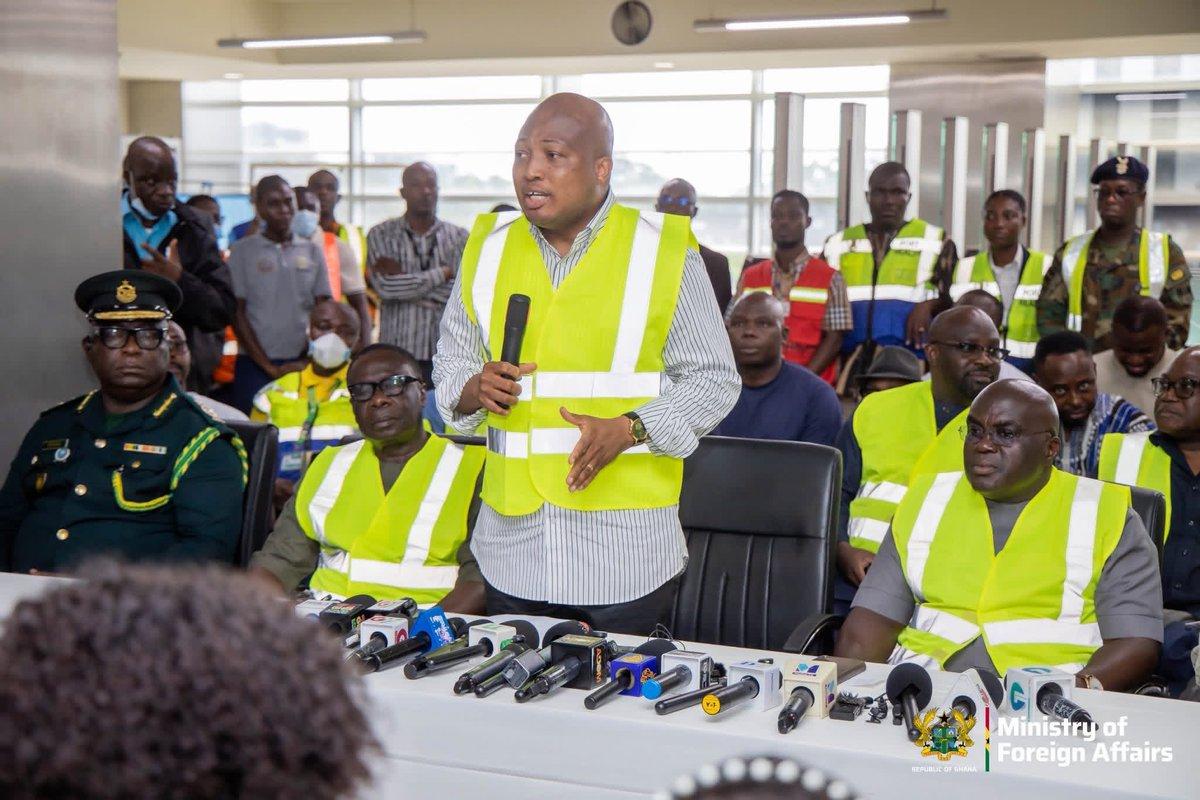
The government says it spent GH¢49,721,786 on evacuating 1,964 Ghanaians from South Africa between May 27 and September 4, 2026, following renewed xenophobic attacks and intimidation directed at African migrants in parts of the country. Foreign Affairs Minister Samuel Okudzeto Ablakwa disclosed the figure at a September 7 briefing, saying GH¢38,835,512 covered chartered flights, commercial airline tickets, ground transportation, feeding, hotel accommodation, medical treatment and hospitalisation, while GH¢10,802,000 was allocated to reintegration and transportation allowances for returnees. An additional GH¢84,274 was spent on the repatriation of two mortal remains.
According to the Ministry of Foreign Affairs, GH¢33,721,786 of the total cost came directly from government resources, while GH¢16 million was provided by Engineers & Planners, the company owned by businessman Ibrahim Mahama. The Ministry said all obligations connected with the operation had been settled and that there were no outstanding liabilities after the final evacuation flight returned in September.
Government also said every evacuee received a GH¢5,000 reintegration grant and GH¢500 transportation allowance after arrival in Ghana, alongside other support including medical screening, National Health Insurance Scheme registration, food packages, mobile SIM cards and access to psychological and trauma counselling. Those payments have since become one of the central issues in the controversy because opposition MPs and independent media analysis have questioned whether records supplied by the Ministry fully reconcile with the total number of people government says received the assistance.
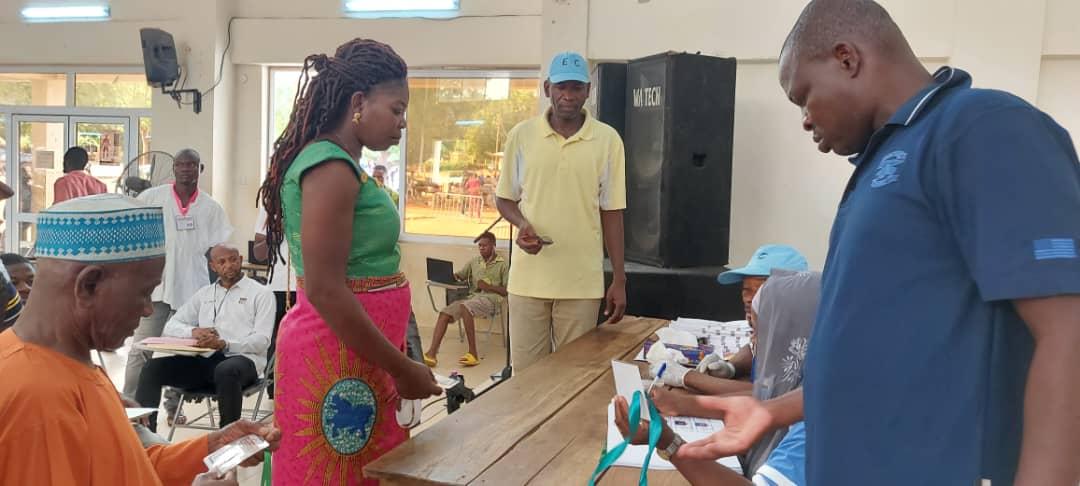
Addo strongly rejected claims that returnees were denied part of the promised financial support. Speaking at Monday’s press conference, he said evacuees received the full GH¢5,500 package and argued that allegations that some people received only GH¢2,000, only the transport allowance or only the reintegration component were inconsistent with what members of his group experienced when they arrived in Ghana.
He said returnees were handed envelopes containing the money and were able to count their payments before leaving the airport. Another evacuee, Emmanuel Akwoko, said all six members of his family, including the children, received GH¢5,500 each, with his wife signing on behalf of their children. Akwoko said he had also not received complaints about non-payment from returnees participating in the WhatsApp groups to which he belonged.
Those accounts directly challenge some of the allegations circulating around the evacuation exercise, but they do not independently verify every payment made to all 1,964 beneficiaries. Testimony from returnees can establish what particular individuals or groups received, but the broader financial accountability question concerns whether government records, payment registers, flight manifests, invoices and supporting documentation reconcile with the total expenditure reported by the Ministry.
That distinction is central to the controversy. The Minority in Parliament has not argued that rescuing Ghanaians from xenophobic violence was unnecessary. Its challenge has focused primarily on whether the GH¢49.72 million expenditure can be independently verified through documentary evidence and whether the records supplied by the Foreign Affairs Ministry fully support the number of evacuees, the payments made and the cost of flights and other logistical arrangements.
Deputy Ranking Member of Parliament’s Foreign Affairs Committee Nana Asafo-Adjei Ayeh has called for an independent audit of the operation after reviewing documentation released by the Ministry in response to a Right to Information request. The Minority says its analysis found discrepancies involving the reintegration grant register, transport allowances, commercial-flight records, duplicate entries, unsigned payments and payments relating to minors.
One of its most prominent concerns involves the two payment registers. Government said each of the 1,964 evacuees received both a GH¢5,000 reintegration grant and a GH¢500 transportation allowance, but the Minority says only 824 names could be matched across both registers in the documents it received. The opposition argues that this leaves a large number of beneficiaries whose combined payments require further documentary reconciliation.
The Minority has also questioned flight records. Its analysis said the documents provided accounted for 926 people transported on chartered flights and another 247 people through itemised commercial-flight records, producing a total of 1,173 passengers in those specific documents. The opposition says it wants further evidence explaining how the remaining passengers within the reported total of 1,964 were transported.
These figures remain allegations arising from the Minority’s interpretation of the documentation and do not by themselves prove that the government inflated passenger numbers, diverted money or committed any criminal offence. Gaps in records can result from incomplete documentation, separate payment arrangements, different manifests or administrative errors, which is precisely why the opposition has called for a full independent audit rather than treating its preliminary analysis as proof of wrongdoing.
JoyNews Research separately reported that its own examination of available records found some apparent inconsistencies, including duplicate names, unsigned payments and expenditure for which supporting receipts were not present in the material it reviewed. The research team also reported that it had identified individuals who said they did not receive both components of the government package. Those findings have added to pressure for a detailed reconciliation of the evacuation accounts.
Addo’s group disputes those claims and says the accounts being circulated publicly do not reflect the experience of the returnees it represents. The disagreement therefore cannot be resolved simply by choosing one side’s testimony over the other. The documentary trail and any independent audit will be more important in determining whether all payments and expenditures can ultimately be reconciled.
The Ministry of Foreign Affairs has already submitted more than 200 pages of documentation in response to the Minority’s Right to Information request. Government says those records include expenditure details, receipts and information relating to the 1,964 evacuees, and the same material has also been submitted to Parliament’s Foreign Affairs Committee for further scrutiny.
Ablakwa has gone further by asking the Auditor-General to conduct a special audit of the South Africa evacuation and other evacuation exercises undertaken by the Ministry since 2017. Those include the 2020 COVID-19 evacuation, the evacuation of Ghanaians from Ukraine in 2022, the Sudan evacuation in 2023 and the 2026 South Africa operation. The Ministry argues that examining the exercises across different administrations would provide a more complete basis for comparing costs and procedures.
The Majority side of Parliament’s Foreign Affairs Committee has supported that audit request while defending the Ministry’s decision to release extensive records. Majority MPs say the documentation provided demonstrates a willingness to account publicly for the expenditure and argue that an audit should examine multiple evacuation exercises rather than focusing exclusively on the South Africa operation.
The Minority, however, wants a separate independent review and has suggested that a major accounting firm such as KPMG, PwC, Deloitte or Ernst & Young could undertake the exercise. Its position is that the Auditor-General’s work does not prevent additional independent examination where significant questions have been raised about reconciliation of records.
That disagreement has turned what began as a humanitarian evacuation into a significant political accountability debate. The government presents the operation as an emergency intervention that brought nearly 2,000 citizens out of dangerous conditions and provided them with financial and medical support upon their return. The opposition says the humanitarian justification does not remove the government’s obligation to demonstrate precisely how tens of millions of cedis were spent.
Addo said returnees were increasingly frustrated that they had become caught in the middle of that dispute. He argued that people who had lived through xenophobic hostility were now being treated publicly as though they had participated in a questionable financial transaction rather than as citizens who sought help from their government during a crisis.
According to Addo, that environment has had a direct consequence for the 46 Ghanaians who remain in South Africa. He said those individuals had been expected to join the evacuation operation and still wanted to return, but the controversy had made the group hesitant to approach the government again for assistance because any additional rescue effort might trigger further criticism over cost.
His remarks were especially emotional when discussing the group’s reluctance to seek government help. Addo said the returnees effectively no longer felt comfortable “begging” government to rescue the remaining citizens because of the reaction generated by the previous evacuation. He urged the media and political actors to separate legitimate questions about expenditure from the immediate humanitarian needs of people still abroad.
That appeal is one of the most important new developments in the story. Whatever the final findings on the GH¢49.72 million expenditure, the existence of 46 additional people seeking evacuation presents a separate question for government. If their circumstances meet the threshold that justified earlier evacuations, the state will have to determine whether to organise further assistance and how to account transparently for any new expenditure.
Addo also broadened his appeal beyond South Africa, arguing that other Ghanaians stranded in foreign countries may also be unable to finance their return home. He said some people seeking repatriation were not motivated by the prospect of receiving reintegration money but by genuine hardship and a lack of resources to purchase their own tickets.
The South Africa evacuation began after renewed anti-immigrant hostility and xenophobic intimidation created fears for the safety of Ghanaian nationals. South Africa has experienced periodic outbreaks of violence and discrimination directed at migrants from other African countries, often associated with economic frustration, unemployment and accusations that foreigners compete with citizens for jobs, housing and business opportunities.
Ghanaians were among those who requested assistance from their government after conditions deteriorated. The first group of approximately 300 evacuees returned to Accra in late May, and subsequent flights continued over several months as officials registered and processed additional people seeking to leave.
The operation required coordination between Ghana’s Foreign Affairs Ministry, the Ghana High Commission in Pretoria, airlines, airport authorities, immigration officials, health agencies and disaster-management personnel. Some evacuees required accommodation and feeding in South Africa before departure, while others needed medical support or commercial tickets rather than seats on chartered flights.
Ghana’s High Commissioner to South Africa, Benjamin Anani Quashie, recently said the High Commission itself did not handle payment for the charter flights. He explained that flight arrangements and payments were managed by the Ministry of Foreign Affairs in Accra, while the Pretoria mission was informed when flights were scheduled and how many seats were available.
That statement has become relevant to the accountability debate because opposition MPs have sought clarity over who approved payments, how airlines were selected and what documentation exists for the charter arrangements. The High Commissioner said his mission had provided information concerning expenses it directly managed, including accommodation and feeding, but did not hold figures for charter-flight payments handled in Accra.
The Ministry has responded that it possesses airline receipts, boarding passes and flight manifests identifying the people who travelled. Ablakwa has maintained that the evacuation was conducted transparently and that all necessary documents exist for auditors and parliamentary scrutiny.
The disagreement therefore increasingly concerns the interpretation and completeness of the records rather than whether documentation exists at all. Government says the evidence supports its declared totals, while the Minority and JoyNews analysis have raised questions about gaps and inconsistencies requiring explanation.
Some of the controversy has centered on children included among the evacuees. The Minority said it identified 442 minors in the reintegration payment register and asked how payments on behalf of children were handled. Government supporters and returnees have said parents or guardians signed on behalf of minors and that children were included because families returning from difficult circumstances required support as a household.
The account provided by Akwoko at Monday’s press conference supports that explanation in at least his family’s case. He said each of his six family members received the full allowance and that his wife signed for the children. That does not automatically explain every entry on the government register, but it provides a concrete example of how payments involving minors may have been processed.
The most reliable way to resolve that question would be for auditors to match payment records, signatures, guardian information and beneficiary details while protecting the privacy of returnees. Public release of personal data should be handled carefully because evacuation records can contain names, telephone numbers, identification details and information about children.
The wider dispute also illustrates the difficulty governments face when emergency humanitarian operations later become subjects of financial scrutiny. During a rapidly developing crisis, authorities may need to secure flights, accommodation and other services quickly, sometimes at higher prices than would apply under normal procurement conditions. That does not remove the requirement for documentation, but it can make direct comparisons with ordinary travel arrangements misleading.
At the same time, an emergency cannot become a blanket justification for weak accounting. Public funds used during crises remain subject to audit, and emergency procurement can be especially vulnerable to inflated prices or poor record keeping because decisions must be made quickly.
The correct standard is therefore not whether the evacuation was morally justified. There is broad agreement that government has a responsibility to protect citizens facing serious danger abroad. The accountability question is whether the resources used to carry out that responsibility were properly documented, reasonably priced and paid to the intended beneficiaries.
Addo’s defence of government addresses only part of that question. His testimony is relevant to whether returnees actually received the promised support and how they experienced the evacuation, but it cannot independently establish whether every charter flight, hotel bill, ticket, transportation invoice or administrative expense was correctly priced.
Similarly, opposition allegations do not prove corruption simply because records appear incomplete or inconsistent. Those concerns need to be tested against the Ministry’s underlying documents and any evidence that may not have been contained in the initial RTI response.
That is why the proposed audit has become increasingly important. A credible review could establish the actual number of evacuees transported on each flight, reconcile payment registers, verify amounts received by families and individuals, examine procurement decisions and confirm the contribution attributed to Engineers & Planners.
The GH¢16 million private contribution is itself significant because the total GH¢49.72 million figure is sometimes described publicly as though the entire amount came directly from the state. According to the government’s breakdown, approximately GH¢33.72 million was public expenditure, while Engineers & Planners covered GH¢16 million.
That distinction does not eliminate the need to account for the entire operation, particularly where private support was incorporated into a government-led evacuation, but it is necessary for accurate reporting of the burden on the public purse.
Government’s breakdown means the combined GH¢5,500 support package alone would amount to approximately GH¢10.8 million for 1,964 people, closely matching the GH¢10,802,000 figure announced for reintegration and transport allowances. The controversy is therefore less about the mathematical calculation of that total than whether the beneficiary records sufficiently establish that the full amount reached all of the intended recipients.
The remaining approximately GH¢38.8 million covered the much broader logistical operation, including flights, commercial tickets, accommodation, food, transportation and medical support. Those expenses are more difficult for members of the public to independently assess without access to invoices and contracts.
The cost per evacuee also requires careful treatment. Dividing GH¢49.72 million by 1,964 produces an average of roughly GH¢25,300 per person, but that figure includes the GH¢5,500 direct payment as well as airfare, accommodation, logistics, health support and other shared expenses. It therefore should not be presented as though government simply spent GH¢25,300 on an airline seat for every individual.
Some returnees required more assistance than others. People evacuated on commercial flights may have incurred different costs from those transported on chartered aircraft, while hospitalisation or prolonged accommodation would increase expenditure associated with certain individuals. An audit would be better positioned than a simple average to determine whether the overall costs were reasonable.
The political atmosphere surrounding the controversy has nevertheless become increasingly adversarial. Addo accused some opposition figures and sections of the media of attempting to establish wrongdoing before the process had been properly examined. He also alleged that some members of the NPP had contacted and coached returnees to make statements critical of the government’s payment arrangements.
That allegation has not been independently established and should be treated as Addo’s claim. No publicly available evidence reviewed by VNTV proves that the NPP officially organised a campaign to coach evacuees, and the party or individuals accused would be entitled to respond.
The allegation demonstrates how deeply political the issue has become. Instead of remaining a technical discussion over invoices and payment registers, it now involves accusations that rival political actors are attempting either to protect or discredit the government.
That development risks obscuring the two issues that can coexist without contradiction. The government may have carried out a necessary and valuable rescue operation that returnees genuinely appreciate, while questions about the accuracy and completeness of its financial documentation may still deserve investigation. Defending the humanitarian purpose does not answer every accounting question, and demanding an audit does not necessarily mean condemning the evacuation itself.
The returnees’ call for dignity is therefore compatible with continued scrutiny. People who fled xenophobic attacks should not be treated as suspects or political props simply because government spent money to bring them home. At the same time, public officials responsible for those funds must be able to demonstrate how the money was used.
That balanced position becomes even more important because 46 Ghanaians reportedly remain in South Africa and may still require assistance. Their fate should not depend on which political side prevails in a dispute over previous expenditure.
If government determines that another evacuation is necessary, the controversy provides an opportunity to strengthen transparency from the beginning. Authorities could publish passenger totals, costs, procurement procedures and categories of expenditure promptly while protecting personal data, reducing the likelihood of another prolonged argument after the operation is complete.
The experience could also lead the Foreign Affairs Ministry to establish a standardized public reporting framework for future evacuations. Ghana has repeatedly had to rescue citizens from emergencies abroad, including the COVID-19 pandemic, Russia’s invasion of Ukraine, the Sudan conflict and now xenophobic violence in South Africa.
A consistent framework could specify what records should be maintained for charter flights, commercial tickets, accommodation, medical bills, passenger manifests, direct payments and private donations. That would make comparisons between different operations easier and reduce partisan disputes over the information available.
For returnees, however, the immediate concern remains more personal. Addo said many people who came home are still recovering emotionally and economically from what they experienced in South Africa. Reintegration grants can provide temporary assistance, but rebuilding livelihoods after leaving jobs, homes or businesses abroad can take much longer.
Some returnees may need employment, housing, mental-health services or additional social support. Government had earlier announced employment opportunities for some groups, but the long-term success of the evacuation will partly depend on whether people are able to rebuild stable lives rather than simply being transported back to Ghana.
That context explains why Addo views the public controversy as painful. From his perspective, returnees see themselves as survivors of xenophobic hostility who were rescued by their government, while much of the current political conversation portrays them primarily as entries in disputed financial records.
For lawmakers, however, scrutiny of those records is part of Parliament’s constitutional oversight role. An evacuation operation involving nearly GH¢50 million is large enough to justify detailed examination regardless of whether the purpose of the expenditure was humanitarian.
The challenge is therefore to prevent accountability and compassion from being treated as opposing principles. Government can be praised for rescuing citizens and still be required to account fully for the cost. Returnees can defend the assistance they received while auditors investigate discrepancies. Opposition MPs can demand records without questioning the humanity of the people who were evacuated.
The Ministry’s decision to request an Auditor-General review provides a possible route toward resolving those competing claims. Once a full audit examines the manifests, payments, invoices and procurement records, the debate can move away from competing political narratives toward independently verified findings.
Until then, neither side should claim more than the available evidence establishes. The returnees’ statements provide important evidence that at least many beneficiaries say they received the full GH¢5,500 package, but they do not resolve every discrepancy raised in the documents. The Minority’s analysis identifies issues requiring answers, but those issues are not themselves proof that money was stolen or the evacuation numbers were falsified.
For the 46 people Addo says remain in South Africa, the political debate may feel particularly remote. Their concern is whether they will receive the same opportunity to return home that was extended to nearly 2,000 others.
Addo has asked the government not to allow the controversy to stop further humanitarian intervention, arguing that Ghanaians who genuinely cannot afford to leave difficult conditions abroad should not become casualties of a domestic political fight.
That appeal now places a new decision before the Mahama administration. It must determine whether the 46 remaining citizens qualify for further evacuation, what such an operation would cost and whether conditions in South Africa justify additional state intervention.
Whatever government decides, greater transparency around any future operation would help protect both taxpayers and returnees. Clear public accounting would make it harder for legitimate questions to become personalised attacks and harder for political actors to dismiss scrutiny simply as partisan hostility.
The Ghana-South Africa evacuation controversy therefore remains unresolved on two fronts. One is humanitarian: whether the 46 Ghanaians reportedly still stranded will be brought home. The other is financial: whether the GH¢49.72 million already reported can be fully reconciled through an independent examination of the government’s records.
Michael Addo and fellow returnees have now made their position clear. They say the evacuation saved Ghanaians from circumstances they considered dangerous, that they received the financial assistance government promised and that attacks surrounding the exercise are unfairly humiliating people still recovering from their experiences.
The Minority has an equally clear position: appreciation for an evacuation does not replace accountability for public expenditure, and the records should withstand independent verification.
Both questions can be answered without sacrificing the other. The 46 Ghanaians still seeking assistance can be treated as a humanitarian matter, while auditors, Parliament and the Ministry continue examining the previous operation. Until that process is completed, the government’s expenditure remains subject to legitimate scrutiny, and the returnees’ defence remains important testimony rather than the final word on the accounts.