TINUBU SAYS WORLD BANK HAS VINDICATED HIS REFORMS AS NIGERIANS STILL BATTLE HIGH COSTS
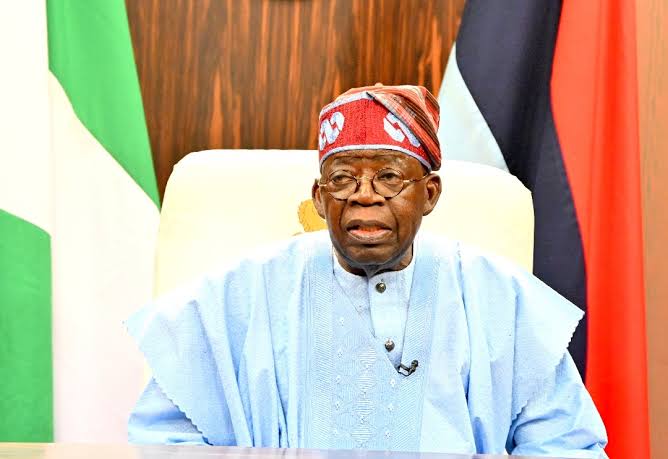
President Bola Tinubu says the World Bank’s October 2026 Nigeria Development Update confirms that his economic reforms are working, citing stronger growth, rising foreign reserves, higher government revenues and the first stabilization in Nigeria’s poverty rate since 2019. The World Bank says real GDP grew 4.2 percent in the first half of 2026 and expects growth to average at least 4.4 percent through 2028, but it also stresses that poverty remains high and that stronger macroeconomic conditions must now translate into jobs, lower poverty and better living standards.
President Bola Tinubu has cited the World Bank’s latest assessment of Nigeria’s economy as evidence that his administration’s controversial reform program is beginning to deliver measurable results, pointing to stronger economic growth, improved government revenues, rising foreign reserves and the first stabilization in the national poverty rate since 2019, even as millions of Nigerians continue to face high food, transport and energy costs.
The President welcomed the October 2026 edition of the World Bank’s Nigeria Development Update, titled “Beyond the Federal Purse: How Higher Revenues Reshaped State Priorities,” saying its findings confirmed that decisions taken since 2023 to remove the petrol subsidy, unify the foreign exchange market and strengthen fiscal discipline had put the economy on a more stable footing and created additional resources for federal and state governments.
Tinubu said the report demonstrated that the difficult economic measures his administration implemented after taking office were beginning to produce results despite the severe short term pressure they placed on households and businesses. He argued that higher public revenues, stronger external reserves and improved economic growth showed that the country was moving away from the fiscal and foreign exchange pressures that had accumulated before the reforms.
The World Bank’s figures provide support for several of those claims. Nigeria’s real gross domestic product expanded by 4.2 percent in the first half of 2026, compared with 3.9 percent during the corresponding period of 2025 and 3.5 percent in the first half of 2024. The Bank said services remained the main driver of the economy, while agriculture also made a stronger contribution to growth.
That increase in economic activity was significant enough for the World Bank to conclude that Nigeria’s poverty rate had stabilized for the first time since 2019. The institution expects poverty to begin declining gradually if economic growth continues to outpace population growth over the coming years.
The stabilization is an important change from the trend Nigeria experienced during several years of weak per capita growth and repeated economic shocks. It does not, however, mean that poverty has fallen sharply or that the living conditions of most Nigerians have already returned to pre reform levels. The World Bank’s own analysis continues to describe poverty as high and emphasizes that the country now has to convert improved macroeconomic indicators into jobs, higher household incomes and better public services.
The distinction is central to the political debate surrounding Tinubu’s economic record. The administration has increasingly pointed to growth, foreign reserves, public revenue and lower inflation as evidence that the economy is recovering, while critics argue that macroeconomic indicators matter little to households that are still struggling with food prices, rent, electricity tariffs, transport costs and declining purchasing power.
Tinubu acknowledged that gap in his response to the World Bank report, saying the gains recorded so far must translate into lower food prices, more employment opportunities and better living standards. He said the administration would continue expanding targeted cash transfers, accelerate the deployment of compressed natural gas, increase agricultural productivity and improve access to healthcare and education.
According to the President, targeted cash transfer programs have already reached more than 10 million households. The administration has promoted those transfers as one of several measures intended to cushion the impact of reforms that initially produced a sharp increase in the cost of transport, food and other basic goods.
The removal of the petrol subsidy in 2023 was one of the most consequential economic decisions of Tinubu’s presidency. The government argued that the subsidy had become fiscally unsustainable and diverted resources away from investment in infrastructure and social services. Its removal, however, led to a substantial increase in petrol prices and contributed to higher transportation and production costs throughout the economy.
The administration also abandoned the multiple exchange rate system and moved toward a more market determined currency regime. That reform was intended to reduce distortions, attract investment and eliminate the gap between official and parallel market exchange rates, but it also contributed to a steep depreciation of the naira and increased the cost of imported goods, machinery and raw materials.
Those reforms were followed by one of the most difficult cost of living periods experienced by Nigerian households in years. Food inflation rose sharply, businesses faced higher energy and financing costs, and many workers saw the real value of their incomes decline even where nominal wages increased.
The World Bank’s latest report suggests that some of those pressures have begun to ease at the macroeconomic level. Inflation fell from 27.6 percent in January 2025 to 15.2 percent by December of that year before the decline slowed as higher global fuel prices linked to the conflict in the Middle East created new inflationary pressure.
The Bank projects inflation will continue easing over the medium term and could fall to around 12 percent by 2028, although that forecast depends on the government maintaining economic discipline and avoiding policy reversals that could reignite price pressures.
Nigeria’s external position has also strengthened. The current account surplus increased to approximately $12 billion, equivalent to about 7 percent of gross domestic product, during the first half of 2026, compared with $8.6 billion during the corresponding period a year earlier.
Gross external reserves rose from $45.5 billion at the end of 2025 to $53.8 billion by the end of August 2026, giving the Central Bank a stronger buffer against external shocks and providing greater confidence in the country’s ability to meet international payment obligations.
The World Bank also projects Nigeria’s public debt to decline from about 40 percent of GDP in 2025 to 38.1 percent in 2026, although debt servicing costs remain a significant pressure on public finances and continue to compete with spending on infrastructure, healthcare, education and social protection.
One of the strongest improvements recorded in the World Bank assessment is the increase in government revenue. Federation revenues increased by 69 percent in real terms between 2023 and 2025, with state governments emerging as major beneficiaries of the additional income.
That increase was driven in part by the removal of the petrol subsidy, which had previously absorbed a significant share of public resources, and by reforms to foreign exchange and revenue collection. The additional funds have given states greater capacity to increase capital spending and address infrastructure deficits.
According to the World Bank, state capital expenditure increased by 151 percent in real terms between 2023 and 2025. Much of the additional spending was directed toward roads and other transport infrastructure, agriculture, energy and housing.
The report found that 29 of 33 states included in its analysis shifted spending toward economic infrastructure, while real social spending per person increased in all but one state. Internally generated revenue also increased in real terms in 31 of 35 states, while 21 states reduced their debt to GDP ratios between 2021 and 2025.
Tinubu used those findings to urge state governments to manage their higher revenues more prudently and direct a greater share of available resources toward projects that improve living conditions.
The President has repeatedly argued that the benefits of his economic reforms cannot be measured only at the federal level because state and local governments now receive significantly higher allocations than they did before subsidy removal and other fiscal changes.
That argument has increasingly placed state governors under scrutiny over how the additional revenue is being spent. While several states have announced major infrastructure projects and wage adjustments, critics have questioned whether increased allocations are translating quickly enough into improved schools, hospitals, roads and social protection.
The World Bank’s October report makes a similar point. It describes improved revenue as an opportunity rather than an end result, emphasizing that the quality and accountability of government spending will determine whether stronger public finances ultimately produce meaningful changes in the lives of citizens.
The Bank’s overall economic outlook for Nigeria remains cautiously positive. It expects growth to average at least 4.4 percent annually between 2026 and 2028 if reforms remain in place and if improvements in macroeconomic stability are accompanied by measures that support private investment, productivity and job creation.
That growth rate would represent an improvement over Nigeria’s performance during much of the previous decade, but it would still need to be sustained for several years to produce substantial increases in income per person given the country’s large and rapidly growing population.
For that reason, the World Bank has shifted its emphasis from economic stabilization to inclusive growth. Its October update states that Nigeria’s immediate priority is no longer simply preventing macroeconomic deterioration, but ensuring that improving economic conditions create employment, reduce poverty and raise living standards.
That challenge is especially important because the benefits of economic reform are rarely distributed evenly. Businesses with access to foreign capital and sectors that benefit from higher oil prices or improved foreign exchange liquidity may experience recovery before households whose incomes remain fixed or whose livelihoods depend on informal economic activity.
Nigeria’s large informal sector means millions of citizens have limited access to formal credit, unemployment insurance or structured social protection. When food, fuel or transportation costs rise sharply, those households absorb the impact directly, making the speed and effectiveness of government support particularly important.
The Tinubu administration says its response will combine continued fiscal discipline with targeted interventions designed to help vulnerable households while avoiding a return to broad subsidies that government officials argue were expensive and poorly targeted.
The expansion of compressed natural gas vehicles is one component of that strategy. The government has promoted CNG as a cheaper alternative to petrol for commercial transportation and public vehicles, although the availability of conversion centers, infrastructure and gas supply remains uneven across the country.
Agricultural production is another major focus because food prices remain one of the strongest sources of household pressure. The government has announced measures aimed at increasing local production, improving access to fertilizers and farm inputs and reducing transportation and storage losses.
The effectiveness of those measures will be closely watched because lower food inflation would provide one of the clearest signs that improved macroeconomic conditions are reaching ordinary households.
The latest World Bank assessment therefore provides Tinubu with credible economic indicators to support his argument that the reforms have improved Nigeria’s fiscal and external position. Growth has accelerated, reserves have increased, government revenues have risen sharply and the poverty rate has stopped worsening for the first time in several years.
At the same time, the report does not declare Nigeria’s economic problems resolved. It repeatedly emphasizes that poverty remains high and that the next phase of reform must focus on jobs, household incomes, service delivery and more effective public spending.
That difference between economic stabilization and household recovery is likely to remain at the center of Nigeria’s political debate. Tinubu can point to measurable improvements in growth, revenue and reserves, while opponents can point to the continuing pressure on food, transport and energy costs faced by millions of families.
The credibility of the administration’s claim that the reforms are working will increasingly depend on whether those two realities begin to converge. If inflation continues to decline, job creation strengthens and public spending produces visible improvements in infrastructure and services, the World Bank’s positive macroeconomic assessment could begin to translate into broader public confidence.
If household purchasing power remains weak despite stronger government finances and economic growth, however, the political argument over the reforms will continue. For now, the World Bank’s report provides evidence that Nigeria’s economy has become more stable and that poverty has stopped worsening, but the much larger test is whether that stabilization produces sustained improvements in everyday living conditions across the country.