UK SANCTIONS 15 SUDANESE COMMANDERS OVER ALLEGED WARTIME RAPE, TORTURE AND ATTACKS ON CIVILIANS
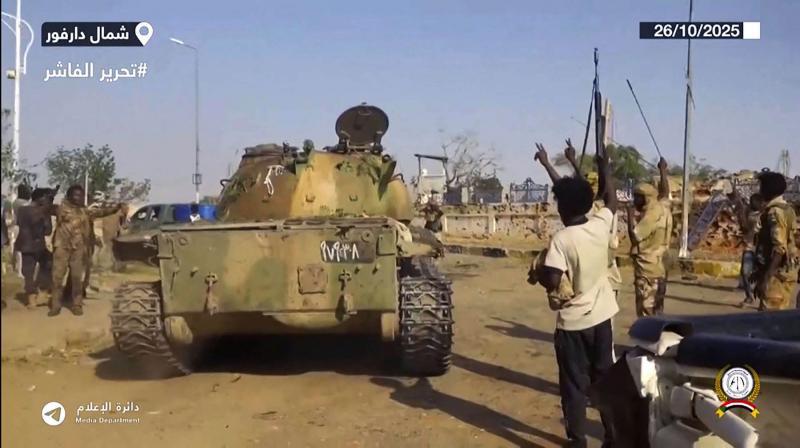
The United Kingdom has sanctioned 15 Sudanese military commanders, militia leaders and security officials over alleged involvement in conflict-related sexual violence, torture and attacks on civilians. The targets include figures associated with the Rapid Support Forces, Sudanese Armed Forces and army-allied armed groups. The measures impose asset freezes and travel bans and were announced one year after the fall of El Fasher, where UK-funded investigators documented alleged systematic starvation and sexual violence. Britain has also pledged £15 million in new humanitarian and survivor support.
The United Kingdom has imposed sanctions on 15 senior military commanders, militia leaders and security officials linked to Sudan’s devastating civil war, accusing figures from both the Rapid Support Forces and the Sudanese Armed Forces, as well as army-allied armed groups, of responsibility for or involvement in conflict-related sexual violence, torture and attacks against civilians. The measures, announced by the Foreign, Commonwealth and Development Office on Monday, October 26, include asset freezes and travel bans and mark one of London’s most significant attempts this year to impose individual accountability on commanders associated with abuses committed during Sudan’s continuing war, particularly atrocities linked to the siege and fall of El Fasher in North Darfur.
The British government said the sanctions were introduced one year after El Fasher fell following an approximately 18-month siege that left hundreds of thousands of civilians trapped amid severe shortages of food, water and medical supplies. The UK said evidence gathered through British-funded investigations by the Centre for Information Resilience indicated that starvation and sexual violence were used systematically during the conflict and that abuses were committed by actors on both sides of Sudan’s war. London stressed that the designations were aimed at specific individuals suspected of serious violations rather than at Sudanese communities or institutions as a whole.
Among those specifically identified by the British government is Hussein Abu Jalak, described by London as an RSF colonel linked to atrocities during the siege of El Fasher. Another named individual is Al-Nour Ahmed Adam, widely known as Al-Qubba, whom British authorities said played a prominent role in the siege and attack on the city before later defecting from the RSF to the Sudanese Armed Forces in 2026. The inclusion of Al-Qubba is particularly significant because it demonstrates that changing allegiance does not remove exposure to sanctions where authorities believe an individual may previously have been involved in serious violations.
The United Kingdom did not frame the measures as criminal convictions. Sanctions are administrative foreign-policy tools and do not by themselves establish criminal guilt in a court of law. The designations reflect the British government’s assessment that there are sufficient grounds to impose restrictive measures because of alleged involvement in abuses, and the individuals named remain entitled to challenge their designation through applicable legal procedures. That distinction is important in reporting the measures accurately, particularly because allegations involving rape, torture and attacks on civilians carry serious legal and reputational consequences.
Foreign Secretary Ed Miliband said the war had created a humanitarian catastrophe and argued that rape and starvation were still being used as weapons against Sudanese civilians. He said those responsible must face consequences and called on outside states and other foreign backers to stop supporting Sudan’s warring parties. Miliband also warned that worsening climate conditions could deepen the threat of famine but said the immediate ability of humanitarian organisations to deliver food remained heavily dependent on the conduct of the RSF and SAF, particularly whether they allow aid convoys to move safely.
The sanctions announcement was accompanied by a significant new humanitarian package. Britain said it would provide £5 million specifically for survivors of conflict-related sexual violence, including sexual and reproductive healthcare, maternal-health services, psychosocial support and safe spaces for women and girls. A further £10 million will support humanitarian operations in areas including North Darfur and El Obeid, with funding directed toward clean water, sanitation, health services and protection for displaced communities facing worsening hunger and disease risks.
The timing of the announcement is deeply symbolic. El Fasher, once the last major city in Darfur outside RSF control, became one of the most heavily contested places in Sudan after the war between the army and the RSF erupted in April 2023. The city had hosted hundreds of thousands of civilians and internally displaced people, many of whom had already survived earlier conflicts in Darfur, before the RSF began a prolonged siege that steadily restricted access to food, medicine and safe escape routes.
The final RSF offensive began in late October 2025, after months of repeated warnings from the United Nations and humanitarian organisations that a full takeover could trigger mass atrocities. UN reporting later said the assault resulted in large-scale killings, mass displacement and serious violations of international humanitarian law. The Office of the UN High Commissioner for Human Rights had warned before the city fell that civilians, particularly members of non-Arab communities, faced an acute risk of ethnically motivated attacks if the RSF captured El Fasher.
Evidence collected after the city’s fall intensified those concerns. The Centre for Information Resilience verified footage showing RSF commanders at the army’s 6th Infantry Division base and documented mass detentions and killings along routes used by civilians fleeing El Fasher. CIR also identified repeated examples of ethnic slurs, coercion of detainees and indicators consistent with conflict-related sexual violence, although not every alleged incident could be directly captured on video.
Human-rights organisations have separately documented allegations of rape, gang rape, abduction and sexual slavery involving women and girls during Sudan’s conflict. British officials said their latest measures were partly intended to ensure that sexual violence is treated not as an unavoidable consequence of war but as conduct that can lead to international sanctions and future legal accountability. That approach is consistent with broader international efforts to classify conflict-related sexual violence as a serious violation of international humanitarian law and, depending on the circumstances, potentially a war crime or crime against humanity.
The UK’s decision to sanction figures from both major sides of Sudan’s conflict is politically important because international responses have sometimes been criticised for appearing to focus disproportionately on the RSF while giving less attention to abuses attributed to the SAF and allied forces. British officials said the latest investigation found evidence of systematic starvation and sexual violence committed by actors associated with both camps, and Monday’s sanctions were structured accordingly.
That does not mean the scale or nature of alleged abuses by every faction is identical. The RSF has been repeatedly accused by the United Nations, human-rights groups and Western governments of mass killings, ethnically targeted violence and widespread sexual abuse in Darfur, particularly during operations around El Fasher. The Sudanese army and allied armed groups have separately faced accusations of indiscriminate attacks, reprisals against civilians suspected of supporting the RSF and obstruction of humanitarian assistance.
The civil war began on April 15, 2023, after a power struggle between army chief General Abdel Fattah al-Burhan and RSF commander Mohamed Hamdan Dagalo, widely known as Hemedti, escalated into open warfare. The two forces had previously cooperated in the removal of longtime ruler Omar al-Bashir in 2019 and later shared power during Sudan’s unstable transition, but disputes over integrating the RSF into the national army and control of the political process eventually collapsed into armed conflict.
What began as fighting in Khartoum rapidly expanded into Darfur, Kordofan and other regions. Over more than three years of war, cities have been destroyed, hospitals attacked, markets burned and civilian infrastructure repeatedly damaged. Millions of people have been displaced internally or forced across borders, and humanitarian organisations have described Sudan as one of the world’s worst displacement and hunger emergencies.
The fall of El Fasher represented a major military and humanitarian turning point because the city had remained a key army and allied stronghold within Darfur even as the RSF consolidated control over much of the wider region. When the RSF captured the city, it effectively strengthened its position across Darfur and raised fears that civilians who had been trapped under siege would face reprisal attacks after the collapse of army resistance.
United Nations investigators reported that there was no reliable safe passage for many civilians fleeing during the final offensive. Some of those attempting to escape were reportedly detained, attacked or killed, while others disappeared along routes outside the city. The violence displaced tens of thousands of people in a matter of days and deepened humanitarian pressure on already overcrowded camps.
Women and girls have faced particular risks throughout Sudan’s war. Sexual violence has been reported in homes, displacement sites, checkpoints and detention settings, and many survivors have limited access to medical treatment because hospitals and clinics have been damaged or closed. Survivors also face stigma, insecurity and the risk of retaliation, making documentation difficult and suggesting that reported cases may represent only a fraction of the true scale of abuse.
The £5 million British support package is intended to address some of those gaps by funding healthcare, counselling and protected spaces for survivors. Such support is especially important because sexual violence in war often produces consequences extending far beyond immediate physical injury, including trauma, unwanted pregnancies, sexually transmitted infections, family separation and social exclusion.
The UK’s sanctions also have financial consequences. An asset freeze generally prevents designated individuals from accessing money or economic resources located in Britain or controlled by UK persons, while British companies and citizens are prohibited from making funds available to them without authorisation. Travel bans prevent designated individuals from entering or transiting through the United Kingdom except under limited circumstances.
The effectiveness of sanctions in influencing battlefield conduct remains uncertain. Sudan’s war has continued despite multiple rounds of punitive measures imposed by Britain, the United States, the European Union and other governments. Combatants frequently operate outside Western financial systems, and commanders may have limited assets in sanctioning countries, reducing the immediate economic impact of restrictions.
Supporters of sanctions argue that their value extends beyond immediate financial pressure. Designations can isolate commanders diplomatically, complicate international travel, deter business partners and establish a formal record linking individuals to alleged abuses. They can also lay groundwork for coordinated measures by other governments or future criminal investigations if additional evidence emerges.
Critics counter that targeted sanctions have so far done little to halt the war itself. Both the SAF and RSF continue to believe they can improve their battlefield position, and outside military, political and financial support has allowed the conflict to continue despite international pressure. Analysts have repeatedly warned that sanctions are unlikely to change the war’s trajectory unless they are combined with stronger diplomacy and pressure on external actors supplying money, weapons or logistical support.
Miliband’s call for foreign backers to end their support reflects those concerns. Sudan’s conflict has become increasingly internationalised, with rival governments and regional actors accused of supporting different factions. Those relationships have complicated mediation efforts and allowed both sides to replenish resources despite enormous losses.
Britain’s latest sanctions therefore serve two purposes: individual accountability and broader political signalling. By targeting commanders from multiple factions, London is attempting to show that it does not consider alignment with either side a shield against consequences. By pairing sanctions with humanitarian funding, the government is also signalling that punitive measures against alleged perpetrators should be accompanied by support for civilians living with the consequences of the war.
The designation of Al-Qubba illustrates the complexity of that approach. He was previously a prominent RSF commander involved in operations around El Fasher but defected to the army in April 2026 and was publicly welcomed by Burhan. Human Rights Watch later warned that commanders accused of serious abuses should not avoid accountability simply by switching sides, and the UK’s decision appears consistent with that principle.
His defection also demonstrates how fluid Sudan’s alliances have become. Commanders and armed groups have repeatedly shifted positions during the conflict in response to tribal tensions, disputes over leadership, access to resources and changing military circumstances. Those shifts make accountability more difficult because individuals accused of abuses may later join factions that present themselves as opponents of the forces with which they were previously associated.
The British government has not publicly released detailed evidence packages for every one of the 15 newly sanctioned individuals in its general announcement, although the official sanctions list records the designations. London said the full package was based on investigation, open-source reporting and evidence concerning command roles and alleged violations. The UK sanctions list was formally updated on October 26 to include the 15 new Sudan-related designations.
There had been no comprehensive public response from all the sanctioned individuals or from both warring factions at the time of VNTV’s review. Neither the SAF nor the RSF had issued a detailed joint rebuttal addressing each British allegation. That means the sanctions should be reported as accusations by the UK government rather than established criminal findings.
The RSF has previously denied or disputed some allegations of systematic atrocities and has occasionally said it would investigate individual fighters accused of abuses. The Sudanese army has likewise rejected allegations that it deliberately targets civilians and has accused the RSF of being primarily responsible for the country’s humanitarian catastrophe. International investigators, however, have documented serious allegations against actors associated with both sides.
The latest British measures arrive after five previous rounds of UK sanctions related to Sudan’s war, including actions against RSF commanders and financial networks accused of supporting military operations. In July 2026, London also targeted gold and finance networks it said were helping sustain the conflict by generating revenue used for weapons procurement and armed activity.
That widening sanctions architecture shows how international policy has evolved from targeting military leaders alone to targeting economic networks that help finance the war. Sudan’s gold trade, in particular, has become a critical source of revenue for armed actors, and foreign governments increasingly view financial pressure as one of the few tools available short of direct intervention.
Still, the humanitarian situation continues to deteriorate. Britain said the threat of famine is increasing because of attacks on markets, health facilities, displacement camps and aid infrastructure, while obstruction of humanitarian access has repeatedly prevented food and medicine from reaching civilians. El Niño-linked drought conditions could further worsen food insecurity in areas where agriculture and local markets have already been devastated by fighting.
The new £10 million humanitarian allocation will therefore focus partly on access to clean water and sanitation around displacement sites near Tawila and on health and protection services in El Obeid, where conflict and restrictions on aid have left civilians facing acute needs. That assistance is intended to complement existing international operations rather than replace the much larger funding required to address Sudan’s humanitarian emergency.
The challenge remains getting assistance to the people who need it. Aid convoys have been blocked, attacked or delayed, and humanitarian workers have faced insecurity across multiple front lines. Britain is calling on both the SAF and RSF to stop attacks on aid operations and allow humanitarian organisations to operate without political or military interference.
The conflict has also placed enormous pressure on neighbouring countries receiving Sudanese refugees, including Chad, Egypt, South Sudan and Ethiopia. Those states are dealing with their own economic and security challenges, and prolonged displacement risks turning Sudan’s internal war into a deeper regional humanitarian crisis.
International mediation has repeatedly struggled to produce a durable ceasefire. Saudi Arabia and the United States have hosted talks, African and Arab organisations have attempted separate initiatives, and European governments have pushed for humanitarian pauses, but battlefield calculations have repeatedly undermined diplomatic agreements.
Both the SAF and RSF have at various stages appeared to believe that continued fighting could improve their negotiating position. That has reduced incentives for compromise and left civilians trapped between rival forces whose commanders face growing international accusations of war crimes and other serious violations.
The sanctions announced Monday are therefore unlikely on their own to end the conflict. Their significance lies instead in the message that commanders can remain targets of international action long after individual battles end and even if they change factions. That may matter increasingly as evidence from El Fasher and other battlefields is preserved for future accountability processes.
The UK-funded CIR investigations are particularly important because modern accountability efforts rely heavily on digital evidence, satellite imagery, geolocation, verified videos and social-media records. Such material can help reconstruct who was present at specific locations, identify commanders and establish patterns of conduct even where investigators cannot immediately access conflict zones.
The fall of El Fasher generated an enormous volume of such evidence. Videos appeared to show detainees being held or killed, armed commanders present at key locations and civilians fleeing under dangerous conditions. Investigators have attempted to verify those materials carefully because manipulated or miscaptioned footage can spread rapidly during war.
That work will likely continue beyond the immediate sanctions. Britain and other governments have supported international investigative mechanisms examining Sudan, while human-rights organisations are preserving testimony and digital evidence that could eventually be used in national or international legal proceedings.
For survivors, however, future accountability does not address immediate needs. Many remain displaced without adequate food, healthcare or protection, and women subjected to sexual violence often require specialised services that are unavailable in the areas where they have fled. Britain’s survivor-support funding is therefore intended to address an urgent humanitarian gap while longer-term legal efforts continue.
The wider question is whether international pressure can change the behaviour of armed groups before further atrocities occur. Sanctions imposed after abuses have already happened may provide accountability, but they cannot restore lives lost or undo sexual violence. Prevention requires access for monitors, humanitarian corridors, credible ceasefire enforcement and pressure on commanders before large-scale attacks take place.
El Fasher demonstrates the consequences when those protections fail. International agencies warned for months that the city faced catastrophe, yet the siege continued until the final assault. The subsequent allegations of mass killings, starvation and sexual violence have become a symbol of the international community’s limited ability to protect civilians during Sudan’s war.
Monday’s sanctions are in part a response to that failure. By acting on the first anniversary of the city’s fall, Britain is attempting to keep international attention on events that risk being overshadowed by other global crises and to demonstrate that evidence collected from Sudan can still produce consequences for individuals.
Whether the sanctions will materially affect commanders on the ground is less certain. Sudan’s armed factions remain heavily militarised, the war economy continues to generate resources and outside support has not disappeared. Asset freezes are most effective when designated individuals have significant exposure to international banking systems or jurisdictions cooperating with the sanctions.
Travel bans can also matter to senior political and military figures seeking international legitimacy or access to diplomatic negotiations. Even where commanders have no immediate plans to visit Britain, inclusion on a sanctions list can influence how other governments, banks and international organisations treat them.
For Sudanese civilians, the broader hope is that coordinated international pressure eventually increases the cost of continued abuses. That would require Britain’s measures to be reinforced by other countries and combined with stronger diplomatic efforts aimed at ending the war.
The United Kingdom has said its objective is accountability, civilian protection and humanitarian access rather than support for one military faction over another. By sanctioning figures associated with both the RSF and SAF-aligned forces, London is attempting to demonstrate that principle publicly.
The credibility of that approach will depend on whether future sanctions continue to be applied consistently regardless of political alignment. Human-rights groups have repeatedly argued that accountability loses legitimacy when governments punish abuses by adversaries while overlooking similar conduct by partners.
Sudan’s war is particularly vulnerable to that problem because regional states have competing relationships with the rival factions. A genuinely effective accountability framework would therefore require governments to apply pressure based on conduct rather than alliance.
For now, Britain’s decision represents one of the strongest international actions taken around the first anniversary of El Fasher’s fall. Fifteen commanders and security figures now face UK asset freezes and travel bans, while £15 million in additional British funding will go toward humanitarian operations and services for survivors of sexual violence.
The measures do not resolve Sudan’s war, nor do they constitute criminal convictions of the individuals targeted. They do, however, place alleged wartime sexual violence, torture and attacks on civilians at the centre of London’s policy toward the conflict and reinforce the principle that commanders can face consequences even long after particular battles have ended.
As fighting continues and famine risks deepen, the effectiveness of that policy will be measured not only by how many names appear on sanctions lists but by whether international pressure can protect civilians still living under siege, ensure aid reaches those in need and create a credible pathway toward accountability for the atrocities that have defined Sudan’s war.