U.S. CONGRESSMAN MOVES TO BLOCK NIGERIA’S PAID LOBBYING IN WASHINGTON OVER RELIGIOUS FREEDOM DISPUTE
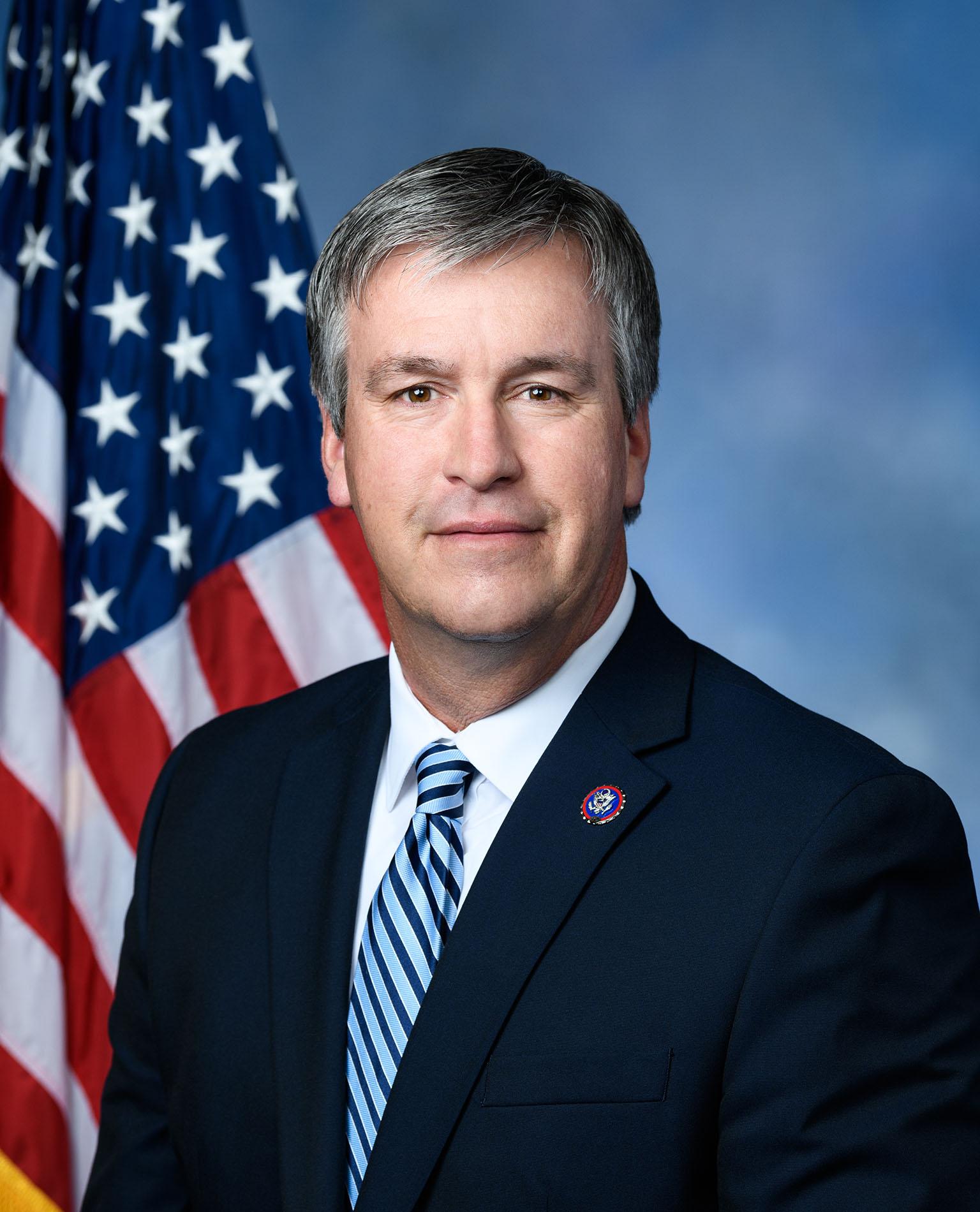
U.S. Representative Barry Moore has introduced H.R. 10939, legislation seeking to prohibit compensated lobbying on behalf of the Nigerian government while Nigeria remains designated a Country of Particular Concern over religious freedom. The proposal comes after Abuja entered a lobbying arrangement worth up to $9 million with Washington-based DCI Group to communicate its security efforts and counter criticism over attacks on Christians. The bill is only at the introduction stage and has been referred to the House Judiciary Committee; it has not passed Congress and is not yet law.
A new confrontation is opening between Washington and Abuja after United States Congressman Barry Moore introduced legislation that would prohibit paid lobbying on behalf of the Nigerian government for as long as Nigeria remains designated by the United States as a Country of Particular Concern over religious freedom. The proposal, H.R. 10939, was introduced in the House of Representatives on October 29 and has been referred to the House Judiciary Committee, placing Nigeria’s expensive lobbying operation in Washington directly inside a congressional debate over religious violence, foreign influence and the extent to which an overseas government should be allowed to spend millions of dollars shaping American political opinion while facing formal U.S. criticism over its religious-freedom record.
The official title of H.R. 10939 states that the measure would prohibit compensated lobbying on behalf of the Nigerian government for the duration of Nigeria’s designation as a country of particular concern for religious freedom. Congressional tracking records show that Moore, a Republican from Alabama, is the sole sponsor at this stage and that the bill has not passed either chamber of Congress. It remains at the beginning of the legislative process, with no House vote, Senate action or presidential signature, meaning it is not yet law and should not be reported as though restrictions on Nigerian lobbying have already taken effect.
Moore has framed the measure as a direct response to Nigeria’s decision to retain high-priced lobbying and public-relations firms in Washington while American lawmakers continue raising concerns about killings of Christians, attacks on churches and broader questions about religious freedom. He has argued that Abuja should not be spending millions of dollars on lobbyists to defend its image in the United States while the underlying security concerns remain unresolved, presenting the bill as an attempt to prevent what he sees as reputation management replacing substantive action. That argument reflects a wider line of criticism already voiced by several U.S. lawmakers who say Nigeria’s lobbying campaign has been designed to counter congressional pressure rather than address the violence that generated the criticism in the first place.
Nigeria’s lobbying strategy became a major political issue in Washington after the government engaged DCI Group, a prominent U.S. public-affairs firm, under a contract reported at up to $9 million over a year. A filing under the U.S. Foreign Agents Registration Act showed an initial six-month payment of $4.5 million, with a similar amount due for a subsequent six-month period. The firm was hired to communicate Nigeria’s efforts to protect Christian communities, maintain U.S. support for security cooperation and counter what Abuja described as misinformation being circulated by some Christian evangelical organisations and advocacy groups.
The size of that contract quickly became politically explosive. U.S. lawmakers including Representative Chris Smith publicly criticised the arrangement, pointing to the roughly $750,000-a-month cost and questioning why Nigeria was directing such large sums toward Washington influence campaigns while facing persistent allegations of religiously motivated violence. Smith told a congressional hearing that he was deeply concerned by the lobbying expenditure and argued that a “culture of denial” remained among Nigerian officials.
Senator Ted Cruz later made a similar argument, accusing Nigeria of launching a public-relations campaign in response to American concerns rather than fully confronting the insecurity itself. Those criticisms have helped turn a conventional foreign-lobbying contract into a broader political symbol inside Washington, with some lawmakers viewing the spending as evidence that Nigeria is focused on changing the American narrative while others argue that Abuja is entitled to explain its own security efforts and challenge what it considers inaccurate portrayals of the conflict.
The dispute is rooted in Nigeria’s designation as a Country of Particular Concern under U.S. religious-freedom law. The designation is reserved for countries the United States determines have engaged in or tolerated particularly severe violations of religious freedom, a category defined under the International Religious Freedom Act as involving systematic, ongoing and egregious violations. Nigeria was redesignated under the Trump administration in late 2025, returning the country to a status that had been removed under the previous U.S. administration.
The designation has intensified diplomatic tensions because American lawmakers and religious-freedom advocates have increasingly highlighted attacks on Christian communities in parts of central and northern Nigeria, including killings by jihadist organisations, armed militias and criminal groups. Some U.S. political figures describe the violence as targeted persecution of Christians, while the Nigerian government strongly disputes suggestions that the state is deliberately tolerating a systematic anti-Christian campaign. Abuja says the security crisis is complex, driven by terrorism, banditry, communal conflict, land disputes and organised crime, and that Muslim communities have also suffered large numbers of casualties.
That disagreement over how the violence should be understood is central to the lobbying fight. Nigerian officials argue that portraying the country’s entire insecurity problem as a simple religious war ignores the diversity of armed groups and the fact that communities of multiple faiths are affected. Critics in the United States respond that even if the violence has multiple causes, attacks on Christian communities are serious enough to require stronger government protection and greater accountability for perpetrators. H.R. 10939 effectively places that dispute inside the U.S. legislative process by linking Nigeria’s ability to pay American lobbyists directly to the continuation of the CPC designation.
If enacted in the form described by Moore and congressional bill records, the measure would restrict individuals and firms in the United States from receiving compensation to lobby on behalf of the Nigerian government while the designation remains in force. That would represent an unusually direct intervention into the way a foreign government seeks political representation in Washington and could significantly reduce Abuja’s ability to use professional lobbying firms to communicate with lawmakers, executive agencies and other American policymakers.
The bill would not prevent Nigerian diplomats from representing their country through normal diplomatic channels, nor would it automatically sever relations between Abuja and Washington. Nigeria’s embassy, diplomats, visiting ministers and other government officials would still be able to communicate directly with the U.S. government. The practical effect would instead fall on paid private influence operations, particularly firms registered under U.S. foreign-agent rules to represent Nigerian government interests.
That distinction matters because lobbying is a common feature of international diplomacy in Washington. Governments from around the world hire public-affairs firms, law firms and strategic advisers to build relationships with Congress, manage reputational crises, communicate policy positions and influence debates that may affect sanctions, trade, security cooperation or foreign assistance. Nigeria’s use of such firms is therefore not unusual in itself; what has become unusual is the effort by a member of Congress to prohibit that lobbying specifically because of a human-rights and religious-freedom designation.
The proposed restriction could create significant pressure on Nigeria if it advances. Without paid lobbyists, Abuja would have to rely more heavily on its embassy, Ministry of Foreign Affairs, direct government-to-government engagement and relationships with U.S. officials. That could be particularly important at a time when Nigeria is attempting to preserve security cooperation with Washington while countering calls for tougher U.S. action over religious violence.
The controversy has also exposed weaknesses in Nigeria’s diplomatic representation. Critics have argued that the country’s heavy reliance on private firms became more visible after long periods without fully deployed ambassadors in important capitals, including Washington. Former diplomats have warned that lobbying firms can supplement diplomacy but cannot permanently substitute for experienced ambassadors and political officers with formal access to foreign governments.
Nigeria’s defenders, however, can reasonably argue that hiring lobbyists does not itself prove wrongdoing. Governments frequently retain professional advocates precisely when they believe international narratives are inaccurate or politically damaging. From Abuja’s perspective, the United States has enormous influence over security assistance, investment, diplomatic relations and Nigeria’s international reputation, giving the government a strong incentive to make its case directly to policymakers who may otherwise hear primarily from advocacy organisations critical of its record.
The political dispute therefore turns not simply on whether lobbying exists but on what the money is being used to accomplish. Critics argue that millions of dollars would be better directed toward security operations, protection of vulnerable communities, intelligence gathering and prosecution of perpetrators. Nigeria’s government argues that international communication is itself necessary because inaccurate descriptions of the crisis can damage diplomatic cooperation and undermine the country’s ability to work with partners against extremist organisations.
The CPC designation raises the stakes further because it carries symbolic and potentially practical consequences. Under U.S. religious-freedom law, a country designated as a CPC can face a range of policy responses, including diplomatic measures and economic actions, although the precise consequence depends on decisions by the administration. The designation therefore matters not only as a statement of American disapproval but as a tool that can influence the wider bilateral relationship.
Moore’s bill would turn that designation into a trigger for an additional restriction. As long as Nigeria remains on the CPC list, the proposed lobbying ban would remain in effect; once the designation is lifted, the restriction would no longer apply. That structure creates an incentive system in which Nigeria’s ability to hire American political advocates would depend directly on the United States’ assessment of its religious-freedom record.
Supporters of the proposal are likely to argue that this removes a perceived contradiction in U.S. policy. They question why Washington should formally designate a government over severe religious-freedom concerns while simultaneously allowing that government to spend millions of dollars hiring American professionals to lobby the same political institutions responsible for maintaining or lifting the designation.
Opponents could raise different concerns, including questions about free speech, foreign representation and whether singling out one government creates a precedent that could later be expanded to other foreign states. Lobbying rules already require disclosure under the Foreign Agents Registration Act, and critics of a blanket prohibition could argue that transparency and enforcement are preferable to banning paid advocacy altogether.
Those debates have not yet taken place in a full congressional hearing because H.R. 10939 remains at the early committee stage. The House Judiciary Committee will determine whether the measure receives further consideration, amendment or a vote. If it is approved by committee, it would still need to pass the full House, then move through the Senate and ultimately reach the president before becoming law.
That legislative distance is important because many bills introduced in Congress never progress beyond committee. The existence of H.R. 10939 is politically significant because it demonstrates the level of concern among some lawmakers, but its introduction should not be confused with enactment. Nigeria’s lobbying firms remain legally able to operate under existing U.S. law unless and until Congress passes new restrictions.
The legislation also enters a politically charged debate over terminology. Some American politicians and advocacy organisations have described attacks on Christians in Nigeria as persecution or even genocide, while other analysts caution that the violence is more complex and varies substantially by region. Boko Haram and Islamic State-linked militants have carried out explicitly ideological attacks, while other killings involve criminal bandits, cattle-rustling networks, local militias and land conflicts whose religious dimensions can overlap with ethnic and economic grievances.
This complexity does not diminish the seriousness of killings against Christians, but it does mean that reporting should distinguish between confirmed attacks, allegations of religious motive and broader claims about state policy. Moore’s criticism is a political position supported by his interpretation of the violence and Nigeria’s response; it is not itself a judicial finding that the Nigerian government is deliberately orchestrating persecution.
Abuja has repeatedly denied that accusation. Nigerian officials say security forces are fighting extremist and criminal groups across multiple regions and that victims include Christians and Muslims. The government has also argued that some international advocacy campaigns exaggerate or simplify the conflict in ways that can inflame religious tensions inside Nigeria.
At the same time, the continued frequency of attacks gives Nigeria’s critics substantial material to point toward. Churches, Christian villages and religious leaders have been attacked in different parts of the country, while communities frequently complain that security forces arrive too late or fail to prosecute attackers effectively. Those failures have kept the issue alive in Washington even when the Nigerian government argues that the state itself does not discriminate on religious grounds.
The $9 million lobbying contract has therefore become more than a financial transaction. To critics, it symbolises a government willing to spend heavily on Washington messaging while Nigerians remain vulnerable at home. To Abuja, it is part of an effort to protect a strategic relationship and counter a narrative it believes misrepresents a complicated national-security crisis.
Moore’s legislation directly targets that contradiction as he sees it. By preventing the Nigerian government from paying lobbyists during the CPC period, the bill would force Abuja to resolve the underlying religious-freedom concerns if it wants to regain access to professional political representation in Washington.
The proposal could also have consequences for American lobbying firms themselves. DCI Group and any other firm acting for the Nigerian government would have to assess whether their contracts could continue if the bill became law, while future firms could be prohibited from accepting Nigerian government business during the designation period.
The legislation comes at a time when foreign lobbying is under broader scrutiny in Washington. U.S. lawmakers have increasingly questioned how overseas governments use public-relations firms and strategic consultants to influence policy, particularly when those governments face accusations of corruption, human-rights abuses or democratic backsliding. Nigeria’s case could therefore become part of a larger debate about whether disclosure rules are sufficient or whether certain categories of foreign representation should be restricted entirely.
For Nigeria, the political damage may occur even if H.R. 10939 never becomes law. The introduction of the bill keeps the Christian-persecution controversy in congressional discussion, draws additional attention to the $9 million lobbying agreement and reinforces the CPC designation as an active problem in bilateral relations rather than a symbolic label that can be ignored.
It also gives religious-freedom advocates a new legislative vehicle around which to organise. Lobbying restrictions can become a focal point for hearings, letters, public campaigns and pressure on the State Department, meaning the bill’s influence could extend beyond its formal chances of passage.
Nigeria will therefore likely continue making the case that its security crisis is being misunderstood. Officials can be expected to emphasise military operations against jihadist groups, arrests of suspected attackers, efforts to protect vulnerable communities and the fact that terrorist organisations have also targeted mosques and Muslim civilians.
American critics are likely to respond by focusing on results rather than intentions. They argue that regardless of official statements, attacks continue and perpetrators are too rarely brought to justice. For lawmakers such as Moore, the question is whether the Nigerian government’s actions have been strong enough to justify removing the CPC designation.
The debate also intersects with U.S. security cooperation in West Africa. Nigeria remains one of the region’s most important military and diplomatic powers, and Washington has an interest in working with Abuja against extremist networks, trafficking, instability and the spillover effects of crises across the Sahel. A serious deterioration in relations could complicate cooperation on issues that matter to both countries.
That creates a difficult policy balance. American officials seeking stronger religious-freedom protections must decide how much pressure to apply without undermining security partnerships that may themselves be necessary to defeat the groups responsible for many of the attacks. Nigeria, meanwhile, must demonstrate that it can protect religious communities without appearing to dismiss legitimate concerns as foreign propaganda.
The lobbying controversy illustrates how difficult that balance has become. Instead of the two governments debating security policy only through diplomatic channels, private lobbying firms, religious organisations and members of Congress have become increasingly influential participants in the argument.
The bill’s referral to the Judiciary Committee is also notable because some Nigerian reports incorrectly described it as having been referred to the Foreign Affairs Committee. Official congressional tracking records identify the Judiciary Committee as the committee currently handling H.R. 10939. That distinction matters because it affects which lawmakers and procedural rules will determine whether the proposal advances.
At present, there are no listed cosponsors, meaning Moore is carrying the legislation alone. That could change if additional lawmakers sign on, particularly those already active on international religious-freedom issues. The level of congressional support in the coming weeks will provide a clearer indication of whether the measure remains primarily a symbolic pressure tactic or develops into a serious legislative effort.
Nigeria will also be watching the Trump administration closely. Because the CPC designation originated from the executive branch, the administration’s position on Nigeria’s progress could ultimately matter as much as congressional pressure. If Washington determines that conditions have sufficiently improved and removes the designation, the premise of Moore’s proposed lobbying restriction would disappear.
If the designation remains, however, Nigeria could face increasing pressure to demonstrate measurable progress rather than relying primarily on diplomatic assurances. That could include stronger protection for vulnerable communities, faster prosecution of attackers, improved intelligence operations and more transparent reporting on religiously motivated violence.
The controversy therefore places security outcomes at the centre of Nigeria’s diplomatic challenge. Public relations can shape how policy is understood, but it cannot permanently resolve the questions raised by repeated killings, kidnappings and attacks on religious communities. The most effective response available to Abuja remains reducing the violence itself and demonstrating credible accountability when attacks occur.
For Moore and his supporters, that is precisely the point of H.R. 10939. Their argument is that Nigeria should not be able to spend millions influencing Washington while remaining under a designation reserved for severe religious-freedom concerns. Whether Congress ultimately agrees is far from certain, but the introduction of the bill means the issue is now formally part of the U.S. legislative agenda.
For Nigeria, the immediate practical situation has not changed. The lobbying contracts remain in place, H.R. 10939 has not passed and there is no legal prohibition currently preventing American firms from representing the Nigerian government. What has changed is the political environment surrounding those contracts.
A dispute that began over religious violence has now expanded into a fight over money, lobbying and foreign influence in Washington. Nigeria’s government says it is combating terrorism and protecting citizens of all faiths, while some U.S. lawmakers say Abuja is spending heavily to persuade Americans that the situation is better than it is.
H.R. 10939 places those competing narratives in direct confrontation. If the bill advances, Nigeria could face the unprecedented prospect of losing access to paid lobbying in the United States for as long as Washington continues to classify it as a religious-freedom concern. If it fails, the scrutiny generated by the proposal may still increase pressure on the Tinubu administration to show that the millions spent on diplomacy and public relations are matched by measurable improvements in security at home.
The central fact remains that the legislation is a proposal, not a completed restriction. Moore has introduced the bill, the House Judiciary Committee now has jurisdiction, and Nigeria’s lobbying operation continues under existing law. The next question is whether other lawmakers join him and whether the measure moves beyond committee before the current Congress ends.
Whatever its legislative fate, the bill has already delivered a political message that will be difficult for Abuja to ignore. Some members of the United States Congress are no longer content simply to criticise Nigeria’s religious-freedom record; they are now considering whether to directly restrict the Nigerian government’s ability to pay American firms to defend that record in Washington.