FEDERAL GOVERNMENT UNVEILS USSD CREDIT SERVICE FOR HOUSEHOLD NEEDS AND SOLAR ENERGY ACCESS
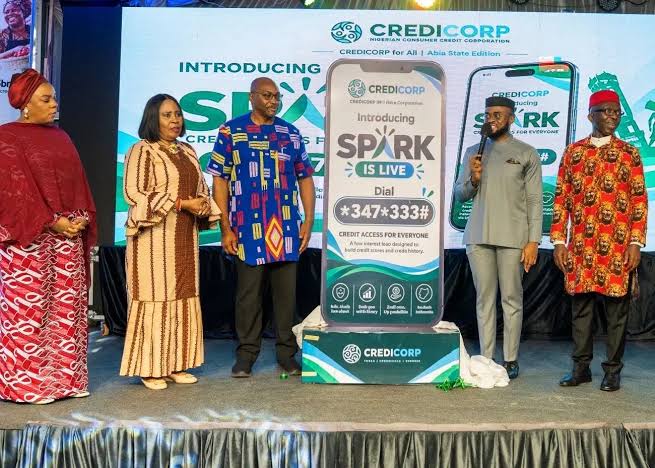
The Federal Government, through the Nigerian Consumer Credit Corporation, has unveiled a USSD credit service called SPARK that allows Nigerians to access loans for household needs and solar energy using basic phones without internet or smartphones. The code is *347*333#. The service is in pilot stage and is expected to become more widely available before the end of 2026. It forms part of broader efforts to expand consumer credit, with more than 350,000 people already having accessed related programmes.
The Federal Government has introduced a USSD-based consumer credit service that allows Nigerians to access loans for everyday household needs and solar energy equipment using basic mobile phones, without requiring smartphones or internet connectivity. The service, named SPARK, was unveiled by the Nigerian Consumer Credit Corporation (CREDICORP) during a pilot event in Aba, Abia State. The designated USSD code is 347333#. Wider nationwide availability is expected before the end of 2026.
CREDICORP Managing Director and Chief Executive Officer Uzoma Nwagba said the platform is designed to expand access to consumer credit for first-time borrowers and people with little or no formal credit history. By taking and repaying loans, users can build repayment records that improve their credit profiles and open pathways to larger financial services later. Nwagba described the broader vision as enabling working Nigerians to acquire essential goods and productive assets without having to pay the full cost upfront. He noted that the Aba event demonstrated practical applications ranging from credit for market women to productive assets for transport operators.
The corporation’s consumer credit programmes cover five main categories. These include energy solutions such as solar panels and generators; life essentials covering food and beverages, healthcare and apparel; home improvement items including furniture, household appliances and building materials; digital devices such as laptops, smartphones and tablets; and mobility options involving compressed natural gas and electric vehicles. Solar access forms a specific component within the energy category, reflecting ongoing efforts to help households obtain alternative power solutions amid persistent challenges with grid electricity. SPARK itself is a loan product, not a grant. Successful applicants will be required to repay the funds according to the terms agreed with the participating lending institution.
As of the end of October, CREDICORP reported that more than 350,000 Nigerians had accessed credit through its programmes, with over N53.5 billion facilitated. Women accounted for roughly 59 per cent of beneficiaries. The Aba showcase brought together more than 1,000 residents, participating financial institutions, local vendors and government representatives. The USSD channel is intended to reach people who are currently excluded from conventional lending channels that depend on smartphones, internet access or established banking relationships.
The initiative sits within a wider set of government measures aimed at expanding consumer credit. President Bola Tinubu has previously linked such access to the ability of working Nigerians to acquire solar systems, vehicles and digital devices without first accumulating years of savings. Separate CREDICORP programmes have already supported solar home systems for women under partnership arrangements with the Ministry of Women Affairs. The new USSD service extends the same logic to a larger group of users who may not hold smartphones.
Operational details remain limited at the pilot stage. CREDICORP has indicated that the platform is not yet fully operational nationwide and that interested users should await the wider rollout. Interest rates, maximum loan sizes, eligibility criteria and the precise range of goods available through the USSD channel have not been fully published. Because the product is structured as consumer credit, uptake will depend on the willingness of participating financial institutions to lend, the creditworthiness assessments applied to first-time borrowers, and the capacity of recipients to service the loans amid prevailing cost-of-living pressures.
What is confirmed is that CREDICORP has unveiled the SPARK USSD service with the code 347333# to provide access to consumer loans for household needs and solar energy equipment, that the service does not require a smartphone or internet connection, and that it is currently in a pilot phase with wider availability expected before the end of 2026. What remains to be established is the speed and scale of the nationwide rollout, the terms offered to borrowers, and the extent to which the service reaches people who have previously been unable to access formal credit. The platform adds a new channel to existing consumer-credit efforts while remaining subject to the ordinary requirements of repayment and risk assessment.