NIGERIA’S 2027 BATTLE INTENSIFIES AS OBI DEEPENS GRASSROOTS DRIVE, PARTIES REALIGN AND EFCC CASES SHAKE POLITICAL SPACE
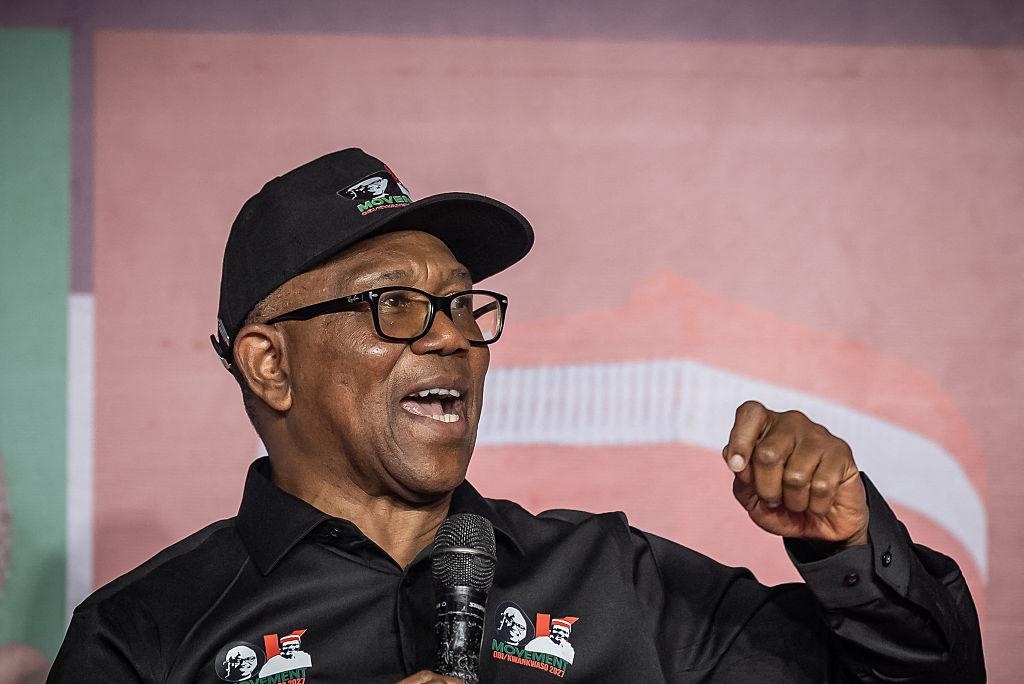
Nigeria’s 2027 political battle is intensifying as Peter Obi and running mate Rabiu Kwankwaso expand NDC grassroots mobilisation through markets, town halls and community engagements while the APC, ADC and other parties strengthen their own structures. At the same time, high-profile EFCC cases involving former officials including Godwin Emefiele, Nasir El-Rufai and Ifeanyi Okowa are contributing to wider debate over anti-corruption enforcement and political neutrality. INEC has fixed November 28 for a nationwide mock election to test upgraded BVAS and electronic result transmission systems ahead of the January 16, 2027 presidential and National Assembly elections.
Nigeria’s political landscape is entering a more aggressive phase ahead of the January 16, 2027 presidential and National Assembly elections, with major candidates expanding grassroots operations, parties restructuring their campaign machinery and anti-corruption investigations increasingly becoming part of the national political conversation. Peter Obi, presidential candidate of the Nigeria Democratic Congress, has intensified direct engagement with traders, traditional leaders, youth groups and local communities, while his running mate Rabiu Musa Kwankwaso has joined a widening mobilisation effort intended to build support beyond the regions where the former Anambra State governor performed strongly in 2023. At the same time, President Bola Tinubu’s All Progressives Congress is strengthening its own structures across the country, Atiku Abubakar’s African Democratic Congress is battling legal uncertainty surrounding its leadership and candidate nominations, and several high-profile EFCC investigations involving former public officials are generating accusations, counter-accusations and wider concerns about the role of anti-corruption institutions during an election season.
The changing environment reflects how quickly Nigeria’s 2027 election has moved from early speculation into a full national contest. Political parties are no longer limiting their activity to meetings with governors, lawmakers and traditional power brokers, but are increasingly taking their campaigns directly to voters through town halls, market visits, community consultations and local mobilisation networks. The strategy is particularly visible in Obi’s campaign, which is attempting to convert the enthusiasm that surrounded his 2023 presidential bid into a more organised national structure capable of competing at polling-unit level across all six geopolitical zones.
Obi has spent recent weeks visiting different parts of the country and presenting his campaign as an effort built around listening to communities rather than relying exclusively on large political rallies. In Plateau State, he met members of the traditional council and participated in a town hall engagement where insecurity featured prominently in discussions. He argued that Nigeria cannot achieve sustainable economic progress while citizens continue living under fear of kidnapping, banditry and other forms of violence, linking security directly to productivity, investment and national development.
That Plateau engagement followed similar political activities in other states as the NDC expands its national campaign presence. Obi has visited communities in Kogi, Benue, Enugu, Rivers, Cross River and other areas, while urging supporters to participate actively in the election process and protect their votes from polling units through collation. His message increasingly combines economic criticism of the Tinubu administration with calls for electoral vigilance, insecurity reform and stronger accountability in government.
The Lagos leg of the campaign attracted particular attention because Obi and Kwankwaso targeted markets and densely populated urban communities rather than focusing only on formal political venues. Kwankwaso visited Kantangua Market in Alimosho and interacted with traders and local mobilisation groups, while the wider NDC programme included stakeholder engagements across Lagos. Videos from the visit showed large crowds surrounding party officials and chanting support for the presidential ticket, although crowd size at campaign events should not automatically be interpreted as a reliable measure of electoral strength.
The Lagos strategy reflects the NDC’s effort to recreate and expand the coalition that helped Obi perform strongly in the commercial capital during the 2023 election. Lagos remains politically significant not only because of its population and economic importance but also because President Tinubu built much of his political career there. Any opposition candidate seeking to challenge the APC nationally is therefore likely to devote considerable resources to the state.
Kwankwaso’s presence on Obi’s ticket has also reshaped calculations in northern Nigeria. The former Kano State governor retains a significant political following in parts of the North-West, and the NDC hopes his inclusion can help Obi improve on his relatively weak 2023 performance in northern states. Support groups backing the pair have already announced structures across the 36 states and Federal Capital Territory, while women’s mobilisation organisations and local coordinators are being deployed to strengthen the campaign at community level.
The Obi-Kwankwaso alliance is therefore being presented by supporters as an attempt to combine Obi’s support among younger urban voters and parts of the South with Kwankwaso’s political network in the North. Whether that coalition produces the desired electoral result will ultimately depend on voting patterns, party organisation, candidate credibility and turnout rather than campaign visibility alone.
The APC is responding with its own aggressive mobilisation strategy. Party officials have directed youth coordinators and local campaign structures to deepen outreach at ward and polling-unit level, recognising that an incumbent president cannot rely only on governors, party leaders and federal power to deliver votes. Tinubu’s campaign is attempting to defend the administration’s record while building alliances with politicians from outside the traditional APC structure.
That effort has already produced unusual political combinations. Figures who previously belonged to opposition parties or maintained separate political identities have become associated with Tinubu’s second-term campaign, reinforcing criticism from opponents who accuse the APC of attempting to absorb large sections of the political establishment. The ruling party rejects that interpretation and argues that politicians are joining or cooperating with Tinubu because they support his policies and believe his administration should continue.
The defection pattern has become one of the most important features of the 2027 cycle. Lawmakers, former governors, party officials and local political organisers have switched allegiances in several states, often presenting their decisions as responses to internal party disputes, ideological differences or expectations of better political opportunities. In some cases, entire local structures have moved with senior politicians, creating significant changes in state-level party organisation.
Kaduna is one of the states where those movements have attracted attention. Groups associated with former Governor Nasir El-Rufai and members of opposition parties have recently moved toward the APC, while El-Rufai himself remains involved in legal and political controversies. The situation illustrates how political loyalties at elite level can shift even while grassroots supporters do not necessarily move in the same direction.
Bayelsa has also become a competitive space. Obi’s recent visit generated discussions about political realignment among Ijaw leaders and opposition supporters, while elements within the state’s PDP have separately expressed support for Tinubu’s re-election. Such cross-party endorsements demonstrate how the 2027 election is increasingly being shaped by local alliances rather than rigid national party identities.
The opposition itself remains fragmented. Atiku Abubakar is contesting on the platform of the African Democratic Congress, but his candidacy has been affected by a Federal High Court judgment that invalidated the David Mark-led leadership responsible for key decisions within the party. The ADC has appealed the ruling, and INEC Chairman Joash Amupitan has said the commission will comply with whatever final binding judgment emerges from the courts.
The legal dispute creates uncertainty because candidate nominations are central to election preparations. If a court ultimately invalidates a party leadership structure, decisions taken by that structure can also come under challenge. Atiku’s campaign therefore faces a legal battle at the same time it is attempting to organise politically against Tinubu and other opposition candidates.
That complication demonstrates why courts have become major actors in Nigeria’s election cycle. INEC has disclosed that it is dealing with more than 300 election-related cases, including disputes over party leadership, nominations and other pre-election matters. Late judgments can force changes to candidate lists and create logistical difficulties for the commission as ballots and election materials are prepared.
Oyo State Governor Seyi Makinde represents another opposition force. He is contesting under the Allied Peoples Movement and has increasingly criticised the Tinubu administration over economic management, political defections and what he describes as institutional pressure against opposition politicians. Makinde has also spoken with other opposition figures about areas of possible cooperation, although no unified opposition ticket has emerged.
The existence of several prominent opposition candidates creates both opportunity and difficulty for Tinubu’s challengers. Multiple candidates can broaden the range of alternatives available to voters, but they can also divide opposition support. Talks about cooperation have therefore remained a recurring feature of the political conversation, particularly among figures who argue that fragmented opposition parties may struggle to compete effectively against a ruling party with nationwide institutional structures.
No final opposition arrangement has been announced, and the different candidates continue to campaign independently. Obi, Atiku and Makinde have each outlined their own approaches to security, economic reform and governance, while Tinubu is campaigning on continuity and the record of his administration.
The election environment is further complicated by growing debate over anti-corruption enforcement. Several former senior officials remain under investigation or prosecution by the Economic and Financial Crimes Commission, and their cases are increasingly being discussed alongside questions about party affiliation and political loyalty.
Former Central Bank of Nigeria Governor Godwin Emefiele remains one of the most prominent defendants. During proceedings at the Lagos State Special Offences Court in Ikeja on November 12, an EFCC investigator alleged that Emefiele used associates and proxies to acquire multi-billion-naira properties while serving as CBN governor. The prosecution witness also alleged that more than $2 million in cash was recovered from the office of a lawyer said to have acted on Emefiele’s behalf.
Emefiele is facing a 19-count charge involving allegations of gratification and corrupt demands, while a co-defendant is facing separate charges. The allegations remain subject to trial, and Emefiele is entitled to the presumption of innocence unless convicted by a court. His defence has challenged aspects of the prosecution’s evidence and objected to attempts to introduce material it argues is unrelated to the charges before the court.
The Emefiele proceedings have attracted significant attention because of his former position at the centre of Nigeria’s monetary and financial system. As CBN governor, he oversaw major currency, foreign-exchange and banking policies, including the controversial naira redesign that preceded the 2023 election. His prosecution therefore carries political as well as financial significance, even though the case itself must be decided on evidence rather than partisan interpretation.
Former Kaduna State Governor Nasir El-Rufai is another major political figure facing serious allegations. In October, a Department of State Services forensic investigator testified in court that El-Rufai and associates allegedly planned to use $600,000 to influence EFCC officials and intermediaries in connection with an investigation. Those allegations are being tested in court and have not been established as proven facts.
The case has attracted attention partly because El-Rufai has become an increasingly outspoken political figure outside the Tinubu administration. Supporters have argued that scrutiny of opposition-aligned politicians raises questions about selective enforcement, while authorities maintain that political affiliation does not provide immunity from investigation.
Former Delta State Governor Ifeanyi Okowa presents another politically sensitive example. The EFCC has continued investigating allegations involving approximately ₦1.3 trillion in derivation funds that accrued to Delta State during his tenure. Okowa has denied wrongdoing and has not been convicted of any offence in relation to the allegations.
The political dimension intensified after Okowa moved from the PDP to the APC and subsequently secured the ruling party’s senatorial ticket for Delta North. Critics questioned whether his defection would affect the EFCC investigation, while the commission maintained that its probe remained active. Human rights groups have since called on the agency to bring such cases to a clear legal conclusion rather than allow unresolved investigations to remain indefinitely associated with prominent politicians.
Those concerns reflect a broader challenge for anti-corruption institutions. The EFCC must be able to investigate former and serving officials regardless of political party, but public confidence can weaken when cases appear unresolved for long periods or when suspects later join the ruling party. Even where there is no evidence that party membership altered an investigation, perceptions of selective enforcement can damage institutional credibility.
The Atiku camp has also become part of that debate. A former member of the House of Representatives petitioned the EFCC in September to reopen allegations involving Atiku from his period as vice president between 1999 and 2007. Atiku responded by saying anyone with evidence should present it and maintained that previous investigations had not resulted in a conviction against him.
The petition itself does not amount to a criminal charge, and there has been no verified conviction arising from those allegations. Nevertheless, the timing has generated political controversy because Atiku is contesting the presidency and his supporters have warned against using anti-corruption agencies for campaign purposes.
These competing claims make the EFCC’s independence especially important during the final months before the election. Legitimate investigations cannot simply stop because a suspect becomes a candidate or joins an opposition party, but enforcement must also be transparent enough to show that cases are not being initiated selectively for political advantage.
Makinde has made similar allegations more directly, accusing the Tinubu administration of using EFCC scrutiny to pressure opposition governors into the APC. He has not produced public evidence demonstrating that Tinubu personally ordered the commission to target specific governors, and the EFCC has consistently denied political interference. The allegation nevertheless demonstrates how deeply anti-corruption enforcement has become intertwined with campaign politics.
The ruling party argues that such criticism often emerges whenever politicians face investigation. APC officials maintain that the existence of a corruption probe should not be automatically interpreted as evidence of political persecution and that former public officials must account for the management of public funds regardless of party affiliation.
The wider public debate is therefore not simply about whether the EFCC should investigate politicians, but whether the institution can demonstrate consistency. Cases involving ruling-party figures are likely to be scrutinised just as closely as those involving opposition leaders, particularly as political tensions rise.
INEC is simultaneously attempting to prevent those broader disputes from undermining confidence in the election itself. Chairman Joash Amupitan has acknowledged that the commission enters 2027 carrying a trust deficit from the 2023 elections and has identified security, logistics, technology and result management as key priorities.
The commission has scheduled a nationwide mock accreditation and voting exercise for November 28. The exercise will simulate the presidential election and test upgraded versions of the Bimodal Voter Accreditation System as well as electronic transmission of results.
INEC says it has introduced safeguards designed to prevent inaccurate polling-unit results or figures showing over-voting from being uploaded to the Result Viewing Portal. The commission has also reduced the maximum number of registered voters assigned to an individual BVAS device from 1,250 to 850, with additional devices expected at larger polling units.
The technology changes are partly a response to controversy surrounding the 2023 election, when failures in result upload and communication contributed to significant public distrust. Amupitan has said the commission wants the November mock exercise to expose technical weaknesses before the January election rather than during the real vote.
Security remains another serious concern. Political events have already experienced violence and disruption in some areas, including attacks involving opposition supporters. Police investigations into such incidents will be closely watched because campaigns must be able to operate without intimidation if the election is to be considered genuinely competitive.
Obi’s campaign experienced a security scare during a recent town hall engagement in Cross River State, while supporters have also reported confrontations in other locations. The NDC has said such incidents will not stop its mobilisation efforts, but the events reinforce concerns about the safety of candidates, supporters and election personnel.
Tinubu and the APC face the same broader national security environment. Banditry, kidnapping, insurgency and communal violence remain active in several regions, and insecurity could affect both campaign activity and election-day participation. INEC has warned that security conditions are among the factors capable of disrupting voting if not managed effectively.
Political violence can influence turnout even where an election is not formally cancelled. Voters who fear attacks may simply remain at home, creating unequal participation between areas. Security agencies will therefore be expected to protect polling units and campaign events without appearing to favour any political party.
The battle for young voters will also be significant. Nigeria has a large youth population, and parties are building dedicated mobilisation structures aimed at first-time and younger voters. The APC has intensified youth outreach, while Obi’s movement continues to draw heavily from younger Nigerians who became politically active around the 2023 election.
The challenge for Obi is to transform enthusiasm into organisation. The 2023 campaign demonstrated the power of volunteer networks and social-media mobilisation, but elections are ultimately won through voter registration, turnout, polling agents, collation monitoring and party structures across thousands of communities.
That reality appears to explain the current emphasis on markets, local consultations and community engagement. The NDC is attempting to create a more institutional version of the largely organic movement that emerged around Obi in 2022 and 2023.
Kwankwaso’s political network may provide additional organisational capacity in areas where Obi previously struggled. His supporters have long relied on community-level mobilisation in Kano and other parts of the North-West, giving the ticket an opportunity to combine different political traditions.
The APC has deeper established structures, particularly through governors, lawmakers and local government networks. Incumbency also provides Tinubu with visibility and political access unavailable to opposition candidates, although incumbency does not guarantee electoral support and can also make the president responsible for public dissatisfaction over economic and security conditions.
The economy will remain one of the most important issues. Tinubu’s administration argues that reforms introduced since 2023 are creating greater stability, attracting investment and addressing structural weaknesses. Opposition candidates say many households continue to struggle with food prices, living costs and unemployment despite improvements in selected macroeconomic indicators.
Obi has focused heavily on production, fiscal discipline, education and security in his campaign messaging. Atiku has emphasised economic restructuring, private-sector growth and national unity, while Makinde has called for reforms to political institutions and electoral rules.
Tinubu’s campaign is likely to emphasise continuity and argue that reversing reforms would undermine progress. The eventual contest will therefore involve competing interpretations of whether the hardship associated with economic adjustment has produced enough visible benefits to justify another term.
Regional politics will remain important but increasingly complicated. Traditional assumptions that candidates can rely automatically on their home regions are being challenged by defections, cross-party alliances and changing voter behaviour. Obi is attempting to expand northward, Tinubu is strengthening alliances in the South-East and South-South, while Atiku is working to retain influence in northern areas.
The 2023 election already demonstrated that voting patterns can shift. Obi won states that previous opposition candidates had not traditionally dominated, while Tinubu lost Lagos despite his long political association with the state. Atiku retained significant northern support but failed to build enough votes nationally to win.
The 2027 campaigns are therefore attempting to learn from those results rather than simply repeat them. Each major candidate needs to defend existing strengths while expanding into regions where previous performance was weak.
Grassroots engagement becomes particularly important under that strategy because national campaign rallies alone provide limited information about local political organisation. Meetings with traders, traditional rulers, community groups and local activists can help campaigns understand regional concerns while establishing networks capable of mobilising voters on election day.
Those engagements also create opportunities for misinformation and exaggerated claims. Campaign crowds, defections and endorsements are frequently presented as proof that a candidate has already secured a state or region, even though actual voting may produce a different result.
Reliable assessment therefore requires separating campaign activity from electoral prediction. The fact that Obi attracts large crowds in a market, Tinubu receives endorsements from governors or Atiku controls established party networks does not by itself determine the final outcome.
The election will depend on millions of individual votes cast across 36 states and the Federal Capital Territory, subject to the constitutional requirements governing presidential victory.
The electoral commission’s credibility will therefore be as important as party strategy. If voters trust the technology, collation and result declaration process, political disagreements are more likely to be resolved through courts and democratic institutions. If confidence collapses, even legitimate results may face widespread rejection.
That makes INEC’s November 28 mock exercise one of the most significant events remaining before the election. The commission has an opportunity to demonstrate improvements to BVAS, IReV and result management while identifying operational problems early enough to correct them.
Political parties will almost certainly scrutinise the exercise closely. Opposition groups will be looking for evidence that the weaknesses associated with 2023 have been addressed, while the ruling party also has an interest in a process whose legitimacy is broadly accepted.
Domestic and international observers will add another layer of scrutiny. ECOWAS has appointed former Ghanaian President Nana Addo Dankwa Akufo-Addo to lead a 200-member election observation mission, while other regional and international organisations are expected to monitor the election.
The presence of observers cannot prevent every irregularity, but their reports can provide independent assessments of polling procedures, security and result management. Their conclusions may become especially important if political parties challenge the eventual outcome.
Nigeria is therefore moving toward an election in which politics, law enforcement, courts and electoral administration are increasingly overlapping. Candidates are mobilising communities while lawyers fight over nominations, investigators pursue former officials and INEC attempts to rebuild public confidence.
The anti-corruption cases will continue to attract attention because several defendants and subjects of investigation remain politically influential. Each development will be interpreted through the campaign environment, making careful distinction between allegations and established facts essential.
Emefiele’s trial, El-Rufai’s legal battles, the Okowa investigation and petitions concerning Atiku all involve different facts and legal circumstances. They should not be combined as though they represent one coordinated case or proof of a single political strategy.
The same caution applies to accusations of selective enforcement. Opposition politicians have raised legitimate questions about institutional independence, but those claims require evidence. The existence of a prosecution against a government critic does not automatically establish political persecution, just as joining the ruling party should not automatically end scrutiny of alleged wrongdoing.
The EFCC’s credibility will therefore depend on consistency, transparency and the willingness to take investigations to logical legal conclusions. Long-running cases that remain unresolved can fuel suspicion regardless of the commission’s intentions.
Nigeria’s political class will also face pressure to avoid using unproven corruption allegations purely as campaign weapons. Accusations can damage reputations before courts establish facts, particularly when amplified through social media. Responsible political debate requires distinguishing between being investigated, being charged and being convicted.
That distinction will become increasingly important as campaigning intensifies over the remaining weeks before January 16.
For Obi, the immediate challenge is expanding his grassroots structure while sustaining momentum across regions with very different political dynamics. His campaign is attempting to show that the movement around him has developed beyond social-media enthusiasm into a national organisation capable of competing for votes at every level.
For Kwankwaso, the task is demonstrating that his northern political network can transfer meaningful support to a joint presidential ticket. His effectiveness will be measured not only in Kano but across neighbouring states and other parts of the North.
For Atiku, the immediate priority includes resolving the ADC’s legal problems while maintaining campaign momentum. A presidential campaign cannot operate comfortably while fundamental questions remain about the validity of party leadership and nominations.
For Makinde and other opposition candidates, the challenge is building enough national recognition and structure to compete beyond their traditional political bases.
For Tinubu, the central task is defending a first-term record under intense scrutiny while managing a coalition that increasingly includes politicians from different parties and political backgrounds. His supporters argue that those alliances demonstrate broad acceptance of his leadership, while opponents describe them as evidence of an expanding political establishment around the presidency.
The electorate will ultimately decide between those competing narratives. Campaign alliances, defections, legal cases and endorsements may shape the environment, but they do not replace the ballot.
The approaching election is therefore increasingly becoming a test not only of individual candidates but of Nigeria’s democratic institutions. INEC must demonstrate that election technology and result management can operate credibly, security agencies must protect political competition without partisan interference, courts must resolve disputes promptly and anti-corruption institutions must show that their work is based on law rather than political loyalty.
Political actors also have responsibilities. Candidates must avoid inflammatory rhetoric, parties must respect electoral rules and supporters must be able to campaign without violence or intimidation.
The next several weeks will likely produce further defections, court rulings, corruption allegations and campaign controversies. Each development will feed into the larger battle over who controls Africa’s most populous democracy after May 2027.
What is already clear is that the election cannot be understood simply as a rematch of 2023. Party platforms have changed, alliances have shifted, new tickets have emerged and politicians who once stood together are now campaigning against one another.
Peter Obi’s grassroots mobilisation is one part of that transformation, but the wider story involves a rapidly changing political system in which Tinubu, Obi, Atiku, Makinde and other candidates are simultaneously trying to expand their coalitions while defending themselves against political and legal challenges.
Anti-corruption investigations add another layer of uncertainty because many of the individuals under scrutiny remain connected to the political system. The more those cases overlap with defections and election campaigns, the greater the pressure on the EFCC to demonstrate institutional neutrality.
INEC’s preparations will meanwhile determine whether the political competition ends in a process Nigerians broadly regard as credible. The November 28 nationwide mock vote will be an early test of the commission’s claim that it has learned from the failures and controversies surrounding the 2023 election.
The January 16 election is therefore approaching as a contest shaped by far more than campaign speeches. Grassroots organisation, regional alliances, court decisions, anti-corruption cases, election technology, security and public trust are all converging at the same time.
Nigeria’s political battle has entered its decisive stage, and the weeks ahead will show whether the country’s institutions can manage one of its most complex and competitive election cycles without allowing political rivalry to overwhelm the rules designed to protect democratic competition.