SECRET RECORDS REVEAL US$333 MILLION IN DONATIONS BEHIND TRUMP WHITE HOUSE BALLROOM AS ETHICS SCRUTINY GROWS
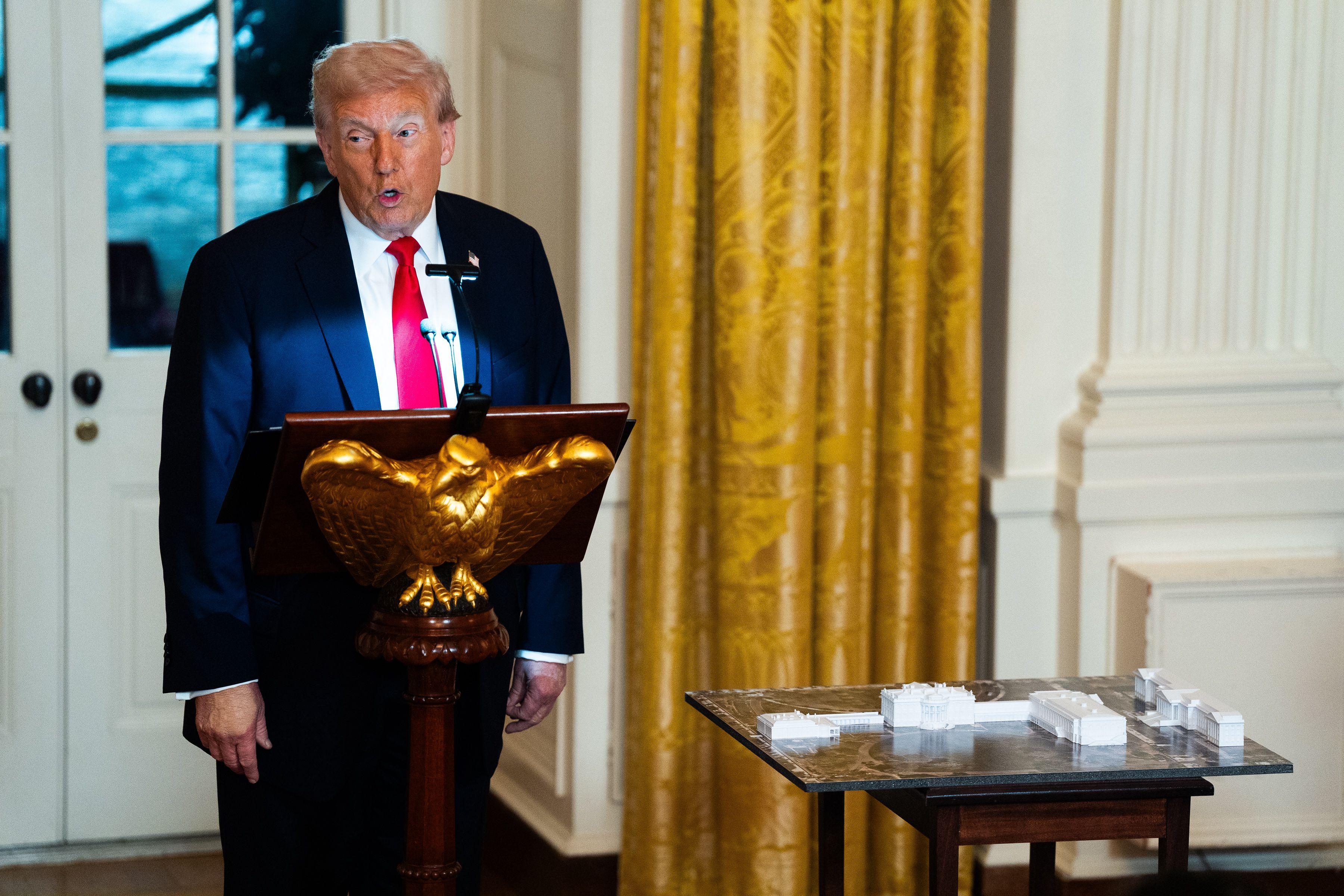
Confidential fundraising records obtained by The Washington Post show roughly US$333 million in private commitments from 67 major donations toward President Donald Trump’s White House ballroom project. Nvidia and Apple each committed US$25 million, Comcast pledged US$7.5 million, while Microsoft, Lockheed Martin and Palantir were among companies committing US$10 million. At least US$77 million was connected to donors requesting anonymity, and several contributors have significant federal contracts, regulatory interests or other matters before the government, although the records do not establish that their donations caused favorable government actions.
Confidential fundraising records obtained by The Washington Post have revealed that President Donald Trump’s new White House ballroom project attracted approximately US$333 million in private commitments from some of America’s largest technology companies, defense contractors, wealthy financiers, political allies and other major donors, dramatically expanding public understanding of who is paying for the controversial project. The records show that Nvidia and Apple each pledged US$25 million, Comcast committed US$7.5 million, and companies including Microsoft, Lockheed Martin and Palantir were listed with US$10 million commitments, while at least US$77 million was connected to donors who requested that their identities remain private. The disclosure has intensified questions about transparency because several donors have major federal contracts, regulatory interests or other business matters before the Trump administration, although the available evidence does not establish that any contribution was exchanged for favorable government treatment.
The internal spreadsheet reportedly lists 67 donations exceeding US$10,000 and provides the most detailed accounting yet of the private money financing the ballroom. Before the leak, the White House had publicly identified a number of companies, individuals and foundations that supported the project but had not disclosed the size of most contributions, leaving the public unable to determine which donors were financing the largest share of the construction. The newly disclosed records substantially change that picture by showing that a relatively small number of corporations and wealthy individuals were responsible for a large portion of the money raised, with contributions of US$5 million, US$10 million and US$25 million appearing repeatedly among the largest commitments.
The US$333 million total is broadly consistent with the amount the administration has previously said was raised, but the identities and contribution levels have become politically significant because of the nature of the project and the position of the person promoting it. The ballroom is being built within the White House complex and has been championed personally by Trump, who has repeatedly argued that the existing presidential residence lacks a permanent venue large enough for major state dinners and formal events. The administration says private financing allows the project to proceed without requiring taxpayers to bear the entire cost, while critics argue that private contributions to a project so closely associated with a sitting president should be subject to much stronger disclosure requirements than ordinary charitable donations.
Nvidia and Apple are among the most prominent names on the list, each with a US$25 million commitment. Both companies are deeply affected by federal policy decisions involving trade, artificial intelligence, China, semiconductor exports, tariffs, antitrust enforcement and national security, making their contributions especially sensitive from an ethics perspective. There is no evidence that either company received a specific government benefit because of its donation, but the size of the contributions has raised questions about whether companies with substantial interests before the federal government should be able to provide multimillion-dollar financial support to a presidential project without automatic public disclosure.
Nvidia’s contribution has attracted particular attention because the company occupies a central position in the global artificial intelligence and semiconductor industries and depends heavily on U.S. export policy for access to international markets. The company had already acknowledged supporting the ballroom project, but the amount of its contribution had not previously been publicly known. According to the leaked records, Nvidia requested anonymity for its contribution, a detail that has intensified scrutiny because the company simultaneously has major policy interests before federal agencies dealing with technology exports and national security. Nvidia has said its support was independent of business considerations and has rejected suggestions that the donation was connected to regulatory treatment.
Apple’s US$25 million commitment raises similar questions because the company routinely interacts with the federal government on trade, tariffs, manufacturing, China policy and technology regulation. Apple is one of the world’s largest corporations and has significant exposure to decisions made by the executive branch, particularly where tariffs and supply chains are concerned. The company has not been accused of illegally attempting to purchase influence, and there is no evidence proving that its ballroom contribution resulted in favorable treatment, but the size of the donation places Apple among the most important private financiers of a project identified directly with the president.
Another major donor listed in the records is billionaire Charles Ergen, co-founder of Dish Network, whose total commitment reportedly reached US$25 million through two US$12.5 million pledges. Ergen’s name has drawn attention because companies connected to him have been involved in important regulatory discussions with the Federal Communications Commission over valuable wireless spectrum and telecommunications assets. The FCC previously examined whether EchoStar had complied with obligations tied to some of its spectrum holdings before later ending that inquiry following major business transactions. Ergen’s ballroom contributions came after some of those developments, but no public evidence shows that the donations influenced the regulatory outcome or that government officials made decisions in exchange for his financial support.
The Adelson family also appears among the largest donors with a US$25 million commitment, continuing the family’s long history of financial support for Republican political causes and conservative organizations. Large political donors routinely support philanthropic and civic projects as well as campaigns, but the ballroom disclosure has renewed debate over whether a privately funded project connected directly to the president should operate under rules closer to campaign finance disclosure. Critics argue that when wealthy political supporters finance a presidential priority on such a large scale, the public has a legitimate interest in knowing exactly how much they contributed and whether they have other matters before the federal government.
Comcast’s US$7.5 million commitment has attracted scrutiny for similar reasons. The media and telecommunications company regularly interacts with federal regulators over communications policy, mergers, competition, licensing and other business issues, placing it among companies whose financial relationship with a presidential project could create an appearance of influence even without evidence of wrongdoing. Comcast has not been shown to have received any official favor because of the donation, but the broader controversy centers on the fact that the public had little ability to evaluate such relationships until the internal donor records became available.
Microsoft, Lockheed Martin and Palantir were each listed with US$10 million contributions, placing several of the federal government’s most significant contractors among the project’s major supporters. Microsoft has extensive cloud computing and technology contracts with federal agencies, Lockheed Martin is one of the largest defense contractors in the United States, and Palantir provides data and artificial intelligence systems to military, intelligence and law-enforcement agencies. Their contributions do not prove improper influence, but ethics specialists have argued that large federal contractors financing a project personally promoted by the president create precisely the kind of relationship where transparency is necessary to maintain public confidence.
The controversy has become even more politically sensitive because of donations associated with people who later benefited from presidential decisions. One of the most closely examined examples involves Isabela Herrera, daughter of international banker Julio Herrera Velutini, who had faced federal criminal charges before later receiving a presidential pardon. The records show that Herrera committed US$2.5 million to the ballroom project and had also made substantial political contributions to a Trump-aligned political action committee, while her father was pardoned by Trump several months later.
Herrera Velutini had been indicted in 2022 over allegations involving political financing and an attempt to influence a banking regulator in Puerto Rico, allegations he disputed. Trump later granted him clemency in January 2026, with the White House maintaining that the prosecution had been politically motivated. The timing of the ballroom donation and the subsequent pardon has generated intense scrutiny because it creates an appearance that critics say warrants examination, but the evidence currently available does not establish that the donation caused the pardon or that any agreement existed linking financial support to presidential clemency.
That distinction is important because the donor controversy involves several examples where contributions were followed by favorable government developments without evidence proving that one caused the other. A company can legitimately receive a federal contract after contributing to a public project, and an individual can receive a pardon for reasons unrelated to a family member’s donation. Establishing bribery or a quid pro quo would require evidence showing that money was offered or accepted in exchange for an official action, and the leaked records do not provide such proof. The ethical concern instead centers on whether the structure creates enough appearance of influence that stronger disclosure safeguards should have been required from the beginning.
Salesforce is another company whose name appears in the donor records while simultaneously maintaining major federal business interests. The company and people connected to it reportedly made contributions to the ballroom while its government contracting operations continued expanding, including access to major U.S. Army procurement opportunities. Federal agencies maintain that contracts are awarded on technical capability, mission requirements and value rather than political donations, and there is no evidence demonstrating that Salesforce’s contribution altered those processes. The overlap nevertheless reinforces the larger question of whether companies with active federal business should be permitted to contribute privately to presidential projects without comprehensive public reporting.
Cryptocurrency companies and investors also appear prominently among the donors, reflecting the sector’s increasingly close relationship with the Trump administration. Cameron and Tyler Winklevoss, founders of the Gemini cryptocurrency exchange, reportedly contributed bitcoin worth more than US$5 million, while other crypto interests also provided significant support. The cryptocurrency industry has benefited from a considerably friendlier federal regulatory environment during Trump’s second presidency, including changes in enforcement priorities and a broader administration effort to position the United States as a global center for digital assets. No evidence currently shows that those policy changes were granted because of ballroom donations, but the combination of major contributions and major regulatory interests has become another focus of transparency concerns.
The fundraising campaign has been handled through the Trust for the National Mall, a nonprofit organization that supports restoration and improvement projects connected to national monuments and important public spaces in Washington. Because nonprofit organizations operate under different disclosure rules from political campaigns, the Trust is not generally required to publish the identity and contribution amount of every donor. That legal structure allowed some ballroom supporters to request anonymity, and according to the leaked records, at least US$77 million was associated with donors who sought to remain undisclosed.
Supporters of the fundraising model argue that private philanthropy has long played a role in preserving national institutions and monuments and that corporate donations can reduce public spending. They say there is nothing inherently improper about successful companies or wealthy individuals helping finance a facility that will remain part of the White House long after Trump leaves office. Critics counter that the White House is unlike a museum or public park because access to the president and executive branch can have enormous political and commercial value, making multimillion-dollar anonymous contributions much more sensitive.
The project itself has also expanded significantly from the ballroom originally described publicly. Trump has said the facility will accommodate approximately 1,000 guests, allowing the White House to host large state dinners and official receptions without relying on temporary structures, but the wider redevelopment also includes office space, underground security infrastructure, emergency medical facilities, hardened shelters and systems intended to improve protection from missiles and drones. Those additions have substantially increased the complexity and estimated cost of the project and have blurred the distinction between the privately financed ceremonial ballroom and security improvements that may involve government funding.
Trump had repeatedly said that he and wealthy supporters would finance the ballroom and that taxpayers would not carry the principal financial burden. However, his own name reportedly does not appear on the internal donor spreadsheet reviewed by The Washington Post, despite earlier statements that he would personally contribute. The absence of his name does not prove that he has not provided money, because the records may be incomplete or his contribution may have been made through another structure, but it has created additional pressure on the White House to disclose how much Trump personally provided.
The project has already faced legal and historical preservation controversy because of changes to the White House East Wing. Critics have argued that the administration moved too aggressively in demolishing and restructuring historically significant portions of the complex and failed to follow the level of review normally expected for changes to one of the most important federal buildings in the country. The legal battle eventually reached the U.S. Supreme Court, which allowed construction to continue while litigation proceeds, keeping the project alive despite continuing challenges over procedure and presidential authority.
The donor revelations are separate from those construction disputes but add another layer of controversy to a project already facing intense scrutiny. The issue is no longer limited to whether the White House needs a large ballroom or whether the East Wing should have been altered. It now includes questions about who paid for the development, why some donors requested anonymity, what federal interests those donors hold and whether existing ethics rules are strong enough to govern private financial support for presidential projects.
White House officials have strongly rejected suggestions that ballroom donors received improper favors and have described the leaked documents as confidential material that should not have been released. The administration argues that companies and individuals contributed because they wanted to support an improvement to the White House that will serve future presidents as well as the current administration. Officials have also indicated that they intend to investigate how the internal fundraising records became public, framing the disclosure as an unauthorized leak rather than evidence of wrongdoing.
The administration’s defense does not eliminate the pressure for greater transparency because the core concern is not necessarily that every donor engaged in corruption. The more fundamental question is whether the public should have been able to see the donor list from the beginning. When corporations with billion-dollar government contracts, companies facing regulatory decisions and individuals connected to presidential pardons are giving millions of dollars to a presidential project, disclosure allows the public to judge the relationships based on facts rather than speculation.
The internal records have also exposed inconsistencies that may require further explanation. Some companies reportedly appeared on the fundraising spreadsheet despite saying they did not intend to contribute, while other entities publicly described as supporters were not included in the internal list reviewed by the newspaper. Those discrepancies could result from changes in pledges, accounting timing, in-kind contributions or incomplete records, but they reinforce calls for the White House or the Trust to release an official audited accounting rather than leaving the public dependent on leaked documents.
The ballroom controversy could eventually lead to legislative changes governing private donations for federal construction projects. Congress currently has extensive rules surrounding campaign contributions, lobbying and gifts to federal officials, but the law is less clear when private donors finance permanent improvements to a government property closely associated with a sitting president. Lawmakers could eventually consider disclosure requirements for contributions above a certain amount or additional rules for companies that hold active federal contracts or regulatory matters.
Any attempt to impose those restrictions would likely face opposition from nonprofit organizations and donors who argue that privacy is a legitimate part of charitable giving. However, supporters of stronger rules contend that presidential projects require a higher standard because the possibility of access and influence is far greater than in ordinary philanthropy. The debate therefore extends beyond Trump and could shape how future administrations finance major projects inside the White House or other sensitive federal properties.
The timing of the disclosure also gives the controversy broader political significance as the United States moves through a contentious election environment. Government ethics, corporate influence and presidential power remain major subjects of political debate, and opponents of the administration are likely to use the donor list to demand investigations into whether contributors received government benefits. Republican allies of Trump are expected to continue emphasizing that no evidence has established bribery or an explicit exchange between donations and official actions.
That distinction should remain central to responsible reporting on the issue. The records establish that major companies and wealthy individuals donated extraordinary sums of money to the ballroom project, that many of them have substantial interests before the federal government, and that some later experienced favorable government actions. The records do not establish that contracts, regulatory approvals or pardons were purchased through those donations, and presenting those events as proven exchanges would go beyond the available evidence.
What the documents clearly demonstrate is that the fundraising operation was far larger and more concentrated among powerful donors than the public previously understood. Nvidia and Apple each committed US$25 million, Comcast pledged US$7.5 million, Microsoft, Lockheed Martin and Palantir committed US$10 million each, while other corporations, billionaires and political allies provided millions more. At least US$77 million was associated with anonymity requests, meaning a substantial portion of the financing could have remained hidden without the leaked records.
That secrecy is likely to remain the central issue even if no criminal conduct is uncovered. Public confidence in government depends not only on whether officials obey the law but also on whether relationships between government and powerful private interests can be examined openly. Secret multimillion-dollar contributions to a project promoted by a sitting president create questions that are difficult to resolve when the identities and financial interests of donors are concealed.
The White House continues to argue that the project will benefit the presidency as an institution rather than Trump personally, and there is merit to the fact that the ballroom and its security infrastructure will remain after his administration ends. Future presidents will be able to use the facility for state dinners, diplomatic events and other official functions, and enhanced security systems could provide long-term protective benefits. The question, however, is whether those institutional benefits justify allowing private donors with substantial government interests to finance the project without automatic public disclosure.
The donor records have therefore transformed the ballroom from a construction controversy into a broader debate about the relationship between money and presidential power. The question is no longer simply whether wealthy Americans should be permitted to help improve a national building. It is whether companies and individuals seeking contracts, approvals, policy changes or presidential decisions should be able to provide enormous private financial support to a project associated with the person controlling those government powers.
For now, the evidence supports scrutiny rather than a conclusion of corruption. No direct quid pro quo has been established, and none of the major companies identified in the records has been shown to have purchased a government decision through its contribution. At the same time, the scale of the donations, the anonymity requests and the overlapping government interests make the case an important test of whether existing ethics and disclosure rules are adequate for a project without clear modern precedent.
The fundraising total may also continue rising because the leaked spreadsheet reportedly reflects commitments recorded only through late September. Trump has discussed a private fundraising target of roughly US$400 million, meaning additional contributions may already have been received or could still be sought. A complete accounting would need to include not only cash contributions but also in-kind support, Trump’s personal contribution if one has been made, and any taxpayer-funded security or infrastructure work connected to the broader East Wing redevelopment.
Until such information is released, the leaked donor records will remain the most detailed available picture of the financial network behind the White House ballroom. They reveal a project supported overwhelmingly by some of the wealthiest and most influential corporations and individuals in the country, many of whom regularly interact with the federal government on matters worth hundreds of millions or billions of dollars.
The unresolved question is not whether every one of those donors acted improperly, because the evidence does not support such a conclusion. The unresolved question is whether a fundraising system that allowed tens of millions of dollars to remain anonymous and placed major federal contractors and regulated companies among the largest financiers of a presidential project provided enough transparency to protect public confidence.
That debate will continue as construction progresses and additional information emerges. Every major federal decision involving one of the disclosed donors is now likely to receive increased scrutiny because the public knows those companies or individuals financially supported the ballroom. That scrutiny does not make every favorable decision suspicious, but it is a predictable consequence of allowing powerful private interests to contribute enormous sums to a project identified so closely with a sitting president.
The ballroom may ultimately be completed and used by future administrations for decades, but the story of how it was financed is likely to remain part of its history. The leaked records have established that approximately US$333 million came from a concentrated network of corporations, billionaires and political allies, including at least US$77 million attached to anonymity requests, while several donors held major interests before the federal government.
Whether investigations eventually uncover evidence of improper influence remains unknown. What is already clear is that the disclosure has exposed a significant transparency gap at the intersection of private money and presidential power, and that gap is now likely to face sustained scrutiny from lawmakers, journalists, ethics organizations and the public long after the ballroom itself is completed.