WHITE HOUSE ORDER BEHIND STARSHIELD LIMITS IN UKRAINE AS SENATORS DEMAND FORMAL INVESTIGATION
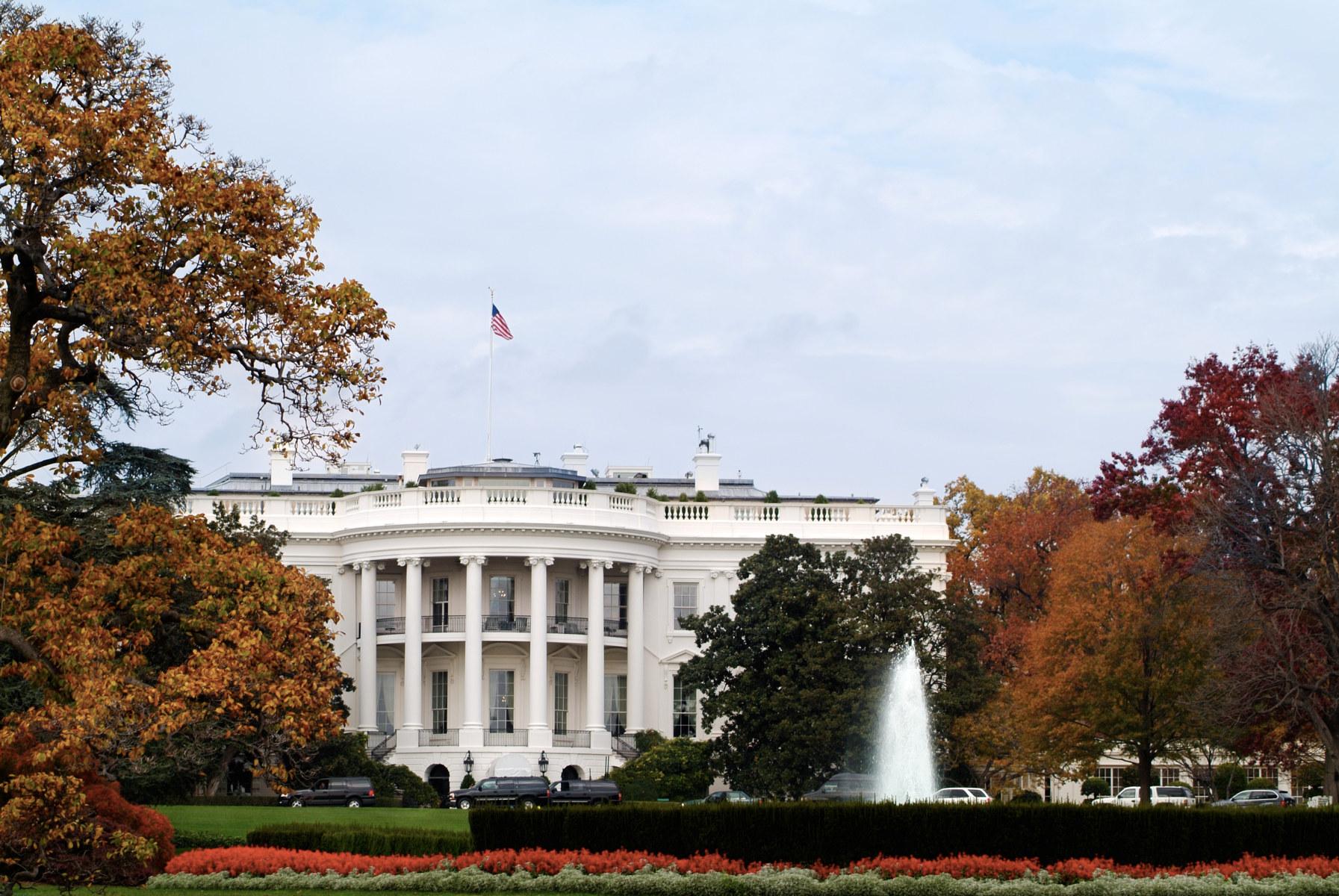
Multiple U.S. and Western officials told Reuters that the instruction to limit Ukraine’s military Starshield satellite service originated inside the White House, although they did not identify the official who made the decision. A senior U.S. official denied that President Donald Trump personally issued the request. The restrictions disrupted Ukrainian communications and high-speed drone operations, with some service subsequently restored. Nine bipartisan U.S. senators have now formally asked the Defense Department inspector general to investigate who authorized or knew about the restrictions, whether SpaceX acted independently, and whether related communications and warning disruptions endangered American personnel in Ukraine.
An order to restrict the U.S.-controlled Starshield satellite communications system used by Ukrainian forces came from inside the White House, according to American and Western officials briefed on the decision, deepening controversy over a sudden disruption that affected battlefield communications, drone operations and air-defense missions at a critical stage of Russia’s war against Ukraine. The restrictions appeared without advance warning and limited the speed at which equipment connected to the satellite network could operate effectively, prompting immediate concern in Kyiv and among U.S. lawmakers over why a system considered essential to Ukraine’s defense was altered during intensified Russian missile and drone attacks.
Reuters reported that two U.S. officials and a Western official familiar with the matter said senior Defense Department leaders received a message instructing them that SpaceX’s Starshield service for Ukraine needed to be slowed. The officials did not identify who inside the White House made the decision or who was responsible for carrying it out, leaving a crucial part of the chain of command unresolved. A senior U.S. official separately denied that President Donald Trump personally made the request, saying no such instruction came from the president, but the administration did not provide a public explanation identifying another official who may have authorized the change.
The distinction is important because Starshield is not simply the ordinary commercial Starlink internet service familiar to civilian users. It is a military-focused satellite communications system developed by SpaceX for government and national security customers, with the U.S. government exercising substantial control over the services provided to Ukraine under Defense Department and U.S. Space Force arrangements. Ukrainian forces use the system for battlefield communications, command and control, unmanned aircraft operations and other military functions in an environment where conventional communications infrastructure is frequently damaged or jammed by Russia.
The disruption became apparent when Ukrainian forces suddenly began losing connectivity on fast-moving platforms linked to the satellite network. Ukrainian officials said some systems disconnected when traveling at relatively modest speeds, while SpaceX reportedly acknowledged a restriction affecting service at around 100 miles per hour, or approximately 160 kilometers per hour. Tests conducted by Ukrainian forces also indicated problems beginning at lower speeds in some circumstances, creating uncertainty over exactly how the restriction was being applied across different terminals and military units.
That technical change had immediate operational consequences because Ukraine increasingly relies on fast-moving drones for both defense and battlefield missions. Interceptor drones designed to pursue and destroy Russian unmanned aircraft often need to travel faster than the imposed threshold, while other remotely operated platforms depend on stable satellite links for navigation, video transmission and communication with operators. Ukrainian military officials said the restrictions caused missions to be abandoned, drones to lose connections and some defensive operations to become significantly more difficult.
The problem was especially serious for units attempting to intercept newer Russian jet-powered drones. Those aircraft travel much faster than many conventional propeller-driven drones, meaning Ukrainian interceptors must accelerate substantially to catch them. A communications service that disconnects once an interceptor reaches a particular speed can make an otherwise functioning drone ineffective at precisely the moment it is attempting to engage an incoming threat.
Ukraine also relies heavily on satellite communications because Russia maintains powerful electronic warfare capabilities across large sections of the front. Conventional radio signals, GPS navigation and other communications systems can be jammed or disrupted, while Starlink and Starshield have generally provided more resilient connectivity. That resilience has made satellite internet an integral part of Ukraine’s battlefield architecture since Russia launched its full-scale invasion in February 2022.
The sudden restrictions therefore caused more than a temporary inconvenience. They exposed how deeply Ukraine’s military operations have become dependent on a communications infrastructure that can ultimately be altered by decisions made outside Ukraine. Even where Ukrainian forces own or operate terminals, access to the network itself depends on systems controlled by SpaceX and, in the case of Starshield arrangements, the U.S. government.
President Volodymyr Zelensky said connectivity had begun to improve after the disruption but had not been completely restored to previous conditions. Ukrainian military units also reported that service was returning unevenly, with some limitations continuing to affect high-speed operations. The partial restoration reduced some immediate pressure but did not answer the larger question of why the restrictions were introduced without warning.
That unanswered question has now triggered bipartisan concern in the United States Senate. Nine senators, including Democrats and Republicans, sent a formal letter to Defense Department Inspector General Platte Moring III demanding an investigation into the Starlink and Starshield disruptions and any associated interruption of U.S.-supported intelligence and early-warning capabilities in Ukraine.
The group includes Senate Foreign Relations Committee ranking member Jeanne Shaheen, Republican Senator Thom Tillis, Dick Durbin, Susan Collins, Jack Reed, John Cornyn, Chris Coons, Lisa Murkowski and Richard Blumenthal. Their letter asks investigators to determine whether Defense Department officials or other U.S. government personnel directed, authorized, approved or had advance knowledge of changes affecting the satellite services available to Ukraine.
The senators also want investigators to determine whether SpaceX independently imposed any restrictions, whether the company acted within the terms of government contracts and what steps the Defense Department took after learning that the service had been degraded. Their request specifically calls for the preservation of communications, technical directives, contractual records and correspondence involving the Pentagon, SpaceX and other relevant government agencies.
The congressional concern extends beyond Ukrainian military operations. Senators cited reports that disruptions to communications, intelligence sharing and threat-warning systems may also have affected American diplomatic, military and security personnel operating in Ukraine. According to their letter, there were incidents in which U.S. personnel reportedly had difficulty reaching designated shelters during Russian air attacks because systems relied upon for warning or communications were not functioning normally.
The senators said any preventable disruption that endangered American personnel would require immediate accountability. They requested an initial briefing from the Defense Department inspector general by November 1 and asked investigators to establish whether the communications restrictions and reported intelligence disruptions were connected or resulted from separate technical or policy decisions.
The controversy has also become intertwined with a broader deterioration in relations between Washington and Kyiv. The restrictions emerged as the Trump administration increased pressure on Ukraine over attacks against Russian energy infrastructure, particularly oil refineries. Trump has argued that Ukrainian strikes on Russian refineries contribute to pressure on global fuel markets at a time when energy prices have become a significant domestic political issue in the United States.
Reuters reported that the Starshield restriction followed U.S. pressure on Zelensky to stop attacks on Russian oil facilities. The timing has fueled speculation in Ukraine that the satellite limits were intended as leverage, although U.S. officials have not publicly confirmed that the two issues were connected. Ukrainian officials have also noted that some of the drones used in long-range strikes against Russian energy targets do not necessarily depend on Starshield, complicating the argument that slowing the system would directly halt those operations.
Because no official order has been publicly released, it remains unclear whether the restriction was designed specifically to affect Ukrainian offensive operations, whether it was intended to enforce existing contractual limits or whether some other policy consideration was involved. That uncertainty is a central reason senators are demanding an inspector general investigation rather than relying on anonymous accounts or competing explanations from officials.
Elon Musk has sought to distance SpaceX from responsibility for the decision by emphasizing the distinction between civilian Starlink and the military Starshield system. Musk said Starshield is owned and controlled by the U.S. government for these purposes and argued that restrictions involving military use would therefore ultimately be decisions for U.S. authorities rather than a unilateral policy choice by SpaceX.
That explanation has increased pressure on Washington because earlier concerns about Starlink access in Ukraine often centered on Musk’s personal influence over the service. The latest episode appears different if government officials rather than SpaceX executives ordered the operational change. Reuters’ reporting that the instruction originated inside the White House has therefore shifted scrutiny directly toward the administration.
The Pentagon has not provided a detailed public explanation of who approved the restrictions, why they were necessary or whether all of them have now been removed. SpaceX has similarly provided limited public detail about the technical configuration affecting Ukrainian users. Without those answers, lawmakers are attempting to establish whether normal contracting and national security procedures were followed.
The U.S. Space Force plays an important role because some Starshield services are administered through government contracts under its authority. The senators said Ukraine previously had access to service without the newly reported speed restrictions and questioned whether unilateral changes would comply with those arrangements. Their letter asks whether affected parties received adequate notice and whether contractual oversight mechanisms were used before capabilities were altered.
The incident highlights an increasingly important feature of modern warfare. Satellite communications, cloud computing, artificial intelligence and privately developed software are now as important to some military operations as conventional weapons, but control over those systems can remain concentrated in a small number of companies and governments. A battlefield unit may possess drones, ammunition and trained personnel yet still lose critical capabilities if the digital infrastructure connecting those systems is restricted.
Ukraine provides perhaps the clearest example of that dependency. Starlink became one of the country’s most important communications tools after Russian forces damaged traditional telecommunications networks during the early stages of the invasion. Tens of thousands of terminals have since been used by government agencies, military units, humanitarian groups and civilians, while military-focused Starshield services expanded the role of satellite connectivity in more sensitive defense operations.
Ukrainian units have repeatedly described satellite connectivity as essential for coordinating artillery, transmitting reconnaissance information, communicating between command posts and operating unmanned systems. Although Ukraine has invested heavily in domestic alternatives and other communications technologies, no other system currently offers precisely the same combination of coverage, availability, mobility and resistance to some forms of electronic warfare.
That dependence has created a strategic vulnerability that Ukrainian officials and European governments are now attempting to reduce. European satellite operator Eutelsat, which owns the OneWeb constellation, has emerged as the most frequently discussed alternative, but its network is significantly smaller than Starlink and cannot immediately replace every capability Ukraine currently receives through SpaceX systems.
Investor interest in European satellite companies increased sharply after reports of the Starshield restrictions. Shares in Eutelsat and SES rose as markets assessed the possibility that European governments may accelerate efforts to build independent satellite communications capacity rather than depending overwhelmingly on American providers. Europe is already developing the IRIS² secure satellite constellation, but the system is not expected to match Starlink’s current scale in the immediate future.
The dispute has therefore developed implications far beyond the Ukrainian battlefield. European governments are examining whether national security systems can remain dependent on infrastructure controlled by a foreign administration whose policies could change with little warning. Similar questions have already emerged around cloud computing, artificial intelligence and defense software, but the Starshield episode provides an unusually visible demonstration of how quickly access to a crucial military capability can be altered.
For Washington, the episode creates its own strategic concerns. American defense technology has traditionally been attractive to allies partly because of confidence that systems purchased or provided under formal arrangements will remain available during crises. If allies conclude that essential capabilities can be restricted suddenly for political leverage, governments may accelerate efforts to diversify away from American systems even when those alternatives are more expensive or less capable.
The White House has not said that weakening confidence in U.S. defense technology was its objective, and the exact purpose of the Starshield restriction remains under investigation. Nevertheless, the uncertainty surrounding the decision is already influencing discussions in Europe about strategic autonomy and the need for independent communications infrastructure.
There is also a significant distinction between limiting Ukraine’s access to a service and directly assisting Russia. Critics of the decision have argued that reducing Ukrainian communications capacity inherently benefits Russian forces because it makes Ukrainian defenses less effective, but that does not establish that U.S. officials intended to help Moscow. The available evidence shows that Ukrainian units experienced operational disadvantages during the restrictions, while the motive behind the White House instruction remains unclear.
Russian forces have continued extensive missile and drone attacks on Ukrainian cities and energy infrastructure while the communications dispute has unfolded. Ukraine has entered another period of heavy pressure on its air-defense network, with shortages of interceptor missiles and large numbers of Russian drones forcing Kyiv to rely increasingly on lower-cost drone interceptors. Any restriction affecting those interceptors therefore arrives at a particularly sensitive moment.
Ukraine’s growing reliance on interceptor drones is partly a response to the economics of air defense. Using expensive surface-to-air missiles against relatively inexpensive Russian drones can rapidly exhaust limited stocks, while purpose-built Ukrainian interceptor drones offer a cheaper method of defending cities and infrastructure. Those systems still require reliable communications, making the Starshield restrictions potentially significant even when the affected drones themselves cost much less than conventional missiles.
The disruption also comes amid uncertainty over other forms of American support. Ukrainian officials have raised concerns about interruptions in intelligence sharing and early-warning information, although Washington has not fully explained whether those problems were technical, temporary or the result of policy decisions. The senators’ investigation request specifically asks the inspector general to determine whether the satellite and intelligence incidents were related.
The possibility that several capabilities were reduced simultaneously has heightened anxiety in Kyiv because Ukraine depends on American intelligence for information about Russian aircraft, missile launches and other threats. Even brief interruptions can reduce warning time available to civilians, military units and foreign personnel during major attacks.
U.S. lawmakers supporting the investigation have framed the issue partly as a matter of protecting American personnel rather than simply determining the level of support Washington should provide Ukraine. Their letter argues that diplomats and other U.S. personnel operating in an active war zone must have dependable communications and warning systems regardless of broader political disagreements with Kyiv.
The bipartisan nature of the request is significant because policy toward Ukraine has become increasingly divided in Washington. Republican and Democratic senators joining the same demand for an inspector general investigation suggests that questions about the Starshield disruption extend beyond the wider political dispute over military aid and instead involve concerns about process, contractual obligations and the safety of U.S. personnel.
The inquiry could establish whether officials followed proper procedures and whether the Defense Department understood the operational consequences before the restrictions were implemented. It could also determine whether the instruction was written or verbal, how it was transmitted to the Pentagon and SpaceX, and whether military commanders responsible for U.S. operations in Europe were consulted.
Those details will be especially important because the available reporting currently depends heavily on officials speaking anonymously. Reuters has confirmed through multiple sources that the instruction originated within the White House, while a senior Ukrainian official was separately told that the action was a White House decision. However, no identified official has publicly accepted responsibility for issuing the order.
The denial concerning Trump must also be understood narrowly. A senior U.S. official said the president made no such request, which disputes any claim that Trump personally issued the instruction. That statement does not by itself establish that no White House official was involved, and Reuters reported that questions about whether another administration official made the request went unanswered.
Until the administration identifies the decision-maker or an investigation establishes the full chain of authority, reporting should therefore avoid presenting the restriction as a confirmed personal order from Trump. The supported conclusion is that multiple officials say the instruction came from inside the White House, while responsibility for the precise decision remains unidentified.
Ukraine has continued discussions with Washington and SpaceX as it seeks complete restoration of the service. Zelensky has described the interruption as dangerous, particularly because of its effect on defensive systems during Russian attacks. Ukrainian military personnel have also warned that even temporary uncertainty over satellite access can force commanders to reconsider operations and develop contingency systems.
Some units have already increased efforts to build alternatives involving radio networks, mesh communications and locally developed control systems. Ukrainian defense companies have made substantial progress in reducing reliance on foreign technology in several areas, particularly drone production, but communications infrastructure remains a more difficult challenge because satellite constellations require enormous investment and years to develop.
European support could eventually reduce that dependency, although replacing Starlink and Starshield would be difficult in the short term. Eutelsat’s OneWeb satellites can provide secure connectivity and have already been deployed in Ukraine, but the network has fewer satellites and less capacity than SpaceX’s constellation. Other European initiatives remain under development.
The episode is therefore likely to accelerate a broader reassessment of how Ukraine and Europe build military communications for a prolonged confrontation with Russia. The lesson for Kyiv is that technical superiority is not enough if access to the technology can be changed by an external political decision. For Europe, the same issue raises questions about whether strategic independence requires controlling the infrastructure behind weapons and communications systems rather than simply purchasing equipment from allies.
The immediate political issue in Washington remains much narrower. Senators want to know who decided to alter the service, whether government contracts permitted the restrictions, whether Ukraine and American personnel were properly warned and whether the decision contributed to failures in battlefield operations or emergency warning systems. Those questions now sit with the Defense Department inspector general, who has been asked to launch an immediate inquiry and preserve relevant government and contractor records.
The investigation could provide the first authoritative account of a decision that has so far been explained mainly through anonymous officials, battlefield reports and competing statements from Washington, Kyiv and SpaceX. It may also establish whether the restrictions were part of a deliberate effort to pressure Ukraine over Russian energy strikes or whether that timing was coincidental.
Until those findings are available, the strongest evidence establishes several points. Ukraine experienced unexpected restrictions on the military satellite network supporting its forces, those restrictions disrupted some drone and communications operations, multiple officials say the instruction to slow Starshield originated inside the White House, and a bipartisan group of U.S. senators is now demanding an investigation into who authorized the change and whether American personnel were put at risk.
What remains unresolved is who inside the White House made the decision, what precise objective officials intended to achieve, whether President Trump knew about the instruction before it was implemented and whether the satellite restrictions were connected to reported interruptions in intelligence and early-warning support. The White House denial applies specifically to Trump personally issuing the request and does not yet provide a complete explanation of how the decision was made.
For Ukraine, those unanswered questions matter because Starshield is not an optional convenience but part of the communications infrastructure underlying modern battlefield operations. The disruption showed that even a temporary change imposed thousands of miles from the front can immediately affect drones, command links and defensive missions facing Russian attacks.
For the United States, the controversy now presents a question of accountability as much as foreign policy. A system financed and administered through U.S. government arrangements was altered during an active war, apparently on instructions originating within the executive branch, without clear public information about the decision-maker or the operational assessment behind the order.
The Senate inquiry could ultimately determine whether the episode resulted from legitimate national security policymaking, inadequate coordination, contractual confusion or an attempt to use satellite access as leverage over Ukraine. Until that investigation is completed, claims about the motive behind the restriction should remain clearly distinguished from the evidence showing where the instruction originated.
The controversy has nevertheless exposed an important strategic reality. Ukraine’s defense increasingly depends not only on weapons and ammunition but on digital infrastructure controlled by governments and private companies outside its borders. The sudden Starshield limits showed how quickly that dependency can become a vulnerability when political decisions change, and the resulting investigation will now test whether Washington can provide a transparent explanation for a decision that affected one of its partner’s most important wartime communications systems.