NPP CAN WELCOME ALAN KYEREMATEN BACK, BUT NOT AS FLAGBEARER JOE WISE
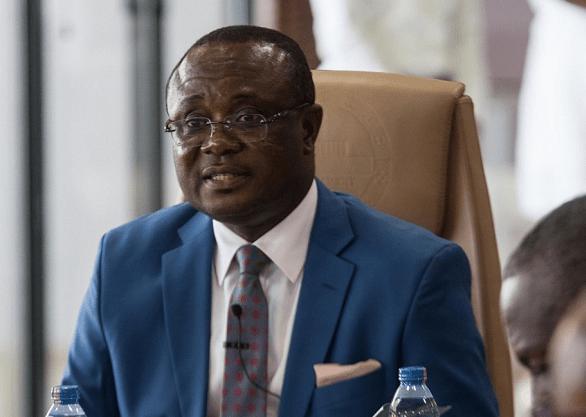
Former First Deputy Speaker Joseph Osei-Owusu says Alan Kyerematen would be welcome to return to the New Patriotic Party as a member but cannot automatically become its presidential flagbearer. Joe Wise says the NPP has already completed its internal selection process, with Dr. Mahamudu Bawumia elected to lead the party into the 2028 election. His comments follow Kyerematen’s statement that he would consider returning to the NPP if invited to lead it as flagbearer.
Former First Deputy Speaker of Parliament Joseph Osei-Owusu has said the New Patriotic Party would be prepared to welcome Alan Kyerematen back into its ranks but cannot grant the former Trade and Industry Minister an automatic return as presidential flagbearer, insisting that the party has already completed the process of selecting its candidate for the 2028 general election. Osei-Owusu, popularly known as Joe Wise and currently serving as chairman of the NPP’s Disciplinary Committee, said Kyerematen would have to follow the party’s established procedures for former members seeking readmission and could not bypass an internal electoral process that has already produced former Vice-President Dr. Mahamudu Bawumia as the NPP’s next presidential candidate.
Joe Wise made the remarks while speaking to journalists on the sidelines of an NPP sensitisation programme for constituency secretaries in the Ashanti Region, responding to recent comments by Kyerematen that he would consider returning to the party if invited to lead it as flagbearer. He said he initially regarded Kyerematen’s condition as something of a joke because, in his view, the NPP constitution and internal democratic processes do not allow the party simply to replace an elected flagbearer by invitation.
“The party has a channel of electing a flagbearer, and that procedure has been completed,” Osei-Owusu said, according to reports from the programme. He added that the question of Kyerematen seeking the nomination could arise at a future point after Bawumia’s current mandate had run its course, but argued that there was no basis for making him the party’s presidential candidate now without another properly constituted internal process.
His comments followed an interview Kyerematen gave to DW Africa in which the former minister said he would be willing to return to the NPP if he were invited to lead the party into the 2028 election. Kyerematen said such an arrangement would allow him to exercise sufficient influence over the party’s direction and argued that the political principles he now promotes through the United Party could provide the NPP with what he considers a viable path back to government.
Kyerematen’s comments immediately revived discussion about whether one of the NPP’s longest-serving former presidential aspirants could eventually reconcile with the party he left in 2023 after decades of membership. His departure was one of the most significant internal ruptures the NPP experienced ahead of the 2024 election, particularly because he had previously served as Trade and Industry Minister and contested repeatedly for the party’s presidential nomination.
Kyerematen resigned from the NPP in September 2023 after withdrawing from that year’s presidential primary process. He complained about what he described as intimidation, unfair treatment and a political environment that had become hostile to his supporters. The NPP rejected several of those criticisms, but Kyerematen proceeded to launch his Movement for Change and later contested the 2024 presidential election as an independent candidate under the movement’s banner.
His departure ended a long association with the NPP that stretched back to the party’s formative years and included repeated attempts to become its presidential candidate. Kyerematen was widely known within the party as “Alan Cash” and for years represented one of the most recognisable alternatives to the leadership blocs that eventually coalesced around former President Nana Addo Dankwa Akufo-Addo and later Bawumia.
Since the 2024 election, Kyerematen has taken further steps to build an independent political organisation, eventually establishing the United Party. His new political vehicle has sought to position itself outside the traditional rivalry between the NPP and the National Democratic Congress, with Kyerematen arguing that Ghana requires a political and economic model different from those offered by the two parties that have alternated in government since the beginning of the Fourth Republic.
During his recent DW Africa interview, Kyerematen nevertheless left the door open to a possible NPP return under a highly specific condition. Asked whether he would accept an invitation to return as the NPP’s flagbearer, he responded affirmatively and argued that leadership of the party would give him the control necessary to implement the ideas he believes could return the NPP to power.
That position has created an obvious procedural problem because the NPP has already chosen its 2028 presidential candidate. On January 31, 2026, more than 190,000 party delegates participated in a nationwide presidential primary supervised by the Electoral Commission, and Bawumia emerged with 110,643 votes, representing about 56.5 percent of valid ballots cast.
Kennedy Ohene Agyapong finished second with 46,554 votes, while former Agriculture Minister Dr. Bryan Acheampong placed third with 36,303. Former Education Minister Dr. Yaw Osei Adutwum and former party General Secretary Kwabena Agyei Agyepong finished further behind. Because the party’s constitution requires a winning candidate to receive more than 50 percent of valid votes, Bawumia secured the nomination outright without the need for a runoff.
The Electoral Commission subsequently declared Bawumia duly elected as the NPP’s presidential candidate for the 2028 general election. That result gives Joe Wise’s position a clear procedural foundation: the flagbearer position is not currently vacant, and replacing Bawumia would require circumstances and party procedures far more substantial than an informal invitation to Kyerematen.
Osei-Owusu therefore separated the question of Kyerematen’s possible return to membership from the question of presidential leadership. On membership, he adopted a considerably more welcoming tone, acknowledging the former minister’s long years of service and saying the party needs additional members rather than fewer people.
“Alan Kyerematen has duly served the party in so many ways, so if he comes, we will accept him,” Joe Wise said. His statement suggests that influential figures within the NPP are not necessarily opposed to reconciliation with Kyerematen despite the acrimony surrounding his departure three years ago.
However, readmission would itself have to take place under party rules. The NPP has procedures governing members who resign, defect or otherwise cease to belong to the party and later seek a return. Joe Wise said Kyerematen should use those mechanisms if he is genuinely interested in rejoining rather than conditioning his return on being immediately handed the presidential nomination.
The issue is politically sensitive because reconciliation with Kyerematen could potentially help the NPP rebuild support among voters and activists who followed him out of the party during the 2023 split. His breakaway movement attracted some former NPP supporters, particularly people who believed the internal presidential contest had been tilted against him, even though his eventual performance in the 2024 election did not approach that of the two dominant parties.
For the NPP, which lost power in the 2024 general election and is attempting to reorganise ahead of 2028, internal unity has become a recurring theme. Bawumia himself called for reconciliation immediately after winning the January 2026 primary, urging supporters of rival aspirants to put aside grievances and accept the choice made by delegates.
The party has since undertaken organisational reforms, constitutional amendments and grassroots engagement as it attempts to recover from its electoral defeat. Delegates at the NPP’s October national conference in Kumasi approved a series of constitutional changes affecting party leadership, executive structures and the relationship between the flagbearer and party organisation.
Those reforms reinforce the importance the NPP places on formal internal procedures, making it difficult for senior officials to publicly support any proposal that would effectively overturn the presidential primary. Even if Kyerematen retained considerable goodwill among portions of the membership, Bawumia’s January victory gives him a direct mandate from delegates to lead the party into 2028.
The debate also raises a broader question about whether Kyerematen genuinely intends to return to the NPP or is using the possibility strategically to make a larger political argument. His statement to DW Africa was not an announcement that he had applied for readmission. Instead, he responded to a hypothetical question by saying he would accept an invitation if the party offered him its presidential leadership.
At the same time, he maintained his commitment to the United Party and said its values represented what he believes Ghana requires. That creates a potentially contradictory political position: Kyerematen is building a separate party while simultaneously indicating that he could return to the NPP if offered control of its presidential ticket.
Joe Wise’s response effectively closes that particular pathway for now. His message is that the NPP may be open to restoring Kyerematen’s membership but is not prepared to disregard the result of the presidential primary or subordinate the party’s procedures to the demands of a returning former member.
The former First Deputy Speaker also suggested that the situation could be different in the future. He said that after Bawumia completes the mandate for which he has been elected, Kyerematen could potentially return and participate in whatever process the party establishes for selecting its next presidential candidate. Whether he could eventually run unopposed would then depend on the circumstances at the time rather than an agreement made now.
That distinction allows Joe Wise to leave open the possibility of long-term reconciliation without undermining Bawumia’s current leadership. It also avoids framing Kyerematen as permanently excluded from the NPP’s presidential ambitions if he chooses at some point to return and compete under party rules.
Bawumia’s own political position is central to the discussion. Having led the NPP into the 2024 election and subsequently retained the confidence of delegates in the January 2026 primary, he remains the party’s recognised presidential candidate for 2028. Any suggestion that Kyerematen could simply be substituted would therefore challenge not only party rules but the votes cast by nearly 200,000 delegates.
That explains why Joe Wise described the demand as unacceptable even while speaking positively about Kyerematen’s record in the party. The two positions are not necessarily inconsistent: the NPP can value a former member’s contribution and welcome reconciliation without conceding the presidential nomination as a condition of his return.
Kyerematen’s departure in 2023 remains important to understanding the current exchange. He withdrew from the NPP’s presidential race after the party’s special electoral college narrowed the field of aspirants and alleged that the internal environment was characterised by intimidation and unequal treatment. He subsequently resigned from the party and accused its leadership of departing from some of the traditions he believed had originally defined the NPP.
The NPP strongly disputed the implication that its presidential process lacked legitimacy. Bawumia ultimately won the November 2023 primary and represented the party in the 2024 general election, which the NPP lost to the National Democratic Congress under John Dramani Mahama.
Kyerematen, campaigning independently, sought to present himself as an alternative to both major parties and promoted what he called a Great Transformational Plan for Ghana’s economy. His Movement for Change later evolved into a broader political project and ultimately into the United Party.
His willingness even to discuss an NPP return therefore indicates that the political relationship between him and his former party remains unresolved rather than completely severed. It also reflects the fluidity of Ghanaian party politics, where former rivals and defectors frequently return to their original parties after periods of disagreement.
For the NPP, however, readmitting such a prominent figure would create both opportunities and complications. Kyerematen could bring back supporters who left with him, particularly in the Ashanti Region and among older NPP activists familiar with his decades of service. At the same time, his return could revive internal rivalries that the party has been trying to settle following Bawumia’s latest victory.
There is also the question of the United Party and what would become of the political organisation Kyerematen has built if he returned to the NPP. His supporters joined that project partly because of dissatisfaction with the traditional parties, and some may resist any attempt to fold their organisation back into the NPP.
Kyerematen himself has argued that the values of his new party should shape any future political arrangement. That suggests a return, if it ever occurs, would likely involve negotiations over policy and organisational influence rather than a simple restoration of his previous membership.
Joe Wise’s comments make clear that one demand is not currently negotiable: the NPP’s 2028 presidential candidacy. The party has already completed that process, and Bawumia holds the mandate.
The former First Deputy Speaker’s position also reflects his current role as chairman of the NPP Disciplinary Committee. That committee is responsible for questions of party conduct and internal discipline, making his comments on the formal procedure for re-entry particularly relevant, although any ultimate decision involving Kyerematen would likely require engagement with broader party leadership structures.
The exchange may therefore become the beginning of a longer conversation about reconciliation rather than the final word. Neither Kyerematen nor the NPP has announced formal negotiations, and there is currently no indication that he has submitted an application to rejoin.
Until that happens, the discussion remains political rather than administrative. Kyerematen has publicly stated the circumstances under which he would consider returning, and Joe Wise has publicly stated that the condition cannot be satisfied under the party’s current arrangements.
The controversy also offers an early glimpse of how opposition politics could evolve before 2028. The NPP is attempting to consolidate behind Bawumia, while Kyerematen is attempting to establish the United Party as a credible third force. Whether those projects remain completely separate or eventually intersect could affect opposition strategy against the governing NDC.
Any potential alliance would involve more than personalities. Kyerematen has criticised both the NPP and NDC and argued that Ghana needs a political system less dominated by the two-party rivalry. Returning to the NPP without significant changes could therefore expose him to accusations of abandoning the very alternative project he has spent years trying to build.
Conversely, staying outside the NPP requires the United Party to demonstrate that it can develop nationwide structures, attract candidates and compete effectively against parties with decades of organisational infrastructure. The choice carries political risks whichever direction he takes.
For Bawumia, the discussion reinforces the need to maintain internal legitimacy and unity. He won the 2026 primary convincingly but still faced significant support for Kennedy Agyapong and Bryan Acheampong, meaning the party contains multiple influential blocs whose cooperation will be necessary for a competitive 2028 campaign.
Reintroducing Kyerematen as another major figure could either broaden that coalition or complicate it further. Much would depend on the terms of any reconciliation and whether supporters of the current flagbearer believed his authority was being challenged.
Joe Wise appears determined to avoid that ambiguity. His remarks distinguish clearly between welcoming Kyerematen home and reopening a presidential contest the party considers finished.
That position is likely to resonate with party members who believe internal democracy requires unsuccessful aspirants and returning members to respect the decisions of delegates. It may be less persuasive to Kyerematen supporters who believe his political experience and economic proposals justify a special arrangement.
Ultimately, the dispute is about both procedure and power. Kyerematen says he would consider returning if he can lead; the NPP says leadership must be earned through the party’s established electoral process, and that process has already selected someone else for 2028.
For now, Mahamudu Bawumia remains the NPP’s duly elected flagbearer after winning 110,643 votes in January’s nationwide primary. Alan Kyerematen remains founder and leader of the United Party and has not formally rejoined the NPP.
Joe Wise’s intervention therefore leaves the political door open but closes the presidential one, at least for the current electoral cycle. The former Trade Minister, he says, can come back to the party he helped build and would be welcomed for his years of service, but he cannot return on the condition that a flagbearer position already awarded through an internal election be handed to him.
Whether Kyerematen is willing to separate those two questions will determine whether the latest exchange develops into a genuine reconciliation process or remains another chapter in the political split that began in 2023.