2027: ATIKU, PETER OBI, MAKINDE AND OTHER OPPOSITION LEADERS SET TO SIGN UNITY PACT TO CHALLENGE TINUBU
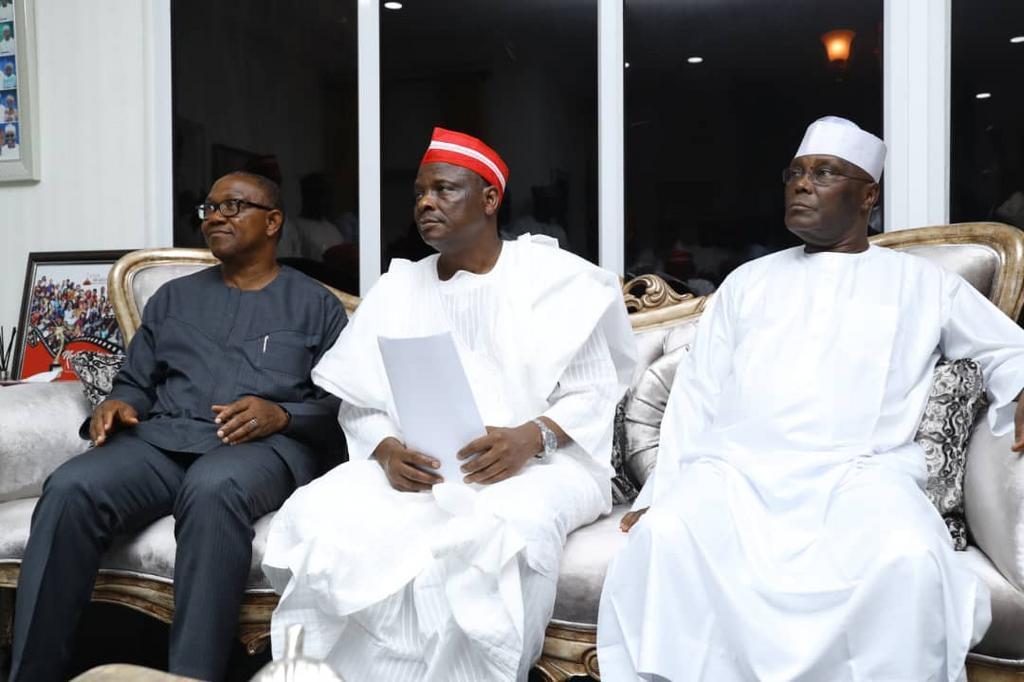
Former Vice President Atiku Abubakar, former Anambra State Governor Peter Obi, Oyo State Governor Seyi Makinde and other opposition presidential candidates are expected to meet at the NAF Conference Centre in Abuja on Monday, November 30, 2026, to formalize political cooperation ahead of Nigeria's January 16, 2027, presidential election. The summit, organized by the Coalition for Democracy, will bring together the ADC, NDC, APM, PRP, SDP and a faction of the PDP to consider three major documents addressing opposition unity, democratic renewal and national reforms. Although the alliance is intended to establish a common political front against President Bola Tinubu, disagreements concerning presidential ambitions and candidate selection remain unresolved, while the ruling APC has dismissed suggestions that the proposed coalition will undermine its reelection campaign.
Nigeria's opposition political parties are preparing for a major political gathering in Abuja on Monday, November 30, 2026, where former Vice President Atiku Abubakar, former Anambra State Governor Peter Obi, Oyo State Governor Seyi Makinde and other prominent presidential contenders are expected to advance negotiations aimed at establishing a united political front against President Bola Ahmed Tinubu ahead of the 2027 general elections. The proposed agreement represents a renewed attempt by opposition leaders to overcome longstanding political divisions, competing presidential ambitions and institutional disagreements that have complicated previous efforts to establish a common electoral platform capable of challenging the ruling All Progressives Congress.
The meeting, scheduled to take place at the NAF Conference Centre in Abuja under the Coalition for Democracy, will constitute the Second Summit of Nigeria's Opposition Political Parties. Its organizers have indicated that the gathering will move discussions beyond informal consultations and declarations of political cooperation toward written commitments addressing democratic renewal, opposition unity, electoral integrity and national governance reforms. The summit comes less than seven weeks before the presidential and National Assembly elections scheduled by the Independent National Electoral Commission for January 16, 2027.
Salihu Mohammed Lukman, a leading convener of the Coalition for Democracy and a prominent figure within the African Democratic Congress, announced the meeting following deliberations by the coalition's Central Leadership Committee on Wednesday night. According to the communique issued on Thursday, participating political organizations reaffirmed their commitment to cooperation and agreed to suspend their regular campaign activities on Monday to allow their representatives to participate in the summit.
The participating organizations include the African Democratic Congress, the Nigeria Democratic Congress, the Allied Peoples Movement, the Peoples Redemption Party, the Social Democratic Party and a faction of the Peoples Democratic Party. Their involvement brings together political figures representing different ideological traditions, regional interests and electoral constituencies, although the existence of a common political objective has not eliminated disagreements over how the proposed alliance should operate.
Atiku, associated with the ADC presidential ticket, Obi of the NDC and Makinde of the APM are expected to lead their respective political blocs to the gathering. Former Cross River State Governor Donald Duke, the presidential candidate of the PRP, and Adewole Adebayo, representing the SDP presidential ticket, are also expected to participate alongside other party officials and representatives involved in the coalition negotiations.
The summit is expected to consider three principal documents: the National Covenant for Democratic Renewal, the Framework for Opposition Unity and the National Reform Programme. These documents were developed through working groups established following the coalition's inaugural summit at the Yar'Adua Centre in Abuja on August 31, 2026. Their proposed adoption is intended to establish a more structured basis for political cooperation among organizations that have traditionally operated independently and, in several instances, competed directly against one another.
Although Monday's gathering has been described as an important step toward opposition unity, the participating parties have not publicly announced an agreement to withdraw their separate presidential candidates in favor of a single contender. The distinction between signing a political cooperation agreement and formally consolidating presidential candidacies remains one of the most important unresolved questions surrounding the summit. Political cooperation may encompass electoral monitoring, democratic reforms and joint public advocacy without necessarily resulting in a common presidential ticket.
That distinction has become increasingly significant because the parties are approaching the negotiations with separate presidential candidates and running mates already associated with their respective electoral platforms. Atiku's political arrangement involves former Rivers State Governor Rotimi Amaechi, while Obi is running alongside former Kano State Governor Rabiu Musa Kwankwaso under the NDC. Makinde's APM ticket includes Lawal Daura, creating competing political structures whose supporters have already developed expectations concerning their participation in the election.
The existence of separate presidential tickets illustrates the considerable challenge confronting the coalition's organizers. Each candidate has established relationships with party officials, campaign organizations, financial supporters and political constituencies that may have differing expectations about the outcome of negotiations. Reaching a common position would consequently involve decisions extending beyond personal agreements among the leading presidential contenders.
Lukman has acknowledged that distrust among opposition organizations remains an obstacle to deeper cooperation. His previous statements have emphasized that some participating parties are more comfortable working together on electoral integrity and democratic reforms than committing themselves to supporting a presidential candidate from another organization. Those differences indicate that the coalition currently encompasses varying levels of commitment rather than a completely unified political structure.
The proposed agreement is also taking shape within an increasingly restrictive electoral timetable. INEC's revised schedule established August 22, 2026, as the administrative deadline for presidential and National Assembly candidate withdrawals and replacements. Although aspects of the timetable have been the subject of legal debate concerning statutory withdrawal periods, Monday's summit will occur well after the ordinary deadlines associated with changing presidential nominations.
This creates an important distinction between a political endorsement and a formal alteration of the presidential ballot. A candidate may announce support for another contender or suspend campaign activities, but whether that decision can result in removal or substitution on the ballot depends on applicable electoral legislation, INEC procedures and any relevant court orders. The opposition parties will therefore need to consider the legal feasibility of their preferred arrangements rather than relying exclusively on political understandings.
The short period remaining before the presidential election adds further urgency to those discussions. When the participating leaders gather on November 30, only 47 days will remain before Nigerians are scheduled to vote in the presidential and National Assembly elections. That period includes the time required for political organizations to communicate decisions to supporters, resolve internal disagreements and comply with applicable campaign and electoral requirements.
Monday's summit follows several months of consultations that have produced commitments to political cooperation without conclusively resolving questions concerning presidential candidacies. Earlier negotiations identified five proposed documents, including a Single-Term Transition Charter and a Roadmap to a Common Presidential Candidate. However, the latest announcement lists only three documents for adoption, leaving uncertainty concerning whether the omitted proposals have been incorporated into other agreements, postponed or abandoned.
Premium Times previously reported that the working groups established during the August summit had been given a limited period to complete their assignments. Subsequent investigations found that progress had been difficult to establish publicly, with disagreements and competing priorities complicating efforts to produce a comprehensive framework for opposition cooperation. The latest summit announcement indicates that the parties have prepared material for consideration, but the full contents of those documents have not been independently made available for examination.
The proposed National Covenant for Democratic Renewal is expected to address the participating organizations' shared concerns about the condition of Nigeria's democratic institutions. Opposition figures have repeatedly criticized what they describe as increasing concentration of political power, threats to competitive multiparty democracy and shortcomings in the administration of elections. Those concerns have formed part of their public justification for pursuing greater political cooperation.
The ruling APC has rejected allegations that Nigeria's democratic institutions are being deliberately weakened to disadvantage opposition parties. Representatives of the governing party have argued that political defections and changes in party affiliation reflect decisions made by individual politicians and their constituencies rather than an organized effort to eliminate electoral competition.
The disagreements surrounding the condition of Nigeria's democratic institutions are likely to remain prominent during the presidential campaign. Opposition parties maintain that reforms are necessary to protect electoral credibility and ensure meaningful political competition, while the APC has defended its record and rejected suggestions that the governing party is seeking to prevent legitimate opposition activity.
The proposed Framework for Opposition Unity could provide greater clarity concerning how participating parties intend to manage their relationships while maintaining separate political identities. Such an arrangement would differ considerably from the merger that produced the APC in 2013, when several opposition organizations combined their institutional structures to establish a new political party before the 2015 general election.
Makinde addressed that distinction during a recent interview with media personality Chude Jideonwo, confirming that he had participated in discussions with Atiku and Obi concerning possible cooperation against Tinubu. The Oyo governor explained that the emerging arrangement was not intended to reproduce the formal merger that brought together opposition parties ahead of the election that ended the Peoples Democratic Party's sixteen-year control of the federal government.
His remarks indicate that the participating organizations are exploring a form of cooperation that would permit them to preserve their existing political platforms. However, the precise consequences of that arrangement for individual presidential campaigns remain uncertain. Political organizations can establish common positions on selected issues without agreeing to dissolve their structures or abandon their independently nominated candidates.
Makinde's confirmation of discussions with Atiku and Obi has generated considerable public interest because it establishes that consultations have extended to some of the most prominent individuals involved in the presidential contest. Nevertheless, the Oyo governor's acknowledgment of those conversations should not be interpreted as confirmation that he has agreed to withdraw from the election or accept a position within another candidate's proposed administration.
Reports published ahead of the summit suggested that Atiku and Makinde had discussed possible power-sharing arrangements. Punch reported that an unnamed source close to Atiku claimed the negotiations included the possibility of Makinde being considered for the position of Secretary to the Government of the Federation if an opposition administration were eventually established. However, representatives associated with Makinde's political organization disputed suggestions that he was preparing to abandon his presidential ambition.
The reported discussions have therefore introduced additional uncertainty rather than establishing a definitive agreement. Anonymous accounts of political negotiations can provide insight into issues under consideration, but they do not carry the same evidentiary weight as jointly announced decisions or signed documents released by the participating candidates and political parties.
The APM's position remains particularly important because Makinde has publicly maintained his involvement in the presidential contest while acknowledging the need for opposition cooperation. Party representatives have rejected reports suggesting that arrangements for his withdrawal have already been concluded, reinforcing the distinction between exploring possible alliances and formally surrendering a presidential nomination.
The disagreement also reflects continuing discussions surrounding Nigeria's informal arrangements for the geographical rotation of presidential power. President Tinubu, who assumed office in May 2023, comes from the southwestern region of the country. Atiku originates from Adamawa State in the northeast, while Obi comes from Anambra State in the southeast and Makinde from Oyo State in the southwest.
Some political figures maintain that the presidency should remain in southern Nigeria for another term, citing expectations that political leadership should rotate between northern and southern regions. Others argue that political competence, democratic competition and the preferences of voters should determine presidential leadership without imposing geographical restrictions that are not explicitly established by the Constitution.
Nigeria's constitutional framework does not establish a mandatory system requiring the presidency to alternate between the northern and southern regions after specified periods. However, political parties have frequently adopted informal zoning arrangements intended to manage regional representation and address concerns about the distribution of political power within the country's diverse population.
Those arrangements have influenced presidential nominations, party leadership positions and discussions surrounding the distribution of government appointments. Their interpretation has nevertheless generated considerable disagreements, particularly when individual political ambitions conflict with expectations held by regional constituencies or party organizations.
For Atiku, the latest coalition negotiations form part of a lengthy political career that has included several attempts to secure the Nigerian presidency. He served as vice president between 1999 and 2007 under former President Olusegun Obasanjo and subsequently contested presidential elections on different political platforms. His involvement in the proposed alliance reflects longstanding efforts to establish cooperation among opposition organizations and develop a common political approach to national elections.
Atiku's position within the ADC has also been affected by legal disputes concerning the party's leadership and the validity of its presidential nomination process. Earlier in November, a Federal High Court ruling challenged the legality of the leadership structure responsible for his candidacy, generating further uncertainty within the opposition party. The implications of that decision remain dependent on subsequent legal proceedings and the current positions of the relevant electoral authorities.
Those legal questions illustrate how internal political party disputes can have consequences for broader coalition arrangements. An agreement involving a presidential candidate may become more complicated when the validity of that candidate's nomination is simultaneously being contested through judicial proceedings. The participating organizations will therefore need to consider the institutional status of their respective parties alongside negotiations concerning political cooperation.
Atiku's political history includes extensive involvement in both the PDP and the APC, as well as relationships with influential political figures across different regions of Nigeria. His current participation in the ADC-led opposition arrangements represents another chapter in a career characterized by changing party alliances and sustained involvement in national political competition.
Peter Obi approaches the negotiations from a different political background. The former Anambra governor contested the 2023 presidential election under the Labour Party, attracting substantial support among younger voters, urban residents and Nigerians dissatisfied with the established political alternatives. His campaign became one of the most prominent developments in an election that produced a more competitive presidential contest than several previous races.
Obi has emphasized issues including fiscal responsibility, public-sector accountability, investment in education and healthcare, and a transition toward a more productive national economy. His supporters have frequently presented those priorities as central to their involvement in national politics, although the broader political movement associated with his candidacy encompasses individuals holding different views concerning coalition negotiations and potential compromises.
His current political partnership with Rabiu Musa Kwankwaso under the Nigeria Democratic Congress has introduced a new dimension to opposition arrangements ahead of the 2027 elections. Kwankwaso, a former governor of Kano State and former defense minister, contested the 2023 presidential election under the New Nigeria Peoples Party, securing substantial support particularly within Kano and parts of northern Nigeria.
The Obi-Kwankwaso ticket brings together two politicians who pursued separate presidential campaigns in 2023. Their cooperation represents one example of how the opposition landscape has changed since that election, although the arrangement remains distinct from the broader six-party coalition expected to gather in Abuja on Monday.
Lukman has previously acknowledged that the NDC's preference for its existing presidential ticket would need to be considered in any discussions concerning a common candidate. That position demonstrates the significance of established commitments between presidential candidates and their running mates, particularly when coalition negotiations occur after nomination processes and campaign preparations have already advanced.
For the NDC, participation in the wider opposition summit does not necessarily indicate a willingness to abandon its existing presidential arrangement. The party may support cooperation concerning electoral credibility, institutional reforms and other shared objectives while maintaining its separate candidacy. Whether its representatives will consider additional compromises remains dependent on negotiations and decisions formally announced by the organization.
Makinde's involvement introduces another important political dimension because he remains a serving state governor with executive responsibilities in Oyo State. His political experience includes two consecutive terms as governor following his initial election in 2019, during which he developed relationships with party organizations, elected officials and political leaders throughout southwestern Nigeria.
The governor was previously associated with the group of five PDP governors whose disagreements with the party's national leadership became a defining feature of opposition politics during the 2023 electoral period. The group, commonly referred to as the G5, challenged arrangements surrounding the distribution of leadership positions within the PDP and expressed concerns about regional representation.
Those disagreements contributed to the complicated political environment preceding the 2023 presidential election. Members of the group adopted differing approaches toward the contest, demonstrating how internal party disputes can influence broader electoral arrangements even when political leaders nominally belong to the same organization.
Makinde's current involvement in coalition negotiations therefore reflects a political environment in which relationships established during earlier electoral cycles have continued to evolve. His decision to participate in discussions with Atiku and Obi is significant partly because those politicians pursued competing interests during the 2023 election and have since adopted different political platforms.
Donald Duke's expected participation further broadens the gathering's political composition. The former Cross River governor has previously pursued national political ambitions and is associated with the presidential ticket of the Peoples Redemption Party for the 2027 election. His involvement brings another former state executive into discussions concerning the potential relationship between governance reforms and opposition cooperation.
Adewole Adebayo of the Social Democratic Party is also expected to attend, adding another presidential contender whose political organization has maintained its separate identity. The participation of five presidential candidates illustrates the coalition's broad membership, but it also emphasizes the complexity of obtaining agreement among individuals who have independently committed themselves to seeking national office.
The PDP faction participating in the coalition introduces additional organizational challenges. The party has experienced sustained internal disputes involving leadership, candidate selection and relationships with political figures aligned with the federal government. Different factions have advanced competing positions concerning the party's future and its participation in the 2027 presidential election.
Premium Times identified the Tanimu Turaki-led faction as the PDP grouping involved in the Coalition for Democracy. Meanwhile, separate reporting has suggested that political figures associated with Federal Capital Territory Minister Nyesom Wike may pursue arrangements supporting President Tinubu's reelection. The existence of competing tendencies within the PDP means that participation by one faction cannot automatically be described as an agreement representing the entire political party.
Reports concerning factional presidential candidate Sandy Onor have similarly generated disagreements about the possibility of withdrawal or cooperation with the APC. PDP representatives have rejected suggestions that his presidential bid has already been abandoned, demonstrating the continuing uncertainty surrounding the party's internal electoral arrangements.
Those developments highlight an important limitation confronting the coalition. Even where participating leaders agree on common objectives, the authority of their respective organizations to implement those decisions may be affected by leadership disputes, judicial proceedings or competing claims of institutional legitimacy.
The proposed National Reform Programme is intended to provide a policy dimension to the coalition beyond the shared objective of challenging the incumbent president. Establishing common positions on governance could enable participating organizations to identify areas of agreement concerning economic management, institutional reforms, public accountability and the delivery of essential services.
Nigeria's economic circumstances remain central to the wider presidential campaign. President Tinubu's administration has implemented significant policy changes since assuming office, including the removal of petrol subsidies and reforms affecting the foreign exchange market. The government has defended those measures as necessary to address longstanding fiscal pressures, improve economic efficiency and establish conditions for sustainable growth.
Opposition figures have criticized the social and economic consequences of the reforms, citing increases in living costs, transportation expenses and financial pressures affecting households and businesses. They have argued that the administration's approach has imposed substantial hardship without providing sufficiently effective protection for vulnerable Nigerians.
Government officials have maintained that the reforms were required to address inherited economic challenges and that their long-term benefits should be assessed alongside measures intended to support vulnerable communities. The effectiveness of those policies and the distribution of their costs and benefits remain subjects of considerable public and political debate.
For opposition parties developing a common reform programme, the challenge will be establishing whether they agree not only on criticisms of existing policies but also on credible alternatives. Economic proposals concerning taxation, public expenditure, energy pricing and exchange rate management can involve difficult trade-offs, particularly when governments must simultaneously address inflation, employment and public debt obligations.
A comprehensive opposition programme would consequently need to explain how proposed reforms would be financed, implemented and evaluated. General commitments to economic growth, employment creation and accountability may attract public attention, but their practical significance depends on the policies and institutional arrangements through which those objectives would be pursued.
Security is another issue likely to remain prominent in the opposition's wider policy discussions. Nigeria continues to confront significant challenges involving insurgency, kidnapping, banditry, communal violence and organized criminal activity across different regions. These threats have affected agricultural production, transportation, education and the ability of communities to maintain ordinary economic activities.
The Tinubu administration has defended its security policies and highlighted operations undertaken by military and law enforcement institutions. Opposition leaders have questioned whether those measures have produced sufficient improvements in public safety, particularly in communities experiencing recurring attacks and restrictions on movement.
The proposed National Reform Programme could establish common positions on security-sector accountability, institutional coordination and the protection of affected communities. However, the precise policy commitments contained in the document have not been publicly established, making it premature to attribute specific security proposals to the coalition before their release.
The protection of electoral integrity appears to represent one of the areas in which the participating parties have identified a clearer common interest. Earlier coalition statements emphasized cooperation in safeguarding votes, monitoring electoral procedures and promoting confidence in the administration of the election. These objectives could provide a basis for collaboration even where political organizations continue supporting separate presidential candidates.
Opposition parties have raised concerns about the transparency of result management, the independence of electoral institutions and the conduct of security agencies during elections. They have called for procedures capable of ensuring that votes are accurately recorded and that disputes are addressed through transparent legal mechanisms.
INEC has maintained that it is undertaking preparations to conduct the 2027 elections in accordance with Nigeria's constitutional and statutory framework. The electoral commission's responsibilities include voter registration, candidate nominations, electoral logistics, accreditation procedures, vote counting and the declaration of results.
The commission will face scrutiny from political parties, civil society organizations, domestic observers and international partners throughout the electoral process. Public confidence will depend substantially on the accuracy of its operations, the transparency of decisions and the effectiveness of mechanisms available for addressing disputes.
Concerns surrounding electoral integrity have acquired particular significance following Nigeria's 2023 presidential election, which generated sustained disagreements over the administration of the poll. Opposition candidates challenged aspects of the electoral process, including the operation of result transmission arrangements and allegations concerning irregularities in different parts of the country.
Those disputes were subsequently addressed through judicial proceedings. The Presidential Election Petition Court dismissed challenges to Tinubu's victory, and the Supreme Court affirmed his election in October 2023. Although opposition supporters continued expressing concerns about aspects of the election, the judicial decisions established the legal outcome of the contest.
The experience of 2023 remains an important reference point for the current coalition negotiations. That election produced a presidential contest involving several major candidates whose support was distributed across different regions and constituencies. The resulting fragmentation has frequently been cited by opposition figures as a reason for exploring greater cooperation before the next election.
According to the official results declared by INEC in 2023, Tinubu received 8,794,726 votes under the APC, while Atiku secured 6,984,520 votes as the PDP candidate. Obi received 6,101,533 votes under the Labour Party, and Kwankwaso obtained 1,496,687 votes representing the NNPP.
The figures demonstrate that substantial numbers of Nigerians supported different opposition candidates during the election. However, adding the votes received by those candidates does not establish what would have happened if they had contested under a common platform. Voter preferences are influenced by individual candidates, party identities, regional considerations, policy commitments and the circumstances surrounding each election.
An electoral alliance can change those circumstances significantly. Some supporters may accept endorsements made by political leaders, while others may reject arrangements they believe conflict with their preferences. Previous voting patterns therefore provide important historical context but cannot establish the outcome of a hypothetical unified opposition campaign or predict the results of the 2027 election.
Nigeria's presidential electoral requirements also extend beyond obtaining the largest nationwide vote total. Candidates must satisfy constitutional requirements concerning the geographical distribution of electoral support. Consequently, the significance of political cooperation cannot be assessed solely through aggregate vote figures without considering the legal framework governing presidential elections and the distribution of support across the federation.
The participating parties will also need to distinguish national political cooperation from competition in parliamentary and other elections. The presidential and National Assembly elections are scheduled to take place simultaneously, meaning that opposition organizations may be negotiating common objectives while fielding competing candidates in constituencies throughout the country.
Those overlapping contests can complicate agreements because local candidates and party organizations may have interests different from those of their national leaders. An arrangement supporting cooperation at the presidential level does not necessarily resolve disagreements concerning Senate or House of Representatives seats, particularly where participating parties have independently selected candidates and developed separate campaign organizations.
The governorship and state assembly elections scheduled for February 6, 2027, create further considerations. Political organizations may seek to maintain their individual identities and organizational structures because their long-term interests extend beyond the presidential election. Agreements reached in Abuja could therefore have implications for subsequent negotiations concerning electoral competition at state and constituency levels.
The experience of Nigeria's earlier opposition merger provides useful historical context for understanding the current discussions. In 2013, several political organizations combined to establish the APC, creating a common institutional structure ahead of the 2015 general election. The new party subsequently nominated Muhammadu Buhari, who defeated incumbent President Goodluck Jonathan.
That election represented the first transfer of federal executive power from a governing political party to an opposition party through Nigeria's democratic electoral process. The result demonstrated the significance of political competition and the possibility of changing national leadership through constitutional procedures.
However, the circumstances surrounding the current coalition differ substantially from those of the earlier merger. The APC was formally established well before the 2015 presidential election, providing time for organizational integration, candidate selection and preparations under a common political identity. By contrast, the Coalition for Democracy is negotiating cooperation among parties that retain separate structures and have already advanced their presidential campaigns.
Makinde's statement rejecting the idea that the current arrangement should be understood as another formal merger reinforces that distinction. The opposition parties appear to be considering a flexible cooperation framework rather than immediately creating a new political organization. The legal and practical consequences of that approach will become clearer when the proposed documents are released.
The governing APC has responded to the opposition's renewed consultations by expressing confidence in its own political organization and President Tinubu's reelection campaign. Party representatives have dismissed suggestions that the emerging alliance presents a decisive challenge to the incumbent, maintaining that the administration's political relationships and governance record provide a basis for continued public support.
The APC has also pointed to political figures associated with Wike and other opposition backgrounds who have expressed support for Tinubu's continued leadership. Those relationships illustrate that negotiations ahead of the election are taking place across several political platforms rather than exclusively among organizations formally participating in the Coalition for Democracy.
The ruling party's confidence represents its stated political position, not independent evidence concerning the eventual election result. Similarly, the opposition's declarations concerning the possibility of defeating Tinubu should be understood as expressions of its political objectives rather than established assessments of how Nigerians will vote.
Monday's gathering is therefore likely to attract considerable attention from journalists, civil society organizations and voters seeking clarification about the nature of the proposed agreement. The immediate questions concern which documents are ultimately adopted, whether all expected political leaders participate and whether the summit produces a clear position concerning the continuation of separate presidential campaigns.
The availability of the signed documents will be particularly important for determining whether the agreements contain specific obligations or remain broad declarations of political intent. A framework described as binding may have political significance without necessarily creating obligations enforceable through the courts. Its practical effectiveness will depend on its wording, the authority of its signatories and the mechanisms established for resolving disagreements.
The coalition has not publicly established how disputes among participating organizations will be handled if their interests subsequently diverge. Nor has it released comprehensive details concerning whether the proposed framework establishes a permanent leadership structure, joint decision-making procedures or conditions under which individual parties may withdraw from the arrangement.
Those questions are especially relevant because previous opposition initiatives have encountered difficulties arising from disagreements over leadership and candidate selection. Establishing common objectives is often less complicated than resolving disputes over which individuals or institutions should exercise authority within a shared political arrangement.
For Nigerian voters, the significance of the summit will extend beyond the relationships among prominent presidential candidates. The electorate will also be entitled to examine whether the proposed National Reform Programme addresses the economic, security and governance concerns that have dominated public discussion throughout the current electoral period.
Political cooperation focused exclusively on replacing an incumbent administration would leave important questions about the policies of a potential alternative government unresolved. Conversely, a detailed programme without agreement on how participating organizations intend to approach the presidential election may leave uncertainty concerning its electoral significance.
The proposed coalition documents could provide an opportunity to address both dimensions, although their effectiveness cannot be assessed comprehensively before their contents are publicly available. Commitments concerning democratic institutions, electoral integrity and national reforms will require careful examination to establish whether they contain specific proposals, implementation arrangements and mechanisms for accountability.
The presidential election will ultimately remain a decision for Nigerian voters acting within the country's constitutional framework. Neither an opposition summit nor an endorsement among political leaders can substitute for the choices made at polling stations and the lawful procedures through which election results are established.
The parties' ability to conduct their campaigns peacefully, communicate their policy positions accurately and respect electoral procedures will remain important throughout the final weeks before voting. Electoral authorities, security institutions and judicial bodies will also have responsibilities concerning the protection of political participation and the fair administration of the process.
As of Friday, November 27, the six-party coalition had confirmed preparations for Monday's summit and announced three documents intended to formalize aspects of its cooperation. However, no definitive agreement establishing a single presidential candidate had been publicly confirmed, and reports suggesting that particular contenders could withdraw remained disputed or insufficiently substantiated.
For Atiku, Obi, Makinde, Duke and Adebayo, Monday's discussions represent another opportunity to establish whether their separate political organizations can identify a workable basis for cooperation without immediately resolving every disagreement concerning presidential ambitions. The outcome may clarify the extent to which the participants intend to coordinate on electoral integrity, democratic reforms and national policy while maintaining their respective candidacies.
For President Tinubu and the ruling APC, the proposed summit represents a development within an increasingly active presidential campaign. The governing party has publicly dismissed concerns about the opposition's negotiations, while its representatives continue defending the administration's economic and security policies. Those positions will remain subject to public scrutiny as competing political organizations present their respective programmes to Nigerian voters.
With fewer than seven weeks remaining before the presidential election, the Abuja summit is expected to provide greater clarity concerning the direction of Nigeria's opposition movement. The most consequential unresolved issue remains whether participating parties intend to maintain their separate presidential campaigns or establish a wider endorsement arrangement consistent with the existing electoral framework. Until the agreements are signed, published and explained by their participants, the proposed unity pact remains an important political initiative whose full scope and consequences have yet to be established.