MAHAMA HANDS OVER THREE NEW AIRCRAFT TO GHANA AIR FORCE, DEFENDS $60.68 MILLION EXECUTIVE JET PURCHASE AMID OPPOSITION SCRUTINY
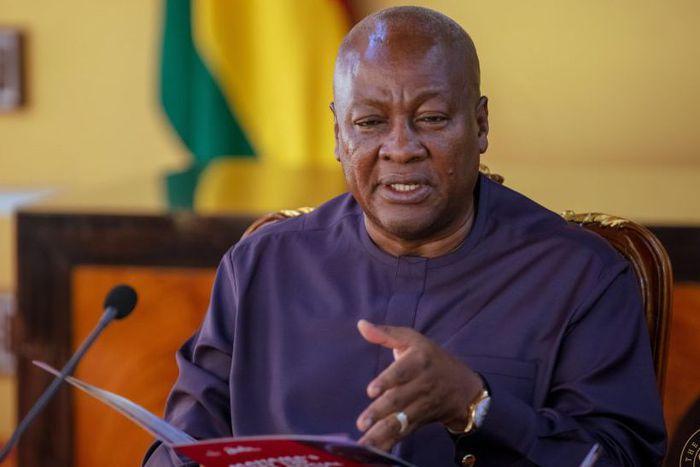
President John Dramani Mahama has officially handed over three newly acquired aircraft to the Ghana Air Force at a ceremony at Burma Camp in Accra on Thursday, November 26, 2026. The aircraft comprise an Airbus ACH175 helicopter, an Airbus ACH160 helicopter and a Dassault Falcon 6X executive jet, acquired under defense procurement agreements approved by Parliament in December 2025. The executive aircraft cost $60.68 million, while the four-helicopter procurement package is valued at approximately €125.97 million, with two additional helicopters expected in 2027. Mahama defended the acquisitions as necessary investments in military modernization, emphasizing that the aircraft were purchased directly from their manufacturers without intermediaries. Meanwhile, the parliamentary Minority, led on the issue by Damongo MP Samuel Abu Jinapor, continues to demand greater transparency concerning the expenditure, financing arrangements and the government's justification for acquiring a new presidential jet.
President John Dramani Mahama has officially commissioned and handed over three newly acquired aircraft to the Ghana Air Force as part of his administration's broader military modernization program, amid continuing opposition scrutiny over the cost and justification of the procurement. The aircraft, comprising an Airbus ACH175 helicopter, an Airbus ACH160 helicopter and a Dassault Falcon 6X long-range executive jet, were formally presented during a ceremony at the Air Force Base in Burma Camp, Accra, on Thursday, November 26, 2026. The acquisitions were undertaken through defense procurement agreements approved by Parliament in December 2025, covering a $60.68 million contract for the executive aircraft and a separate €125.97 million agreement for four helicopters. While the government maintains that the investment is necessary to replace aging military equipment and strengthen Ghana's operational capabilities, the parliamentary Minority has demanded greater transparency concerning the financial arrangements and the administration's decision to acquire a new presidential aircraft.
Speaking during the commissioning ceremony, President Mahama reaffirmed his administration's commitment to equipping the Ghana Armed Forces with modern resources capable of supporting their constitutional responsibilities. He emphasized that military personnel entrusted with protecting the country's sovereignty and territorial integrity deserved appropriate equipment, training and infrastructure to perform their duties safely. The president presented the acquisition as part of a coordinated effort to address longstanding operational limitations within the Armed Forces rather than an isolated investment in executive transportation.
“If a group of people are required to risk their lives in defence of our motherland, the least we can do is to ensure that they are always adequately equipped to carry out this duty,” Mahama said.
The president explained that the newly delivered Falcon 6X would improve Ghana's capacity to undertake long-distance official engagements, while the two Airbus helicopters would enhance the Air Force's ability to meet domestic transportation and operational requirements. He stressed that the aircraft belonged to the Republic of Ghana and would remain under the management of the Ghana Air Force. His remarks sought to distinguish the acquisition of an executive aircraft for official state purposes from the perception that the government had purchased an aircraft exclusively for the personal convenience of the president.
Mahama also announced that two additional Airbus H175 helicopters were expected to arrive in 2027 under the existing procurement agreement. Their eventual delivery would bring the number of helicopters acquired through the Airbus contract to four, completing the planned package of one H160 and three H175 aircraft. Thursday's ceremony therefore represented the delivery of three of the five aircraft covered by the two parliamentary-approved agreements rather than the completion of the entire procurement program.
The president further disclosed that the aircraft had been purchased directly from their respective manufacturers without the involvement of procurement agents. His administration has presented that arrangement as a mechanism for improving accountability, limiting unnecessary intermediary costs and obtaining equipment through established aviation manufacturers. Mahama also indicated that direct acquisition should receive greater consideration in future military procurement arrangements, particularly where the government is capable of negotiating directly with companies responsible for manufacturing the required equipment.
Purchasing aircraft directly from manufacturers can provide opportunities for governments to negotiate technical support, maintenance arrangements, warranty conditions and personnel training within the same contractual framework. However, direct procurement alone does not establish that a transaction represents the best available value for taxpayers. A comprehensive assessment would also require examination of the negotiated price, aircraft configuration, financing conditions, maintenance obligations and other services included in the agreements. Those considerations remain particularly important given the questions raised by opposition lawmakers concerning the government's expenditure.
The ceremony was attended by senior military officers, government officials and other dignitaries. Chief of the Defence Staff Lieutenant General William Agyapong received the aircraft keys before transferring responsibility to the Chief of the Air Staff, Air Vice Marshal Eric Agyen-Frempong. The Air Force leadership described the acquisition as an important development in its continuing modernization and reaffirmed its commitment to maintaining appropriate aviation safety standards.
The formal transfer of the aircraft places responsibility for their management, operation and maintenance within the Ghana Air Force. That responsibility extends beyond ensuring that the newly acquired assets are available for official assignments. It also requires the establishment of appropriate maintenance schedules, technical support arrangements, personnel training and operational procedures capable of preserving their long-term serviceability. President Mahama emphasized that the effectiveness of the investment would depend substantially on how responsibly the aircraft were managed after their delivery.
The most politically contentious component of the procurement remains the Dassault Falcon 6X executive jet, which arrived in Ghana on November 16, 2026. The French-manufactured aircraft was welcomed with a ceremonial water salute in Accra, attracting attention from government officials, military representatives and members of the diplomatic community. Its arrival immediately renewed debate over the necessity of acquiring a new presidential aircraft at a time when many Ghanaians continue to confront economic pressures and demand improvements in essential public services.
The Falcon 6X was acquired under a $60.68 million agreement between the Government of Ghana, represented by the Ministry of Defence, and French aircraft manufacturer Dassault Aviation. Its acquisition is intended to improve the country's long-range executive transportation capacity and replace the aging Falcon 900EX previously used for presidential and other official assignments. The government has maintained that reliable strategic air transportation is important for Ghana's diplomatic engagements and international responsibilities.
For the administration, the new executive aircraft addresses concerns about the availability and reliability of existing government aviation assets. Official international travel frequently requires coordination between diplomatic authorities, aviation personnel and government institutions, particularly when senior national representatives undertake multiple engagements within relatively short periods. The government's position is that establishing reliable state-owned transportation capacity can reduce dependence on alternative travel arrangements while allowing the Air Force to maintain institutional control over official aircraft operations.
However, the parliamentary Minority has questioned whether acquiring a new executive jet at this stage represents an appropriate use of Ghana's public resources. Damongo Member of Parliament Samuel Abu Jinapor has been among the most prominent opposition figures challenging the administration's decision, particularly given the National Democratic Congress's previous criticism of proposals to acquire another presidential aircraft during the administration of former President Nana Addo Dankwa Akufo-Addo.
In a statement published on November 17, Jinapor argued that the government's decision raised questions about the consistency of its political position. He recalled that leading NDC figures had previously criticized plans to acquire a new executive aircraft while maintaining that the country's existing presidential jet remained suitable for official assignments. His criticism centered on whether circumstances had changed sufficiently to justify an expenditure that members of the governing party had previously opposed.
Jinapor also questioned the relatively short period between parliamentary approval of the procurement agreement and delivery of the executive aircraft. He maintained that discussions surrounding the 2026 budget had created an impression that the procurement process could extend over several years. The aircraft's arrival less than a year after Parliament approved the agreement consequently prompted questions from opposition lawmakers concerning the circumstances that enabled the transaction to proceed so quickly.
The government has attributed the accelerated delivery to an opportunity involving an earlier manufacturing allocation. Presidential spokesperson and Minister of State responsible for Government Communications, Felix Kwakye Ofosu, explained that Ghana was able to obtain an earlier delivery position after another customer made its slot available. The explanation addresses the government's account of the procurement timeline, although the opposition has continued demanding comprehensive documentation concerning the transaction.
The Minority has indicated that it intends to pursue the matter in Parliament, seeking clarification regarding the total financial commitment, financing arrangements, procurement procedures and justification for the purchase. Its concerns extend beyond the announced acquisition price to the broader costs that taxpayers may incur throughout the aircraft's operational life. The questions are particularly relevant because purchasing an executive aircraft creates continuing financial obligations associated with maintenance, insurance, crew training, replacement components and other operating expenses.
The $60.68 million contract value should therefore be distinguished from the complete lifetime cost of operating the Falcon 6X. Aircraft acquisition agreements may include different combinations of equipment, technical support, warranties and training services, depending on their contractual terms. Establishing the full cost to the Ghanaian government would require additional information about the specific services included in the purchase agreement and the future expenditure necessary to keep the aircraft operational.
Similarly, the €125.97 million Airbus agreement covers four helicopters rather than only the two presented during Thursday's ceremony. The reported amount should not be interpreted as the purchase price of the two helicopters already delivered. Two additional aircraft remain outstanding under the agreement, and a complete assessment of the helicopter program will depend partly on their eventual delivery and the contractual arrangements governing the entire package.
The distinction between the two contracts is important because they were negotiated in different currencies and involve different manufacturers. Combining their headline values into a single Ghana cedi figure requires a specified exchange rate and an understanding of the dates and conditions under which payments are made. Currency fluctuations could influence the actual domestic financial burden depending on the government's financing arrangements. Without those details, estimates of the overall cedi expenditure should be treated as indicative rather than definitive.
Parliamentary approval of the agreements in December 2025 establishes that the proposed procurements underwent legislative consideration before the aircraft were delivered. However, such approval does not eliminate Parliament's continuing oversight responsibilities concerning the implementation of government contracts. Lawmakers retain legitimate interests in examining expenditure, financing obligations, contractual performance and whether public resources are being used in accordance with approved objectives.
The government's defense of the acquisition also extends to the broader condition of Ghana's military aviation fleet. Officials have identified aging equipment and grounded aircraft as significant challenges affecting the Air Force's operational capacity. Addressing those concerns requires decisions concerning whether existing aircraft should undergo extensive repairs, whether replacement equipment should be acquired and how available resources should be distributed among competing military requirements.
Mahama disclosed during Thursday's ceremony that the government had allocated resources toward restoring grounded aircraft within the existing fleet. The repair initiative includes helicopters, transport aircraft and training aircraft requiring technical attention. The administration has presented those efforts as complementary to the acquisition of new equipment, suggesting that its modernization program involves both replacement and restoration rather than relying exclusively on new purchases.
Restoring grounded aircraft can provide financial and operational benefits where existing assets remain suitable for continued service and repairs can be undertaken economically. However, maintaining older aviation equipment may become increasingly expensive as components become difficult to obtain and technical requirements change. Decisions concerning whether to repair or replace particular aircraft therefore require comprehensive assessments involving safety, operating costs, expected service life and the availability of qualified maintenance personnel.
The newly acquired helicopters are expected to contribute to greater flexibility in Ghana's aviation operations, including transportation and emergency-response activities. Military helicopters can support a range of public responsibilities beyond conventional defense assignments, particularly where difficult terrain, limited road infrastructure or urgent circumstances create a need for aviation assistance. Their practical contribution will depend on their configuration, availability and the operational arrangements established by the Air Force.
Ghana's military aviation infrastructure has also become the subject of increased national attention following concerns about emergency transportation and access to communities located far from major urban centers. During the commissioning ceremony, Mahama disclosed plans to establish at least one airstrip in each of Ghana's regions. The proposed initiative is intended to improve access for medical evacuation, emergency response and national security activities.
The regional airstrip proposal represents a potentially important component of the administration's aviation development strategy because aircraft alone cannot address every transportation challenge. Effective aviation services require suitable infrastructure, trained personnel and arrangements connecting landing facilities with hospitals, emergency services and other public institutions. Establishing regional facilities could improve access to communities that currently depend primarily on road transportation, although implementation would require detailed planning and financial commitments.
The announcement does not establish that construction contracts have already been awarded in every region or that all proposed facilities will become operational within a particular period. The government has not provided a comprehensive public implementation schedule alongside Thursday's aircraft handover. Further information concerning the selection of locations, projected costs and responsibilities for maintaining the proposed airstrips will be necessary to assess the practical scope of the initiative.
The Air Force modernization program also forms part of a wider effort to strengthen Ghana's Army and Navy. Mahama disclosed that the government was pursuing the acquisition of two offshore patrol vessels intended to improve maritime protection and address challenges involving illegal fishing and piracy. Ghana's coastal waters possess substantial economic importance, particularly for communities dependent on fishing, maritime commerce and offshore energy activities.
Effective maritime protection requires cooperation among the Ghana Navy, fisheries authorities and other institutions responsible for monitoring activities within the country's territorial waters. Illegal fishing can threaten marine resources, affect the livelihoods of coastal communities and undermine government efforts to maintain sustainable fisheries. The proposed investment in naval equipment reflects the administration's stated intention to improve institutional capacity for addressing those challenges, although the precise delivery arrangements remain subject to further developments.
Mahama also indicated that the Ghana Army was expected to receive additional vehicles in 2027 as part of efforts to improve transportation and logistical support. The broader modernization agenda includes improvements in military infrastructure, professional training and personnel welfare. These commitments demonstrate that the government's defense investment strategy encompasses several service branches, although the financial implications of the complete program extend beyond the aircraft contracts announced at Thursday's ceremony.
The government's emphasis on military modernization comes amid wider regional concerns about security developments in West Africa. Several countries within the region continue to confront political instability, violent extremism and cross-border criminal activity. Ghana has maintained a comparatively stable democratic environment, but its security institutions remain responsible for monitoring regional developments and protecting communities that could be affected by emerging threats.
Investment in military capability can contribute to national preparedness, but it must also be assessed alongside the government's wider economic and social responsibilities. Ghana continues to face substantial demands for expenditure on healthcare, education, employment initiatives, infrastructure and public debt management. Decisions involving major defense acquisitions consequently attract considerable scrutiny because resources committed to one area of government activity influence the financial capacity available for other priorities.
The administration has defended its defense expenditure by emphasizing the importance of national security to economic development and public welfare. Its position is that stable conditions provide an essential foundation for businesses, investment and the delivery of government services. Opposition lawmakers, however, have questioned whether all components of the procurement program carry equal urgency, particularly the acquisition of the executive jet compared with other military and public service requirements.
That distinction has become central to the political debate surrounding Thursday's handover. The procurement of helicopters capable of supporting operational and emergency transportation requirements presents different considerations from purchasing an aircraft primarily associated with long-range executive travel. Evaluating the justification for each acquisition requires attention to its intended responsibilities, alternatives available to the government and the financial obligations associated with its use.
The historical positions adopted by Ghana's principal political parties have further complicated the controversy. When political organizations move between government and opposition, their responsibilities and access to institutional information can change. Governments may identify operational circumstances that were less apparent during opposition, while opposition parties may question decisions previously defended by their own administrations. Nevertheless, substantial changes in policy positions require clear explanations if political leaders intend to maintain public confidence in their consistency.
For the NDC administration, explaining the specific conditions that made replacement of the existing presidential aircraft necessary will remain important in responding to the Minority's criticism. Relevant considerations could include the condition of the previous aircraft, maintenance expenditure, operational availability and the comparative financial implications of alternative transportation arrangements. Publication of appropriate supporting information could allow the public to examine the government's reasoning without relying exclusively on competing partisan statements.
For opposition lawmakers, the responsibility of parliamentary scrutiny similarly requires examination of documented expenditure and contractual arrangements rather than assumptions concerning the administration's motives. Demanding transparency about public procurement is consistent with legislative oversight, but establishing that a transaction involved wrongdoing requires credible evidence. The questions raised by Jinapor and other Minority representatives do not independently establish that the aircraft agreements were unlawful or improperly administered.
President Mahama thanked Parliament, the Ministries of Defence and Finance, military leaders and technical personnel for their roles in facilitating the acquisitions. He also acknowledged the cooperation of international partners, particularly French President Emmanuel Macron, in supporting the procurement process. The transaction highlights the continuing relationship between Ghana and European aviation manufacturers in supplying equipment for government and military purposes.
The international dimension of the procurement also creates responsibilities concerning technical cooperation and long-term support. Modern aircraft require specialized expertise, and maintaining their availability can depend on access to manufacturer-approved components, training programs and maintenance services. Establishing sustainable arrangements for those requirements will be important in determining whether the Ghana Air Force can obtain the anticipated benefits from the new equipment throughout its operational life.
A major concern for the military leadership will be ensuring that the aircraft remain available for their intended assignments rather than developing the maintenance difficulties associated with portions of the older fleet. Acquiring new equipment provides an opportunity to improve capabilities, but long-term performance depends on disciplined management and predictable funding for maintenance. The Chief of the Air Staff's assurance concerning aviation safety will therefore need to be supported by consistent technical standards and institutional oversight.
The introduction of new aircraft can also require additional professional training for aviation personnel responsible for flight operations, engineering and technical administration. Such training forms an essential component of integrating new equipment into an existing aviation organization. Appropriate certification, access to maintenance documentation and continuing professional development contribute to the safe and effective management of aircraft over extended periods.
Several questions remain unresolved following Thursday's ceremony, particularly concerning the complete financing arrangements associated with the two procurement agreements. Although reported contract values have established the headline acquisition commitments, the complete payment schedules, long-term operating costs and detailed contractual support provisions have not been independently established in the available public reporting. Additional parliamentary disclosures could provide a more comprehensive understanding of the financial obligations associated with the acquisitions.
The government must also complete the delivery of the remaining two helicopters expected in 2027 while continuing its wider military restoration and modernization program. The eventual availability of those aircraft will represent an important milestone in the implementation of the Airbus agreement. Progress on regional aviation infrastructure, naval procurement and Army transportation improvements will provide further indications of whether the administration's wider defense commitments are being translated into operational assets.
For Ghanaian taxpayers, the significance of the procurement will ultimately depend on more than the successful delivery of three aircraft or the government's assurances concerning direct purchasing arrangements. The public has a legitimate interest in understanding the financial commitments involved, the purposes for which the aircraft are used and whether their acquisition produces measurable improvements in national transportation and defense capacity. Parliamentary oversight and transparent financial reporting will remain essential to establishing whether those objectives are achieved.
Thursday's handover marks a significant development in Ghana's efforts to address aging military aviation infrastructure and establish more reliable air transportation capabilities. The government has defended the acquisitions as necessary national investments, while the parliamentary Minority continues to question the cost, timing and consistency of the decision to purchase a new executive aircraft. Those competing positions will require further examination through official documentation and legislative scrutiny rather than political assurances alone. As the Ghana Air Force assumes responsibility for the new aircraft, the enduring measure of the investment will be whether the assets are managed safely, used responsibly and maintained in a manner that delivers lasting value to the Republic of Ghana.