PRESIDENCY ADMITS TINUBU NEEDS MORE MEDIA ENGAGEMENTS AFTER GRANTING ONLY ONE FORMAL INTERVIEW TO NIGERIAN JOURNALISTS SINCE TAKING OFFICE
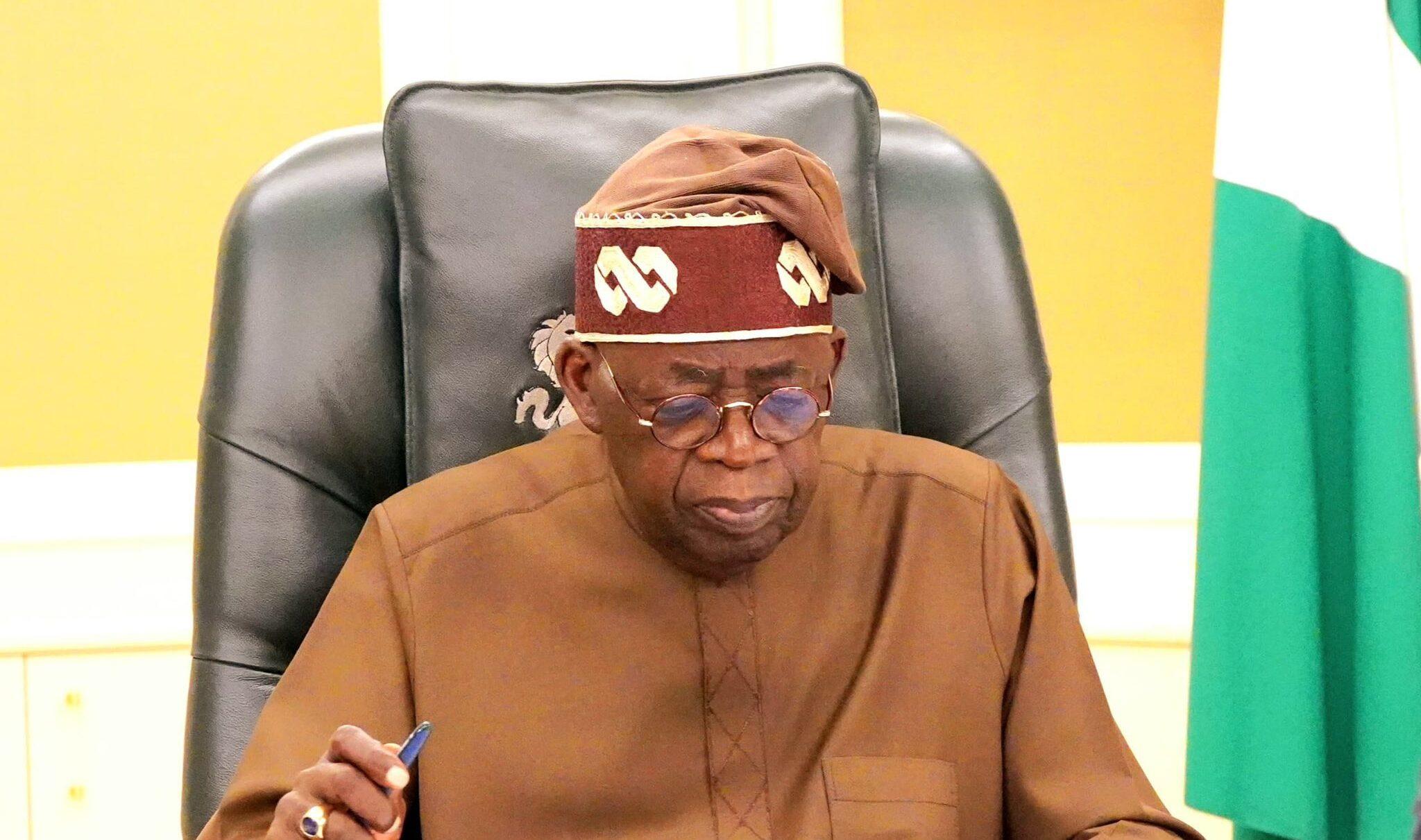
The Presidency has acknowledged that President Bola Ahmed Tinubu needs to engage more frequently with Nigerian journalists after granting only one formal interview to domestic media organizations since assuming office in May 2023. Presidential media adviser Daniel Bwala, speaking on the Niger Unfiltered podcast released on November 26, 2026, disclosed that some previously proposed interviews had been postponed and maintained that Tinubu was willing to participate in additional media engagements. His remarks followed criticism of the president's November 17 interview with American political strategist Diana London and former Vice President Atiku Abubakar's demand for a live, unscripted interview with Nigerian journalists. Although Bwala indicated that greater media engagement could occur during a possible second term, he defended the Presidency's authority to choose interviewers and did not announce a specific date for another presidential media chat.
The Presidency has acknowledged the need for President Bola Ahmed Tinubu to engage more frequently with Nigerian journalists following growing criticism over his limited participation in formal media interviews since assuming office on May 29, 2023. Daniel Bwala, Special Adviser to the President on Media and Policy Communications, disclosed that the president was willing to grant additional interviews to local media organizations, while defending the administration's authority to determine which journalists and platforms it engages. Speaking during an episode of the Niger Unfiltered podcast released on Thursday, November 26, 2026, Bwala addressed questions surrounding Tinubu's record of granting only one formal interview to Nigerian media organizations during his approximately three and a half years in office.
The acknowledgment follows controversy surrounding Tinubu's recent interview with American political strategist and media personality Diana London at the Presidential Villa in Abuja. The engagement attracted criticism from Nigerians who questioned why the president had granted access to a foreign media personality while rarely making himself available for extensive questioning by journalists working within the country. The controversy has subsequently developed into a wider debate about presidential accountability, press freedom, government transparency and the relationship between political leaders and domestic media organizations ahead of the 2027 general elections.
Responding to questions about whether the president's limited engagement with Nigerian journalists was sufficient, Bwala acknowledged that the administration should improve its approach. He indicated that Nigerians could expect greater presidential media engagement in a possible second term, although he did not announce a date for another interview before the forthcoming election. His remarks represent an acknowledgment that the existing level of direct interaction between the president and local journalists could be expanded, even as the Presidency continues to defend its broader communication strategy.
“I expect us to do more. And the second time, you’ll see more of that,” Bwala said during the podcast.
The presidential adviser also revealed that some proposed interviews had previously been postponed despite initial approval from Tinubu. According to Bwala, there had been occasions when the president agreed to participate in media engagements but subsequently reconsidered following advice received shortly before the scheduled interviews. He did not identify the individuals responsible for recommending those postponements or provide details concerning the circumstances that led to the cancellation of particular engagements. The disclosure nevertheless suggests that the limited number of formal interviews was not necessarily the result of an absence of requests from journalists.
Bwala rejected suggestions that Tinubu was unwilling to answer difficult questions or incapable of participating in unscripted discussions. He maintained that the president possessed sufficient knowledge of his administration's activities to respond to journalists without relying on prepared answers. However, the adviser also criticized certain media practitioners whom he accused of political bias and inadequate professionalism, arguing that the Presidency retained the discretion to select journalists it considered appropriate for particular engagements.
The administration's position was further emphasized when Bwala defended its control over the platforms through which presidential interviews are conducted. He maintained that external pressure should not determine which individuals or organizations receive access to the president, insisting that such decisions remained the responsibility of the Presidency. His remarks have introduced an additional dimension to the controversy because the question of media access now extends beyond the frequency of presidential interviews to the criteria used in selecting journalists permitted to conduct them.
Bwala argued that Tinubu's communication with Nigerians should not be assessed exclusively through the number of formal interviews granted since his inauguration. He pointed to the activities of the State House press corps, which includes journalists representing television stations, newspapers, digital platforms and other media organizations. According to the presidential adviser, those correspondents regularly cover Tinubu's official engagements, providing Nigerians with information about the president's activities and government decisions.
However, routine reporting on presidential activities differs substantially from an extensive interview in which journalists have an opportunity to question the president directly. Official statements, speeches and reports concerning government engagements provide important information about the administration's activities, but they do not necessarily offer opportunities for immediate follow-up questions. A formal interview allows journalists to examine policy decisions, request clarification concerning disputed claims and challenge explanations that may not adequately address public concerns.
The debate surrounding Tinubu's media engagement has become more prominent following Diana London's November 17 meeting with the president at the Presidential Villa. Photographs from the engagement showed London alongside Tinubu and his Chief of Staff, Femi Gbajabiamila. The interview was subsequently publicized by individuals associated with the All Progressives Congress, who indicated that the recorded discussion would be released to the public.
London's involvement generated particular attention because of her professional background in political strategy, international communications and lobbying. Some critics questioned whether the engagement represented a conventional journalistic interview or formed part of a broader communications initiative intended to present the Nigerian government's position to international audiences. Those questions became more significant following reports concerning a lobbying arrangement involving the Nigerian government and a United States-based firm.
The controversy intensified after allegations emerged linking London's engagement to a reported $4.5 million lobbying arrangement. Former Vice President Atiku Abubakar subsequently called on the Presidency to clarify the circumstances surrounding the interview and disclose relevant information concerning the reported contract. He also demanded the release of the complete, unedited recording of Tinubu's conversation with London, arguing that Nigerians should be permitted to examine the president's responses without uncertainty regarding the editing process.
London rejected suggestions that she had personally received $4.5 million from the Nigerian government or any individual in Nigeria. In a statement issued on November 19, she explained that her visit involved interviewing Tinubu for a documentary and gaining firsthand experience of the country. Her denial is an important element of the controversy because allegations concerning the value of a wider lobbying contract should not be confused with evidence that the same amount was paid directly to her.
Reports concerning payments involving London's company and a separate American lobbying firm have further complicated discussions about the nature of the engagement. However, the existence of commercial relationships between lobbying organizations does not independently establish that a particular interview was purchased or that the president's participation formed part of an improper financial arrangement. Determining the precise relationship between the reported contracts and the November 17 interview would require examination of the relevant agreements, payment records and other supporting documentation.
Atiku's intervention has added political pressure to the debate surrounding Tinubu's limited participation in interviews with Nigerian journalists. The former vice president challenged the president to submit himself to a live interview involving experienced domestic media practitioners, allowing them to ask questions concerning governance, economic conditions and other matters affecting Nigerians. His representatives maintained that the country possessed journalists capable of conducting rigorous interviews and examining the administration's record without relying on foreign media personalities.
Atiku's criticism must also be understood within the context of his position as a political opponent of the incumbent administration. His demands form part of a wider political debate surrounding government transparency and accountability ahead of the presidential election. Nevertheless, the questions raised concerning public access to national leaders extend beyond the interests of individual political candidates and remain relevant to journalists, civil society organizations and citizens seeking detailed explanations of government policies.
Bwala's response sought to defend Tinubu against allegations that the president deliberately avoids Nigerian journalists while prioritizing foreign media engagements. He referred to the president's previous formal media interview, which was moderated by veteran journalist and former presidential spokesperson Reuben Abati. The adviser also maintained that certain criticisms of London's interview were motivated partly by media personalities who wanted an opportunity to interview the president themselves.
Some of Bwala's strongest criticisms were directed at individuals associated with Arise Television, whom he accused of bias in their coverage of the administration. Those accusations represent the presidential adviser's assessment of the media organization's conduct and should not be treated as independently established findings of professional misconduct. The broader disagreement illustrates the sometimes difficult relationship between political administrations and media organizations that regularly examine government decisions and challenge official explanations.
Tinubu's first formal presidential media chat took place on December 23, 2024, approximately 19 months after his inauguration. The interview was broadcast through national television and radio networks, allowing Nigerians across the country to hear the president respond to questions concerning his administration's economic reforms, governance priorities and other national developments. At the time, the engagement represented an important departure from the predominantly structured speeches and official statements through which the president had communicated with the public.
During that interview, Tinubu defended his decision to remove the fuel subsidy, maintaining that the policy was necessary despite the economic difficulties experienced by households and businesses. He also addressed questions concerning the size of his cabinet, rejecting suggestions that reducing the number of ministers would necessarily improve government efficiency. The discussion covered several aspects of the administration's direction and provided an opportunity for Nigerians to hear the president explain major policy decisions directly.
The December 2024 interview remains particularly relevant because the economic and social circumstances surrounding some of those policies have continued to evolve. Nearly two years have passed since that engagement, during which the government has introduced further initiatives and faced additional questions concerning security, economic development, public expenditure and institutional accountability. Another comprehensive presidential interview would provide an opportunity to examine how the administration assesses the progress of those policies and whether its original expectations have been achieved.
One of the principal subjects likely to feature in any future presidential media engagement is the impact of Tinubu's economic reforms. The administration introduced major changes to fuel subsidy arrangements and foreign exchange policy shortly after assuming office, presenting them as necessary measures to address structural problems within the Nigerian economy. Supporters of those policies have emphasized their potential to improve government finances and establish more sustainable economic arrangements, while critics have highlighted the difficulties experienced by citizens confronting rising living costs.
For many Nigerians, the practical consequences of economic reform are assessed through household purchasing power, employment opportunities, transportation costs and access to essential commodities. Government announcements concerning economic growth or improved revenue may provide important indicators of policy performance, but they do not necessarily explain how those developments affect individuals in different economic circumstances. Direct questioning of the president could provide an opportunity to examine the relationship between national economic indicators and the experiences of ordinary households.
National security represents another issue on which Nigerians may seek detailed explanations from the president. Communities in several parts of the country continue to confront challenges involving kidnapping, insurgency, organized criminal activity and communal violence. The Federal Government has announced various security initiatives, military operations and institutional reforms intended to address those challenges, but questions remain concerning their effectiveness and the conditions experienced by affected communities.
A comprehensive presidential interview could allow journalists to examine the administration's security strategy, the coordination of military and law enforcement institutions and the measures being undertaken to protect vulnerable populations. Such questioning would not necessarily require the disclosure of sensitive operational information. Rather, it could focus on policy objectives, institutional accountability, measurable outcomes and the government's responsibilities toward citizens affected by insecurity.
Public expenditure and the cost of governance also remain important subjects in discussions concerning presidential accountability. Nigerians have continued to debate the financial commitments associated with government institutions, infrastructure projects, official travel and administrative expenses. While ministries and government spokespersons regularly issue statements concerning these matters, direct engagement with the president could provide additional clarity about the priorities guiding federal expenditure.
The importance of presidential media interviews becomes particularly evident during periods of major policy transformation. When governments introduce reforms that affect millions of people, citizens have legitimate interests in understanding the reasoning behind those decisions, the expected benefits and the measures available to address unintended consequences. Regular engagement with journalists provides one mechanism through which political leaders can explain policy developments while responding to concerns that may not be addressed through formal announcements.
However, the role of journalism extends beyond providing a platform for government explanations. Journalists are also responsible for examining the accuracy of official claims, identifying inconsistencies and pursuing information that public institutions may not voluntarily disclose. Effective presidential interviews therefore require sufficient independence to permit meaningful questions and appropriate follow-ups rather than limiting discussion to subjects selected exclusively by government officials.
The Presidency's insistence on determining which journalists receive interview opportunities raises broader questions concerning how media access should be administered within a democratic system. Government officials ordinarily retain discretion over their schedules and the platforms through which particular announcements are made. There is no general requirement that a president must accept every request for an interview. Nevertheless, decisions concerning media access can influence the diversity of questions presented to political leaders and the extent to which different sections of society are represented in public discussions.
Where access is concentrated among media organizations perceived as sympathetic to an administration, concerns may arise about whether difficult policy questions receive sufficient attention. Conversely, government officials may object to interviews they believe are conducted unfairly or primarily intended to generate political controversy rather than inform the public. Reconciling those competing concerns requires adherence to professional standards, transparency about interview arrangements and respect for the independence of journalists.
Nigeria's constitutional framework recognizes freedom of expression and the role of the press in holding government accountable. Section 22 of the Constitution establishes responsibilities for the press, radio, television and other mass media agencies to uphold constitutional objectives and highlight the government's accountability to citizens. Section 39 also provides protections concerning freedom of expression and the receipt and communication of information, subject to applicable legal limitations.
These constitutional principles do not establish a fixed schedule of mandatory presidential interviews, but they provide important context for assessing the relationship between government institutions and independent media. A democratic system benefits from opportunities for citizens to obtain information concerning public decisions and for journalists to examine the conduct of individuals exercising governmental authority. Presidential interviews represent one of several mechanisms through which those objectives can be pursued.
Nigeria's media industry has historically played a significant role in national political development, including the struggle for independence, opposition to military rule and the restoration of civilian government. Journalists and media organizations have contributed to public debates concerning corruption, constitutional rights, electoral integrity and the conduct of government institutions. That history provides additional significance to contemporary disagreements over the access granted to Nigerian journalists by individuals occupying the country's highest political office.
Tinubu's own political background is closely connected to the country's struggle for democratic governance during the military era. Following the annulment of the June 12, 1993, presidential election, he became associated with political movements advocating the restoration of civilian government. His administration's contemporary relationship with independent media therefore attracts particular attention from individuals who regard press freedom and public accountability as important components of the democratic institutions that emerged after military rule.
The development also highlights the changing nature of political communication in the digital age. Presidents and other public officials increasingly communicate through social media platforms, prerecorded videos, official websites and digital statements that allow information to reach large audiences without passing through traditional media organizations. These platforms can improve the speed with which governments communicate decisions, particularly during emergencies or major policy announcements.
However, direct digital communication does not perform every function associated with independent journalism. Government-controlled platforms generally allow officials to determine the content, timing and presentation of their messages. Independent interviews introduce opportunities for external questioning, allowing issues that may not form part of the government's preferred communication priorities to receive public attention. Both forms of engagement can contribute to public information, but their respective functions are not interchangeable.
The approaching 2027 general elections have increased the significance of discussions concerning Tinubu's media accessibility. As an incumbent president seeking another term, he faces public scrutiny concerning his administration's performance since 2023. Opposition candidates are similarly expected to explain their policy proposals, professional records and approaches to the challenges confronting the country. Providing opportunities for journalists to examine the positions of all major presidential candidates would contribute to a more informed electoral debate.
Presidential debates and live interviews can offer important opportunities for voters to compare competing approaches to governance. Unlike campaign advertisements or prepared speeches, such engagements can expose candidates to questions concerning the feasibility of their proposals, inconsistencies in previous statements and the financial implications of their commitments. Their usefulness depends on fair moderation, meaningful questions and the willingness of participants to provide substantive answers.
Atiku's demand for a live interview with Nigerian journalists reflects one aspect of the wider debate concerning how political leaders should communicate with the electorate before voting takes place. However, similar expectations of accessibility and accountability are relevant to all candidates seeking public office. The opportunity to question presidential contenders should not be limited exclusively to the incumbent, particularly where opposition figures are presenting policies that could have substantial consequences for national governance.
Bwala's suggestion that greater media engagement could occur during a second Tinubu administration leaves an important question unresolved concerning the period before the election. While the presidential adviser acknowledged the need for more interviews, he did not provide a specific commitment establishing when Nigerian journalists would next have an opportunity to question the president formally. The distinction between expressing willingness and announcing a scheduled engagement remains significant, particularly given his disclosure that previously proposed interviews had been postponed.
The administration's response to the controversy surrounding Diana London will also remain an important consideration. Atiku and other critics have requested additional information concerning the circumstances of the interview and its possible relationship with reported international lobbying activities. London's denial of receiving the alleged $4.5 million payment has addressed one aspect of the controversy, but it does not independently resolve every question concerning the wider contractual arrangements discussed in public reports.
For the Presidency, arranging another comprehensive interview with Nigerian journalists could provide an opportunity to explain its communication strategy and respond directly to concerns about government performance. Such an engagement would also allow the administration to address questions that have accumulated since the December 2024 media chat. Whether that opportunity materializes will depend on the president's schedule, the decisions of his advisers and the eventual arrangements established with participating media organizations.
For Nigerian journalists, the controversy reinforces the importance of maintaining professional independence while seeking access to political leaders. Rigorous questioning, accurate reporting and fair presentation of official responses remain essential to establishing public confidence in media coverage. Disagreements with government officials should not prevent journalists from examining matters of public interest, just as criticism of government policies should remain grounded in reliable evidence rather than unsupported allegations.
Ultimately, Bwala's acknowledgment establishes that the Presidency recognizes the need for greater direct engagement between Tinubu and the Nigerian media, even while insisting on its discretion over the selection of interviewers. The statement marks an important development in the debate surrounding presidential accessibility, but it does not yet establish a timetable, a format or a confirmed list of journalists for future engagements. Nigerians will therefore have to distinguish between the administration's expressed willingness to conduct more interviews and the practical implementation of that commitment.
As the 2027 elections approach, the significance of presidential media engagement will extend beyond the immediate controversy surrounding Diana London's interview. Citizens will require reliable information about the administration's record, the consequences of its economic reforms, its response to insecurity and its plans for the future. While official statements and routine coverage of presidential activities remain valuable sources of information, opportunities for independent questioning can provide additional insight into the decisions affecting the country. The outstanding issue is whether the Presidency's acknowledgment of the need for greater engagement will translate into regular, substantive interviews through which Nigerians can hear their president respond directly to the questions shaping their lives and the country's political future.