BABANGIDA REAFFIRMS SUPPORT FOR TINUBU’S 2027 RE-ELECTION BID AS ABDULSALAMI CALLS FOR PEACE AND NATIONAL UNITY
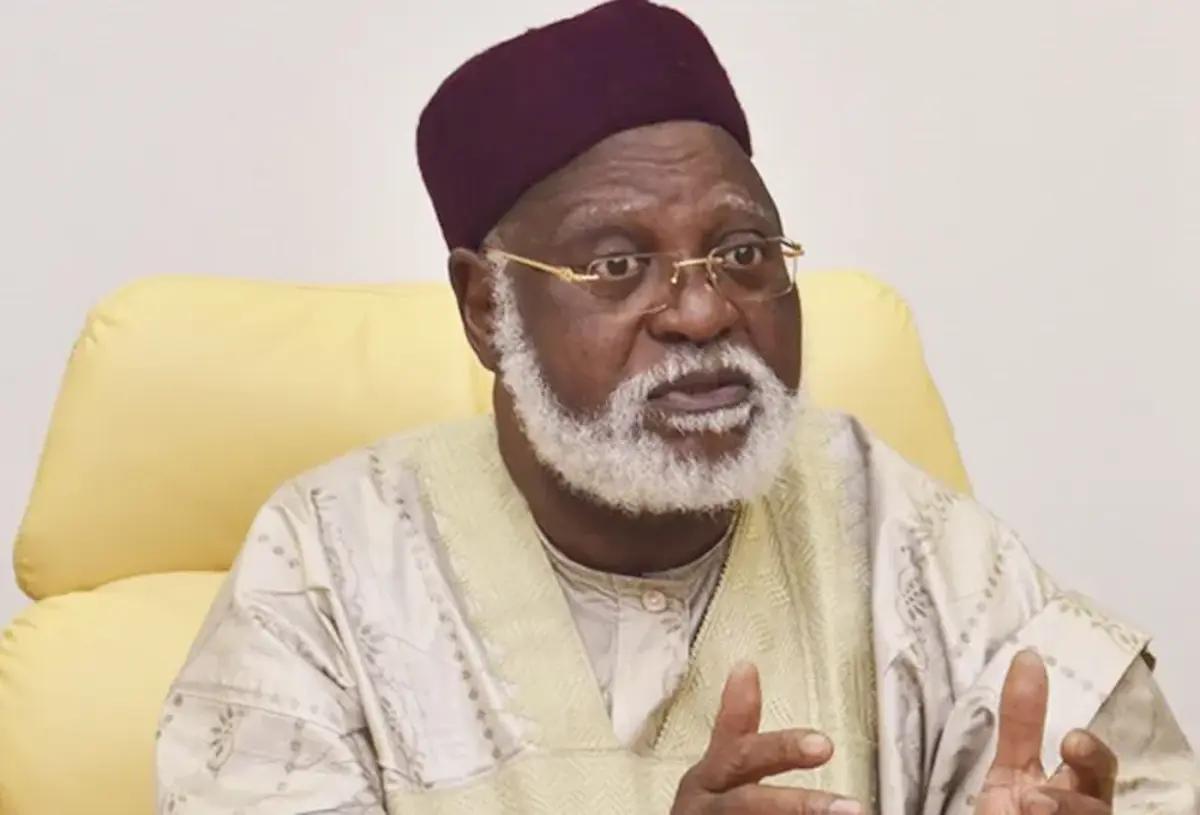
Former Nigerian military President General Ibrahim Badamasi Babangida has reaffirmed his support for President Bola Ahmed Tinubu's second-term ambition ahead of the 2027 general elections, while former Head of State General Abdulsalami Abubakar has commended the administration's efforts and called for national peace and stability. Their remarks come as political parties intensify preparations for the forthcoming elections amid continuing debates over economic reforms, security and governance. Babangida's endorsement adds another prominent voice to Tinubu's re-election campaign, while Abdulsalami's appeal emphasizes peaceful democratic participation and the prevention of electoral violence. His reported commendation of the administration should not, however, be interpreted as a formal presidential endorsement without an explicit declaration.
Former Nigerian military President General Ibrahim Badamasi Babangida has reiterated his support for President Bola Ahmed Tinubu's second-term ambition ahead of the 2027 general elections, adding his voice to the growing political discussions surrounding the president's re-election campaign. The former military ruler's position comes as another former Head of State, General Abdulsalami Abubakar, commended the administration's efforts and emphasized the importance of preserving national peace and stability as the country approaches another electoral cycle. Their remarks have attracted attention because of their longstanding influence within Nigeria's political establishment and their respective roles in shaping the country's transition from military government to civilian democratic rule.
Babangida's renewed expression of support places him among prominent former national leaders who have publicly aligned themselves with Tinubu's second-term ambition. His position carries historical significance given his extensive involvement in Nigerian politics, both during his years as military president and following his departure from office in 1993. Although former military leaders no longer exercise the constitutional authority associated with their previous positions, their public statements frequently generate considerable political interest, particularly during periods of heightened electoral competition.
The former military president's endorsement comes at a time when political organizations across Nigeria are intensifying preparations for the 2027 elections. The ruling All Progressives Congress has continued mobilizing support for Tinubu, while opposition parties are developing their respective campaign organizations and presenting alternative approaches to national governance. Within that increasingly competitive environment, endorsements from former national leaders have become an important component of the wider political conversation, although they do not independently establish how citizens will vote when elections are conducted.
Babangida, who governed Nigeria between August 1985 and August 1993, has maintained relationships with successive generations of political leaders since leaving office. His residence in Minna, Niger State, has frequently served as a destination for politicians seeking consultations with the former military president. Presidential aspirants, governors, party leaders and other influential figures have visited him over the years, reflecting his continuing visibility within the country's political establishment despite his retirement from active government responsibilities.
His renewed backing for Tinubu is particularly noteworthy given the historical relationship between the president's political career and Nigeria's struggle for democratic governance during the military era. Tinubu was elected to the Senate in 1992 under the Social Democratic Party and subsequently became involved in the pro-democracy movement following the annulment of the June 12, 1993, presidential election by Babangida's military administration. The annulment generated a prolonged national political crisis and became one of the most consequential events in Nigeria's modern political history.
The June 12 election, widely regarded as having been won by businessman and politician Moshood Kashimawo Olawale Abiola, became a defining symbol of the country's struggle for democratic representation. Following the annulment, Tinubu participated in political activities associated with the National Democratic Coalition, which campaigned for the restoration of civilian government. The contrasting historical roles occupied by Tinubu and Babangida during that period provide additional context for understanding the significance of their contemporary political relationship.
More than three decades later, Babangida's support for Tinubu reflects the changing relationships that have characterized Nigeria's political landscape since the restoration of democratic government in 1999. Political figures who once occupied opposing positions during the military era have subsequently developed different relationships within civilian politics. However, such realignments do not erase the historical disagreements associated with Nigeria's democratic transition or establish a common interpretation of the decisions made during that period.
General Abdulsalami Abubakar's remarks introduced a separate emphasis on national stability and peaceful electoral participation. The former Head of State commended the administration's efforts while urging Nigerians and political stakeholders to avoid conduct capable of undermining peace ahead of the general elections. His comments reflect his longstanding involvement in initiatives intended to reduce electoral tensions and encourage cooperation among political actors.
Unlike Babangida's explicit expression of support for Tinubu's re-election ambition, Abdulsalami's reported remarks focused principally on the administration's efforts and the importance of maintaining stability. That distinction is significant because praising aspects of a government's performance does not necessarily constitute a formal electoral endorsement. In the absence of an explicit declaration from Abdulsalami supporting a particular presidential candidate, his comments should not be interpreted as establishing that he has adopted an identical political position to Babangida.
Abdulsalami occupies a distinctive position within Nigeria's democratic history because of his role in supervising the transition from military to civilian government between June 1998 and May 1999. Following the death of General Sani Abacha, he assumed leadership of the country and implemented a transition program that culminated in the election and inauguration of President Olusegun Obasanjo. That transfer of power established the foundation of Nigeria's Fourth Republic, which has continued despite numerous political, economic and security challenges.
Since leaving office, Abdulsalami has remained involved in diplomatic engagements, conflict resolution and initiatives supporting democratic stability. His leadership of the National Peace Committee has been particularly important during successive Nigerian election cycles, when the organization has encouraged candidates and political parties to commit themselves to peaceful participation. Those efforts have included facilitating peace agreements intended to discourage inflammatory political rhetoric, intimidation and violence before and after elections.
His appeal for national peace comes against the backdrop of concerns surrounding electoral security in Nigeria. Previous election cycles have witnessed incidents of intimidation, attacks on political gatherings, destruction of election materials and confrontations involving supporters of competing candidates. Such incidents can discourage voter participation, threaten election officials and undermine public confidence in the institutions responsible for administering the electoral process.
The approaching elections will require cooperation among the Independent National Electoral Commission, law enforcement agencies, political organizations and civil society institutions to ensure that citizens can participate without fear. Political leaders possess considerable influence over the conduct of their supporters, making their public statements and responses to disputes important factors in preventing escalation. Calls for peaceful participation are most meaningful when accompanied by appropriate action against individuals responsible for violence, regardless of their political affiliation.
For Tinubu's administration, the remarks from the two former military leaders arrive during a period of extensive debate concerning its economic reforms, security policies and broader governance record. Since assuming office in May 2023, the president has introduced significant policy changes involving fuel subsidies, foreign exchange arrangements and government revenue administration. The administration has presented those measures as necessary to address longstanding structural weaknesses and establish a more sustainable foundation for economic development.
However, the reforms have also generated substantial difficulties for households and businesses confronting increases in transportation expenses, food prices and other essential living costs. Critics have questioned the pace and implementation of government policies, arguing that the economic consequences experienced by ordinary Nigerians require more comprehensive responses. Supporters maintain that difficult adjustments are necessary to address problems that accumulated over successive administrations, while emphasizing the importance of assessing their longer-term economic effects.
The reported comments by Babangida and Abdulsalami contribute to that debate but do not independently resolve disagreements concerning the administration's performance. Political endorsements represent the judgments or preferences of the individuals issuing them, while evaluating government policies requires examination of economic data, public expenditure, security outcomes and the experiences of affected communities. Nigerians retain the right to reach their own conclusions concerning the administration's record.
National security is also expected to remain a major issue throughout the forthcoming campaign. Communities across different parts of Nigeria continue to confront threats associated with insurgency, armed criminal organizations, kidnapping and communal conflicts. Addressing those challenges requires sustained institutional cooperation, effective law enforcement and policies capable of protecting vulnerable populations. Abdulsalami's emphasis on peace therefore extends beyond the immediate conduct of political campaigns to the broader conditions necessary for democratic stability.
The security environment carries particular significance for electoral participation in communities where residents may experience difficulty accessing polling locations safely. Election officials must be able to distribute materials, conduct accreditation and administer voting without interference. Political parties must also be able to communicate with voters and organize lawful campaign activities under conditions that protect their supporters. The government's commitment to peaceful elections will ultimately be assessed through the practical implementation of those responsibilities.
Babangida's endorsement also highlights the continuing influence of former military leaders within Nigeria's civilian political establishment. Several individuals who previously occupied senior military or government positions have remained active in public discussions concerning national policy and political leadership. Their experience can provide historical and institutional perspectives, although their involvement continues to generate debate about the evolving relationship between the country's military past and its democratic institutions.
The authority to choose Nigeria's next president nevertheless rests with eligible voters rather than former national leaders, political organizations or government officials. Endorsements may contribute to public debate and campaign activities, but they cannot replace the constitutional procedures through which political leadership is determined. The credibility of the electoral process depends on citizens being able to exercise their rights independently and on the accurate administration and declaration of election results.
For opposition parties, the emergence of endorsements supporting the incumbent president forms part of the competitive environment in which they must present their own policies and campaign messages. The approaching election provides opportunities for political organizations to examine the administration's record, propose alternative policies and engage citizens concerning their priorities. A peaceful and credible electoral process requires that those opportunities remain available to competing political groups under fair and lawful conditions.
The different emphases expressed by Babangida and Abdulsalami also illustrate the various roles former national leaders can occupy during an election period. Some choose to express explicit support for particular candidates, while others concentrate on institutional stability, national reconciliation and the prevention of violence. Both forms of public engagement can influence political discussions, but maintaining a clear distinction between partisan endorsements and appeals for peaceful democratic participation is essential to accurately reporting their positions.
As preparations for 2027 intensify, attention will increasingly turn toward the conduct of political campaigns and the ability of public institutions to maintain their independence. Electoral competition is expected to generate disagreements over government performance, economic policy, national security and the distribution of public resources. Those disagreements are a normal component of democratic politics, provided they are expressed through lawful activities and do not develop into intimidation or violence.
Babangida's renewed support for Tinubu establishes another public expression of backing for the president's second-term ambition, while Abdulsalami's appeal reinforces the importance of preventing political competition from threatening national stability. The former leaders' interventions carry historical significance because of their respective experiences in government and Nigeria's transition to democratic rule. However, the eventual outcome of the election will depend on the decisions of Nigerian voters rather than the political preferences expressed by prominent individuals.
More than a quarter of a century after Nigeria returned to civilian government, the approaching general elections represent another opportunity to assess the strength of its democratic institutions. Beyond the endorsements, campaign alliances and disagreements that will characterize the contest, the central questions concern the quality of governance, the protection of constitutional rights and the ability of citizens to determine their political future peacefully. Babangida's support for Tinubu and Abdulsalami's appeal for national unity underscore different dimensions of that electoral environment, while the responsibility for ensuring a credible and peaceful process remains with political leaders, public institutions and the Nigerian electorate.