
MAHAMA GRANTS EXECUTIVE CLEMENCY TO 863 PRISONERS AHEAD OF GHANA’S 70TH INDEPENDENCE ANNIVERSARY
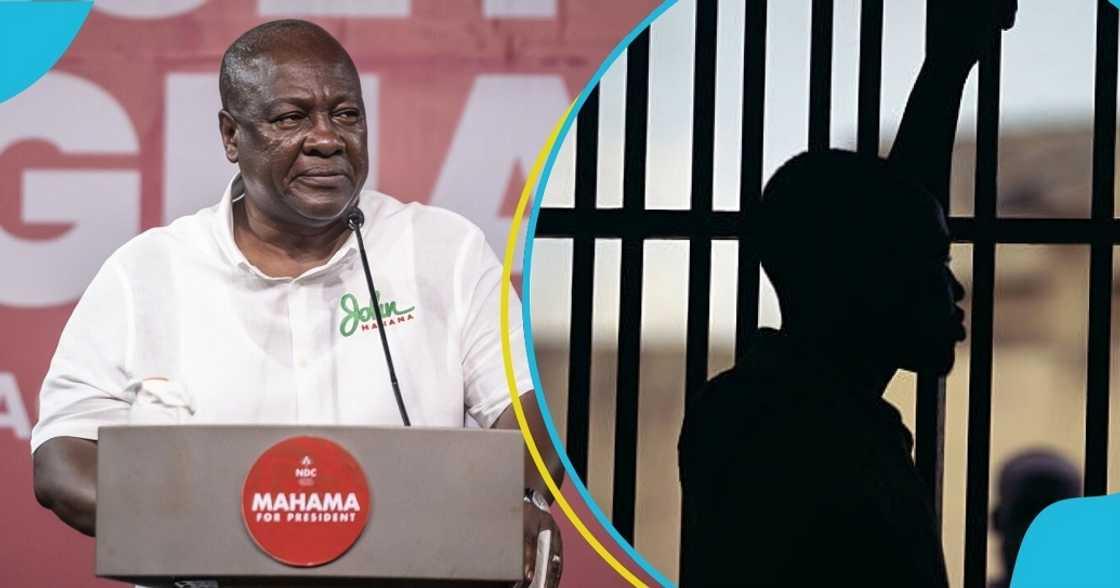
President John Dramani Mahama has granted executive clemency to 863 convicted persons under Article 72(1) of Ghana’s Constitution after consulting the Council of State. 819 first offenders, 13 prisoners aged 70 or above, six seriously ill inmates and two people approved under special recommendations are being released outright. Eleven death sentences have been commuted to life imprisonment, while six life sentences have been reduced to definite 20-year terms. Three cases were approved following petitions and another three fall under an unspecified “others” category. The Presidency says the exercise forms part of activities marking Ghana’s 70th Independence Anniversary.
President John Dramani Mahama has exercised Ghana’s constitutional prerogative of mercy in favor of 863 convicted persons, granting outright releases to hundreds of first offenders and vulnerable inmates while commuting a number of death and life sentences as part of activities marking the country’s 70th Independence Anniversary.
The Presidency announced the decision on October 5, saying Mahama acted under Article 72(1) of the 1992 Constitution after consulting the Council of State. The largest category consists of 819 first offenders who have been granted outright release, making them by far the overwhelming majority of beneficiaries. Thirteen convicted persons aged 70 and above and six seriously ill inmates have also been granted outright release, while two additional prisoners are being released following special recommendations.
The clemency exercise does not mean all 863 prisoners are leaving prison immediately. Eleven people who were serving death sentences will instead have those sentences commuted to life imprisonment, while six people serving life sentences will have their punishment reduced to definite 20-year terms. Three beneficiaries received relief following petitions, and another three fall under an “others” category that the Presidency did not explain in greater detail.
The distinction between a pardon and a commutation is important. An outright pardon can end the punishment imposed after conviction, depending on the terms under which it is granted, while a commutation changes the severity or length of the punishment without necessarily erasing the underlying conviction. In the current exercise, hundreds of beneficiaries are being released, but those whose death sentences were converted to life imprisonment and those whose life terms were reduced to 20 years will remain subject to custodial sentences.
The Presidency described the decision as an act of mercy and national reflection linked to Ghana’s 70th Independence Anniversary, which the country will mark on March 6, 2027. Relevant state institutions have been directed to take the administrative steps necessary to implement the president’s decision, including processing releases and adjusting prison records for those whose sentences have been changed.
Mahama’s authority to take the action is set out directly in Ghana’s Constitution. Article 72 permits the president, acting in consultation with the Council of State, to grant a free or conditional pardon to a convicted person, delay the execution of a punishment, substitute a less severe form of punishment or remit all or part of a sentence, penalty or forfeiture. The provision also requires a report from the trial judge or judges in cases involving a death sentence before the president exercises the prerogative of mercy.
That power is separate from the judicial process that originally convicted the prisoners. The president is not overturning the courts’ findings through an appeal or declaring that the beneficiaries were wrongly convicted. Instead, the Constitution creates an executive mechanism through which punishment can be reduced or ended after conviction for reasons including mercy, humanitarian concerns, age, illness, rehabilitation or other considerations placed before the president and Council of State.
The decision is particularly significant because of the number of first offenders included. The Presidency has not released a detailed public list of all 819 first offenders or the offenses for which they were convicted, but their inclusion suggests the clemency exercise was designed in large part around prisoners considered less likely to present the same long-term risk as repeat offenders or people serving the most serious sentences.
That does not mean first offenders necessarily committed minor crimes. The term describes a person without a previous criminal conviction and does not by itself establish the seriousness of the offense. The practical significance of the category will therefore depend on the screening process used before names were recommended for presidential consideration.
The limited information released so far means there are still important questions about that selection process. The Presidency announced the approved categories and numbers but did not publish individual names, sentence histories, offenses, time already served or the specific criteria used to distinguish those selected from other prisoners who may appear to fall into similar categories.
Presidential clemency exercises generally require careful assessment because the decision affects several interests at once. There is the humanitarian case for giving rehabilitated prisoners a second chance, particularly elderly or seriously ill people and first offenders who have served meaningful portions of their sentences. There are also the interests of victims and families, who may expect transparency where sentences imposed by courts are later reduced or ended by executive action.
That balance becomes especially sensitive in cases involving long sentences, life imprisonment or death sentences. In the current exercise, 11 people sentenced to death have not been released but will no longer face capital punishment, while six people serving life sentences now have definite 20-year terms. The Presidency did not publicly identify the crimes involved in those cases.
The commutation of death sentences also intersects with Ghana’s wider debate over capital punishment. Ghana has moved away from executions in practice for decades, and Parliament has taken steps in recent years to remove the death penalty from portions of the country’s ordinary criminal law, although constitutional and legal questions around capital punishment have not disappeared entirely. The president’s use of the prerogative of mercy provides another route through which individuals on death row can have their punishment converted to life imprisonment.
The clemency decision also comes against the continuing problem of congestion inside Ghana’s prisons. Ghana Prisons Service data cited during Justice for All Programme proceedings earlier this year put the inmate population at more than 13,000 nationwide. As of March 2, the service recorded 13,620 inmates, including 11,875 convicted prisoners and 1,745 people on remand. By March 25, another official count put the total at 13,432, reflecting the normal movement of inmates through the system.
Those figures also show a significant improvement in one area of the criminal justice system. Remand prisoners accounted for roughly 12 to 13 percent of the inmate population earlier this year, far below the levels recorded before the Justice for All Programme began. The initiative uses in-prison court sittings and coordinated case reviews to reduce excessive pretrial detention and resolve cases involving people who may otherwise remain on remand for years.
Even with progress on remand cases, overcrowding remains a major problem in parts of Ghana’s prison system. Some prisons were built decades ago for substantially smaller populations, and officials have repeatedly warned about pressure on accommodation, healthcare, sanitation, food and rehabilitation programs.
Presidential pardons can reduce that pressure temporarily, particularly when hundreds of inmates are released at once, but they are not a substitute for structural prison reform. Overcrowding can return quickly if courts continue sending more people into custody than the prison system can absorb, especially where noncustodial sentencing, parole, rehabilitation and reintegration mechanisms remain limited.
Mahama has shown interest in prison conditions during his current term. In April, he visited the Nsawam Medium Security Prison with members of the Ringway Assemblies of God Church Men’s Ministry, where he spoke about compassion, rehabilitation and the responsibility of society toward incarcerated people. During the visit, he toured projects including a new 800-capacity remand facility and a poultry project intended to improve self-sufficiency and inmate welfare.
That visit provides broader context for the latest decision because it suggests the administration is looking at both immediate humanitarian interventions and infrastructure pressures within the correctional system. The current pardon, however, is constitutionally distinct from prison-development policy and was formally linked by the Presidency to the coming 70th Independence Anniversary.
Ghana has a long history of presidents exercising the prerogative of mercy on national occasions. Independence anniversaries, Christmas periods and other significant national events have often provided the setting for clemency decisions, particularly involving prisoners regarded as vulnerable, elderly, seriously ill or sufficiently rehabilitated.
Such exercises can be politically popular because they emphasize mercy and second chances, but they can also become controversial when the identity of beneficiaries creates suspicion that presidential power is being used to favor politically connected or high-profile individuals. That is why transparency over the categories and recommendations becomes especially important.
In the current case, the Presidency has released a numerical breakdown but not the complete beneficiary list. That has already created speculation around particular high-profile prisoners, although no individual should be treated as a beneficiary unless the government or another authoritative institution confirms it.
The 819 first offenders released outright account for nearly 95 percent of the entire clemency package. Their release is likely to have the most immediate impact on prison numbers, although the exact reduction will depend on whether all administrative processing is completed immediately and whether any beneficiaries are subject to other legal restrictions or sentences.
The 13 elderly prisoners and six seriously ill prisoners form much smaller groups but reflect a humanitarian dimension of the exercise. Keeping very old or gravely ill inmates in prison can impose substantial healthcare and custodial costs, particularly where individuals no longer present the same risk profile they did at the time of sentencing.
That does not automatically make release appropriate in every case. Serious illness or advanced age does not erase the harm caused by an offense, and the Presidency has not disclosed the individual cases. The constitutional structure therefore relies on consultation and case assessment rather than automatic release solely because a prisoner reaches a particular age.
The six life prisoners whose terms are being converted to 20 years face a different outcome. Their sentences become definite rather than indefinite, which may make some eligible for release depending on how much time they have already served and how prison authorities calculate the revised sentence. For others, the change could still mean many years in custody.
The 11 prisoners moving from death sentences to life imprisonment similarly remain incarcerated. Their punishment has been reduced in severity, but they have not been given freedom. The decision removes the possibility of execution under the affected sentences while preserving lifelong imprisonment unless further legal or executive action is taken later.
The three petition-based cases could involve prisoners or their representatives who formally requested clemency, but the government has not disclosed the grounds on which the petitions were approved. The “others” category, also containing three beneficiaries, is even less specific and may attract requests for greater public explanation.
The two beneficiaries granted outright release under special recommendations are similarly not identified in the official statement. Without names or case details, it is not possible to determine whether those recommendations came from prison authorities, medical officials, legal bodies or another institution.
The release process itself will require coordination between the Presidency, Ghana Prisons Service and other justice-sector institutions. Prison authorities will need formal documentation confirming each beneficiary’s status before release or sentence adjustment can be implemented. In cases involving multiple sentences or pending legal matters, additional verification may also be necessary.
The practical effect of clemency therefore does not always occur the moment a presidential statement is issued. Administrative records must match the constitutional decision to ensure that each prison releases the correct person under the correct terms.
For prisoners being released outright, reintegration will become the next challenge. Former inmates often return to communities facing unemployment, social stigma, housing problems and weakened family relationships. Without support, those pressures can undermine rehabilitation and increase the risk of reoffending.
Successful clemency policy therefore depends partly on what happens after release. Skills training, employment assistance, family support and community supervision can determine whether beneficiaries successfully rebuild their lives.
Ghana’s prison system increasingly describes rehabilitation and reintegration as central parts of its mandate rather than treating imprisonment solely as punishment. Vocational training, education programs and prison industries have been developed in several institutions, although resources remain limited compared with the size of the need.
The release of more than 800 first offenders offers an opportunity to examine whether those rehabilitation systems are strong enough to support people returning to society at scale. It could also become an important measure of whether presidential pardons reduce recidivism or merely provide temporary population relief without solving the social conditions that contribute to repeat offending.
The decision also raises a broader question about sentencing policy. If hundreds of first offenders can be considered suitable for outright release through executive clemency, policymakers may examine whether some of those cases could have been handled originally through fines, probation, community service or other noncustodial sanctions rather than imprisonment.
Ghana has been moving gradually toward expanded use of alternatives to incarceration, partly because prisons are expensive and often poorly suited to low-risk offenders. Keeping a first-time offender in a congested prison can sometimes expose that person to hardened criminal networks while disrupting employment and family stability.
That does not mean incarceration is inappropriate for every first offender, particularly where the offense is serious. It does suggest that the criminal justice system benefits from a wider range of sentencing options capable of distinguishing between offenders who require long-term imprisonment and those who may be better managed through supervised alternatives.
The current clemency exercise may therefore have an impact beyond the individual prisoners involved. It draws attention to prison overcrowding, the treatment of elderly and ill inmates, the continued existence of death and life sentences and the wider purpose of punishment within Ghana’s justice system.
It also demonstrates the unusual constitutional nature of presidential mercy. Unlike ordinary sentencing reform, which applies through legislation or judicial decisions, Article 72 gives the president individualized power after conviction while requiring consultation with the Council of State.
That power is deliberately broad. The Constitution allows not only full pardons but also temporary respites, substitution of a less severe punishment and partial remission of sentences. The 863-person decision uses several of those forms simultaneously.
The breadth of the power also creates a corresponding expectation of responsibility. Presidential clemency can correct harsh outcomes, recognize rehabilitation and address humanitarian circumstances, but because it operates outside the ordinary appeals process, its legitimacy depends heavily on transparent criteria and consistent application.
The Presidency’s statement establishes the legal basis and numerical categories for the current exercise but leaves many individual details private. Whether additional information will be released as implementation continues remains unclear.
For the families of those being released, however, the immediate impact is straightforward. Hundreds of convicted people who otherwise would have remained in custody are expected to return home once prison authorities complete the necessary documentation.
For those whose sentences have been commuted rather than canceled, the effect is different but still substantial. Eleven prisoners will no longer face death sentences, and six serving life imprisonment now have fixed terms that could eventually lead to release.
The government has framed the exercise as part of Ghana’s 70th Independence Anniversary, using the milestone to emphasize mercy and national reflection. That symbolism gives the decision a commemorative purpose, but its consequences are concrete for prisoners, their families, victims and the justice system.
The immediate implementation will show how quickly the 819 first offenders, 13 elderly inmates, six seriously ill prisoners and two special-recommendation cases are released. The government may also face pressure to disclose more information about the petition cases, the unspecified “others” category and the standards used to select beneficiaries.
The longer-term question is whether the clemency exercise becomes part of a broader strategy for reducing unnecessary imprisonment and improving rehabilitation or remains principally a one-time anniversary measure. Ghana has made progress in reducing the proportion of remand prisoners, but overcrowding and prison conditions remain persistent concerns that executive pardons alone cannot resolve.
Mahama’s decision provides immediate relief to hundreds of prisoners and reduces the severity of punishment for several others, but it also places renewed attention on the balance between mercy, accountability and public confidence in the justice system. The constitutional authority behind the decision is clear, and the Presidency has provided the overall beneficiary breakdown; what will matter next is transparent implementation, effective reintegration of those released and continued reform of the conditions that leave Ghana’s prisons under pressure even after large clemency exercises.