
MEDIA WORKER, JOURNALIST REMANDED OVER ALLEGED GH¢800,000 FRAUD TARGETING U.S.-BASED GHANAIAN
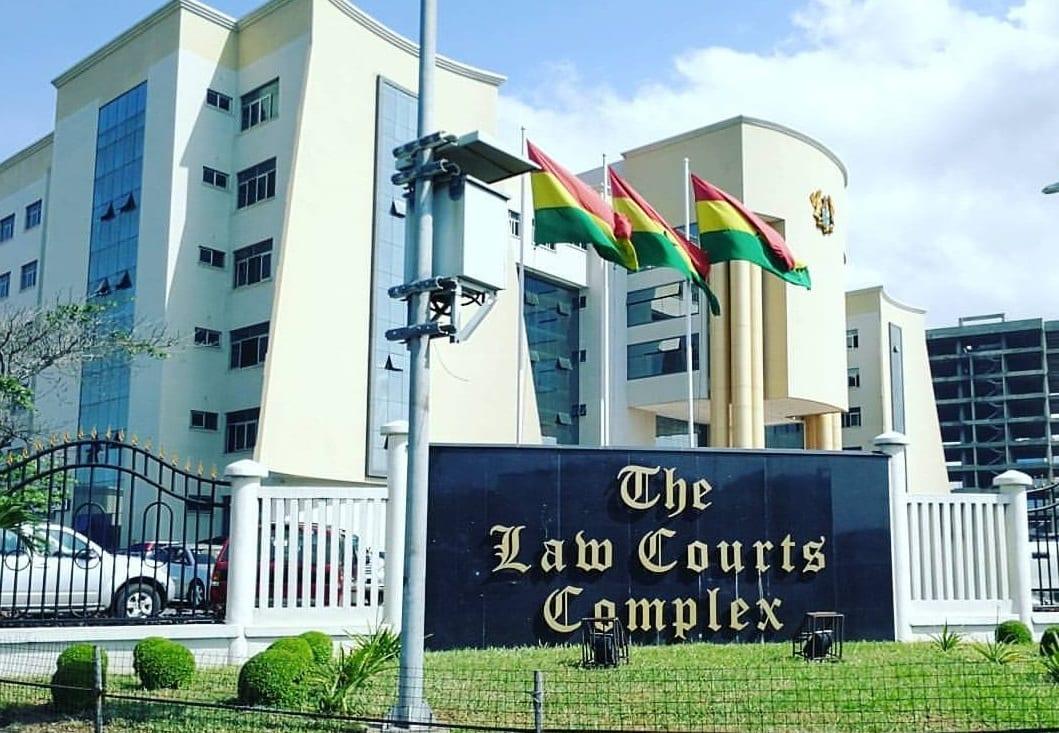
An Accra Circuit Court has remanded Bilyaminu Ibrahim, 28, a media worker, and Mohammed Musah, 25, a journalist, until October 20 over a case involving an alleged GH¢800,000 spiritual-fraud scheme targeting U.S.-based Ghanaian Tourwana Katakarauo. Prosecutors allege that Ibrahim posed as a spiritualist with fugitive suspect Katakaraou Jabiru and received repeated payments for purported sacrifices, Quran recitations and protection against spiritual attacks. Police say GH¢49,000 was recovered from Ibrahim. Musah is accused separately of warning Jabiru not to return home when police attempted to arrest him and faces a harbouring charge. Jabiru remains at large. The accused deny wrongdoing, and the allegations have not been proven in court.
An Accra Circuit Court has remanded a media worker and a journalist into police custody in connection with an alleged GH¢800,000 fraud scheme in which a Ghanaian woman living in the United States was allegedly persuaded over several years to make repeated payments for purported spiritual protection against attacks on herself and members of her family.
The accused are 28-year-old Bilyaminu Ibrahim, described in court as a media worker, and 25-year-old Mohammed Musah, a journalist. Prosecutors say Ibrahim allegedly posed as a spiritualist as part of a scheme involving a third man, Katakaraou Jabiru, who remains at large, while Musah is accused separately of helping Jabiru avoid arrest after police traced him to Dodowa. The two men have been remanded until October 20, 2026, while police investigations continue.
The case was placed before Circuit Court Judge Joseph Kunsong, with Chief Inspector Ramata Asumah presenting the prosecution’s case. Ibrahim faces allegations connected to conspiracy and defrauding by false pretence, while Musah has been charged with harbouring a criminal. Reporting from the court indicates that the accused have denied the charges against them. None of the allegations has yet been proven, and the prosecution’s account remains subject to testing as the case proceeds.
According to the prosecution, the alleged scheme began in 2021 after Jabiru learned that Tourwana Katakarauo, a Ghanaian woman living in the United States, was experiencing personal difficulties. Tourwana’s younger sister, Fawuziya Issaka, is the complainant in the criminal case. Prosecutors allege that Jabiru used his connection to the family to introduce the idea that a spiritual problem was behind Tourwana’s difficulties and claimed that he knew someone capable of helping her.
That person, according to the prosecution, was Ibrahim, who allegedly presented himself as a spiritualist or mallam able to provide protection and resolve the problems affecting Tourwana. Investigators say the representations led to a series of payments rather than a single transfer, with money allegedly demanded for sacrifices, Quran recitations and other supposed spiritual interventions.
The prosecution alleges that Ibrahim and Jabiru eventually obtained about GH¢800,000 from Tourwana through repeated instalments. The money was allegedly collected on the understanding that spiritual activities had to be carried out to prevent attacks on her and members of her family.
Investigators say the allegations became increasingly elaborate as the relationship continued. At one stage, the victim was allegedly told that her late father owed money to an unidentified person who intended to pursue the family spiritually because of the debt. More payments were then allegedly requested to conduct Quran recitations and other activities said to be necessary to prevent the threatened consequences.
Separate court reporting indicates that the prosecution also alleged that Tourwana was given information that caused her to distance herself from members of her family. Prosecutors say the representations were used to reinforce the idea that the dangers she was experiencing had a spiritual origin and that continued payments were necessary to resolve them.
The alleged scheme continued into 2023, according to investigators, when Tourwana’s mother suffered a stroke. Prosecutors say Jabiru became aware of the illness and allegedly informed Ibrahim, after which Tourwana was told that another person was attempting to inflict a similar medical condition on her.
The prosecution alleges that additional money was then demanded for spiritual protection and for the supposed attack to be redirected toward the person responsible for sending it. After Tourwana’s mother suffered the stroke, Ibrahim and Jabiru allegedly represented the event as evidence that their spiritual intervention had worked and received further money described by prosecutors as payments made in appreciation.
The allegations illustrate why investigators are treating the matter as one of false pretence rather than simply a dispute over religious or spiritual services. The prosecution’s case is that the accused deliberately made representations they knew to be false in order to cause the victim to part with money. Whether prosecutors can prove that intention and the alleged deception beyond reasonable doubt will be central if the case eventually proceeds to trial.
The Criminal Offences Act criminalizes obtaining property through false representations where the prosecution can establish the required elements of the offense. A person being charged does not mean those elements have been established, and the accused remain presumed innocent unless convicted by a court.
According to the prosecution, the alleged victim and her relatives eventually attempted to resolve the matter through family elders. Those efforts were unsuccessful, and the dispute was subsequently reported to police, leading to a formal investigation.
Investigators later arrested Ibrahim. The prosecution told the court that during questioning he allegedly admitted that he had falsely represented himself as a spiritualist and received money from the victim. Police also reportedly recovered GH¢49,000 from him.
Any alleged statement made to investigators will still have to satisfy legal requirements if prosecutors seek to rely on it as evidence, and the court has not yet made a finding concerning the circumstances or evidential weight of the reported admission.
The case then widened as police attempted to locate Jabiru, whom the prosecution describes as Ibrahim’s alleged accomplice and the person who initially connected the victim with the supposed spiritualist.
Prosecutors say Jabiru fled to Togo after learning that Ibrahim had been arrested. Police continued looking for him, while Ibrahim was at one stage granted bail during the investigation.
By September 2026, investigators received information that Jabiru had returned to Ghana and was staying in Dodowa. According to the prosecution, he was living or associating with Ibrahim and Musah around the premises connected to Assobaya Media School, where court reporting says the men worked.
Police went to the area on October 1 in an attempt to locate Jabiru. Prosecutors say officers encountered Musah, who told them Jabiru had gone out and later led them to the house, where the wanted man was not found.
It is what allegedly happened next that forms the basis of the charge against Musah.
The prosecution says Musah sent Jabiru a text message warning him not to return to the house after police arrived. Prosecutors told the court that Musah later acknowledged sending the warning because he did not want Jabiru to be arrested.
Musah has been charged with harbouring a criminal under Ghana’s Criminal Offences Act. The allegation against him is therefore materially different from the fraud allegations involving Ibrahim and Jabiru. The published prosecution case does not allege that Musah personally obtained part of the GH¢800,000 from Tourwana.
That distinction is important because early descriptions of the case can create the impression that both men are accused of jointly receiving the entire amount. The prosecution’s account instead places Ibrahim directly within the alleged spiritual-fraud scheme, while Musah’s alleged criminal conduct relates to what happened when police attempted to locate Jabiru.
Jabiru remains at large, meaning investigators have not yet brought the person they describe as the other central participant in the alleged fraud before the court.
His absence could affect the pace of the investigation, particularly if police believe he possesses information about the alleged payments, communications with Tourwana and the movement of money. Investigators are also likely to examine financial records and electronic communications as they attempt to determine how the GH¢800,000 figure was calculated and where the money ultimately went.
The sum cited by prosecutors is substantial. However, the amount should continue to be described as alleged until the court has examined the evidence establishing each payment and its purpose. It is also not yet clear from the publicly available court account whether all transfers were made directly to Ibrahim or whether different payments were received by different people during the alleged scheme.
Police have so far reported recovering GH¢49,000 from Ibrahim, leaving a significant gap between the amount allegedly obtained and the money publicly reported as recovered.
The prosecution has not disclosed whether additional funds or assets have been traced, whether bank or mobile-money accounts have been frozen, or whether investigators believe any of the money was transferred outside Ghana.
The case also raises an important evidentiary challenge because the alleged conduct spans several years and involves a complainant living outside Ghana. Investigators may need records of transfers, calls, messages and other communications to demonstrate how the alleged representations were made and link individual payments to particular claims.
Tourwana’s residence in the United States does not by itself make the case an American criminal matter. The current proceedings are before a Ghanaian court and concern conduct Ghanaian prosecutors say occurred through people operating in Ghana. There has been no public indication that United States authorities are involved.
The spiritual dimension of the allegations may attract considerable attention, but the legal issue before the court is not whether a person is entitled to believe in spiritual intervention. Ghana’s Constitution protects religious belief and practice. The criminal allegation instead concerns whether specific claims were knowingly fabricated for the purpose of dishonestly obtaining another person’s money.
That distinction is likely to become central if the defense challenges the prosecution’s interpretation of what was promised to the victim. Fraud cases involving spiritual services can depend heavily on evidence showing whether representations were made as expressions of belief or as deliberate statements of fact intended to deceive.
The prosecution’s case is that the representations were deliberately false and that Ibrahim was not genuinely the spiritualist he allegedly presented himself to be. The defense will have an opportunity to challenge that account and the circumstances under which statements were obtained during the investigation.
The remand order itself is not a conviction and should not be interpreted as proof of the allegations. Remand allows the accused to remain in lawful custody while investigations or court proceedings continue, subject to further orders from the court.
The next scheduled appearance on October 20 will provide an opportunity for the prosecution to update the court on its investigation and for the accused to pursue any applications available to them, including issues relating to bail. It may also become clearer whether police have made progress in locating Jabiru.
The case has attracted additional attention because two of those before the court are described as working within the media sector. That professional description does not have any bearing on whether the allegations are true, but it explains why the case has been reported prominently by Ghanaian media organizations.
Public reporting will require particular care as the case proceeds. Ibrahim and Musah are accused persons rather than convicted offenders, Jabiru is described by prosecutors as an alleged accomplice who remains wanted, and the GH¢800,000 figure forms part of the prosecution’s allegations rather than a judicial finding.
The most developed part of the case at this stage is the prosecution’s narrative of events stretching from 2021 through the October 2026 police operation in Dodowa. Investigators allege that a woman living abroad was persuaded to hand over substantial sums after being told that spiritual forces threatened her family, that Ibrahim acted as the supposed spiritualist, and that Jabiru helped organize the alleged scheme before later evading police.
Musah entered the case much later, according to the prosecution, through the alleged warning message sent when officers attempted to arrest Jabiru. That allegation will have to be separately proved and should not be conflated with the accusation that GH¢800,000 was fraudulently obtained.
For now, the Circuit Court has ordered both Ibrahim and Musah to remain in police custody until October 20 as investigators continue their work. Jabiru remains at large, only GH¢49,000 of the alleged GH¢800,000 has publicly been reported as recovered, and the court has yet to determine whether any of the allegations advanced by prosecutors can ultimately be established beyond reasonable doubt.