
MIKE OQUAYE RECALLS BLOCKING SPECIAL PROSECUTOR’S ATTEMPT TO ARREST MAHAMA AYARIGA, REVIVING DEBATE OVER PARLIAMENTARY PRIVILEGE
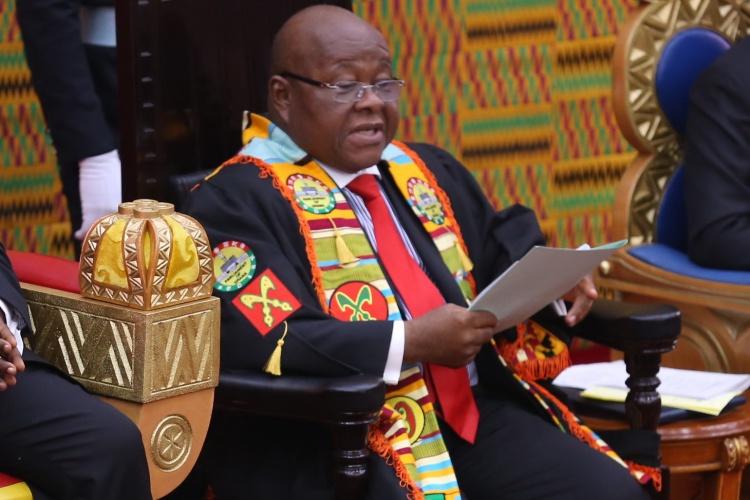
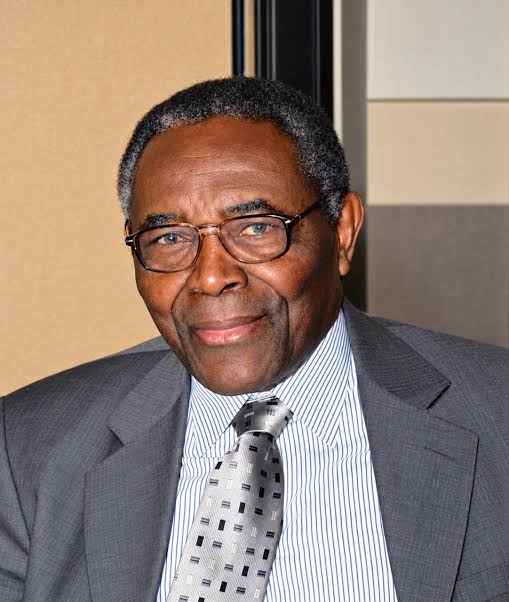
Former Speaker of Parliament Prof. Aaron Mike Oquaye says he personally intervened during his tenure to prevent then-Special Prosecutor Martin Amidu from pursuing Bawku Central MP Mahama Ayariga in a way he believed threatened the lawmaker’s parliamentary privileges. Oquaye says his action was not partisan and was intended to protect Parliament’s constitutional independence. The 2019 dispute later reached the courts, where judges rejected a broad interpretation of parliamentary immunity and required Ayariga to appear as an accused person. Oquaye’s comments have revived the continuing debate over how Article 117 of Ghana’s Constitution should apply when law-enforcement agencies seek to arrest or serve process on sitting MPs.
Former Speaker of Parliament Prof. Aaron Mike Oquaye has revisited one of the most contentious clashes between Ghana’s legislature and the Office of the Special Prosecutor, saying he personally intervened during his tenure to stop then-Special Prosecutor Martin Amidu from pursuing the arrest of Bawku Central MP Mahama Ayariga because he believed Parliament had a constitutional duty to protect the lawmaker’s rights and prevent executive institutions from interfering improperly with legislative work.
Oquaye said his intervention was not motivated by party politics, stressing that Ayariga was at the time an opposition National Democratic Congress MP while he himself had been elected Speaker under a New Patriotic Party administration. He said the principle involved was larger than the political identities of the people concerned: Parliament, in his view, had to defend the privileges attached to the legislature so that law-enforcement agencies could not use arrests, court processes or other state powers to intimidate opposition lawmakers or interfere with parliamentary proceedings. His comments, originally reported following an interview earlier this week and highlighted again in Thursday’s political news cycle, have revived a broader constitutional debate over exactly how far parliamentary privilege extends when an MP is the subject of a criminal investigation.
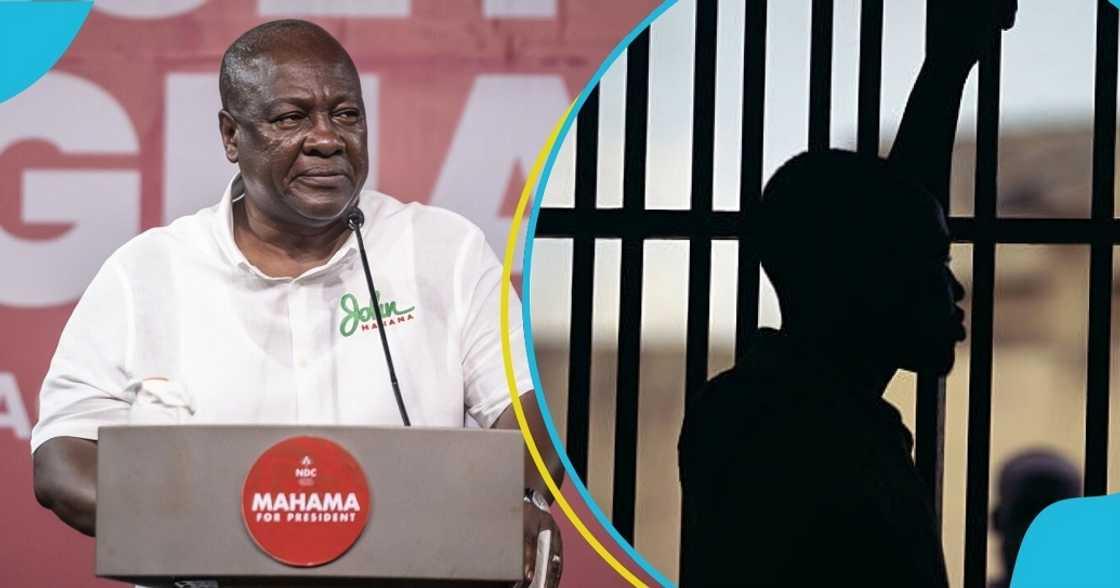
The MP Oquaye was referring to was Mahama Ayariga, who represented Bawku Central and is now Majority Leader and Leader of Government Business in the current Parliament. In 2019, Ayariga became the subject of criminal proceedings initiated by then-Special Prosecutor Martin Amidu over allegations involving the importation and disposal of vehicles, tax and customs payments, foreign-exchange transactions and alleged abuse of public office. Ayariga denied wrongdoing and challenged aspects of the prosecution in court.
Oquaye said that when the Special Prosecutor sought Ayariga during that period, he was “very, very, very active” in stopping what he regarded as attempts that could violate the MP’s constitutional protections. He said he invited Amidu to an open meeting so that the matter could be handled according to constitutional procedures and documented his position in writing. Oquaye’s account presents his intervention as an institutional defense of Parliament rather than an attempt to shield Ayariga from investigation or prosecution.
That distinction is important because Ghana’s Constitution does not grant members of Parliament blanket immunity from criminal investigation or prosecution. Article 117 provides protection against the service or execution of civil or criminal process on the Speaker, an MP or the Clerk of Parliament while that person is on the way to, attending or returning from proceedings of Parliament. The provision is designed to prevent outside institutions from disrupting parliamentary work, but legal experts have repeatedly argued that it does not make MPs generally immune from arrest or criminal liability.
Oquaye’s interpretation during his speakership placed considerable emphasis on the Speaker’s responsibility to ensure that law-enforcement activity did not interfere with parliamentary proceedings. He has now said that the protection of Ayariga’s rights was necessary to preserve the separation of powers, arguing that an executive institution should not be able to silence or intimidate an opposition MP through the use of state authority.
His account also reflects the political atmosphere surrounding the 2019 confrontation. Amidu had been appointed Ghana’s first Special Prosecutor under President Nana Addo Dankwa Akufo-Addo with a mandate to investigate and prosecute corruption-related offenses. Ayariga, a senior NDC figure and former minister, became one of the first high-profile politicians prosecuted by the new office, turning the case into an important test of both the OSP’s authority and Parliament’s claims to constitutional privilege.
The dispute intensified when Ayariga was summoned to appear before the Accra High Court while Parliament was sitting. In June 2019, he wrote to Amidu saying he could not appear on the scheduled day because he was required to attend parliamentary proceedings and warned that any attempt to obstruct him from attending Parliament could amount to contempt of Parliament.
Oquaye subsequently issued correspondence asserting Parliament’s institutional position and asking that court proceedings be arranged in a way that respected Ayariga’s parliamentary responsibilities. The Speaker relied on constitutional provisions concerning parliamentary privilege, including Articles 117 and 118, as part of his argument.
The High Court, however, did not fully accept that interpretation. Justice Afia Serwah Asare-Botwe ruled that Article 118, which protects the Speaker, MPs and the Clerk from being compelled to appear as witnesses while attending parliamentary proceedings, did not exempt Ayariga from appearing in court as an accused person. The court ordered him to attend his criminal trial and rejected the argument that his parliamentary duties alone allowed him to stay away.
That ruling is important to the current debate because it shows that the judiciary did not accept a broad reading of parliamentary immunity. While Parliament insisted that Ayariga’s legislative duties and constitutional protections had to be respected, the court distinguished between an MP being summoned as a witness and an MP appearing as an accused person in a criminal prosecution.
The disagreement did not end there. Later in 2019, tensions escalated between Parliament and Amidu after the Special Prosecutor accused the legislature of interfering with his work. Parliament rejected that claim, saying it had not attempted to sabotage the prosecution but had sought discussions with the OSP to ensure that Ayariga could be made available to the court without unnecessarily compromising his parliamentary responsibilities or constitutional rights.
Parliament said at the time that it had cooperated with investigators during the investigative stage and had a history of working with law-enforcement institutions in cases involving MPs. Its position was that engaging the Special Prosecutor over procedure should not be interpreted as an attempt to obstruct justice.
Amidu strongly disagreed. He maintained that Parliament had interfered with the independence of both the OSP and the administration of justice and publicly challenged Parliament’s characterization of the dispute. The exchange became an early test of the institutional boundaries surrounding the newly established anti-corruption office.
The criminal case itself also encountered legal problems unrelated to parliamentary privilege. In June 2019, the High Court held that the Office of the Special Prosecutor did not have legal authority under its establishing legislation to prosecute some of the tax and customs offenses included in the charges against Ayariga. Amidu later accepted responsibility for defects in portions of the charge sheet and said the OSP would correct them.
Ayariga maintained throughout the controversy that the allegations were unfounded. At different stages he challenged Amidu’s legal authority, the nature of the charges and the conduct of the prosecution. The case ultimately became as notable for the institutional disputes it generated as for the original allegations themselves.
Oquaye’s decision to revisit the episode in 2026 is particularly relevant because Ghana is again debating the scope of parliamentary immunity following recent confrontations involving law-enforcement agencies and sitting MPs. In September, questions resurfaced after Economic and Organised Crime Office personnel attempted to arrest Manhyia South MP Nana Agyei Baffour Awuah at the Accra High Court, prompting renewed arguments about whether security agencies need to notify or obtain permission from the Speaker before acting against a legislator.
Legal practitioner Samson Lardy Anyenini has argued that Article 117 does not grant MPs permanent immunity merely because Parliament is in session. His position is that the constitutional protection applies specifically when an MP is on the way to, attending or returning from parliamentary proceedings and should not be expanded into a general shield from law-enforcement action.
That interpretation differs in emphasis from the practical arrangement associated with Oquaye’s tenure, when the Speaker asserted a strong gatekeeping role in dealings between law-enforcement agencies and Parliament. The difference is important because the Constitution protects Parliament as an institution but does not explicitly state that every arrest of an MP requires prior permission from the Speaker.
Current Speaker Alban Bagbin has also drawn a distinction between notification and permission. In May 2026, Bagbin rejected the proposition that security agencies must always obtain his permission before arresting or inviting an MP. His position was that Parliament should be notified and supplied with enough information to determine whether a constitutional privilege is engaged, but that MPs are not generally beyond the reach of the criminal law.
The disagreement therefore turns less on whether MPs can ever be arrested, because there is broad agreement that they can, and more on when and how law-enforcement agencies should act when parliamentary proceedings are involved. Article 117 is designed to protect legislative work from outside disruption, but courts and constitutional lawyers have warned that the provision should not be converted into immunity from criminal accountability.
Oquaye’s argument is that a Speaker who fails to intervene when an MP’s legislative functions are threatened could allow the executive branch to weaken Parliament indirectly. In his telling, the historical purpose of parliamentary privilege is precisely to prevent governments from using arrest, intimidation or legal process to silence political opponents inside the legislature.
He said his 2019 ruling examined the history of parliamentary privilege, including its roots in the struggles between the English Parliament and the Crown. Modern parliamentary protections developed in part because monarchs historically attempted to intimidate or arrest lawmakers whose positions they opposed. Ghana’s constitutional provisions inherited elements of that tradition, seeking to protect legislative independence within a modern separation-of-powers system.
The concern is not purely historical. In any political system where the executive controls or influences powerful investigative institutions, opposition MPs may reasonably fear that criminal processes could be used selectively. Parliamentary privilege therefore exists partly to make sure lawmakers can debate, vote and hold government accountable without fearing disruption of legislative proceedings.
The opposite risk is equally significant. If parliamentary privilege is interpreted too broadly, politicians facing legitimate criminal investigations could use their seats in Parliament to delay questioning, avoid court appearances or frustrate arrest. Critics of expansive interpretations have therefore argued that the Constitution protects parliamentary work, not individual lawmakers from ordinary criminal law.
That tension explains why the issue repeatedly returns to the courts and Parliament.
Oquaye’s intervention in the Ayariga case has also acquired a different political significance with time. In 2019, the NPP controlled government and Oquaye was Speaker, while Ayariga belonged to the opposition NDC. Today, the political balance has changed substantially. Ayariga is now Majority Leader under President John Dramani Mahama’s NDC administration, while Oquaye remains a prominent NPP elder.
Oquaye is using that reversal to reinforce his claim that his intervention was based on principle rather than partisan advantage. His point is that he defended an opposition legislator even though the government of the day was controlled by his own political tradition.
That argument does not resolve whether his interpretation of parliamentary privilege was legally correct. The High Court’s treatment of the Ayariga proceedings demonstrated that judicial interpretation can differ from the Speaker’s understanding of the scope of parliamentary protections.
It does, however, illustrate the institutional question at the heart of the dispute: whether a Speaker should actively intervene whenever an investigative agency seeks to execute legal process against an MP whose parliamentary duties may be affected.
The role of the Special Prosecutor adds another layer because the OSP was deliberately created as an independent anti-corruption institution. Its establishing law is designed to prevent political interference in corruption investigations, meaning excessive parliamentary intervention could itself raise concerns about undermining an independent prosecutor.
At the same time, independence does not place the Special Prosecutor above the Constitution. The OSP must comply with parliamentary privileges, court procedures, due process and the statutory limits on its powers just like any other state institution.
The Ayariga episode demonstrated both sides of that principle. Parliament could not simply declare that an MP was beyond prosecution, and the Special Prosecutor could not assume that the existence of a criminal case automatically displaced constitutional protections attached to parliamentary proceedings.
The courts ultimately became the institution responsible for resolving the competing claims in specific instances.
The debate is likely to remain important as Ghana strengthens its anti-corruption and economic-crime institutions. The OSP, EOCO, police and other investigative agencies increasingly pursue politically exposed persons, including current and former ministers and MPs. Parliament must therefore continue defining how those agencies can interact with lawmakers without either obstructing legitimate investigations or weakening legislative independence.
A pending Supreme Court case challenging aspects of Parliament’s arrest and service-of-process arrangements could eventually provide greater clarity. Among the questions raised is whether Articles 117 and 118 require law-enforcement officials to obtain the Speaker’s leave before executing process against an MP who is engaged in personal activity rather than parliamentary business.
Until the Supreme Court settles those questions definitively, disagreements between parliamentary practice and narrower legal interpretations are likely to continue.
Oquaye’s latest account is therefore more than a recollection of an old confrontation. It reintroduces a constitutional issue that remains unresolved in important respects and has resurfaced in contemporary disputes involving MPs and law-enforcement agencies.
His position is that Parliament must be willing to defend its members, including opposition members, whenever executive agencies act in a way that could interfere with their constitutional functions. Critics of that approach argue that parliamentary privilege must be interpreted narrowly so that it cannot become a means of avoiding ordinary criminal accountability.
The historical record of the Ayariga case supports parts of both concerns. Oquaye did intervene and Parliament did insist that Ayariga’s legislative responsibilities be protected, while the High Court subsequently rejected a broad claim that parliamentary duties could excuse him from appearing as an accused person. Parliament and the Special Prosecutor also openly disagreed about whether the legislature’s involvement constituted legitimate protection of privilege or improper interference with prosecution.
What Oquaye has now added is a clear explanation of the principle he says guided him: he viewed the dispute not as NPP against NDC or Speaker against Special Prosecutor, but as a test of whether Parliament would defend its constitutional independence when one of its members came under the power of an executive institution.
The unresolved legal question is where that protection ends. Ghana’s Constitution plainly protects lawmakers from certain forms of legal process while they are participating in parliamentary proceedings, but it does not create permanent immunity from criminal investigation or prosecution. Determining the boundary between those two principles remains central to any future confrontation between Parliament and law-enforcement agencies.
As the debate continues, the 2019 Ayariga episode is likely to remain an important reference point because it involved all three branches of the constitutional system: an independent prosecutor exercising powers created by Parliament, a Speaker asserting legislative privilege and a court determining how far that privilege could reach. Oquaye’s intervention protected what he believed were Parliament’s institutional rights, but the judiciary ultimately demonstrated that those protections were not unlimited. That balance, rather than any claim of absolute immunity or unrestricted law-enforcement power, remains the central constitutional issue raised by his account.