FAMILY RAISES ALARM OVER PORT HARCOURT RESIDENT ALLEGEDLY DETAINED BY NIGERIAN MILITARY SINCE 2020 ENDSARS PROTESTS
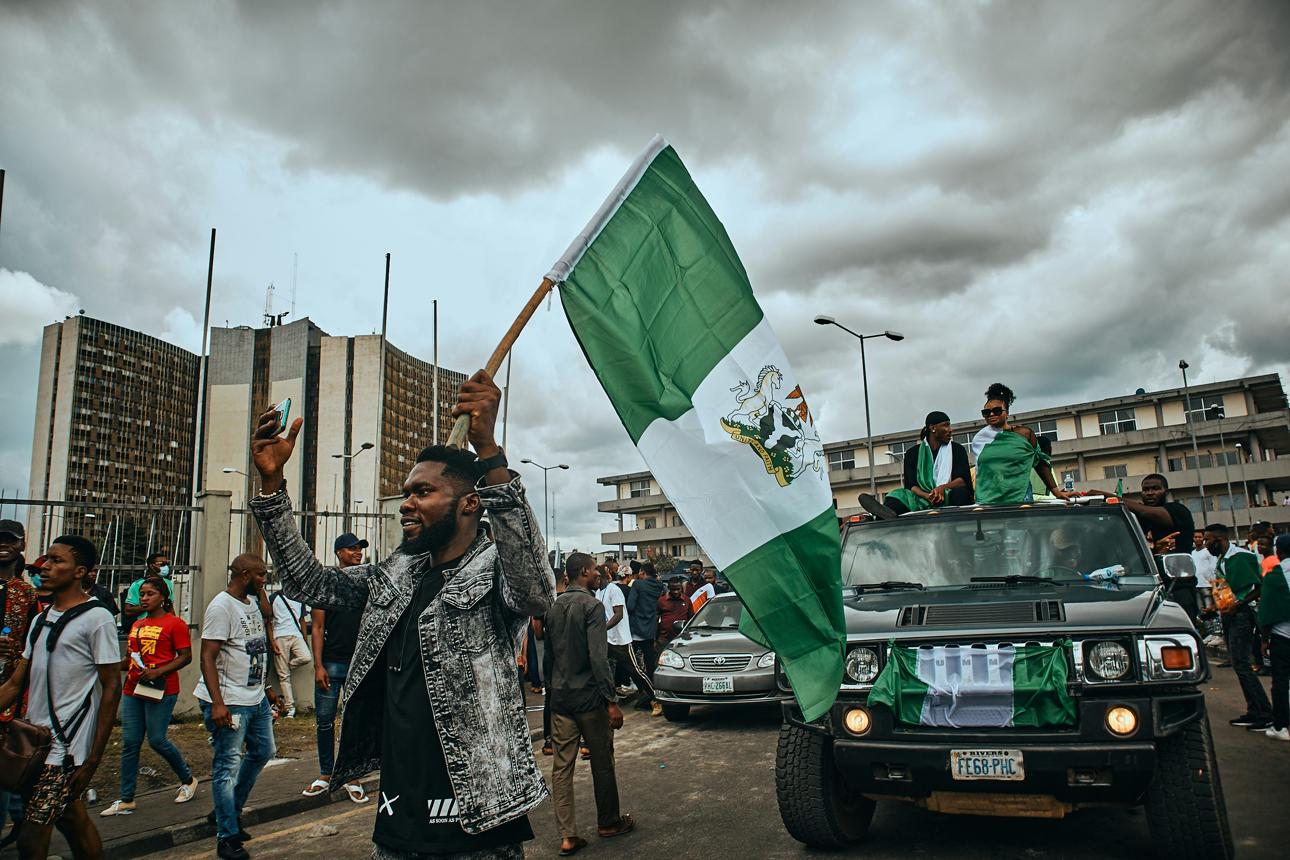
The family of Godspower Emem, a Port Harcourt resident allegedly arrested by Nigerian soldiers during the October 2020 #EndSARS protests, has raised an alarm over his whereabouts following his reported transfer from Kuje Correctional Centre on November 19, 2026. According to his relatives, Emem was handed over to the Department of State Services after his arrest and subsequently detained at Wawa Barracks in Niger State for several years before being moved to Abuja in October 2026. A reported telephone recording reveals that he expressed concerns about being transferred without his family's knowledge. His relatives are now appealing to human rights organizations and lawyers for urgent intervention, raising renewed questions about prolonged detention, constitutional protections and unresolved cases involving individuals arrested during the nationwide protests.
The family of Godspower Emem, a resident of Port Harcourt, Rivers State, has raised an alarm over his whereabouts following allegations that Nigerian military personnel arrested him during the nationwide #EndSARS protests in October 2020 and that he has remained in detention for more than six years. His relatives are appealing to human rights organizations, legal practitioners and government authorities to intervene urgently after he was reportedly transferred from the Kuje Correctional Centre in Abuja on November 19, 2026, without his family receiving information concerning his destination, legal status or the authority responsible for his continued detention.
The disturbing development, first brought to wider public attention on Friday, November 27, has reopened questions surrounding the fate of Nigerians arrested during the historic demonstrations against police brutality. Although successive government officials have addressed allegations concerning the continued detention of individuals connected to the protests, Emem's family maintains that their relative has spent years moving between security and correctional facilities, with his latest reported transfer leaving them unable to establish where he is being held.
According to the family's account published by SaharaReporters and subsequently reported by AsenExpress, Emem was initially apprehended by soldiers during the demonstrations in Port Harcourt before being handed over to the Department of State Services (DSS). He was reportedly transferred to a military detention facility at Wawa Barracks in Niger State, where he allegedly spent several years before being relocated to the Kuje Correctional Centre in the Federal Capital Territory in October 2026.
His relatives say their concerns intensified after receiving information that he had been removed from the Abuja correctional facility on November 19. The reported transfer occurred approximately one month after his arrival at Kuje, creating renewed uncertainty for a family that had already endured years of separation and difficulty obtaining information concerning the circumstances of his detention.
The family's appeal includes a reported audio recording of a telephone conversation between Emem and his sister while he was being held at Kuje. During the conversation, he allegedly expressed concerns that he could be transferred to another facility without his relatives receiving notification. He reportedly explained that detainees were being selected for relocation without being informed of their intended destinations, prompting him to provide identifying information that he believed could assist his family in locating him.
The recording reportedly included another name under which Emem identified himself and a detention identification number. His relatives say they preserved the conversation because they feared that information concerning his whereabouts could become increasingly difficult to obtain if he was moved again. The authenticity of the recording and the circumstances surrounding the reported transfer have not been independently established through official detention records.
For the family, the latest development has transformed a prolonged struggle over Emem's detention into an urgent search for information about his present circumstances. They are seeking legal assistance, including representation from lawyers willing to undertake the matter without charging professional fees, while appealing to organizations concerned with fundamental human rights to investigate his case and establish whether his continuing detention has a lawful basis.
The available reports have not identified a criminal conviction, publicly accessible charge sheet or subsisting court order establishing the legal grounds for Emem's reported six-year detention. However, the absence of such documents from the public record does not conclusively establish that they do not exist. A comprehensive assessment of the case would require access to official records maintained by the Nigerian military, the Department of State Services, the Nigerian Correctional Service and any judicial authorities involved in authorizing his detention.
As of Friday, November 27, no independently verified statement specifically addressing Emem's current whereabouts had been located from the security or correctional institutions identified by his relatives. Consequently, the family's allegations remain central to the available account, while the precise circumstances surrounding his arrest, detention and subsequent transfers remain subject to clarification by the relevant authorities.
The allegations nevertheless raise significant constitutional and humanitarian questions. If Emem has indeed remained in state custody since October 2020 without being properly charged, tried or detained under a valid legal authorization, the circumstances could represent a serious violation of protections concerning personal liberty and access to justice. Establishing whether those protections have been violated will require a thorough examination of the documentary and testimonial evidence associated with his case.
The October 2020 #EndSARS movement represented one of the most consequential episodes of civic mobilization in Nigeria's recent democratic history. What began as a widespread campaign against abuses associated with the Special Anti-Robbery Squad, a controversial unit of the Nigeria Police Force, rapidly developed into nationwide demonstrations demanding accountability, institutional reforms and greater protection of citizens' fundamental rights.
The movement emerged following years of allegations involving arbitrary arrests, extortion, torture and extrajudicial killings attributed to members of the police unit. Young Nigerians had repeatedly expressed concerns about encounters with officers who allegedly targeted individuals based on their appearance, possession of electronic devices or perceived financial circumstances. Social media platforms became important channels through which individuals shared their experiences and organized demands for institutional change.
By October 2020, demonstrations had expanded across numerous Nigerian cities, drawing participation from individuals representing different professional, ethnic, religious and socioeconomic backgrounds. Protesters organized public gatherings, established support networks and demanded that the government address both the immediate conduct of SARS officers and the broader institutional conditions that allowed allegations of police misconduct to persist.
Among the movement's principal demands were the dissolution of SARS, accountability for officers accused of wrongdoing, compensation for victims of police brutality and reforms intended to improve the welfare, training and professional standards of law enforcement personnel. Demonstrators argued that meaningful institutional change required more than replacing the name or organizational structure of a controversial police unit.
Port Harcourt became one of the prominent centers of the movement outside Lagos and Abuja. Demonstrators gathered across parts of the Rivers State capital to express opposition to police brutality despite restrictions announced by the state government at the time. The protests brought together young residents, civil society representatives, entertainment personalities and other individuals demanding changes to Nigeria's policing system.
The participation of Port Harcourt residents reflected the extent to which concerns surrounding law enforcement practices had become a national issue rather than a matter restricted to particular states. Although experiences with police institutions differed across communities, the movement created a common platform through which citizens demanded greater accountability and respect for constitutional protections.
The Federal Government announced the dissolution of SARS on October 11, 2020, following mounting public pressure. However, demonstrations continued as protesters questioned whether the decision would produce meaningful changes in police conduct. Concerns were also raised about the establishment of a replacement tactical unit, with critics arguing that institutional restructuring alone would not address longstanding allegations of abuse.
As the demonstrations continued, security authorities faced increasingly complicated public order challenges. While many gatherings remained peaceful, violence and property destruction occurred in some locations, prompting government officials to impose restrictions and deploy additional security personnel. Authorities defended those measures as necessary to protect lives, property and public infrastructure, while human rights organizations questioned the proportionality of certain interventions.
The distinction between peaceful protesters and individuals suspected of criminal activity became particularly important during the subsequent enforcement operations. Participation in a lawful demonstration does not, by itself, establish involvement in a criminal offense. Security agencies may investigate individuals suspected of specific unlawful conduct, but such investigations must comply with legal requirements governing arrest, detention and prosecution.
The circumstances surrounding Emem's reported arrest remain insufficiently documented to establish whether authorities accused him of any specific criminal offense or whether his detention was connected solely to his presence during the demonstrations. His family maintains that soldiers apprehended him during the #EndSARS period, but no independently verified arrest report explaining the precise allegations against him has been made publicly available.
That uncertainty is significant because the legality of an arrest cannot be determined exclusively by identifying the period or location in which it occurred. Investigators and judicial authorities must examine whether security personnel possessed a lawful basis for taking an individual into custody, whether procedural protections were respected and whether any subsequent detention received the necessary legal authorization.
Even where an initial arrest is lawful, the continuing detention of an individual must remain consistent with applicable constitutional and statutory requirements. An arrest based on reasonable suspicion does not provide unlimited authority to hold a suspect indefinitely, particularly when no final judicial determination has been reached.
Nigeria's 1999 Constitution, as amended, establishes the right to personal liberty under Section 35. Although the provision recognizes circumstances in which individuals may lawfully be deprived of their liberty, such restrictions must occur through procedures authorized by law. The constitutional framework is designed to prevent arbitrary detention while allowing authorities to undertake legitimate investigations and criminal proceedings.
Section 35 also establishes protections concerning the treatment of arrested individuals, including their entitlement to information about the grounds for detention and access to legal advice. Individuals detained on suspicion of criminal conduct must ordinarily be brought before a competent court within the period required by law, subject to applicable constitutional provisions and judicial determinations.
The Constitution additionally provides that individuals who have been unlawfully arrested or detained may be entitled to compensation and a public apology from the appropriate authority. Such remedies generally depend on establishing the unlawfulness of the detention through a competent judicial process rather than merely presenting allegations in public statements.
Section 36 establishes protections relating to fair hearings and the presumption of innocence. Under those principles, individuals accused of criminal offenses are entitled to proceedings before competent and impartial judicial institutions, while criminal responsibility must be established through evidence presented in accordance with applicable legal requirements.
Those constitutional protections apply regardless of the political circumstances surrounding an individual's arrest. People suspected of participating in unlawful activities during demonstrations remain entitled to procedural safeguards, just as individuals who were peacefully exercising their constitutional rights are entitled to protection against arbitrary interference.
National security considerations can create additional legal complexities, particularly when military or intelligence institutions are involved in investigations concerning civilian suspects. Nigerian legislation authorizes certain security agencies to exercise investigative and detention powers under specified circumstances. However, those powers remain subject to the legal conditions established by the relevant statutes, the Constitution and judicial oversight.
The involvement of several security institutions in Emem's reported detention raises questions about which authority initially assumed responsibility for his case and whether subsequent transfers were supported by appropriate documentation. When individuals are transferred between military, intelligence and correctional facilities, clear records are necessary to establish the legal basis for their custody and identify the institution responsible for their treatment.
A properly documented transfer would ordinarily provide information concerning the identity of the detainee, the authority authorizing the movement, the receiving institution and any relevant judicial or administrative instructions. Such records are important not only for internal security management but also for ensuring that individuals remain capable of exercising their legal rights while in custody.
The absence of accessible information concerning a detainee's location can create substantial obstacles for legal representatives attempting to provide assistance. Lawyers may encounter difficulties determining which institution should receive correspondence, identifying the appropriate respondents in legal proceedings or arranging meetings with their clients. Those problems can become more serious when detainees are transferred across different states or held under different administrative classifications.
For family members, the uncertainty surrounding an undisclosed transfer can produce considerable emotional distress. Relatives may be unable to determine whether a detained individual is receiving adequate food, medical treatment or protection from abuse. They may also struggle to establish whether the person has been charged before a court or whether any legal proceedings have taken place without their knowledge.
The United Nations has recognized the seriousness of circumstances in which individuals are deprived of their liberty and authorities subsequently refuse to acknowledge their detention or conceal information concerning their whereabouts. International legal instruments addressing enforced disappearance seek to prevent situations in which individuals are placed outside the protection of the law through such conduct.
Whether Emem's circumstances satisfy the legal definition of an enforced disappearance has not been established. That determination would depend on evidence concerning his arrest, the institutions involved in his detention, the availability of official records and whether authorities have deliberately refused to provide information concerning his location or legal status.
A failure by family members to obtain information does not automatically establish every element of an enforced disappearance. However, the reported absence of information following a transfer from a government correctional facility warrants clarification, particularly where the individual concerned has allegedly remained in state custody for several years.
Nigeria is a party to several international and regional human rights instruments that recognize protections against arbitrary detention. The International Covenant on Civil and Political Rights establishes obligations concerning personal liberty, access to judicial review and the treatment of individuals deprived of their freedom.
The African Charter on Human and Peoples' Rights also recognizes protections relating to personal liberty, dignity and fair hearings. These obligations provide additional legal context for examining allegations of prolonged detention and the denial of access to judicial remedies within African states.
The practical effectiveness of those protections depends heavily on the ability of individuals and their representatives to obtain timely information from authorities. Without confirmation of where someone is being held, it can become considerably more difficult to initiate legal proceedings capable of examining whether that person's detention complies with applicable law.
The family's reported inability to locate Emem after his November transfer therefore represents more than a conventional administrative difficulty. If confirmed, it could impede his access to legal representation and prevent relatives from pursuing available procedures for challenging his continued detention. Establishing his current location is consequently an immediate prerequisite for resolving many of the wider legal questions surrounding his case.
The reported involvement of Wawa Barracks in Niger State also introduces a wider institutional context. Military detention facilities have previously featured in human rights investigations concerning individuals suspected of involvement in security-related offenses. Advocacy organizations have raised concerns about the duration of detention, access to legal representatives and the treatment of some civilians reportedly held at such facilities.
Security authorities have defended the importance of facilities used to investigate individuals suspected of serious threats, including terrorism and organized violence. However, the existence of legitimate national security responsibilities does not resolve questions concerning the lawfulness of any particular individual's detention.
Determining whether Emem was held at Wawa Barracks would require confirmation through official records or other reliable evidence. Investigators would also need to establish the reasons for any such detention, whether he appeared before a court during that period and whether the conditions of his custody were consistent with applicable legal requirements.
His reported transfer to Kuje Correctional Centre in October 2026 raises a separate set of questions. The Nigerian Correctional Service operates institutions accommodating individuals serving criminal sentences and those held in custody while awaiting judicial proceedings. The legal status of each inmate is ordinarily connected to records identifying the authority responsible for admitting and retaining that person.
Where an individual is transferred from military detention into a conventional correctional facility, relevant documentation should clarify whether the person has been formally charged, remanded under a judicial order or transferred pursuant to another lawful arrangement. Access to such documentation would be essential in determining the status under which Emem was reportedly admitted to Kuje.
The most recent transfer reportedly occurred on November 19, leaving the family without information about the institution responsible for his custody. Confirmation of the transfer would help establish whether he was moved to another correctional facility, returned to military or intelligence custody, released or subjected to another administrative arrangement.
At present, none of those possibilities has been conclusively established through independently verified official information. The absence of confirmation means that it would be premature to present any particular explanation as an established fact. Nevertheless, the family maintains that it has been unable to locate him and is seeking urgent assistance from authorities capable of examining the relevant records.
The broader question of Nigerians allegedly detained following the #EndSARS protests has remained a recurring concern for human rights organizations. Amnesty International and other advocacy groups have previously documented cases involving individuals who remained in detention long after the demonstrations, including allegations that some had not received timely trials.
In October 2023, Amnesty International reported that at least 15 people arrested during the 2020 protests were still being held arbitrarily, with most reportedly awaiting trial. The organization questioned the legal basis for continuing detention in those cases and called for the protection of the affected individuals' rights.
Nigerian police authorities subsequently disputed claims that people remained unlawfully detained in connection with the demonstrations. In June 2024, the Nigeria Police Force rejected allegations raised by former Senator Shehu Sani concerning the continued detention of #EndSARS protesters, maintaining that individuals were not being unlawfully held because of their participation in the movement.
That statement concerned the general controversy surrounding protest-related detention at the time. It did not specifically address Emem's current case or establish whether the military, intelligence or correctional institutions mentioned by his family possess records concerning his alleged custody.
The differing accounts provided by human rights organizations and security authorities demonstrate the importance of examining individual cases rather than relying solely on broad institutional assurances or generalized allegations. Establishing the truth requires accurate identification of detainees, access to relevant legal records and confirmation of the circumstances under which each individual was arrested or remained in custody.
On October 20, 2026, marking the sixth anniversary of the demonstrations, the Rule of Law and Accountability Advocacy Centre renewed criticism of Nigeria's progress toward addressing police misconduct. The organization argued that allegations involving unlawful detention, torture, extortion and enforced disappearances continued despite the dissolution of SARS and the announcement of subsequent reform measures.
The organization's assessment reflects the concerns of civil society advocates who believe that institutional accountability has not improved sufficiently since the nationwide demonstrations. Government and police authorities have maintained that reforms, disciplinary mechanisms and security initiatives have been introduced to improve law enforcement practices, although assessments of their effectiveness remain contested.
The latest appeal from Emem's family has emerged within that continuing debate. If the family's account is substantiated, it would raise questions not only about his individual detention but also about the mechanisms available for reviewing cases involving individuals arrested during periods of widespread public unrest.
One of the important institutional responses to the #EndSARS movement was the establishment of judicial panels of inquiry in several Nigerian states. These panels were created to examine allegations of police brutality, receive complaints from affected individuals and recommend measures addressing documented abuses.
The panels provided opportunities for victims and relatives to present testimony concerning encounters with law enforcement personnel. Their recommendations included compensation, disciplinary action and other measures intended to improve accountability, although implementation varied across jurisdictions.
For some families, the panels represented a rare opportunity to present longstanding grievances through an officially recognized process. However, the ability of such institutions to produce lasting improvements depended on whether their recommendations were implemented and whether other agencies pursued investigations or prosecutions arising from their findings.
The existence of a judicial panel or compensation framework does not eliminate the necessity of examining outstanding detention cases. Individuals who remain in custody require access to the ordinary institutions responsible for criminal justice, while families searching for missing relatives may require assistance from agencies capable of establishing their whereabouts.
The issue of prolonged pretrial detention also extends beyond individuals associated with the #EndSARS movement. Nigeria's correctional system has faced longstanding challenges involving overcrowding, delays in judicial proceedings and substantial numbers of inmates awaiting trial.
Individuals unable to secure legal representation or satisfy bail requirements can experience particular difficulties obtaining timely resolutions of their cases. Administrative problems involving case files, transportation to court and coordination between law enforcement agencies and prosecutorial authorities can contribute to lengthy periods of detention.
Those structural challenges do not necessarily explain Emem's circumstances, particularly given the allegations that he spent years in military custody before entering the conventional correctional system. Nevertheless, they provide important context for understanding why prolonged detention remains a significant concern within Nigeria's broader criminal justice environment.
Legal reforms intended to address unnecessary detention include the Administration of Criminal Justice Act, which establishes procedures governing arrest, investigation, remand and prosecution in relevant federal criminal matters. Its provisions are intended to improve the administration of justice while ensuring that defendants receive appropriate procedural protections.
The implementation of criminal justice reforms remains dependent on cooperation among police institutions, prosecutorial authorities, judicial officers and correctional administrators. A failure to maintain accurate records or communicate effectively between those institutions can undermine the protections established by legislation.
For detainees held across multiple facilities, institutional coordination becomes particularly important. Each transfer should preserve the information necessary to establish the person's identity, legal status and entitlement to judicial review. Missing or inaccessible documentation can create uncertainty that becomes increasingly difficult to resolve as detention continues.
Emem's family's reported efforts to obtain assistance from lawyers reflect the important role legal representation can play in addressing those circumstances. A lawyer acting on behalf of a detainee may seek information from relevant agencies, examine available judicial records and determine whether there are grounds for initiating proceedings challenging detention.
Nigeria's fundamental rights enforcement framework provides avenues through which individuals alleging violations of constitutional protections may approach competent courts. Depending on the circumstances, legal representatives may seek orders requiring authorities to produce a detained individual, disclose the grounds for detention or provide other appropriate relief.
The availability and suitability of particular remedies would depend on the evidence obtained concerning Emem's circumstances. Establishing which authority currently holds him, if any, would be an essential component of determining the appropriate legal strategy and identifying the institutions that should respond to any application.
The National Human Rights Commission also possesses responsibilities relating to the investigation of alleged human rights violations and the promotion of fundamental protections. Its involvement could provide another avenue through which concerns surrounding the reported detention are examined, particularly if the family submits supporting documentation and information identifying the institutions involved.
The commission's investigative functions are distinct from the authority of courts to determine criminal liability or issue binding judicial remedies in particular proceedings. Nevertheless, coordination between human rights institutions and legal practitioners can help establish relevant facts and identify circumstances requiring additional intervention.
Other organizations providing legal assistance to individuals experiencing detention-related difficulties include civil society groups, public-interest law practitioners and institutions offering legal aid. Their involvement can be particularly valuable where affected households lack the financial resources necessary to sustain prolonged litigation.
The financial consequences of searching for a detained relative can become substantial when families are required to travel between different cities and institutions. Transportation, accommodation, legal fees and communication expenses can accumulate over extended periods, particularly when relatives receive incomplete or conflicting information concerning the person's location.
For households already experiencing financial hardship, those expenses may limit their ability to pursue investigations consistently. The request for pro bono representation indicates that Emem's relatives recognize the importance of professional legal intervention but may require assistance obtaining the necessary resources.
The psychological consequences of uncertainty surrounding a detained family member can also be considerable. Unlike circumstances in which relatives receive regular information about the progress of a criminal case, families searching for someone whose whereabouts are unknown may remain unable to establish even basic facts concerning that person's safety.
Prolonged uncertainty can affect family relationships, employment and ordinary household responsibilities. Relatives may devote substantial time to seeking information from institutions, contacting advocacy organizations and attempting to identify individuals who may have encountered the detained person.
The reported telephone conversation between Emem and his sister has become particularly significant because it represents what the family describes as communication shortly before his latest transfer. If authenticated, the recording could help investigators establish the circumstances under which he was held at Kuje and provide a starting point for tracing his subsequent movement.
Digital recordings can provide valuable information in investigations concerning disputed detention, although their evidentiary significance depends on authentication and corroboration. Relevant authorities may need to examine the recording alongside correctional records, communications data and testimony from individuals familiar with the circumstances.
The protection of that evidence will be important if legal proceedings are initiated. Preserving the original recording and establishing its context can help prevent disputes concerning whether the material was altered or whether statements have been interpreted inaccurately.
The public attention surrounding the family's appeal also creates responsibilities for news organizations reporting the case. Allegations involving unlawful detention and possible enforced disappearance require careful verification, particularly when multiple government agencies are identified as having participated in an individual's custody.
Responsible reporting must distinguish between the information provided by relatives, the findings established through independent evidence and the responses received from institutions accused of misconduct. Publishing serious allegations without appropriate attribution can create misleading impressions, while disregarding credible concerns raised by affected families can undermine efforts to identify potential violations.
In Emem's case, the central factual questions remain identifiable. Authorities need to establish whether he was arrested during the October 2020 demonstrations, determine the legal basis for any subsequent detention, confirm whether he was held at the military and correctional facilities identified by his relatives, and clarify what happened following his reported transfer on November 19.
Those questions should be capable of examination through official records if the individual remained within formally administered detention systems. Where documentation is missing, inconsistent or unavailable, investigators would need to establish the reasons for those deficiencies and consider whether additional evidence can provide reliable answers.
The military's reported involvement also raises important questions concerning the scope of its responsibilities when operating in civilian environments. Nigeria's armed forces undertake national defense and internal security functions under circumstances established by law, including deployments intended to address serious threats to public safety.
However, military involvement in civilian law enforcement has generated recurring debates concerning accountability, the treatment of suspects and the relationship between security operations and constitutional protections. Those debates became particularly prominent during the #EndSARS demonstrations because military personnel were deployed in several locations experiencing protests and public disorder.
The legality of military involvement in a particular arrest depends on the relevant circumstances and applicable statutory authority. The existence of a military deployment does not automatically establish that every arrest undertaken during an operation was lawful or unlawful. Individual circumstances must be examined to determine whether the personnel involved acted within their powers.
Similarly, allegations that a civilian remained in military detention for several years require careful scrutiny because prolonged deprivation of liberty must possess a continuing legal basis. Even where national security legislation permits particular forms of detention, the relevant statutory safeguards and requirements for judicial supervision remain important.
The broader public interest in Emem's case arises partly from the possibility that other families may face comparable difficulties obtaining information about relatives arrested during periods of public unrest. However, the available evidence does not establish how many individuals, if any, remain in circumstances identical to those described by his family.
A comprehensive review of outstanding protest-related detention complaints could help distinguish individuals lawfully serving sentences, those awaiting trial, those previously released and people whose whereabouts remain disputed. Accurate information would also assist authorities in correcting misinformation and identifying any cases requiring urgent remedial action.
The sixth anniversary of #EndSARS has already prompted renewed discussion about the relationship between policing, national security and democratic accountability. Civil society organizations continue to emphasize that public confidence depends not only on official promises of reform but also on the treatment of individuals whose complaints remain unresolved.
Government institutions, meanwhile, face legitimate responsibilities to investigate criminal activity and maintain public safety. Effective security operations and respect for constitutional protections are not mutually exclusive, and the credibility of law enforcement can be strengthened when authorities demonstrate that individuals are treated in accordance with established legal procedures.
For the Nigerian military, the Department of State Services and the Nigerian Correctional Service, providing accurate information concerning the allegations raised by Emem's relatives would represent an important step toward clarifying the circumstances. A coordinated response could establish which institutions held him, whether the reported transfers occurred and what legal authorization governed his detention.
If Emem remains in custody, identifying his current location would enable his relatives and legal representatives to pursue the appropriate procedures for obtaining information and examining the lawfulness of his detention. If he has been transferred or released, official clarification could help the family determine the next steps necessary to establish his whereabouts.
Should investigations establish that he was detained unlawfully, the relevant institutions would need to address the legal and administrative consequences of that finding. Those consequences could include judicial remedies, compensation or investigations into the conduct of officials, depending on the circumstances and the determinations of competent authorities.
Conversely, if authorities possess lawful grounds for his continuing detention, those grounds should be examined through appropriate legal processes, with the affected individual afforded the protections applicable to his circumstances. The family's public appeal cannot substitute for that examination, but it has highlighted the necessity of obtaining reliable answers.
For now, Godspower Emem's relatives remain confronted by uncertainty concerning a family member they say has spent more than six years in custody following his arrest during a defining moment in Nigeria's recent history. Their reported access to him while he was at Kuje provided a degree of reassurance that has since been undermined by his alleged transfer to an undisclosed destination.
The family is seeking more than renewed public attention to the circumstances surrounding the #EndSARS protests. Its immediate concerns involve establishing whether Emem is safe, determining where he is being held and securing access to legal representation capable of examining the basis of his prolonged detention.
Six years after thousands of Nigerians took to the streets demanding greater accountability from security institutions, unresolved allegations of detention continue to raise important questions about the country's commitment to constitutional protections and timely justice. Emem's case cannot be conclusively determined without official documentation and an independent examination of the family's claims, but the seriousness of those allegations makes a credible response from the relevant authorities essential.
Until his whereabouts and legal status are established, the family's search will remain another unresolved chapter in the aftermath of the 2020 demonstrations. The eventual response from Nigeria's military, intelligence, correctional and judicial institutions will be important not only to Emem and his relatives but also to the broader public interest in ensuring that every person deprived of liberty remains protected by the law. More than six years after the reported arrest, the fundamental questions of where he is being held, why he remains in custody and whether he has received the legal protections guaranteed under Nigeria's constitutional framework continue to demand answers.