ADC LEADERSHIP CRISIS DEEPENS AS NAFIU BALA GOMBE GIVES INEC 24 HOURS TO RECOGNIZE HIM AS NATIONAL CHAIRMAN
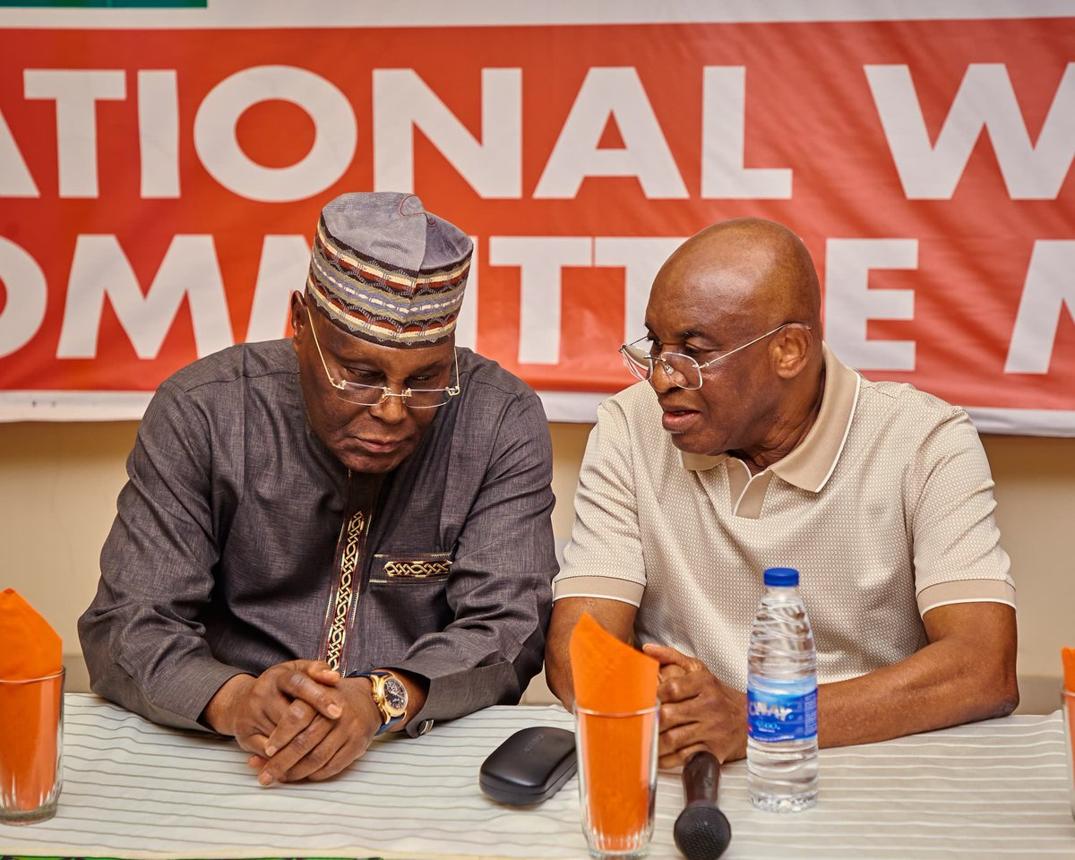
Former African Democratic Congress Deputy National Chairman for the North-East, Nafiu Bala Gombe, has issued a 24-hour ultimatum to the Independent National Electoral Commission, demanding recognition as the party's legitimate national chairman. The demand represents another escalation in the ADC's prolonged leadership dispute involving the national executive associated with former Senate President David Mark. Gombe maintains that his claim is consistent with the party's constitutional succession arrangements, while the controversy raises questions about the authority of competing factions and the implications for candidates participating in the 2027 general elections. However, INEC's formal response, the precise judicial basis of the latest demand and the consequences of noncompliance remain independently unverified.
The leadership crisis within the African Democratic Congress has taken a fresh turn after former Deputy National Chairman for the North-East, Nafiu Bala Gombe, issued a 24-hour ultimatum to the Independent National Electoral Commission, demanding formal recognition as the party's legitimate national chairman. The demand represents another escalation in the prolonged dispute over control of the opposition party as Nigeria intensifies preparations for the 2027 general elections. Gombe's intervention has renewed questions about the legal status of the party's leadership, the authority of its competing factions and the implications of the unresolved controversy for candidates seeking elective positions under the ADC platform.
Gombe maintains that his claim to the national chairmanship is consistent with the party's constitutional arrangements governing leadership succession. His position challenges the authority of the leadership associated with former Senate President David Mark, which emerged following the adoption of the ADC as a political platform by prominent opposition figures. The competing claims have placed the electoral commission at the center of a dispute that carries considerable consequences for the party's organizational stability and its participation in the forthcoming elections.
By issuing a 24-hour ultimatum, Gombe is seeking an immediate administrative response from INEC rather than allowing the question of leadership recognition to remain unresolved. However, the demand does not independently establish his entitlement to the position or impose a legally binding deadline on the electoral commission. The recognition of political party executives must be determined in accordance with applicable electoral legislation, party constitutions and relevant judicial decisions, rather than solely through deadlines announced by individuals claiming leadership positions.
The controversy originates from disagreements surrounding changes to the ADC's national leadership following its emergence as a major platform for opposition political cooperation. In July 2025, prominent political figures adopted the party as part of efforts to establish a coordinated challenge to President Bola Ahmed Tinubu's administration. Former Senate President David Mark emerged as interim national chairman, while former Osun State Governor Rauf Aregbesola assumed responsibilities as national secretary under the new leadership arrangement.
The restructuring brought several experienced politicians into the ADC and substantially increased its national visibility. However, it also generated disagreements involving individuals who occupied positions within the party before the arrival of the opposition coalition. Gombe subsequently emerged as one of the principal figures contesting the legitimacy of the leadership transition, maintaining that the constitutional procedures governing succession had not been properly observed.
At the heart of the dispute is the question of whether the departure of existing national officers created circumstances under which Gombe was entitled to assume the national chairmanship. His position rests on his interpretation of the ADC's internal constitutional provisions and the obligations of officials responsible for administering leadership transitions. The competing leadership has maintained its own claim to legitimacy, creating an institutional confrontation that cannot be conclusively resolved through public statements alone.
Leadership disputes within political parties can become particularly complicated when competing groups present different interpretations of internal constitutional provisions. Political organizations are required to operate within frameworks governing the election, appointment, resignation and replacement of their executives. Where those procedures are disputed, courts may be required to determine whether particular decisions were properly authorized and whether individuals claiming leadership positions possess the necessary legal standing.
The ADC controversy carries additional significance because of the party's position within Nigeria's evolving opposition landscape. Former Vice President Atiku Abubakar and several other prominent political figures have become associated with the party as part of efforts to challenge the ruling All Progressives Congress. The development has transformed what might otherwise have remained an internal organizational dispute into a matter with potentially substantial implications for the forthcoming presidential election.
For Atiku and other politicians pursuing electoral ambitions through the ADC, uncertainty concerning the party's leadership could affect important administrative decisions connected to campaign organization and electoral participation. Political parties require recognized leadership structures to communicate formally with INEC, administer internal procedures and undertake responsibilities associated with candidate nominations. Where competing factions claim authority over those functions, questions can arise concerning the validity of decisions made by either group.
Nevertheless, a leadership dispute does not automatically establish that every candidate associated with the affected party has been disqualified from an election. The legal consequences depend on the specific decisions made by the courts, the timing of relevant nominations and the provisions of the electoral legislation in force. Any conclusion concerning Atiku's presidential candidacy or the status of other ADC candidates would require careful examination of the applicable judicial orders and official electoral records.
Gombe's ultimatum has also renewed attention to the responsibilities of INEC in situations involving disputed political party leadership. The electoral commission maintains records of recognized political organizations and their executives while monitoring aspects of party administration required under Nigerian law. However, its authority is not unlimited, particularly when disputes concerning internal party arrangements become the subject of litigation.
Where a court issues an enforceable judgment or order concerning the leadership of a political party, INEC may be required to take administrative action consistent with that decision. The commission must also consider whether subsequent judicial proceedings, including appeals or orders suspending enforcement, affect its obligations. Consequently, determining whether INEC should immediately recognize a particular claimant requires more than establishing that the individual has publicly demanded recognition.
The precise judicial basis for Gombe's latest ultimatum remains an important issue requiring clarification. Although his broader leadership challenge has been associated with litigation concerning the ADC's administrative arrangements, the complete text of any judgment or order relied upon in issuing the latest demand has not been independently examined for this report. Without that documentation, it would be premature to conclude that the commission is under an enforceable obligation to recognize him within the specified period.
The distinction between a judgment that invalidates particular leadership decisions and an order expressly recognizing another individual as national chairman is particularly important. Courts can determine that specific organizational procedures were unlawful without necessarily appointing a replacement executive or recognizing every claim advanced by a successful litigant. The exact wording of a judicial decision therefore determines its practical consequences for the parties involved and the obligations of institutions responsible for implementation.
Similarly, the commencement of an appeal does not necessarily produce identical legal consequences in every case. Whether a judgment remains enforceable while an appeal is pending depends on the applicable procedural rules and any additional orders issued by the courts. Political actors frequently present different interpretations of these circumstances, making access to the original judicial documents essential for accurately establishing the legal position.
The latest confrontation comes at a particularly sensitive stage of Nigeria's electoral preparations. Political parties have been developing campaign structures, coordinating nationwide activities and mobilizing candidates ahead of the general elections. An unresolved dispute over national leadership can complicate those responsibilities, particularly when competing executives claim authority to make decisions on behalf of the same organization.
Financial administration may also become an important consideration where a political party experiences a prolonged leadership crisis. National executives ordinarily possess responsibilities involving organizational expenditure, campaign resources and the management of party assets. Where authority over those functions is disputed, questions can arise concerning who is entitled to authorize transactions or enter agreements on behalf of the organization. Such uncertainty can affect the party's ability to maintain effective administrative operations.
The implications extend beyond the presidential campaign to governorship, senatorial and legislative candidates associated with the ADC. Individuals contesting elections through the party require organizational support, reliable administrative structures and effective communication with electoral authorities. Continuing disagreement over leadership could create uncertainty concerning campaign coordination and the responsibilities of officials operating at national and state levels.
However, the existence of such uncertainty should not be interpreted as confirmation that individual candidacies have already been invalidated. Electoral participation is governed by specific legal requirements, and the consequences of an internal party dispute must be determined according to those requirements. Candidates retain the right to pursue appropriate judicial remedies where decisions affecting their participation are disputed.
The leadership controversy also comes against the backdrop of broader discussions concerning cooperation among Nigeria's opposition political organizations. Atiku, former Anambra State Governor Peter Obi and Oyo State Governor Seyi Makinde have been associated with consultations intended to explore possible arrangements ahead of the 2027 presidential election. Those discussions have attracted considerable public attention because of the competing political platforms through which the individuals are pursuing their respective ambitions.
The ADC's participation in wider opposition negotiations creates additional questions about which officials possess the authority to make commitments on behalf of the party. Political cooperation ordinarily requires clarity concerning the organizations involved, the representatives empowered to negotiate and the procedures through which agreements receive formal approval. A prolonged leadership dispute could complicate those arrangements even where individual political leaders remain willing to engage in consultations.
Nevertheless, Gombe's challenge should be considered independently of speculation concerning its possible political consequences. There is no verified evidence presented in the available news brief establishing that his ultimatum was coordinated by the ruling APC or any rival political organization. Allegations of external interference would require credible supporting evidence and should not be treated as established facts merely because the dispute involves an opposition party.
Internal leadership disagreements are not unique to the ADC within Nigeria's contemporary political environment. Several political parties have experienced disputes involving national officers, factional structures, internal elections and candidate selection procedures. These controversies have frequently resulted in litigation, defections and competing claims concerning the authority to represent particular organizations before electoral institutions.
Such disputes raise wider questions about internal democracy within political parties. Organizations seeking to exercise governmental authority are expected to establish credible procedures for managing their own affairs, resolving disagreements and protecting the rights of their members. Where leadership transitions become contested, transparent decision-making and adherence to constitutional provisions can help reduce uncertainty and strengthen institutional confidence.
Nigeria's political history provides several examples of how prolonged internal disagreements can affect party stability. Disputes over leadership and candidate nominations have contributed to the fragmentation of established organizations and the emergence of competing political movements. However, the specific consequences vary according to the circumstances of each dispute, the relevant legal framework and the decisions made by affected members.
The ADC's current circumstances are particularly notable because the party's national expansion brought together politicians with different organizational backgrounds and previous political affiliations. Establishing a common administrative structure within such an environment requires agreement concerning leadership authority, membership rights and the distribution of responsibilities. The disagreements involving Gombe and the Mark-led leadership demonstrate that those questions remain contested.
For INEC Chairman Professor Joash Amupitan, the dispute represents another sensitive administrative matter confronting the commission ahead of the elections. The institution is responsible for implementing electoral legislation impartially while responding to competing demands from political organizations. Its handling of disputed leadership claims will attract scrutiny from party members, legal practitioners and other stakeholders interested in the independence of electoral administration.
INEC's responsibility is to assess the applicable legal and administrative circumstances rather than determine recognition according to the political prominence of competing claimants. The commission must also communicate its decisions clearly enough to allow affected organizations to understand the basis of its actions. Where individuals disagree with those decisions, established judicial procedures provide mechanisms for seeking review.
Gombe's decision to impose a 24-hour deadline increases the immediate pressure on the commission but does not remove the necessity of following those procedures. Administrative recognition undertaken without a sufficient legal basis could generate further litigation and deepen uncertainty within the party. Conversely, a failure to implement an enforceable judicial order, where one exists, could raise separate questions concerning compliance with the rule of law.
Several important questions remain unanswered following the announcement of the ultimatum. The precise consequences Gombe intends to pursue if INEC fails to comply have not been independently established, while the commission's formal response to the demand remains unconfirmed in the material available for this report. The position of the competing ADC leadership and the exact status of relevant judicial proceedings also require further clarification.
A direct response from INEC would provide greater certainty regarding the commission's recognition of the party's national executives and the legal basis governing its position. Publication of any court order relied upon by Gombe would similarly allow independent examination of whether his interpretation corresponds with the actual terms of the decision. Those developments would be important in determining whether the ultimatum produces a substantive change in the party's administrative status.
Beyond the immediate confrontation, the ADC faces the continuing challenge of establishing a leadership structure capable of coordinating its political activities while respecting the rights of its members. Resolving the dispute through lawful and transparent procedures would provide greater certainty for candidates, party officials and supporters. Continued uncertainty, by contrast, could leave important organizational questions unresolved as electoral preparations advance.
For now, Gombe's ultimatum represents a direct challenge to INEC over the recognition of the ADC's national leadership rather than confirmation that he has legally assumed control of the party. The competing claims remain subject to the applicable constitutional, statutory and judicial framework, and no independently verified decision establishing the commission's acceptance of his demand has been presented. As Nigeria approaches the 2027 elections, the resolution of the dispute will carry significance not only for the ADC but also for the broader principles of internal party democracy, electoral administration and compliance with the rule of law.